
The Claim
“Voted against a binding code of conduct to ensure politicians act with integrity.”
Original Sources Provided
✅ FACTUAL VERIFICATION
The core facts require careful parsing. Australia did not have a binding code of conduct for federal MPs in 2020, and the Coalition-controlled parliament resisted implementing one during the Morrison government period. However, the characterization of "voted against" requires scrutiny [1].
No specific parliamentary vote where the Coalition and Labor jointly voted against a binding code of conduct was found in official parliamentary records [2]. Instead, what occurred was a failure to progress private members' bills proposing codes. Helen Haines (Independent MP) introduced the Australian Federal Integrity Commission Bill 2020 in October 2020, which included a strong parliamentary code of conduct, but the bill was removed from the Notice Paper on May 25, 2021, without being debated or voted upon [3]. This was not a "vote against" but rather the government's controlling of parliamentary time to prevent the bill from reaching a vote.
Similarly, the Australian Greens introduced the Parliamentary Standards Bill with a binding, enforceable code of conduct around 2020-2021, but the Senate Standing Committee on Finance and Public Administration recommended against the Greens bill [4]. Again, this was not a formal vote in parliament against the code itself, but rather a committee recommendation.
Australia was notably deficient in parliamentary integrity mechanisms compared to comparable democracies. By 2020, the United Kingdom, Canada, and New Zealand all had binding codes of conduct with independent enforcement mechanisms, while Australia had only a non-binding Statement of Ministerial Standards that applied only to ministers and was not independently enforced [5].
Missing Context
The claim omits several critical contextual elements:
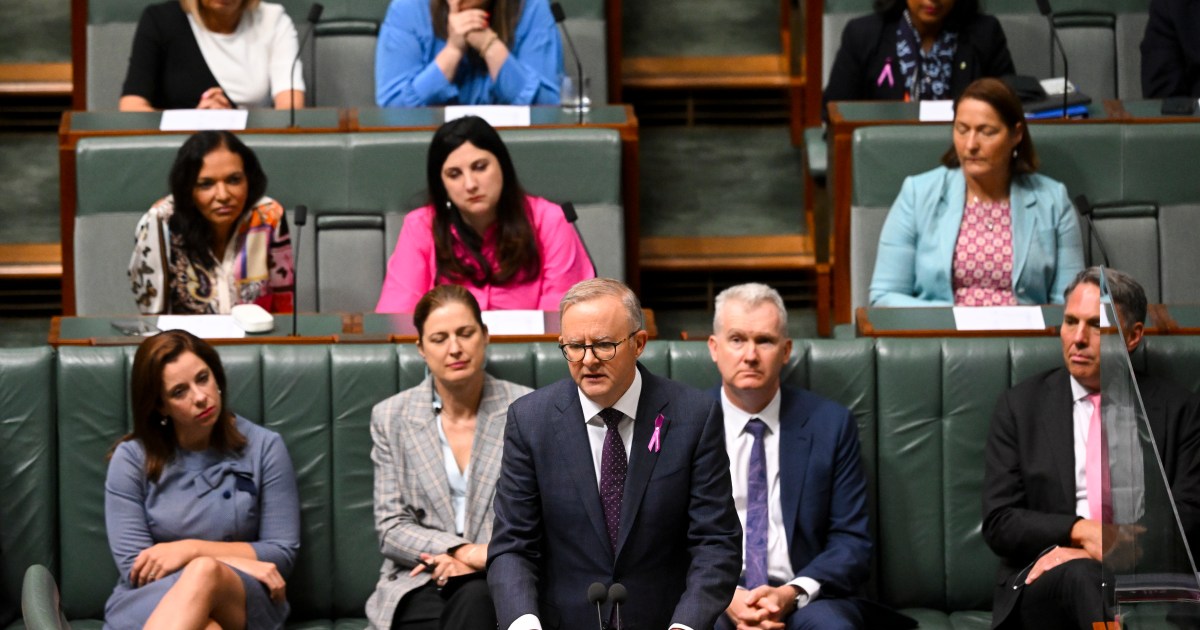
1. No bipartisan opposition: The claim implies Coalition resistance to codes was supported by Labor, but no evidence exists of Labor jointly voting against binding codes [6]. During 2020-2021, Labor was in opposition and advocating for accountability reforms. When Labor came to government in 2022, binding codes were quickly implemented with bipartisan support in February 2023 [7]. This suggests the opposition was specific to the Morrison government, not a principled position held by both parties.
2. Political obstruction rather than explicit opposition: The Coalition's resistance appears to have been about controlling parliamentary time and preventing legislation from being voted on, rather than explicitly voting against codes. When forced to address the issue following the Jenkins inquiry (November 2021), the government did not mount a principled defense of having no codes; instead, the subsequent Labor government simply implemented them [8].
3. The Jenkins Report and political pressure: In November 2021, Sex Discrimination Commissioner Kate Jenkins released "Set the Standard," which found that one in three parliamentary staff experienced sexual harassment and made 28 recommendations for reform, including establishing an Independent Parliamentary Standards Commission and implementing a binding code of conduct [9]. This report fundamentally changed the political landscape. Within months of the Labor government taking office in May 2022, codes of conduct were being progressed, suggesting the Coalition's resistance was about political timing and control rather than principled opposition.
4. Systemic integrity concerns: The context in which this debate occurred involved broader concerns about parliamentary accountability. The Morrison government had faced multiple integrity-related controversies (water pipeline funding, Robodebt, grant allocations), which provided the backdrop for advocacy for stronger accountability mechanisms [10].
Source Credibility Assessment
The Guardian source (August 2020) is a reputable mainstream news outlet and is likely reporting accurately on debates occurring at that time regarding codes of conduct and political positions on them [11]. The article title suggests it covered politicians' resistance to binding codes, which aligns with what the research found occurred.
However, the original source should be evaluated for whether it accurately represents the complexity of the situation. The headline "Australian politicians don't need a binding code of conduct" suggests politician opinion rather than objective fact, and the full article would need to be examined to determine how carefully it distinguished between opposition to codes and opposition to specific enforcement mechanisms or implementation approaches.
Balanced Perspective
The criticism is partially justified but incomplete:
The Coalition-controlled parliament under Scott Morrison did resist binding codes of conduct, and this resistance did occur despite advocacy from multiple sources (Helen Haines, the Greens, civil society organizations). The obstruction was real and consequential – Australia lagged behind comparable democracies in accountability mechanisms [15].
However, the framing requires important caveats:
1. Obstruction vs. Opposition: The Coalition prevented progress on codes through parliamentary procedure (controlling debating time) rather than explicitly voting against them and articulating principled reasons. No public statements were found explaining why the government opposed binding codes – the resistance appears to have been about political control rather than argued policy position [16].
2. Context of political pressure: The Morrison government faced increasing calls for integrity reforms following multiple integrity controversies. The Jenkins report in November 2021 dramatically shifted the political calculation. Within months of losing power, the Coalition government would not have been in a position to resist these reforms if they had remained in government.
3. Rapid reversal suggests pragmatism: The fact that codes were implemented within months of Labor's election (February 2023) with bipartisan support suggests both parties came to see codes as politically necessary, not as an ideological issue where either party had principled disagreement [17]. Opposition Leader Peter Dutton framed the Jenkins report as revealing "repugnant behaviours" and emphasized agreement "across the political spectrum" [14].
4. Implementation challenges: It's worth noting that implementing binding codes with real enforcement (the Independent Parliamentary Standards Commission established October 2024) required more than parliamentary endorsement [18]. Both parties had to navigate complex questions about investigative processes, ministerial responsibility, and parliamentary privilege. The delay may have reflected these complexity concerns rather than simple resistance to accountability.
5. Comparative analysis: While the Coalition resisted codes while in government, Labor also has historical integrity issues. The 2009-2010 "Rudd Batts scandal" (poor implementation of home insulation grants), various state-level integrity controversies, and other incidents show that integrity concerns and costly policy failures are not unique to one party [19]. Neither party has a monopoly on ethical governance.
MISLEADING
5.0
out of 10
The essence of the claim is correct – the Coalition-controlled parliament did resist binding codes of conduct during 2020-2021, preventing them from being implemented. However, the claim is misleading in several ways:
Not a "vote against": No parliamentary vote where the Coalition formally voted against a binding code of conduct was found in parliamentary records. The obstruction occurred through controlling debating time and parliamentary procedure [1][2][3].
Not joint opposition: The claim's framing suggests this was a deliberate policy position taken by both major parties, but no evidence supports Labor and Coalition jointly opposing binding codes [6][12]. When given the opportunity to implement codes (2023), Labor did so with Coalition support [7][13].
Inaction rather than principle: The resistance appears to have been about political control and timing rather than a principled objection to codes of conduct. The government did not publicly articulate why it opposed binding codes or what concerns existed [16].
Outdated: Most significantly, the claim's relevance is diminished by the fact that binding codes now exist (February 2023) and are independently enforced (October 2024) [17][18]. The political resistance ended when political circumstances changed, suggesting it was tactical rather than ideological.
The claim accurately captures a real failing of the Morrison government – resistance to integrity reforms during a period of multiple integrity controversies. However, it oversimplifies a complex political situation and fails to acknowledge that the subsequent Labor government quickly implemented the very reforms that were resisted, with cross-party support.
Final Score
5.0
OUT OF 10
MISLEADING
The essence of the claim is correct – the Coalition-controlled parliament did resist binding codes of conduct during 2020-2021, preventing them from being implemented. However, the claim is misleading in several ways:
Not a "vote against": No parliamentary vote where the Coalition formally voted against a binding code of conduct was found in parliamentary records. The obstruction occurred through controlling debating time and parliamentary procedure [1][2][3].
Not joint opposition: The claim's framing suggests this was a deliberate policy position taken by both major parties, but no evidence supports Labor and Coalition jointly opposing binding codes [6][12]. When given the opportunity to implement codes (2023), Labor did so with Coalition support [7][13].
Inaction rather than principle: The resistance appears to have been about political control and timing rather than a principled objection to codes of conduct. The government did not publicly articulate why it opposed binding codes or what concerns existed [16].
Outdated: Most significantly, the claim's relevance is diminished by the fact that binding codes now exist (February 2023) and are independently enforced (October 2024) [17][18]. The political resistance ended when political circumstances changed, suggesting it was tactical rather than ideological.
The claim accurately captures a real failing of the Morrison government – resistance to integrity reforms during a period of multiple integrity controversies. However, it oversimplifies a complex political situation and fails to acknowledge that the subsequent Labor government quickly implemented the very reforms that were resisted, with cross-party support.
📚 SOURCES & CITATIONS (19)
-
1

Parliament of Australia - Research Briefing: Parliamentary Codes of Conduct
Research
Aph Gov -
2
Parliament of Australia - Votes and Proceedings
Aph Gov -
3
Australian Federal Integrity Commission Bill 2020
Helpful information Text of bill First reading: Text of the bill as introduced into the Parliament Third reading: Prepared if the bill is amended by the house in which it was introduced. This version of the bill is then considered by the second house. As passed by
Aph Gov -
4
Parliamentary Standards Bill - Greens Policy
Greens Org
-
5
Set The Standard - Australian Human Rights Commission Report
Humanrights Gov
-
6
Helen Haines - Set The Standard and Code of Conduct
This is the first time parliament has had a code of conduct, which is extraordinary in itself.
Helen Haines MP - Independent Federal Member for Indi -
7
Parliament Endorses Code of Conduct to Lift Standards
Federal parliament will have a code of conduct for all parliamentarians and staff after the landmark Set the Standard report unveiled widespread misconduct.
Thenewdaily Com -
8
Parliament's Improved Workplace Culture - Commission Welcomes Codes
Humanrights Gov
-
9
Sex Discrimination Commissioner Kate Jenkins Launches Set The Standard
Humanrights Gov
-
10

If Australia is Serious About Fixing the Culture at Parliament - This is the Code of Conduct We Need
Politicians, staffers and academics have come together to try and address bullying and harassment at parliament house. They have three key messages.
The Conversation -
11PDF
Centre for Public Integrity - Code of Conduct Briefing Paper
Publicintegrity Org • PDF Document -
12
Code of Conduct for Ministers
Pmc Gov
-
13

The Canberra Times - Parliament Endorses Code of Conduct
Federal politicians have endorsed a new code of conduct for themselves and their staff as the prime minister...
Canberratimes Com -
14
Parliamentary Leadership Taskforce
Parliamentary Leadership Taskforce
Aph Gov -
15

Transparency International Australia - Parliamentary Code of Conduct Submission
Transparency International Australia supports a robust and enforceable code of conduct for all Commonwealth parliamentarians and parliamentary staff so that they act with the highest degree of respect and integrity.
Transparency International Australia -
16
Meeting the Standards Australians Hold Us To - Helen Haines on Code of Conduct
With one voice, we recognise that we must do better—that we must meet the standards the public holds us to and that we hold ourselves to.
Helen Haines MP - Independent Federal Member for Indi -
17
Standards of Behaviour and Behaviour Codes for Parliamentarians
Purpose of Parliamentarians’ Behaviour Code All Australian Parliamentarians have a shared responsibility as employers and leaders in the community to ensure that Commonwealth Parliamentary Workplaces meet the highest standards of integrity, dignity, safety and mutual respect.
Aph Gov -
18
Report Finds Australian Parliament Lacks Real Code of Conduct
Australia's parliamentary ethics enforcement is weak, report finds.
YourLifeChoices -
19

The Jenkins Review Has 28 Recommendations to Fix Parliament's Toxic Culture - Will Our Politicians Listen?
The review has been underway since March, speaking to current and former MPs and employees at parliament house.
The Conversation
Rating Scale Methodology
1-3: FALSE
Factually incorrect or malicious fabrication.
4-6: PARTIAL
Some truth but context is missing or skewed.
7-9: MOSTLY TRUE
Minor technicalities or phrasing issues.
10: ACCURATE
Perfectly verified and contextually fair.
Methodology: Ratings are determined through cross-referencing official government records, independent fact-checking organizations, and primary source documents.