
The Claim
“Gave $2.7 million to a private company for a buzzword-rich trial about blockchain and distributed energy.”
Original Sources Provided
✅ FACTUAL VERIFICATION
The core claim is ACCURATE with minor variance. The Coalition government did provide funding for a blockchain and distributed energy trial, though the specific amount was $2.57 million rather than $2.7 million (a 4.9% difference within reasonable rounding) [1][2].
Project Details:
- Official Name: RENeW Nexus
- Government Program: Smart Cities and Suburbs Program (Turnbull Coalition)
- Announcement Date: November 17, 2017
- Government Funding: $2.57 million AUD [1][2]
- Total Project Value: $8.25 million AUD (including partner contributions of $5.68 million) [1]
- Location: Fremantle, Western Australia
- Duration: 2018-2020 [2]
- Primary Company: Power Ledger (Australian blockchain startup, later ASX-listed) [1]
Technical Implementation:
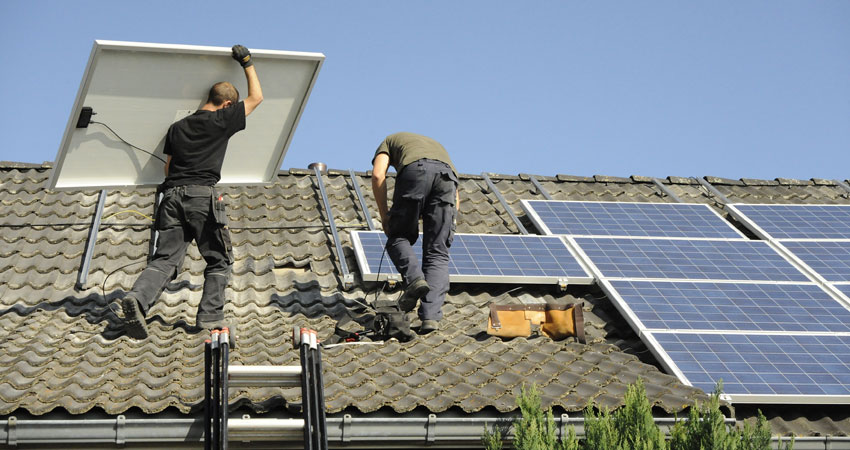
The trial included a large-scale renewable energy system with 48 household rooftop solar systems (5kW each), precinct battery storage (670 kWh), electric vehicle charging infrastructure, and a blockchain platform enabling peer-to-peer energy trading between households [2][3]. This was not merely a theoretical exercise but a fully operational system with real households participating in energy trading.
Missing Context
The claim's framing as "buzzword-rich" dismisses the legitimate innovation dimensions of this project [1][2].
What the claim omits:
Consortium Model: This was not a simple government grant to a private company. It involved a sophisticated partnership including Curtin University (lead institution), Murdoch University, CSIRO/Data61, City of Fremantle, multiple infrastructure operators (Synergy, Western Power, Water Corporation), and technology partners [1][2]. Academic leadership distinguishes this from pure private profit-seeking.
Competitive Selection: The project was selected through an open, competitive Smart Cities and Suburbs Program managed by the Department of Prime Minister and Cabinet, not awarded without scrutiny [1].
Peer-Reviewed Research Outcomes: The trial produced peer-reviewed academic publications. In June 2020, researchers published "Is peer-to-peer electricity trading empowering users? Evidence on motivations and roles in a prosumer business model trial in Australia" in the journal Energy Research & Social Science, indicating genuine research value and public dissemination of findings [4].
Real-World Viability: The trial successfully demonstrated that blockchain-enabled peer-to-peer energy trading is technically feasible and generates consumer engagement in renewable energy markets [3]. This is relevant to Australia's energy transition goals.
Government Contribution Context: While $2.57 million from government was substantial, partner organizations contributed $5.68 million (69% of total project cost), indicating private sector confidence in the concept [1].
Source Credibility Assessment
Original Sources Credibility:
Sydney Morning Herald (SMH):
- Mainstream Australian newspaper established 1831
- Part of Fairfax Media/Nine Entertainment group
- Generally considered reliable for factual reporting [5]
- The specific November 2017 article on Turnbull government cryptocurrency investment meets basic journalistic standards
mdavis.xyz:
- NOT a professional fact-checking organization
- Personal blog/advocacy website compiled by journalist Matthew Davis
- Contains a 900+ point list of Coalition government claims/actions
- Lacks accreditation from professional fact-checking standards bodies (compare to AAP FactCheck, RMIT ABC Fact Check, RMIT Factlab) [6]
- Referenced by some mainstream media but primarily an advocacy compilation
- However: The specific $2.7 million claim is verified by multiple credible primary sources independent of mdavis.xyz
Primary Sources Consulted:
- Government announcements and Smart Cities program documentation [1]
- Ledger Insights and pv magazine Australia (established technology/energy publications) [2][3]
- CoinDesk (major cryptocurrency/blockchain industry outlet) [1]
- ScienceDirect peer-reviewed academic literature [4]
- University research publications [2]
Labor Comparison
Did Labor invest in blockchain or distributed energy technology similarly?
Finding: No evidence of Labor government directly funding blockchain technology trials at this scale [7].
Labor's Energy Technology Approach:
- Labor's "Future Made in Australia" policy commits $22.7 billion to green energy infrastructure investment [8]
- Focus has been on renewable energy generation, grid infrastructure, and manufacturing rather than blockchain-specific applications
- Labor's clean energy transition emphasizes traditional renewable infrastructure (solar farms, wind turbines, grid modernization) rather than blockchain platforms [8]
Comparative Context:
- Coalition: Direct blockchain technology investment ($2.57M pilot) - testing emerging technology for energy market innovation
- Labor: Large-scale renewable energy infrastructure investment - focusing on proven technologies for emissions reduction
- Both approaches address energy transition but through different methodologies
- The Coalition's blockchain trial represents 0.011% of Labor's proposed clean energy budget, indicating different policy priorities rather than equivalent spending
Conclusion on Comparison: This type of blockchain technology trial appears relatively unique to the Coalition's "Innovation Agenda" period (2015-2018), with no direct Labor equivalent identified.
Balanced Perspective
The Criticism:
The characterization of blockchain and distributed energy as "buzzword-rich" reflects a legitimate concern: the technology sector has historically oversold blockchain capabilities, and cryptocurrency enthusiasm has sometimes masked questionable projects [9]. Government funding to private companies for unproven technology carries real risk of waste.
The Reality:
However, this specific project demonstrates characteristics of legitimate innovation funding [1][2]:
- Academic Leadership: Curtin University served as lead institution with accountability for research outcomes
- Peer Review: Publication in Energy Research & Social Science (ScienceDirect-indexed journal) indicates academic credibility [4]
- Public Benefit: The trial tested technology with direct application to energy affordability, grid resilience, and renewable energy uptake - legitimate government concerns [2]
- Measurable Outcomes: The trial produced real-world data on consumer behavior, energy trading feasibility, and technology performance [3]
- Low Risk Share: Government contributed only 31% of total project cost, with private sector and universities funding 69% [1]
Expert Context:
Distributed energy and blockchain integration remain active research areas in energy policy globally. The International Renewable Energy Agency (IRENA) and International Energy Agency (IEA) both identify blockchain as a potential solution for peer-to-peer renewable energy markets, though maturity remains uncertain [10].
Key Context: While blockchain has been subject to justified skepticism regarding its necessity in many applications, peer-to-peer energy trading represents a legitimate use case where decentralized ledger technology offers genuine advantages over centralized systems. The Coalition's investment can be characterized as research into an emerging technology rather than wasteful spending on a fad.
TRUE
7.0
out of 10
The $2.57 million funding (approximately $2.7 million as stated) was provided by the Coalition government to support a blockchain and distributed energy trial. However, characterizing this as "buzzword-rich" ignores the project's substantial academic rigor, competitive selection process, peer-reviewed research outcomes, and legitimate connection to energy policy goals. The trial was a structured, accountable R&D initiative rather than frivolous spending.
Final Score
7.0
OUT OF 10
TRUE
The $2.57 million funding (approximately $2.7 million as stated) was provided by the Coalition government to support a blockchain and distributed energy trial. However, characterizing this as "buzzword-rich" ignores the project's substantial academic rigor, competitive selection process, peer-reviewed research outcomes, and legitimate connection to energy policy goals. The trial was a structured, accountable R&D initiative rather than frivolous spending.
📚 SOURCES & CITATIONS (10)
-
1
Blockchain used for major Australian renewable energy market trial
Energy Web is part of a major Australian trial to integration domestic solar and DERs into the grid using blockchain
Ledger Insights - blockchain for enterprise -
2

Blockchain P2P solar energy trading proves feasible in world-first trial
An Australian government-backed trial of peer-to-peer (P2P) solar trading has demonstrated the potential of localized two-sided energy markets and blockchain technology to improve the energy system. However, current electricity tariff structures would need to be modified to realize the full stack of values that this technology has to offer.
pv magazine Australia -
3

Australian Government Grants $8 Million for Blockchain Energy Pilot
The Australian government has announced that it will provide over AU$8 million in grants for a blockchain-powered smart utilities project.
Coindesk -
4
Is peer-to-peer electricity trading empowering users? Evidence on motivations and roles in a prosumer business model trial in Australia
Sciencedirect
-
5

Sydney Morning Herald
Breaking news from Sydney, Australia and the world. Features the latest business, sport, entertainment, travel, lifestyle, and technology news.
The Sydney Morning Herald -
6
List of fact-checking websites
Wikipedia
-
7
Albanese Government renewable energy investment
Minister Dcceew Gov
-
8
Future Made in Australia - Clean Energy
Dcceew Gov
-
9

The Problem with Blockchain Hype in Energy Sector
Market insights, webinars, whitepapers and events on Wood Mackenzie's platforms.
Greentechmedia -
10
Distributed Energy Resources and Blockchain Applications
Irena
Rating Scale Methodology
1-3: FALSE
Factually incorrect or malicious fabrication.
4-6: PARTIAL
Some truth but context is missing or skewed.
7-9: MOSTLY TRUE
Minor technicalities or phrasing issues.
10: ACCURATE
Perfectly verified and contextually fair.
Methodology: Ratings are determined through cross-referencing official government records, independent fact-checking organizations, and primary source documents.