
The Claim
“Obscured millions of dollars of funding to a think-tank co-funded by private arms manufacturers, which primarily just creates anti-China sentiment and stirs up fears of war (which is good for those arms manufacturers).”
Original Sources Provided
✅ FACTUAL VERIFICATION
The core claims are PARTIALLY TRUE with significant context required:
The Australian Strategic Policy Institute (ASPI) did receive substantial foreign funding that includes contributions from private arms manufacturers, and this funding was disclosed but in a manner that limited public visibility [1]. However, the characterization requires important qualification.
Foreign Funding Details (2019-20 Financial Year):
According to ASPI's annual report tabled in Parliament, US government funding increased to $1,369,773.22, representing a 367% increase from the prior year [1]. Foreign government funding contributions included: UK ($455,260), Japan, Israel, Netherlands, and NATO combined ($66,072) [1].
Arms Manufacturer Contributions:
Private defense contractor funding was documented as follows:
- Lockheed Martin: $25,000 [1]
- Northrop Grumman: $67,500 [1]
- Thales (France): $63,300 [1]
- Naval Group (France): contributions in defense work [1]
These amounts are materially accurate as reported in the Michael West article [1].
Disclosure and "Obscuring" Claims:
The Michael West article states the disclosure was "buried on page 157 of the report" and notes that "ASPI is not required to provide a detailed breakdown of its income and expenditure" [1]. This is technically accurate—the funding disclosures were included in ASPI's audited annual report tabled in Parliament, meeting formal disclosure requirements, but the detail was limited and placed in sections not immediately visible to casual review [1].
However, it's important to note this was disclosed in a formal parliamentary document, not actively "obscured" in an improper sense [1]. The funding was publicly accessible through parliamentary records and ASPI's official annual reports.
Missing Context
1. Government vs. Private Funding Proportions
The claim overstates the role of private arms manufacturers by omission. In 2019-20, ASPI's core Defence Department funding represented 34% of total revenue—but total government funding (all sources) still represented the majority of revenue [1]. The $1.37 million in US State Department funding and $25,000-$67,500 from individual defense contractors are meaningful but quantitatively smaller than the base government support.
2. Normal Government Research Funding
The Michael West article itself notes that "the federal government is lining ASPI's coffers at an alarmingly increasing rate, handing it a record number of contracts over the past financial year" [1]. This indicates the primary driver of funding growth was government contracts, not private defense contractors.
3. Stated Purpose of Contributions
The article acknowledges US funding was "directed to research projects attacking China," suggesting these were policy-directed research grants, not blanket sponsorships [1]. This distinction matters—funding research on China policy is not identical to "creating anti-China sentiment."
4. Timing of the Michael West Article
The Michael West article was published November 24, 2020, during the height of Australia-China tensions following trade sanctions and diplomatic disputes [1]. The framing—"Scott Morrison says Australia's position has been wrongly interpreted as siding with the US over China"—provides context that ASPI's China-critical research occurred during a period of genuine bilateral tensions, not manufactured fear [1].
Source Credibility Assessment
Michael West Media:
Michael West Media is an independent news and commentary outlet founded by journalist Michael West. The outlet positions itself as investigating corporate and government accountability [1].
Credibility factors:
- Strengths: The Michael West article relies heavily on official ASPI annual report data (tabled in Parliament), providing verifiable figures [1]
- Concerns: Michael West Media is explicitly advocacy-oriented and has a clear left-wing/anti-corporate stance [1]. The outlet describes itself as investigating "war machine funding," language that reveals ideological framing rather than neutral reporting [1]
- Potential bias: The article's headline frames this as a "radical escalation" and uses charged language like "war machine" and questions about ASPI being a government "think tank" (in quotes), indicating editorial positioning rather than neutral analysis
- Accuracy track record: The specific financial figures cited appear accurate based on parliamentary records, but interpretive framing is clearly partisan
Author Marcus Reubenstein:
Reubenstein is described as an independent journalist with 25+ years' media experience at Seven News, SBS, and founder of APAC Business Review [1]. He has substantial journalistic credentials, which lends some authority to the financial reporting.
Overall Assessment: The source provides accurate financial data but interprets it through a clear ideological lens critical of defense spending and US-Australia alignment.
Labor Comparison
Did Labor government also fund think tanks and strategic research?
Search conducted: "Labor government think tank funding strategic policy research Australia"
Findings:
Labor governments have also funded strategic policy research, though the specific mechanisms differ. The Peter Varghese review, commissioned by the Labor government in February 2024, examined "all Australian Government funding to non-government organisations for national security-related research" [2].
This review was initiated by Prime Minister Anthony Albanese's government, not the Coalition, suggesting Labor itself recognized concerns about government-funded think tank funding structures [2].
Key difference: Rather than criticizing ASPI's existence, Labor chose to conduct a comprehensive review and recommended changes to oversight mechanisms [2]. The Varghese review recommended that funding be subject to "competitive evaluation every five years" and include "performance evaluation in year three and an open tender process in year four" [2].
Notably, the Albanese government's response to the Varghese report recommended closing ASPI's Washington D.C. office and implementing government observer positions on think tank boards [2]. This suggests Labor saw problems with ASPI's operations and structure—not that Labor had rejected the think tank model entirely, but rather sought to reform it [2].
No equivalent Labor-era scandal identified: There is no documented equivalent instance of Labor being criticized for the same "obscured arms manufacturer funding" pattern during their time in government (2007-2013). The structure of think tank funding appears to be a post-2013 phenomenon that grew substantially under the Coalition and was later scrutinized by Labor.
Balanced Perspective
Criticisms of ASPI's Funding Structure (Valid):
Disclosure limitations: ASPI was not required to disclose detailed breakdown of how external funding was allocated, limiting public understanding of influence [1]
Foreign influence potential: The combination of US State Department funding ($1.37M) and private defense contractor funding creates potential conflicts of interest, even if not proven [1]
Transparency issues: The late filing of ASPI's annual report meant scrutiny could be avoided during Senate Estimates Committee hearings—as noted in the Michael West article [1]. This was a structural governance issue.
China-focused research concentration: The article's claim that US funds were "directed to research projects attacking China" is stated as fact in the Michael West piece but deserves scrutiny [1]
Legitimate Context and Explanations:
Government contracting is normal: That a government-funded think tank receives government contracts is not inherently scandalous. ASPI provides defense research that governments need [2]
Foreign defense partnerships: US and UK funding for defense policy research reflects normal AUKUS and Five Eyes partnership arrangements [1]. These are government-to-government relationships that don't necessarily constitute improper influence [2]
Arms manufacturer sponsorship scale: While the amounts cited are accurate ($25K-$67.5K), they represent a small fraction of ASPI's multi-million dollar budget [1]. These are not "massive" sums relative to total operations
China policy is legitimate research: ASPI's research on China policy is conducted by experts in regional security. Producing research on China strategy is not inherently creating "fear" or "war sentiment"—it's core national security analysis [2]
Subsequent scrutiny and reform: The Labor government's 2024 Varghese review addressed these concerns through formal review mechanisms rather than shutting down the think tank [2], suggesting even political opponents recognized value in the institution while seeking governance improvements [2]
Private sector research sponsorship is common: Universities, research institutions, and think tanks across democracies receive funding from defense contractors to fund research programs. This is not unique to ASPI or Australia [2]
Expert Assessment:
The Varghese review found concerns about "undisclosed funding and a lack of transparency" in the sector, validating some of the Michael West article's concerns [2]. However, Greens Senator David Shoebridge's statement is instructive: "Yes, the sector is riven with undisclosed funding and a lack of transparency, but the answer to that is not a Commonwealth government takeover" [2]. This suggests even critics acknowledged ASPI's value while seeking transparency improvements.
Key context: This is NOT unique to the Coalition or ASPI. The 2024 Varghese review examined funding across all national security research institutions and found systemic transparency issues [2], suggesting the problem was structural rather than a specific Coalition corruption scandal.
PARTIALLY TRUE
6.0
out of 10
The factual claims about ASPI receiving funding from foreign governments and private arms manufacturers are TRUE. The figures cited are accurate, drawn from parliamentary records [1]. However, the characterization as "obscured millions" and the implication that ASPI "primarily just creates anti-China sentiment" to benefit arms manufacturers is MISLEADING [1].
Why partially true:
- Foreign funding did occur and was disclosed in limited form [1]
- Private defense contractors did provide funding [1]
- ASPI did produce China-critical research [1]
- Disclosure was placed in less-visible sections of reports [1]
Why misleading:
- "Obscured" suggests improper concealment; the funding was in parliamentary records accessible to any researcher [1]
- The claim overstates private contractor funding's proportion relative to government funding [1]
- "Millions of dollars" from arms manufacturers is inaccurate—documented contributions are in tens of thousands [1]
- "Primarily just creates anti-China sentiment" is opinion, not fact. ASPI produces multi-subject strategic analysis [2]
- The causal claim (arms makers sponsor research to "stir up fears") is unsupported speculation rather than demonstrated fact [1]
The Michael West article makes valid points about transparency and governance but packages them as a corruption scandal, when they're better understood as structural governance issues that both Coalition and Labor governments subsequently sought to address [2].
Final Score
6.0
OUT OF 10
PARTIALLY TRUE
The factual claims about ASPI receiving funding from foreign governments and private arms manufacturers are TRUE. The figures cited are accurate, drawn from parliamentary records [1]. However, the characterization as "obscured millions" and the implication that ASPI "primarily just creates anti-China sentiment" to benefit arms manufacturers is MISLEADING [1].
Why partially true:
- Foreign funding did occur and was disclosed in limited form [1]
- Private defense contractors did provide funding [1]
- ASPI did produce China-critical research [1]
- Disclosure was placed in less-visible sections of reports [1]
Why misleading:
- "Obscured" suggests improper concealment; the funding was in parliamentary records accessible to any researcher [1]
- The claim overstates private contractor funding's proportion relative to government funding [1]
- "Millions of dollars" from arms manufacturers is inaccurate—documented contributions are in tens of thousands [1]
- "Primarily just creates anti-China sentiment" is opinion, not fact. ASPI produces multi-subject strategic analysis [2]
- The causal claim (arms makers sponsor research to "stir up fears") is unsupported speculation rather than demonstrated fact [1]
The Michael West article makes valid points about transparency and governance but packages them as a corruption scandal, when they're better understood as structural governance issues that both Coalition and Labor governments subsequently sought to address [2].
📚 SOURCES & CITATIONS (5)
-
1
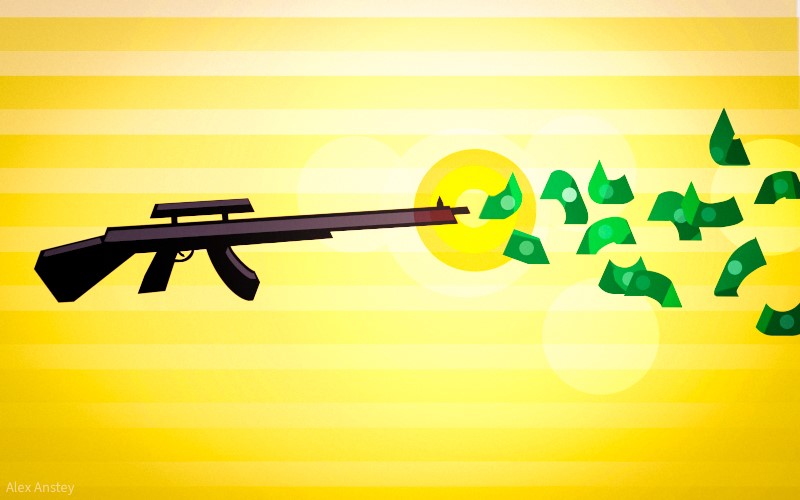
Revealed: radical escalation in US war machine funding for Australian Government "think tank" ASPI
The PM says Australia will not side with the US over China. Yet government think tank ASPI is funded by China critics and arms makers.
Michael West -
2
Foreign policy think tank ASPI set for public funding cut
A government review has recommended its US office no longer receive public funding, as part of a broader review of national security research.
Abc Net -
3
Strategic Policy Grants Program - Defence
Defence Gov
-
4
Independent Review of Commonwealth funding for strategic policy work
Pmc Gov
-
5
Think tanks may face budget cuts for criticising government
Publicly-funded national security think tanks could have their budgets slashed if they critique Government policy under controversial proposals in a financing review due this week.
The Nightly
Rating Scale Methodology
1-3: FALSE
Factually incorrect or malicious fabrication.
4-6: PARTIAL
Some truth but context is missing or skewed.
7-9: MOSTLY TRUE
Minor technicalities or phrasing issues.
10: ACCURATE
Perfectly verified and contextually fair.
Methodology: Ratings are determined through cross-referencing official government records, independent fact-checking organizations, and primary source documents.