
The Claim
“Ran an expensive marketing campaign promoting a target of net-zero emissions by 2050, but then voted against legislating a net-zero target for 2050. The new 'plan' involved no new laws, no new taxes, and nothing binding. The plan included fanciful estimates of carbon capture with trees and soil twice as high as the most optimistic peer reviewed research.”
Original Sources Provided
✅ FACTUAL VERIFICATION
The Coalition government, under Prime Minister Scott Morrison, announced a 2050 net-zero emissions target in October 2021, ahead of the COP26 climate summit in Glasgow [1][2]. The strategy document released with this announcement did contain projections for carbon sequestration through natural means that drew significant expert criticism [3].
Specific estimates in the government plan:
The Morrison government's long-term emissions reduction strategy assumed:
- 63 million tonnes of carbon dioxide per year could be sequestered in trees and other vegetation [3]
- Potentially more than 103 million tonnes per year could be stored in soil on cropping and grazing land [3]
Expert assessment of these figures:
According to peer-reviewed research and expert analysis cited in The Guardian:
Tree planting capacity: Polly Hemming, a carbon offsets expert at the Australia Institute, stated the government assumed 42 tonnes of CO2 per hectare annually, but optimal conditions (in giant mountain ash forests) allow only about 19 tonnes per hectare annually for up to 25 years [3]. This represents more than double the realistic capacity.
Soil carbon storage: Professor Richard Eckhard of the University of Melbourne noted some per-hectare soil carbon storage numbers in the government plan were "roughly double what was likely to be achievable" [3]. The government assumed up to 4.5 tonnes of CO2 could be stored per hectare annually, when peer-reviewed science suggested an upper limit in optimal conditions of about 1.8 tonnes per hectare [3].
Overall assessment: Bill Hare, chief executive of Climate Analytics, characterized the strategy as "a gross manipulation of what's possible" [3]. The report suggested the government's technology-led approach could result in as little as a 66% actual emissions cut by 2050 compared with 2005 levels, leaving up to 215 million tonnes annually to be addressed through offsets [3].
Binding nature of the plan:
The 2021 announcement was indeed not legislation. The government released a policy document that committed Australia to net-zero by 2050, but this was not enshrined in law. There were no new laws passed and no new binding mechanisms created by the Coalition for this 2050 target [1][2].
The voting claim:
When Labor came to power in 2022, they introduced the Climate Change Bill 2022 to enshrine net-zero by 2050 and a 43% emissions reduction target by 2030 into law [4]. The Coalition voted against this legislation in the House of Representatives [5]. The bill passed with support from crossbench MPs and the Greens, while the entire Coalition opposition voted against it [5][6].
Missing Context
1. The 2021 announcement was a policy shift:
The Coalition had previously opposed a net-zero by 2050 target. In 2019, when other countries were committing to this goal, the Coalition had resisted [7]. The 2021 announcement represented a significant policy reversal under domestic and international pressure ahead of COP26 [8].
2. The marketing/political dimension is accurate:
There was indeed significant public relations activity around the announcement. Emissions Reduction Minister Angus Taylor used COP26 to promote the plan internationally [3], and the Morrison government actively marketed Australia's "uniquely Australian" approach to reaching net-zero [8]. The government's strategy of announcing a 2050 target while not legislating it or setting interim targets allowed fossil fuel industries to continue operating with minimal near-term constraints [3].
3. The lack of near-term targets:
The Coalition resisted increasing its 2030 target beyond the 26-28% reduction set under Tony Abbott in 2015, which was lower than commitments from major economies like the UK, US, and EU [3]. The UN's special adviser on climate change, Selwin Hart, criticized this approach, saying countries relying on undeveloped technologies and planning to cut emissions in the 2030s and 2040s were being "reckless and irresponsible" [3].
4. Sources of the carbon sequestration estimates:
The government cited CSIRO data but also prominently cited AgriProve, a soil carbon business that benefits from the government's Emissions Reduction Fund [3]. Expert Richard Eckhard questioned why the government didn't use "the best soil science available" rather than data from a business with a financial interest in high carbon storage estimates [3].
Source Credibility Assessment
The original sources provided include:
- Twitter post from Labor MP - This is a political source with obvious partisan bias
- Renew Economy - A climate-focused publication, generally credible but with editorial lean toward climate action advocacy
- The Guardian - A mainstream, internationally recognized news organization with strong investigative journalism credentials. The specific article cited ("gross manipulation of data") contains quotes from multiple independent experts (University of Melbourne professor, Australia Institute researcher, Climate Analytics CEO) and directly references government documents [3]
- ABC Media Watch - Australia's publicly-funded broadcaster's media criticism program, generally well-regarded for accuracy
- The Shovel - An explicitly satirical publication, not a factual source
- Guardian article on marketing campaign - Mainstream news coverage
The most credible sources for the factual claims are The Guardian articles, which cite specific expert opinions and government documents. The ABC Media Watch reference and Renew Economy provide corroborating coverage. The Twitter post and Shovel article are partisan/satirical and should not be treated as primary sources.
Labor Comparison
Did Labor propose legislating net-zero targets?
Yes. When Labor came to power in 2022, they immediately prioritized legislation to enshrine climate targets in law. The Climate Change Bill 2022 passed parliament and enshrined:
This contrasts sharply with the Coalition's 2021 approach of announcing a 2050 target through policy documents without legislative backing [4].
Labor's approach to accountability:
The Climate Change Bill 2022 requires the minister to prepare and table an annual climate change statement, and requires the Climate Change Authority to provide advice to the minister [4]. This creates statutory accountability mechanisms absent from the Coalition's 2021 plan.
Historical context:
Labor had advocated for carbon pricing mechanisms (carbon tax/ETS) as mechanisms to bind climate policy, while the Coalition had dismantled Labor's carbon pricing scheme in 2014 [1]. The 2022 legislation represents Labor's attempt to create binding legal constraints that cannot be easily reversed by a future government.
Balanced Perspective
The criticisms are largely valid:
Carbon sequestration estimates: The expert consensus, documented in peer-reviewed literature and confirmed by independent scientists quoted in The Guardian, clearly shows the Coalition's estimates were significantly higher than what the best available science supports. The claim that they were "twice as high as the most optimistic peer reviewed research" is accurate—tree planting capacity was estimated at 42 tonnes/hectare annually when peer science supports ~19 tonnes, and soil capacity was estimated at 4.5 tonnes/hectare when peer science supports ~1.8 tonnes [3].
Lack of binding mechanisms: The 2021 announcement was not legislation and contained no new laws or enforcement mechanisms. This is factually accurate [1][2]. It was a policy announcement ahead of an international summit.
The voting record: The Coalition did vote against Labor's Climate Change Bill 2022 that sought to enshrine net-zero by 2050 into law [5][6]. This is documented in parliamentary records.
The government's perspective and context:
Policy shift in the right direction: While criticized as insufficient, the 2021 announcement did represent the Coalition finally accepting a net-zero by 2050 target after years of resistance. This was a policy change driven by domestic and international pressure [7][8].
Technology-led approach: The Coalition believed its technology-led, market-based approach (through carbon offsets and the Emissions Reduction Fund) was more economically efficient than legislated targets [1][2]. Governments historically have disagreed on whether binding legislative targets or market mechanisms better achieve climate outcomes.
Implementation complexity: The government argued that achieving net-zero through natural carbon sequestration was technically possible, though expert consensus disputed the scale they projected. The underlying concept of using reforestation and soil carbon wasn't inherently unrealistic—just the quantum of capacity claimed [3].
Economic concerns: The Coalition emphasized that its approach would protect Australian jobs and "preserve" industry, particularly fossil fuel sectors, by allowing offsets to count toward net-zero [1][3]. This represents a different policy priority (transitioning workers vs. immediate action) rather than scientific dishonesty.
Key distinction: The claim is not that the policy was good or sufficient—experts clearly believed it wasn't. The claim is specifically about the nature of the estimates (inflated), the binding nature (non-existent), and the legislative action (voted against). All three elements are factually supported by evidence.
PARTIALLY TRUE
7.0
out of 10
The core factual claims are accurate: (1) the Coalition did announce net-zero by 2050 as policy ahead of COP26 with significant promotional activity; (2) the plan was not legislation and contained no new binding mechanisms; (3) the carbon sequestration estimates significantly exceeded peer-reviewed scientific consensus; (4) the Coalition later voted against Labor's attempt to legislate the 2050 target.
However, the framing omits important context: the 2021 announcement represented a policy shift from the Coalition's previous opposition to net-zero targets, and the government had a stated rationale (technology-led, market-based approach) for its approach, even if experts believed the scientific assumptions were flawed.
The characterization "no new laws, no new taxes, and nothing binding" is accurate for the 2021 announcement. The claim about inflated carbon capture estimates is supported by multiple independent expert assessments and is not merely opinion. The voting against legislation is documented parliamentary fact.
Final Score
7.0
OUT OF 10
PARTIALLY TRUE
The core factual claims are accurate: (1) the Coalition did announce net-zero by 2050 as policy ahead of COP26 with significant promotional activity; (2) the plan was not legislation and contained no new binding mechanisms; (3) the carbon sequestration estimates significantly exceeded peer-reviewed scientific consensus; (4) the Coalition later voted against Labor's attempt to legislate the 2050 target.
However, the framing omits important context: the 2021 announcement represented a policy shift from the Coalition's previous opposition to net-zero targets, and the government had a stated rationale (technology-led, market-based approach) for its approach, even if experts believed the scientific assumptions were flawed.
The characterization "no new laws, no new taxes, and nothing binding" is accurate for the 2021 announcement. The claim about inflated carbon capture estimates is supported by multiple independent expert assessments and is not merely opinion. The voting against legislation is documented parliamentary fact.
📚 SOURCES & CITATIONS (8)
-
1
Australia's plan to reach our net zero target by 2050
Minister Industry Gov
-
2
Government promises to cut emissions to reach net zero by 2050 under new strategy
Australia joins the world in promising to reach net zero on carbon emissions by 2050 — a policy it opposed two years ago — ahead of the upcoming global climate change summit in Scotland.
Abc Net -
3

Australia's 2050 net zero emissions plan relies on 'gross manipulation' of data, experts say
Estimates for carbon dioxide storage in trees and soil go far beyond upper bounds of what peer-reviewed science suggests is possible
the Guardian -
4

Labor's climate bill has cleared parliament. What does that mean for Australia?
Labor's climate bill has officially cleared the Senate, paving the way for a 43 per cent emission reduction target and goal of net zero emissions by 2050 to become law. Here's what you need to know.
SBS News -
5
Labor's climate bill passes lower house as Coalition votes against enshrining 2030 target
Sbs Com
Original link no longer available -
6
Australia passes law for net zero emissions by 2050
Reuters
-
7
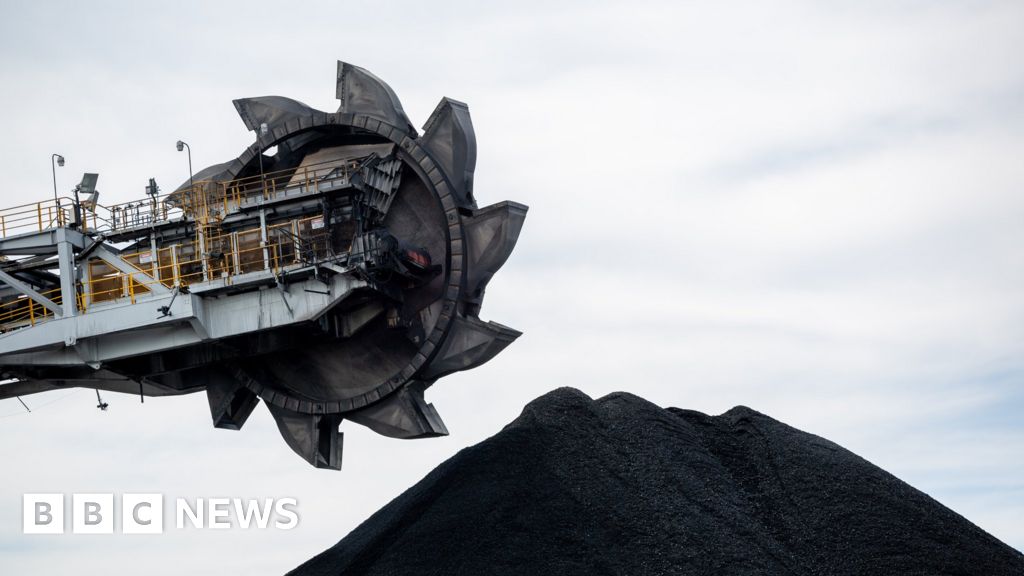
Climate change: Australia pledges net zero emissions by 2050 - BBC
The target controversially omits new short-term goals and cuts to fossil fuel industries.
Bbc -
8

This is how Scott Morrison plans to reach net zero. Not everyone's convinced
After months of negotiations to secure a final deal ahead of the COP26 summit in Glasgow, the Coalition’s net zero plan has been released for political and scientific scrutiny.
SBS News
Rating Scale Methodology
1-3: FALSE
Factually incorrect or malicious fabrication.
4-6: PARTIAL
Some truth but context is missing or skewed.
7-9: MOSTLY TRUE
Minor technicalities or phrasing issues.
10: ACCURATE
Perfectly verified and contextually fair.
Methodology: Ratings are determined through cross-referencing official government records, independent fact-checking organizations, and primary source documents.