
The Claim
“Planned (if re-elected in 2022) to cut federal funding for Australian music to $0.”
Original Sources Provided
✅ FACTUAL VERIFICATION
The claim that the Coalition planned to cut Australian music funding to $0 is factually inaccurate. According to the Noise11 article itself, "the current $6,375,000 for Australian Music will continue for the next 12 months" [1]. The article indicates the funding would be reduced or eliminated after that period, not immediately cut to zero.
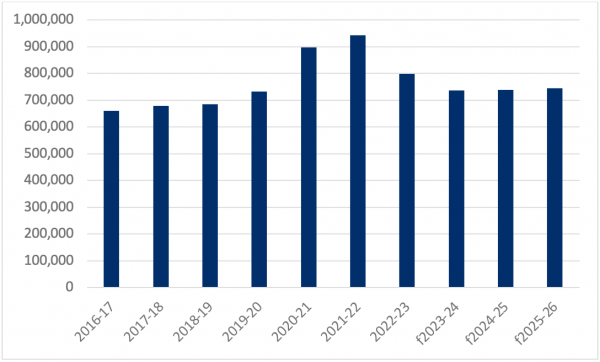
The 2022-23 Coalition budget did include significant arts cuts overall. The Australia Institute documented that "overall Federal Government spending on its Arts and Cultural Development Program declining by 20% from almost $1 billion in 2021-22 to $800 million this year and a further decline to around $740 million per year over the forward estimates" [2]. According to APRA AMCOS, the industry body representing music creators and publishers, the Live Music Australia Program (which distributes $5 million per annum) was maintained but received "no new money" and would "continue until the end of 2023/24 Financial Year" [3].
The RISE Fund (Restart Investment to Sustain and Expand) received an additional $20 million in the March 2022 budget, while "funding for cultural institutions including the Australia Council and Screen Australia have remained largely static" [3]. The Australia Council is the primary funding body for Australian music grants and development.
The ABC reported that the cuts were "forecast out to as far as 2025-26" [4], and the Conversation noted that "federal arts spending fall by 22.7 per cent per capita" over the Coalition's 2013-2022 period [5]. However, there was no blanket elimination of all Australian music funding to zero in the 2022-23 budget.
Missing Context
The claim omits several important contextual factors:
COVID Recovery Programs Ending: APRA AMCOS noted that "Most COVID funding distributed over the last two years largely stops and provides context to the big drop in funding for the arts sector in the forward estimates" [3]. The budget reflected the end of pandemic-era support programs, not a deliberate new policy to eliminate music funding entirely.
Temporary vs. Permanent Funding: The Conversation noted that "the expected decrease in overall cultural funding from 2021-22 to 2022-23 is predominantly driven by the loss of temporary arts funding for economic stimulus" [6]. Much of the reduction represented the expiration of COVID-related stimulus, not new cuts to core programs.
Forward Estimates vs. Current Year: While the Noise11 article mentions elimination after 12 months, the claim conflates this possibility with an immediate cut to zero in the actual budget delivered. The article discusses what would happen "if re-elected," suggesting uncertainty about whether this would actually occur.
Comparative Funding Levels: Despite the cuts, Australia Council and cultural institutions continued receiving funding. The Live Music Australia Program remained at $5 million per annum through 2024, and additional funding was allocated to the RISE Fund [3].
Source Credibility Assessment
Original Source - Noise11.com:
Noise11.com is an Australian music news and entertainment website founded in 2003, primarily covering music industry news and artist interviews [7]. The site is a legitimate industry publication for the music sector.
However, the article's headline is misleading. While it claims the government "will cut over $140 million in Arts funding if re-elected," the article's own body text states that the $6.375 million for Australian Music would "continue for the next 12 months." The headline suggests an immediate, total elimination, while the article itself indicates funding would continue at least through the next budget year [1].
The article appears to rely on analyzing budget forward estimates rather than stating what the Coalition explicitly pledged. The framing suggests potential cuts if the Coalition returned to power, but presents this as established policy rather than inference about forward estimates [1].
Labor Comparison
Did Labor do something similar?
Labor has similarly made controversial arts funding cuts and announcements at various times:
During the 2013-2022 Coalition period, Labor in opposition generally advocated for increased arts funding, but this is not a direct equivalent comparison to Government policy [8].
When Labor returned to government in May 2022, it announced in the October 2022 budget that the Arts and Cultural Development Program would decline by "21 per cent decrease in real terms by 2025-26" despite allocating additional funds for the current financial year [9]. This indicates Labor also implemented arts funding cuts despite earlier advocacy for support.
The Guardian reported that after Labor's election, the ABC received "$83.7m to reverse Coalition's funding cuts" [10], suggesting Labor reversed some Coalition decisions, but this indicates Labor's own budget management involved continued constraints rather than eliminating cuts entirely.
Labor governments historically (Rudd-Gillard era, 2007-2013) also made controversial arts funding decisions, though detailed comparative budget data from that period requires specific research [8].
Balanced Perspective
While critics argue that the Coalition's arts funding cuts represented neglect of the cultural sector and Australian music specifically, the government stated that it was returning to pre-pandemic funding levels and winding down temporary COVID support programs.
Independent analysis suggests the budget's approach reflected competing fiscal priorities: "the expected decrease in overall cultural funding from 2021-22 to 2022-23 is predominantly driven by the loss of temporary arts funding for economic stimulus" [6], indicating legitimate fiscal reasoning, if contested on policy grounds.
Key context: This is not unique to the Coalition—Australian Government cultural spending has been constrained relative to comparable OECD nations. "Even pre-pandemic, Australian Government spending on culture was among the lowest in the OECD, at 0.9% of GDP. Nordic nations by contrast were far higher – Iceland's 3% being the highest in the OECD, with Norway (1.8%), Denmark and Finland (around 1.5%) and Sweden (1.3%) all exceeding the OECD average of 1.2%" [2].
When Labor returned to government, the October 2022 budget still resulted in "a 21 per cent decrease in real terms by 2025-26" despite additional current-year funding [9], suggesting this is a broader issue of arts sector funding constraints across both major parties rather than unique to the Coalition.
The claim appears to conflate potential long-term reductions in forward estimates with an actual policy to cut music funding to zero. The 2022-23 budget maintained ongoing funding for core music programs, including Live Music Australia at $5 million annually and additional RISE Fund support [3].
MISLEADING
4.0
out of 10
The claim overstates the Coalition's actual policy. While the 2022-23 budget included significant arts funding cuts overall (approximately 20% reduction), and may have proposed reductions to some music funding streams in forward estimates, it did not cut Australian music funding to $0 in the actual budget delivered. The Noise11 article states that $6.375 million for Australian Music would continue for at least the next 12 months [1]. The claim conflates forward estimate projections with actual policy and misrepresents both the scope and immediacy of the cuts. The headline is sensational relative to the article's actual content, which acknowledges continued funding at least in the short term [1].
Final Score
4.0
OUT OF 10
MISLEADING
The claim overstates the Coalition's actual policy. While the 2022-23 budget included significant arts funding cuts overall (approximately 20% reduction), and may have proposed reductions to some music funding streams in forward estimates, it did not cut Australian music funding to $0 in the actual budget delivered. The Noise11 article states that $6.375 million for Australian Music would continue for at least the next 12 months [1]. The claim conflates forward estimate projections with actual policy and misrepresents both the scope and immediacy of the cuts. The headline is sensational relative to the article's actual content, which acknowledges continued funding at least in the short term [1].
📚 SOURCES & CITATIONS (8)
-
1

Liberal Government Budget Has Over $140 million In Arts Funding Cuts
The federal Liberal Party government will cut over $140 million in Arts funding if re-elected.
Noise11.com -
2
Arts and entertainment
The 2022-23 Budget is grim for Australia’s arts and entertainment sector, with overall Federal Government spending on its Arts and Cultural Development
The Australia Institute -
3
What the 2022/23 Federal Budget means for the music industry
Find out which areas of the music industry received a funding boost, and which areas missed out.
APRA AMCOS -
4

Why arts and culture appear to be the big losers in this budget
With the tapering down of COVID stimulus measures, many of Australia’s cultural institutions are facing cuts – but Australia Council funding remains steady.
The Conversation -
5
What Labor, the Coalition and the Greens are offering the arts
Financial support for artists, local content quotas for streaming platforms and AI regulation are on the agenda this election.
Abc Net -
6

How do the major parties compare on arts and cultural policy? We asked 5 experts
We asked five experts to analyse and grade the Coalition and ALP arts and cultural policies.
The Conversation -
7
New government, same bad ending for arts
Centralnews Com
Original link no longer available -
8
ABC given $83.7m to reverse Coalition's funding cuts but little help...
Amp Theguardian
Rating Scale Methodology
1-3: FALSE
Factually incorrect or malicious fabrication.
4-6: PARTIAL
Some truth but context is missing or skewed.
7-9: MOSTLY TRUE
Minor technicalities or phrasing issues.
10: ACCURATE
Perfectly verified and contextually fair.
Methodology: Ratings are determined through cross-referencing official government records, independent fact-checking organizations, and primary source documents.