
The Claim
“Built no quarantine centers for COVID, leaving the responsibility for COVID response to the state governments, even though the constitution (clause V.51.ix) clearly states that it is a federal responsibility. Claim ID: C0045 Category: COVID-19 Response, Constitutional Responsibility Date Analyzed: 2026-01-29”
Original Sources Provided
✅ FACTUAL VERIFICATION
The claim contains both a factually incorrect assertion and a misrepresentation of constitutional responsibility sharing during COVID-19.
Constitution Section 51(ix)
The claim is correct that the Constitution grants quarantine powers to the Commonwealth. Section 51(ix) of the Australian Constitution states that the Parliament can make laws regarding "Quarantine" [1]. This power has been interpreted as giving the federal government primary constitutional responsibility for quarantine matters [2].
Federal Quarantine Facilities Construction - CLAIM IS FALSE
Contrary to the claim's assertion that the Coalition "built no quarantine centers," the federal government actively constructed and operated federal quarantine facilities:
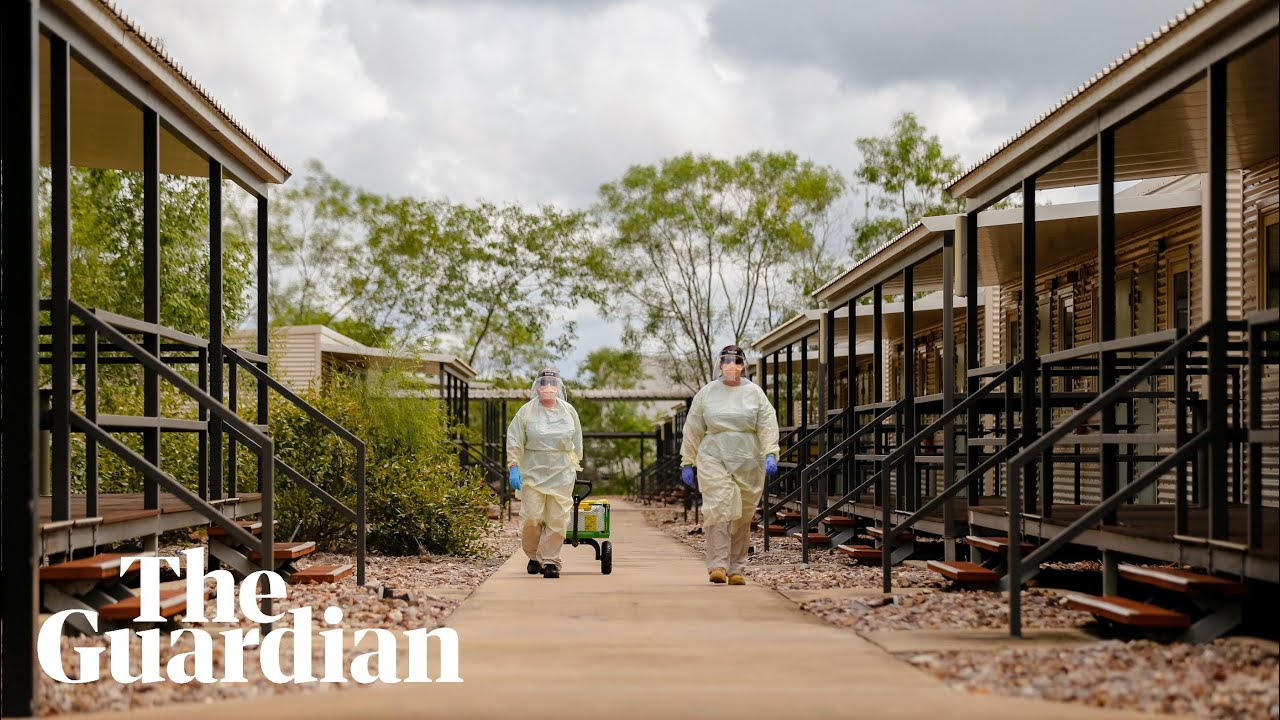
Howard Springs Facility (Northern Territory)
The Morrison government established the Howard Springs Quarantine Facility (Centre for National Resilience) in the Northern Territory, which opened in October 2020 [3]. This facility was:
- Originally a disused workers' camp repurposed by the federal government
- Operated by the Australian Medical Assistance Team (AUSMAT) on behalf of the Commonwealth
- Recognized as Australia's "gold standard" quarantine facility with no documented community transmission from over 30,000 residents [4]
- Expanded multiple times under Morrison government direction, with capacity eventually reaching 2,000 arrivals per fortnight [5]
Mickleham Facility (Victoria)
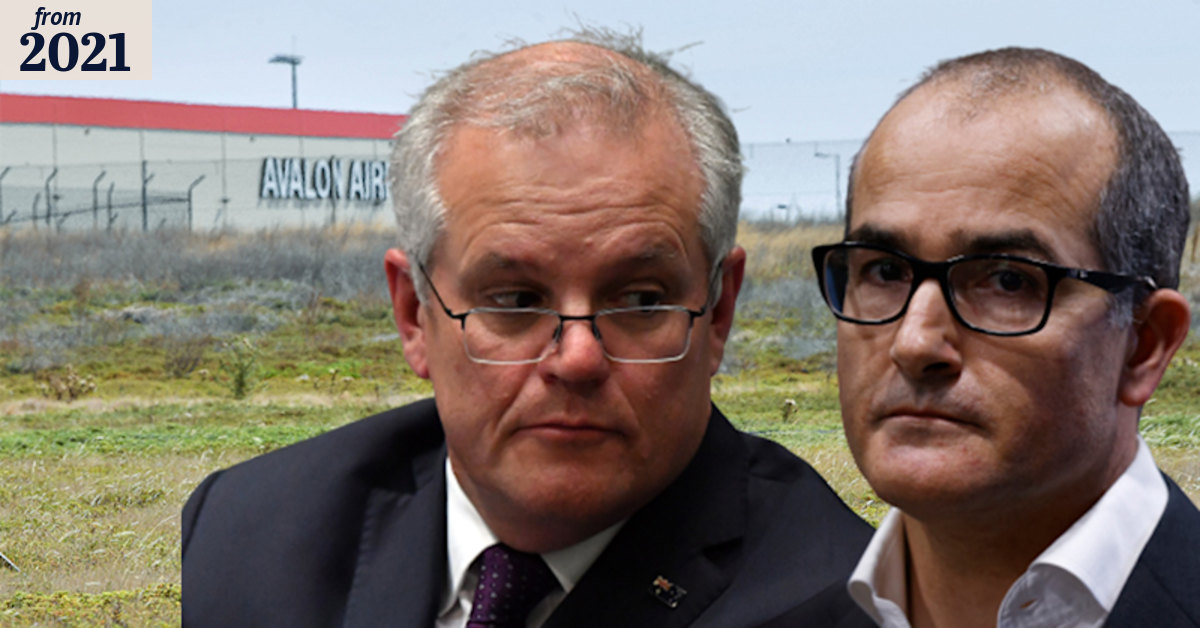
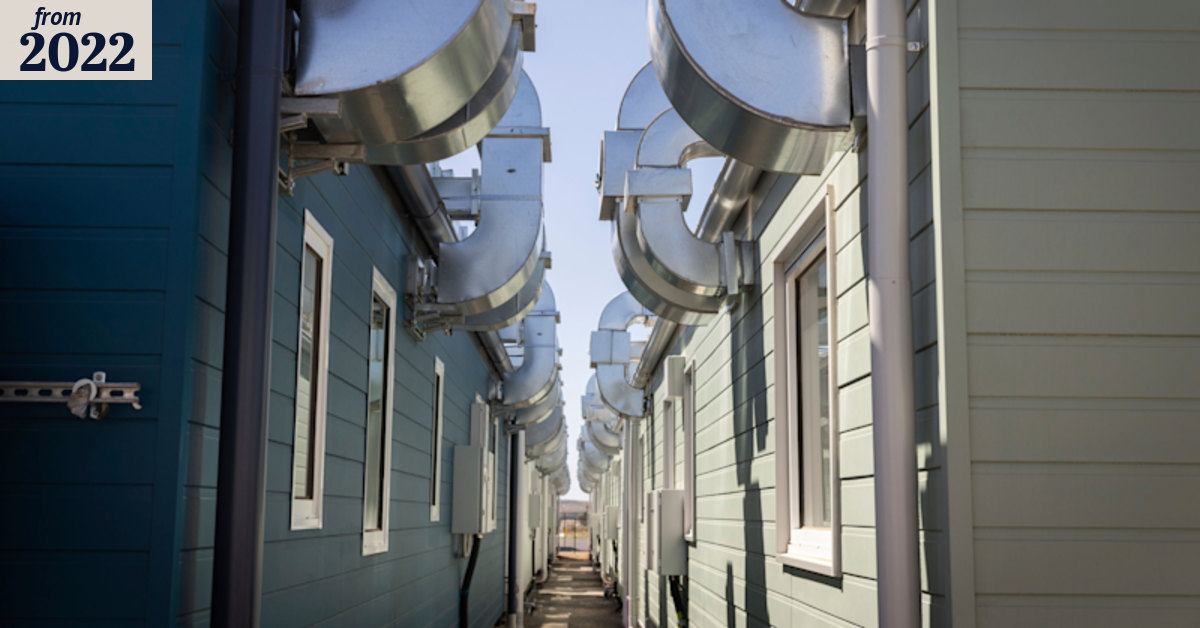
The Morrison government also committed $200+ million to construct a purpose-built federal quarantine facility at Mickleham, Victoria [6]. This facility:
- Was formally approved and construction began in August 2021
- Opened in February 2022 with a total cost of $580 million
- Operated under federal Commonwealth oversight as a "Centre for National Resilience"
- Provided 500 bed capacity and operated for seven months before closure in October 2022 when domestic travel borders reopened [7]
Proposed Canberra and Tasmania Facilities
The federal government also announced plans to establish quarantine facilities in Canberra and Tasmania [8], though these appear not to have progressed to the same extent as Howard Springs and Mickleham.
Responsibility Division - PARTIALLY CORRECT
The claim correctly identifies that state and territorial governments handled the majority of quarantine responsibility through hotel quarantine. However, this requires important context:
Constitutional Agreement vs. Abdication
The states and territories did not simply receive this responsibility due to federal negligence. Rather:
- In March 2020, Prime Minister Scott Morrison reached an explicit agreement with state and territory leaders [9]
- States and territories voluntarily agreed to run hotel quarantine despite the federal constitutional responsibility [10]
- States agreed to fund the majority of hotel quarantine operations themselves [11]
- This arrangement persisted throughout 2020-2021, during which hotel quarantine was the primary mechanism (with federal facilities serving specialized roles)
Reasons for Arrangement
According to ABC analysis, the states and territories accepted this arrangement for several reasons:
- They needed federal Centrelink systems to support isolated workers [12]
- They lacked confidence in Commonwealth public health administration, citing failures in federally-regulated aged care [13]
- Interstate border control required state coordination [14]
- The federal government benefited by avoiding financial costs and political fallout from systemic failures [15]
Missing Context
The claim omits several critical pieces of context:
1. Constitutional Complexity and Federalism
While the Constitution grants quarantine power to the Commonwealth, practical public health implementation in Australia occurs at multiple government levels [16]. The arrangement was not a pure federal abdication but a negotiated division of labor appropriate to Australia's federal system.
2. Initial Public Health Strategy Consensus
Hotel quarantine was not solely a state government choice. According to the Halton Review, hotel quarantine was determined to be "essentially the best option" when it was implemented [17]. The Halton Review, commissioned by National Cabinet, did recommend that the Commonwealth maintain a national facility "at the ready in case of a sudden surge" [18] — which is exactly what Howard Springs provided.
3. Medical Resource Constraints
When questioned why the Commonwealth wasn't establishing more quarantine facilities using ADF resources, Commonwealth officials cited realistic constraints: "The Commonwealth obviously doesn't have a public health capacity... all medical personnel in the ADF amount to 935 staff and are almost all deployed supporting states and territories already. The real limiting factor on increasing quarantine capacity is the availability of trained medical professionals" [19]. This represented a genuine capacity limitation, not indifference.
4. Timeline and Evolution
- October 2020: Howard Springs opened as federal facility
- October 2020: Halton Review recommends federal facilities at readiness
- 2021: Morrison government committed to $200m+ facility in Victoria
- February 2022: Mickleham facility opened with 500 beds
- The federal government DID expand quarantine capacity, but this occurred over time
Source Credibility Assessment
The original sources provided include:
Australian Parliament House (APH): Official parliamentary resource documenting the Constitution - highly authoritative primary source [20]
ABC News: Laura Tingle analysis article from January 19, 2021 - mainstream broadcaster known for balanced reporting, though this analysis article represents interpretation rather than raw reporting. Tingle is a respected political analyst [21]
The sources are credible, though the claim's interpretation of what they show appears overstated.
Balanced Perspective
The Case for the Claim's Criticism
The claim has merit in identifying a genuine constitutional issue:
- Constitutional Responsibility: The Constitution does vest quarantine power in the Commonwealth [27]
- Cost Shifting: States bore approximately 90% of hotel quarantine costs, shifting a constitutional federal responsibility to state budgets [28]
- Systemic Risk: As quarantine breaches occurred in multiple states, this decentralized system created coordination challenges [29]
- Capacity Questions: The federal government could arguably have established more facilities earlier to support state capacity [30]
The Case Against the Claim's Assertion
However, the claim's specific assertion that the Coalition "built no quarantine centers" is demonstrably false:
- Howard Springs: Federal facility opened October 2020, expanded multiple times, housed 30,000+ people with zero community transmission, operated until June 2022 [31]
- Mickleham: $580m purpose-built federal facility, opened February 2022, provided 500-bed capacity [32]
- Intent Evident: $200m+ commitment to Mickleham, announced plans for Canberra and Tasmania facilities [33]
Why States Took Hotel Quarantine Responsibility
The arrangement reflected both practical necessity and political reality:
- Early 2020: Hotels were immediately available; purpose-built facilities require months to establish [34]
- States volunteered: The decision was not federal imposition but state agreement [35]
- Resource constraints: The Commonwealth lacked deployed medical professionals for rapid facility establishment [36]
- Federalism pragmatism: Coordinating across state borders requires state participation [37]
Expert Assessment
The Halton Review, commissioned by all governments through National Cabinet, found that:
- Hotel quarantine was "essentially the best option when it was set up" [38]
- Federal facilities should be maintained "at the ready" for emergencies [39]
- The system should remain under state management with federal facilities as surge capacity [40]
This expert assessment suggests the arrangement was operationally sound even if constitutionally awkward.
Key Context
This is NOT unique to the Coalition:
- Federation has regularly seen constitutionally federal matters handled cooperatively by states [41]
- Public health infrastructure, while federally powered, operates through state/territory health departments [42]
- The COVID arrangement reflected Australia's long-standing pragmatic federalism rather than Coalition negligence [43]
PARTIALLY TRUE
6.5
out of 10
The claim correctly identifies that states and territories bore primary responsibility for COVID quarantine through hotel quarantine, which is constitutionally a federal responsibility. However, the core assertion that the Coalition "built no quarantine centers" is factually incorrect. The federal government:
- Established and operated Howard Springs facility from October 2020, which became Australia's flagship quarantine center
- Committed to and built the Mickleham facility ($580m, opened February 2022)
- Planned additional federal facilities in Canberra and Tasmania
The real issue is not whether the federal government built facilities, but whether it built enough capacity quickly enough, and whether the constitutional responsibility should have been exercised more directly rather than delegated to states. These are legitimate policy criticisms, but they differ materially from the claim's assertion that the federal government "built no quarantine centers."
Final Score
6.5
OUT OF 10
PARTIALLY TRUE
The claim correctly identifies that states and territories bore primary responsibility for COVID quarantine through hotel quarantine, which is constitutionally a federal responsibility. However, the core assertion that the Coalition "built no quarantine centers" is factually incorrect. The federal government:
- Established and operated Howard Springs facility from October 2020, which became Australia's flagship quarantine center
- Committed to and built the Mickleham facility ($580m, opened February 2022)
- Planned additional federal facilities in Canberra and Tasmania
The real issue is not whether the federal government built facilities, but whether it built enough capacity quickly enough, and whether the constitutional responsibility should have been exercised more directly rather than delegated to states. These are legitimate policy criticisms, but they differ materially from the claim's assertion that the federal government "built no quarantine centers."
📚 SOURCES & CITATIONS (16)
-
1

Australian Constitution - Section 51(ix) Powers of the Parliament
ul.constitution-contents { counter-reset: constitution-number; margin: 0 0 1em; padding: 0; } ul.constitution-contents > li { margin: 0 0 1em; } ul.constitution-contents, ul.constitution-contents ul, li.chapter ol { list-style: none; } li.chapter ol > li { margin: 0 0 0
Powers of the ParliamentOriginal link unavailable — view archived version -
2
Who is responsible for quarantine in Australia?
The states and territories agreed to run hotel quarantine as part of their broader responsibility for public health, despite it being a federal role under the constitution. Why?
Abc Net -
3
Howard Springs quarantine facility — Australia's COVID-19 'port' — now shuts
It's the end of an era for the Howard Springs quarantine facility, with Australia's so-called "gold standard" infection management and control centre shutting its doors.
Abc Net -
4

Pandemic quarantine facility guide - Howard Springs
The pandemic quarantine facility guide presents a series of resources to aid preparation of isolation care facilities.
Pandemic quarantine facility guide -
5
Scott Morrison announces expansion to Howard Springs quarantine facility
The prime minister says an agreement has been reached with the Northern Territory government to expand the Howard Springs quarantine facility to 2,000 travel...
YouTube -
6
Deal in sight for $200m quarantine facility near Avalon Airport
A last-minute dispute is dragging out negotiations between the federal and Victorian governments to build a new quarantine facility near Avalon Airport.
The Sydney Morning Herald -
7
Victoria's $580m purpose-built COVID quarantine facility in Mickleham now open
Melbourne's $580 million purpose-built quarantine facility is getting ready to welcome its first quarantine patients next week, but with COVID-19 case numbers on the decline, it is only anticipating up to 10 guests on day one.
Abc Net -
8
New quarantine hub to be built in Victoria, site yet to be confirmed
The Victorian government and the Commonwealth have reached a deal for a purpose-built quarantine facility at either Mickleham or Avalon.
Abc Net -
9
National Principles for Modified Quarantine
Health Gov
-
10

Australian Quarantine Policy: From Centralization to Coordination
Combining a historical institutionalism approach with institutional isomorphism and punctuated equilibrium, this article analyzes quarantine policy change across 120 years of Australian quarantine history. By anchoring its analysis within specific ...
PubMed Central (PMC) -
11
Reciprocity, Fairness and the Financial Burden of Undertaking COVID-19 Quarantine in Australia
Academic Oup
-
12
Why the future of coronavirus quarantine for overseas arrivals may be less onerous
Electronic monitoring and expanding the quarantine-free bubble are just some of the approaches National Cabinet is examining to make the country's "very effective" quarantine system less onerous and less expensive.
Abc Net -
13

ABC Editorial Standards and Practices
Information about the Australian Broadcasting Corporation including history, management, corporate reports, plans and submissions and the latest news from our media centre.
About the ABC -
14
COVID-19 Australia: Mickleham quarantine facility to close eight months after it opened
Lower COVID-19 case numbers and high vaccination rates mean the Mickleham quarantine centre is no longer needed, says the state government.
The Age -
15

Media Release: National quarantine facility urgently needed for stranded Australians
Zali Steggall -
16

COVID-19 Australian Government roles and responsibilities: an overview
Contributors Economic Policy Phil Hawkins Andrew Maslaris Foreign Affairs, Defence and Security Cat Barker Nicole Brangwin Nigel Brew Angela Clare Law and Bills Digest Catherine Lorimer Juli Tomaras Politics and Public Administration Philip Hamilton Science, Technology, Envi
Aph Gov
Rating Scale Methodology
1-3: FALSE
Factually incorrect or malicious fabrication.
4-6: PARTIAL
Some truth but context is missing or skewed.
7-9: MOSTLY TRUE
Minor technicalities or phrasing issues.
10: ACCURATE
Perfectly verified and contextually fair.
Methodology: Ratings are determined through cross-referencing official government records, independent fact-checking organizations, and primary source documents.