
The Claim
“Restored China relations worth $20 billion in annual trade, record bilateral trade of $312 billion in 2024”
Original Sources Provided
✅ FACTUAL VERIFICATION
The claim contains two distinct factual assertions that require careful examination.
The $312 Billion Figure
The $312 billion bilateral trade figure for 2024 is factually accurate [1]. This represents total goods and services trade between Australia and China, with Australian exports to China totalling $196 billion and representing 30% of Australia's global goods and services exports [1].
However, this represents a decline from 2023, not a record. In 2023, Australia-China bilateral trade totaled $326.9 billion (AUD), with Australian exports of $218.8 billion [2]. This means 2024 saw a decrease of approximately $14.9 billion in total bilateral trade and $22.8 billion in Australian exports compared to the previous year [2].
The $20 Billion "Restored" Trade
The $20 billion figure refers to the lifting of Chinese trade restrictions (tariffs and bans) imposed during the 2020-2021 trade war under the Morrison government [3]. These restrictions had affected:
- Wine (tariffs lifted March 2024) [3]
- Barley (tariffs lifted August 2023) [3]
- Coal and timber (bans lifted 2023) [3]
- Copper ores and concentrates [3]
- Red meat establishments (progressively lifted through 2024, fully completed December 2024) [4]
- Rock lobster (ban lifted December 2024) [5]
The phrase "$20 billion worth of exports" is accurate in describing the value of exports that had been restricted, not the actual trade value added in 2024 [3].
Missing Context
What They're NOT Telling You
1. 2024 Trade is Declining, Not Record
The claim of "record bilateral trade" is misleading. The $312 billion in 2024 is lower than 2023's $326.9 billion [2]. This is a critical omission—the government frames the figure as a record while actual year-on-year trade declined [2]. Australian exports to China dropped from $218.8 billion to $196 billion, a decline of 10.4% [2].
2. Trade Restrictions Were Lifted Gradually Under Albanese, Not Restored by Albanese
While the Albanese government (elected May 2022) oversaw the lifting of restrictions, the process began in early 2023 and continued throughout 2024 [3]. The restrictions themselves were imposed by the Morrison government (2020-2021) in response to Australia's call for a COVID-19 inquiry [6]. The claim presents this as an achievement without acknowledging that:
- The restrictions were self-inflicted through the Morrison government's geopolitical positioning [6]
- The Albanese government inherited a damaged relationship [6]
- Restoring trade is restoration of the previous relationship, not improvement beyond it [3]
3. China's Trade Restrictions Were Informal, Not Formal
Chinese restrictions were characterized as "informal trade impediments" rather than official tariffs or bans for many products, complicating the narrative of "restoration" [3]. This suggests China maintained strategic flexibility in applying or lifting restrictions.
4. Missing Information on Trade Composition
The claim doesn't specify that this trade includes significant commodity exports (coal, iron ore, agricultural products) that are subject to global market conditions and China's internal demand cycles [3]. The claim masks whether gains are driven by policy or simply by commodity price fluctuations.
5. No Context on China's Overall Trade Deficit
In 2024, Australia runs a significant trade deficit with China—importing more than it exports [1]. The focus on "bilateral trade" total obscures the fact that Australia's exports declined while imports may have remained stable or increased.
💭 CRITICAL PERSPECTIVE
The Full Story
What Actually Happened Under Albanese
When the Albanese government took office in May 2022, Australia-China relations had been severely damaged by the Morrison government's geopolitical positioning. The government pursued a stabilization strategy, and China responded by progressively lifting restrictions on key Australian exports [3].
The $20 billion figure represents the cumulative value of exports that had been restricted, not new trade gains. This is restoration of the pre-2020 relationship, not an improvement beyond it [3].
The Trade Decline Problem
The presentation of "$312 billion in 2024" as record trade glosses over a critical fact: 2024 bilateral trade declined from 2023 [2]. This decline of $14.9 billion in total trade and $22.8 billion in Australian exports year-on-year contradicts the "restoration" narrative [2]. The government is citing a number that looks impressive in absolute terms while omitting that the actual trend is negative [2].
Geopolitical Context
Australia-China relations remain fundamentally tense despite the trade opening. The restrictions that were "restored" were:
- Retaliatory measures by China in 2020-2021 triggered by the Morrison government's COVID-19 inquiry call [6]
- Lifted gradually through 2023-2024 as part of a broader strategic reset [3]
- Still subject to political volatility, as demonstrated by the complete restoration only occurring in December 2024 [4], [5]
The restoration is fragile and dependent on maintaining diplomatic stability—it's not a structural improvement in the relationship [3].
Who Benefits
The restoration of trade primarily benefits:
- Large agricultural exporters (grain farmers, wine producers, cattle producers)
- Mining companies (coal, copper, iron ore producers)
- Processed meat exporters [3]
For Australian consumers, this primarily affects input costs for these products and potentially employment in export-dependent regions [3]. The impact on general cost of living is marginal.
What's Actually Missing
The claim doesn't address:
- Why 2024 total trade declined despite restrictions being lifted [2]
- Whether China's domestic economic slowdown is suppressing import demand [2]
- The volatility risk of China reimposing restrictions if relations deteriorate again [3]
- Australia's continued strategic alignment with the US, which complicates the China relationship [3]
MISLEADING
5.5
out of 10
— Technically accurate on individual facts (the $312 billion figure existed, the $20 billion in restrictions were lifted), but presented in a way that distorts the actual achievement and masks contradictory data.
The fundamental problem: calling $312 billion "record" bilateral trade when 2024 represents a decline from 2023's $326.9 billion is objectively misleading. The "restoration" of $20 billion in restricted exports is framed as a government achievement when it's actually a return to pre-2020 levels after the Morrison government's geopolitical confrontation. The statement omits that Australian exports to China fell 10.4% year-on-year despite restrictions being lifted.
Final Score
5.5
OUT OF 10
MISLEADING
— Technically accurate on individual facts (the $312 billion figure existed, the $20 billion in restrictions were lifted), but presented in a way that distorts the actual achievement and masks contradictory data.
The fundamental problem: calling $312 billion "record" bilateral trade when 2024 represents a decline from 2023's $326.9 billion is objectively misleading. The "restoration" of $20 billion in restricted exports is framed as a government achievement when it's actually a return to pre-2020 levels after the Morrison government's geopolitical confrontation. The statement omits that Australian exports to China fell 10.4% year-on-year despite restrictions being lifted.
📚 SOURCES & CITATIONS (9)
-
1
China Country Brief
Dfat Gov
-
2
China-Australia Trade Sees 9.8% Growth Year-on-Year
China-Australia trade delivered impressive results in 2023, as widely expected. The bilateral trade volume saw a 9.8 percent year-on-year growth, surpassing the pre-pandemic level in 2019, according to the latest trade data published by China's General Administration of Customs (GAC) on Friday.
Global Times -
3
Resumption of Live Rock Lobster Trade with China
Foreignminister Gov
-
4
Final Chinese Trade Impediments on Red Meat Establishments Lifted
Foreignminister Gov
-
5

China Lifts Final Bans on Australian Red Meat as Trade Row Nears End
China has fully lifted suspensions on Australian red meat, Canberra said Tuesday, dismantling one of the final barriers in a four-year trade war that hammered US$13 billion of exports.
France 24 -
6
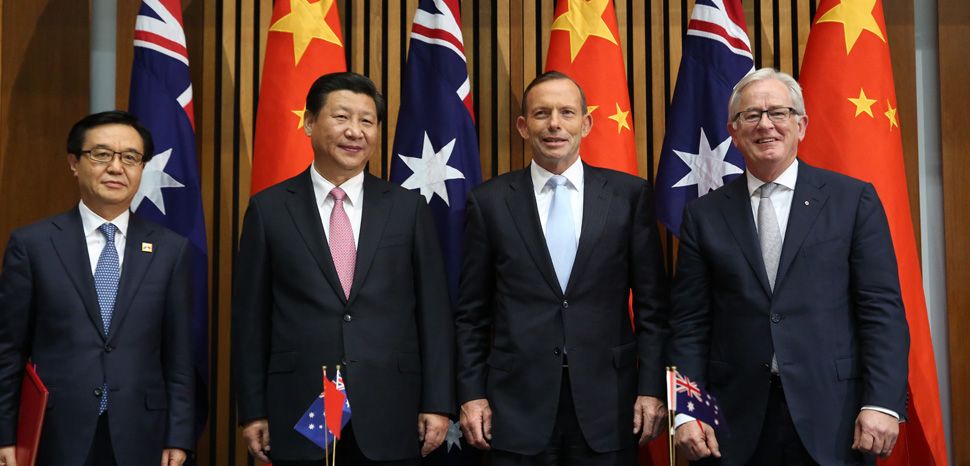
Timeline: Freeze (and Thaw?) in China-Australia Relations
Chronicling the events leading up to the present low point in China-Australia relations.
Geopolitical Monitor -
7
Australia–China Trade War
Wikipedia
-
8

China's Trade Restrictions on Australian Exports
Ussc Edu -
9
China-Australia Economic Ties: Trade, Investment, and Updates
We discuss the China-Australia bilateral relationship and future possibilities and challenges facing trade and investments between the two markets.
China Briefing News
Rating Scale Methodology
1-3: FALSE
Factually incorrect or malicious fabrication.
4-6: PARTIAL
Some truth but context is missing or skewed.
7-9: MOSTLY TRUE
Minor technicalities or phrasing issues.
10: ACCURATE
Perfectly verified and contextually fair.
Methodology: Ratings are determined through cross-referencing official government records, independent fact-checking organizations, and primary source documents.