Đúng một phần

Đánh giá: 6.0/10

Labor
6.2

Tuyên bố

“Hỗ trợ nợ sinh viên 20 tỷ đô la thông qua các biện pháp sửa đổi lạm phát và cắt giảm 20% nợ cho hơn 3 triệu người Australia”
Nguồn gốc: Albosteezy

Nguồn gốc được cung cấp

XÁC MINH THỰC TẾ

Chính sách hỗ trợ nợ sinh viên của chính phủ Australian Labor bao gồm hai thành phần riêng biệt kết hợp để đạt được tổng hỗ trợ khoảng 20 tỷ đô la [1].
The Australian Labor government's student debt relief policy comprises two distinct components that combine to reach approximately $20 billion in total relief [1].
Con số 20 tỷ đô la được chia như sau: khoản cắt giảm nợ trực tiếp 20% một lần khoảng 16 tỷ đô la, kết hợp với các cải cách lạm phát trước đó trị giá khoảng 3 tỷ đô la [1].
The $20 billion figure breaks down as follows: a one-off 20% direct debt cut of approximately $16 billion, combined with prior indexation reforms worth approximately $3 billion [1].
Chính phủ ước tính rằng hơn 3 triệu người Australia sẽ được hưởng lợi từ các biện pháp này [2].
The government estimates that more than 3 million Australians will benefit from these measures [2].
Vào cuối tháng 11 năm 2024, Văn phòng Thuế vụ Australia (ATO) đã bắt đầu xử các khoản giảm nợ, với các thông báo được gửi theo từng đợt - khoảng 100.000 người Australia ban đầu, tiếp theo 1,5 triệu người vào tuần sau [3].
In late November 2024, the Australian Taxation Office (ATO) began processing the debt reductions, with notifications rolling out in waves—approximately 100,000 Australians initially, followed by 1.5 million the following week [3].
Thành phần giới hạn lạm phát chính xác về mặt thực tế.
The indexation cap component is factually accurate.
Năm 2023, lạm phát cao đã đẩy chỉ số lạm phát lên 7,1% (mức cao nhất kể từ năm 1990) [4].
In 2023, high inflation pushed indexation to 7.1% (the highest rate since 1990) [4].
Chính phủ đã thực hiện các giới hạn đối với mức này, cho phép áp dụng chỉ số thấp hơn giữa Chỉ số Giá tiêu dùng (CPI) hoặc Chỉ số Giá tiền lương (WPI) - giảm mức tăng năm 2023 từ 7,1% xuống còn 3,2% [4].
The government implemented caps on this rate, allowing the lower of Consumer Price Index (CPI) or Wage Price Index (WPI) to apply—reducing the 2023 increase from 7.1% to 3.2% [4].
Mức lạm phát năm 2024 cũng được giới hạn tương tự từ 4,7% xuống còn 4,0% [4].
The 2024 indexation rate was similarly capped from 4.7% to 4.0% [4].
Các thay đổi này được áp dụng lùi ngày từ ngày 1 tháng 6 năm 2023, các khoản tín dụng đã được ATO áp dụng tự động [4].
These changes were backdated to 1 June 2023, and credits were applied automatically by the ATO [4].

Bối cảnh thiếu

Tuy nhiên, tuyên bố này bỏ qua bối cảnh quan trọng làm thay đổi đáng kể nhận thức về số tiền hỗ trợ.
However, the claim omits critical context that substantially alters the perception of the relief amount.
Mặc chính phủ đưa ra con số "cắt giảm 20% nợ", nhưng mức hỗ trợ thực tế cho người nợ hiện tại thấp hơn đáng kể khi tính đến các khoản tăng lạm phát tích lũy từ năm 2022 đến thời điểm công bố chính sách.
While the government presents a "20% debt cut," the effective relief for existing debt holders is substantially lower when accounting for indexation increases that accumulated between 2022 and the time of the policy announcement.
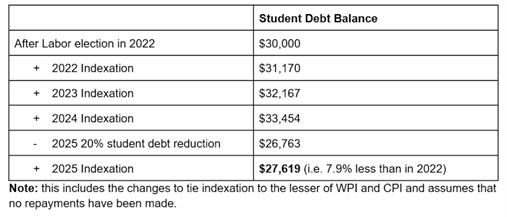
Nghiên cứu do đảng Greens trong Quốc hội thực hiện cho thấy khi tính đến các thay đổi lạm phát kể từ năm 2022, mức hỗ trợ thực tế chỉ 7,9%, không phải 20% [5].
Research conducted by the Greens parliamentary party found that when accounting for indexation changes since 2022, the effective relief is only 7.9%, not 20% [5].
Một dụ cụ thể minh họa điều này: một sinh viên khoản nợ 30.000 đô la vào năm 2022, sau khi trải qua các khoản tăng lạm phát tích lũy đến giữa năm 2024, sẽ khoản nợ 37.619 đô la.
A specific example illustrates this: a student with $30,000 in debt in 2022, after experiencing cumulative indexation increases through mid-2024, would have $37,619 in debt.
Sau khi áp dụng mức cắt giảm 20%, khoản nợ đó trở thành 30.095 đô la - chỉ thấp hơn 4.905 đô la so với điểm xuất phát năm 2022, hoặc chỉ 7,9% hỗ trợ [5].
After the 20% cut is applied, that debt becomes $30,095—just $4,905 below the 2022 starting point, or only 7.9% relief [5].
Chính sách cũng không được nhắm mục tiêu tốt để giải quyết các áp lực nợ sinh viên hiện tại hoặc tương lai.
The policy is also not well-targeted to address current or future student debt pressures.
Biện pháp này chỉ áp dụng cho các khoản nợ HELP hiện tính đến ngày 1 tháng 6 năm 2025 [6].
The measure applies only to existing HELP debts as of 1 June 2025 [6].
Sinh viên hiện đang theo học hoặc các khóa sau không nhận được cải cách cấu trúc nào đối với hệ thống bản tạo ra nợ của họ [6].
Students currently enrolled or future cohorts receive no structural reform to the underlying system that generates their debt [6].
dụ, sinh viên ngành Nghệ thuật được thông báo sẽ giảm học phí trong các đạo luật sau này, nhưng không lộ trình thời gian cụ thể được đưa ra [6].
Arts students, for example, were told to expect fee reductions in later legislation, but no timeline was provided [6].
Hơn nữa, tuyên bố về "hỗ trợ" che giấu một hạn chế quan trọng: ngưỡng thu nhập tối thiểu 67.000 đô la để hoàn trả khoản vay HELP nghĩa nhiều cử nhân sẽ mang khoản nợ sinh viên vĩnh viễn không bao giờ được thanh toán [7].
Furthermore, the claim about "relief" masks an important limitation: the $67,000 minimum income threshold for HELP loan repayment means many graduates will carry permanent student debt that never gets paid down [7].
Nghiên cứu từ University of the Sunshine Coast cho thấy các cử nhân ngành Nghệ thuật mức lương khiêm tốn sẽ gặp khó khăn trong việc thanh toán nợ gốc, tạo ra những các nhà nghiên cứu gọi "vòng xoáy nợ" [7].
Research from the University of the Sunshine Coast found that arts graduates earning modest salaries will struggle to make principal repayments, creating what researchers term a "debt treadmill" [7].

💭 QUAN ĐIỂM PHÊ PHÁN

Chính sách đại diện cho một thành tựu hỗn hợp.
The policy represents a mixed achievement.
Một mặt, cho thấy cam kết của chính phủ trong việc giải quyết nợ sinh viên, các chế giới hạn lạm phát giảm nợ chính xác như đã tuyên bố [1][4].
On one hand, it demonstrates the government's commitment to addressing student debt, and the mechanics of the indexation caps and debt reduction are factually as claimed [1][4].
Mặt khác, nhiều phân tích phê bình cho thấy chính sách hẹp hơn ít tác động hơn so với những con số đầu đề gợi ý.
On the other hand, several critical analyses reveal the policy is narrower and less impactful than the headline figure suggests.
Con số hỗ trợ 20 tỷ đô la, mặc chính xác về mặt kế toán, hoạt động như những các nhà nghiên cứu gọi vấn đề "hồi quy": chuyển giao sự giàu từ người nộp thuế rộng rãi (nhiều người trong số họ không học đại học) sang người bằng cấp, những người thường kiếm được nhiều tiền hơn đáng kể trong suốt cuộc đời so với người không tốt nghiệp [7].
The $20 billion relief figure, while accurate in accounting terms, functions as what researchers call a "regressivity" issue: it transfers wealth from broader taxpayers (many of whom didn't attend university) to degree holders, who typically earn significantly more over their lifetimes than non-graduates [7].
Theo logic này, chính sách sự phân phối ngược - từ những người thu nhập thấp không học đại học đến những người tốt nghiệp thu nhập cao hơn [7].
By this logic, the policy is upside-down redistribution—from lower-income non-university attendees to higher-earning graduates [7].
Các nhà kinh tế lưu ý rằng chính sách không giải quyết các động lực cấu trúc của nợ sinh viên [7].
Economists have noted that the policy fails to address the structural drivers of student debt [7].
Với học phí ngành Nghệ thuật hiện nay trên 17.399 đô la hàng năm theo các cải cách trước đó của chính phủ, các sinh viên tốt nghiệp trong tương lai sẽ tích lũy nợ tương tự [6].
With Arts degrees now costing $17,399+ annually under the government's previous reforms, future graduates will accumulate similarly substantial debts [6].
Chính sách không làm cho các khóa sau này; ràng một biện pháp một lần cho người nợ hiện tại [6].
The policy does nothing for these future cohorts; it is explicitly a one-off measure for existing debtors [6].
Một vấn đề sâu xa hơn được các học giả xác định "vòng xoáy nợ" đối với sinh viên tốt nghiệp thu nhập thấp hơn [7].
A deeper problem identified by academics is the "debt treadmill" for lower-earning graduates [7].
The Conversation đăng tải phân tích lưu ý rằng với ngưỡng hoàn trả tối thiểu 67.000 đô la, nhiều cử nhân - đặc biệt trong các lĩnh vực nhân văn với thu nhập trọn đời khiêm tốn hơn - sẽ không bao giờ kiếm đủ để kích hoạt các khoản hoàn trả đáng kể, để họ mãi mãi mang khoản nợ sinh viên không giảm [7]. Điều này đại diện cho một dạng bẫy nghèo đồng dài ngụy trang thành tiếp cận giáo dục.
The Conversation published analysis noting that with the $67,000 minimum repayment threshold, many graduates—particularly in humanities fields with more modest lifetime earnings—will never earn enough to trigger significant repayments, leaving them perpetually with non-declining student debt [7].
So với các chính sách tương tự về cấu trúc các nước OECD khác, cách tiếp cận của Australia đáng chú ý chưa hoàn chỉnh.
This represents a form of long-term poverty trap disguised as educational access.
dụ, Đức đã loại bỏ hoàn toàn nợ sinh viên cho sinh viên tương lai thông qua chính sách đại học miễn phí [8].
Compared to structurally similar policies in other OECD countries, Australia's approach is notably incomplete.
Anh đã giới thiệu các chứng chỉ kỹ thuật không tính phí [8].
Germany, for example, eliminated student debt entirely for prospective students through free university policy [8].
Cách tiếp cận của Australia - hỗ trợ một lần không cải cách cấu trúc - giải quyết triệu chứng thay nguyên nhân [8].
The UK introduced fee-free technical qualifications [8].
Việc thực hiện chính sách đã diễn ra suôn sẻ từ góc độ hành chính: ATO đã xử các khoản giảm nợ hiệu quả, với việc áp dụng tự động không yêu cầu hành động từ nhân [3].
Australia's approach—one-off relief without structural reform—addresses symptoms rather than causes [8].
Tuy nhiên, thành công vận hành này che giấu tác động thực tế hạn chế của chính sách đối với những người đang vật lộn với nợ sinh viên.
The policy implementation has been smooth from an administrative perspective: the ATO has processed reductions efficiently, with automatic application requiring no action from individuals [3].

ĐÚNG MỘT PHẦN

6.0

/ 10

Các thành phần thực tế (số tiền, số người hưởng lợi, chế lạm phát) chính xác, nhưng chính sách đại diện cho mức hỗ trợ thấp hơn đáng kể so với con số 20% gợi ý khi tính đến các khoản tăng lạm phát trước đó, không giải quyết các động lực cấu trúc của nợ sinh viên trong tương lai.
The factual components (dollar amounts, beneficiary numbers, indexation mechanics) are accurate, but the policy represents substantially less relief than the 20% figure suggests when accounting for prior indexation increases, and it fails to address structural drivers of future student debt.

📚 NGUỒN & TRÍCH DẪN (8)

  1. 1
    ministers.education.gov.au

    More than three million Australians about to receive 20 per cent student debt cut

    Ministers Education Gov

  2. 2
    pm.gov.au

    More than three million Australians about to receive 20 per cent student debt cut

    More than 3 million Australians will have their student debt cut by 20 per cent by the end of next week, wiping almost $16 billion in total.Today alone, more than 1.5 million Australians will see their student debts cut by 20 per cent. That’s around half of all people with a student debt.It continues the ATO’s roll out of the Albanese Labor Government’s cut to student debt.For someone with the average HELP debt of $27,600 this will see around $5,520 wiped from their debt.

    Prime Minister of Australia
  3. 3
    au.finance.yahoo.com

    Date that millions of Aussies will receive HECS debt relief revealed: 'Will get a text message'

    Au Finance Yahoo

  4. 4
    ministers.education.gov.au

    Legislation passes to wipe $3 billion of student debt for 3 million Australians

    Ministers Education Gov

  5. 5
    Labor's student debt reduction amounts to only 7.9%

    Labor's student debt reduction amounts to only 7.9%

    Analysis conducted by the Parliamentary Library shows that Labor’s much-touted 20% student-debt cut collapses to a mere 7.9% once indexation since their election in 2022 is accounted for.

    The Australian Greens
  6. 6
    Labor has promised fast action to cut student debt, but there's a catch

    Labor has promised fast action to cut student debt, but there's a catch

    If you’re among the three million Australians with a HECS-HELP debt, it’s about to be cut by 20%, with no repayments until you earn $67,000. But there is one downside.

    Monash Lens
  7. 7
    Labor's new bill would cut HELP loans by 20%. But it also risks locking some graduates into a 'debt treadmill'

    Labor's new bill would cut HELP loans by 20%. But it also risks locking some graduates into a 'debt treadmill'

    The debt changes will deliver major benefits to recent graduates, but much less to current students and nothing to future students.

    The Conversation
  8. 8
    The good news is the government plans to cancel $3 billion in student debt. The bad news is indexation will still be high

    The good news is the government plans to cancel $3 billion in student debt. The bad news is indexation will still be high

    The federal government has announced plans to change the way debts are indexed. But it may not help students over the long term.

    The Conversation

Phương pháp thang đánh giá

1-3: SAI

Sai sự thật hoặc bịa đặt ác ý.

4-6: MỘT PHẦN

Có phần đúng nhưng thiếu hoặc lệch bối cảnh.

7-9: PHẦN LỚN ĐÚNG

Vấn đề kỹ thuật nhỏ hoặc cách diễn đạt.

10: CHÍNH XÁC

Được xác minh hoàn hảo và công bằng về mặt bối cảnh.

Phương pháp: Xếp hạng được xác định thông qua đối chiếu hồ sơ chính phủ chính thức, các tổ chức kiểm chứng sự thật độc lập và tài liệu nguồn gốc.