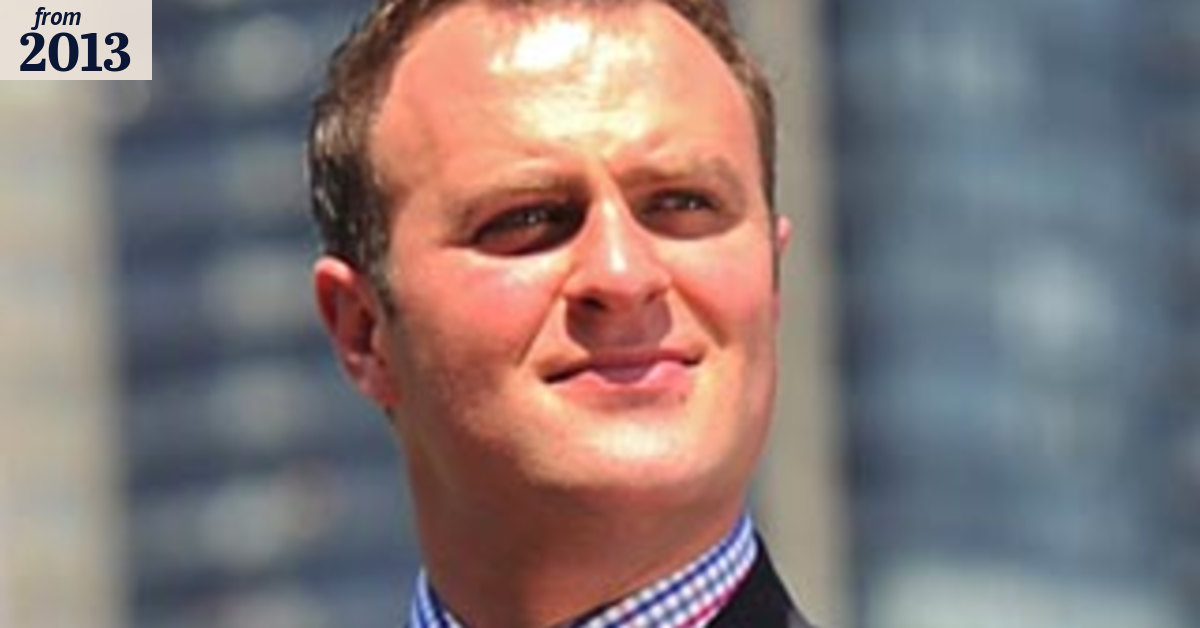
**Tim Wilson's Appointment:**
The Abbott government appointed Tim Wilson as Human Rights Commissioner in December 2013, with the appointment taking effect in February 2014 [1].
Wilson was previously the policy director at the Institute of Public Affairs (IPA), a right-wing free-market think tank [2].
**Advocacy for Abolition:**
The claim that Wilson advocated for abolition of the Human Rights Commission is **accurate**.
In January 2013 (prior to his appointment), the IPA published policy positions including the call to "Abolish the Australian Human Rights Commission" [4].
Wilson defended his appointment despite this prior position, stating: "The key reason why the IPA advocated for its abolition is because it wasn't [doing its job], and so some would see it as very consistent indeed" [5].
**Salary and Budget Impact:**
The claim regarding salary and budget cuts is **substantially accurate**.
According to Commission President Gillian Triggs, this salary would have to come from the Commission's existing annual budget of approximately $25 million, with no additional funding provided by the government for this new appointment [7].
Triggs explicitly stated: "This really does squeeze the commission" and indicated that commissioners would need to decide where cuts would be made, suggesting "an anti-bullying program and a program on education for older Australians might be in the firing line" [8].
**Historical Precedent of Partisan Appointments:**
The claim omits important context about the partisan nature of Human Rights Commission appointments across governments.
Just months earlier, Attorney-General George Brandis (who appointed Wilson) had criticized the Labor government for appointing Tim Soutphommasane as Race Discrimination Commissioner, calling him "yet another partisan of the Left" [9].
Brandis argued Soutphommasane "would not be able to win the public's confidence" due to his Labor Party connections [10].
**Government Justification:**
The Coalition government defended the appointment as an effort to "restore balance" to the Commission.
Brandis stated: "The appointment of Mr Wilson to this important position will help to restore balance to the Australian Human Rights Commission which, during the period of the Labor government, had become increasingly narrow and selective in its view of human rights" [11].
**Wilson's Resignation from Affiliations:**
Upon accepting the appointment, Wilson resigned from both the IPA and the Victorian Liberal Party [12].
There is no evidence of fabrication or significant bias in this specific article, though the framing emphasizes the controversial nature of the appointment.
**Did Labor do something similar?**
Search conducted: "Labor government Human Rights Commissioner appointments partisan"
**Finding: Yes, Labor made similarly partisan appointments.**
In 2013, the Labor government appointed Tim Soutphommasane as Race Discrimination Commissioner.
* * * *
Soutphommasane was a former Labor Party member and former staffer to Labor Foreign Minister Bob Carr [14].
Attorney-General Brandis explicitly criticized this appointment as partisan: "Appointees must be people who can command the confidence of the entire community that they will discharge their responsibilities in a human rights field in a non-partisan manner...
* * * *
Dr Soutphommasane's appointment reinforced concerns that the Human Rights Commission had 'become an ideologically driven agency whose agenda lies entirely with advancing the causes of the Left'" [16].
**Comparison:** Both governments appointed commissioners with clear political affiliations:
- **Labor**: Appointed a former Labor staffer to Race Discrimination Commissioner
- **Coalition**: Appointed a think tank director who had called for the Commission's abolition
Both appointees resigned their party/organizational memberships upon appointment.
**Criticisms of Wilson's Appointment:**
- Appointing someone who had publicly called for the Commission's abolition raised legitimate questions about their commitment to the institution [17]
- The appointment was made without additional budget funding, forcing existing programs to face cuts [18]
- Labor's Shadow Attorney-General Mark Dreyfus described the appointment as signaling a "blatant political agenda" [19]
**Government Justifications:**
- The Coalition argued the Commission had become ideologically unbalanced under Labor and needed "restoring" [20]
- Wilson had established credentials as a public policy intellectual and advocate for individual freedoms [21]
- The appointment fulfilled a Coalition election promise to create a focus on "traditional liberal democratic and common law rights" [22]
**Systemic Context:**
This appointment was part of a broader pattern where both major Australian parties appoint commissioners aligned with their political philosophies when in government.
The Human Rights Commission has historically seen appointments from both sides of politics, with commissioners often bringing distinct ideological perspectives.
**Key context:** This was not unique to the Coalition - both parties have made partisan-leaning appointments to the Commission.
His six-figure salary came from the existing Commission budget, and Commission President Gillian Triggs confirmed this would likely require cuts to education and anti-bullying programs
However, the claim lacks important comparative context that both major parties have made partisan-leaning appointments to the Commission.
The unprecedented aspect of Wilson's appointment was not the partisan nature (common to both sides), but rather that he had explicitly called for the Commission's abolition - a more extreme position than typical partisan appointments.
His six-figure salary came from the existing Commission budget, and Commission President Gillian Triggs confirmed this would likely require cuts to education and anti-bullying programs
However, the claim lacks important comparative context that both major parties have made partisan-leaning appointments to the Commission.
The unprecedented aspect of Wilson's appointment was not the partisan nature (common to both sides), but rather that he had explicitly called for the Commission's abolition - a more extreme position than typical partisan appointments.