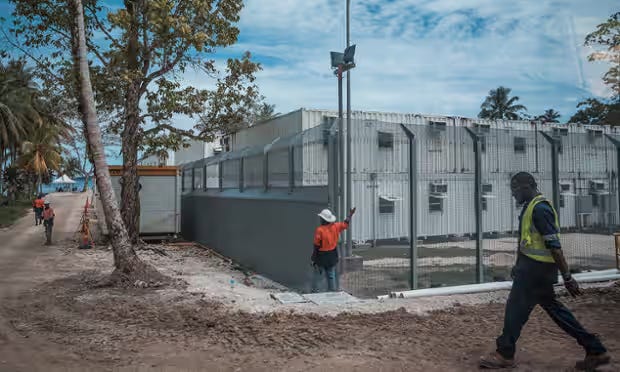
The Australian National Audit Office (ANAO) and Department of Finance data show that onshore detention cost **$655 per person per day** as of 2016 [1].
The Global Detention Project reported detention centre costs at approximately **$360,000 per person per year** (roughly $986 per day) compared to **$47,000 per year** ($129 per day) for community housing [2].
By 2022-2023, costs had risen further to **$505,176 per person per year** in held detention (approximately $1,384 per day) [3].
**Cost of 5-Star Hotels in Sydney:**
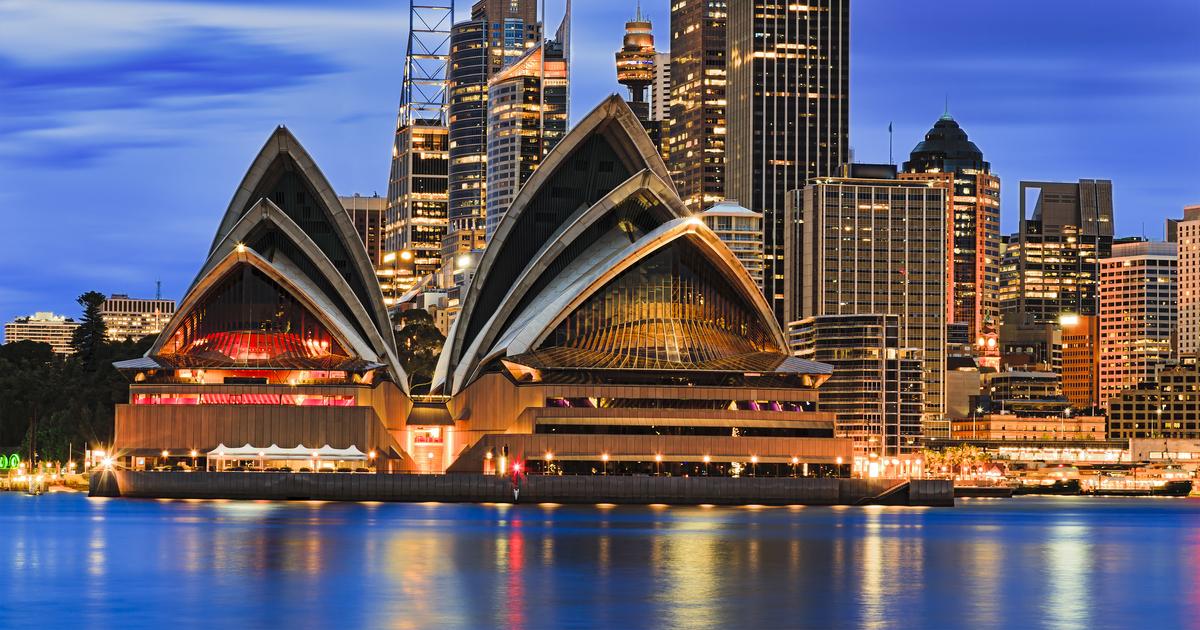
Comparative data on Sydney hotel rates shows that 5-star luxury hotels average approximately **$414-$477 per night**, with the cheapest 5-star options available at around **$74-$346 per night** [4][5].
**Conclusion on Core Claim:**
The mathematics support the claim.
At $655-$1,384 per day for detention versus $414-$477 per night for 5-star hotels, detention costs were indeed 1.5x to 3x more expensive than luxury hotel accommodation.
Even comparing to Sydney's "most expensive" 5-star hotels (which might reach $800-$1,000+ per night for premium suites), detention costs remained in the same ballpark or higher.
**The claim omits several critical pieces of context:**
1. **Bipartisan Policy Foundation:** The high-cost detention policy was not initiated by the Coalition alone.
The offshore detention system was re-established by the Labor Government in August 2012 under Prime Minister Julia Gillard, who reopened detention centres on Nauru and Manus Island [6].
Labor Prime Minister Kevin Rudd then announced the "PNG Solution" on July 19, 2013 - just weeks before the 2013 election - declaring that no asylum seeker arriving by boat would ever be settled in Australia [7].
The Coalition won government in September 2013 and continued this bipartisan policy framework.
2. **Alternative Options Are Cheaper:** The claim implies wastefulness but doesn't acknowledge that significantly cheaper alternatives exist.
Community detention costs approximately **$102,000 per year** ($279 per day), while bridging visas allowing people to live in the community cost only approximately **$40,000 per year** ($110 per day) [8][9].
These alternatives are not just cheaper but also more humane and result in better mental health outcomes.
3. **Offshore Processing Was the Primary Cost Driver:** The most expensive component was offshore processing on Nauru and Manus Island (PNG), which cost approximately **$573,000 per person per year** ($1,569 per day) according to Equity Economics analysis [10].
The total cost of offshore processing reached **$9.65 billion from July 2013 to 2021-2022**, spanning both Coalition and Labor governments [11].
4. **Cost Blowouts Under Both Governments:** The Refugee Council documented "the seventh substantial blowout in eight years" in 2022, with offshore processing costs exceeding budget allocations by $146 million in 2021-22 alone [11].
**Sydney Morning Herald (SMH):**
The original source is the Sydney Morning Herald (SMH), a mainstream Australian newspaper owned by Nine Entertainment.
However, the specific 2014 article cited appears to be business/economic reporting that examined the commercial aspects of detention centre contracts rather than a comprehensive policy analysis.
The article's framing as "Big bills and tax havens" suggests a critical investigative angle focused on corporate profiteering rather than government policy efficacy.
**Did Labor do something similar?**
**Yes - Labor established and significantly expanded the high-cost offshore detention system.**
- **August 2012:** Labor Prime Minister Julia Gillard reopened offshore detention facilities on Nauru and Manus Island [6]
- **July 19, 2013:** Labor Prime Minister Kevin Rudd announced the "PNG Solution" - the policy that no person arriving by boat would ever be settled in Australia [7]
- **Cost trajectory:** By 2015-16 (three years after Rudd left office), offshore detention costs remained over **$1 billion per year**, with per-detainee costs at **$829,000 per year** ($2,271 per day) [12]
The offshore processing infrastructure that generated these extraordinary costs was established under Labor and continued under the Coalition.
* * * *
While the Coalition maintained and operated the system, they inherited the policy framework and infrastructure from the previous Labor government.
**Comparative Analysis:**
Both parties pursued policies that cost significantly more than community-based alternatives.
The Coalition continued a bipartisan approach to asylum seeker deterrence that was economically inefficient by design - spending more to maintain offshore detention as a deterrent signal rather than because it represented value for money.
**The Full Story:**
While the claim is factually correct about relative costs, it presents the issue without essential policy context.
**The Deterrence Policy Rationale:**
Both Labor and Coalition governments implemented offshore detention not because it was cost-effective, but as a **deterrence measure** to discourage dangerous boat journeys and prevent deaths at sea.
From this perspective, higher costs were arguably a feature, not a bug - demonstrating the government's commitment to the "tough on borders" message.
**Economic Inefficiency as Policy Design:**
The extraordinary costs reflect deliberate policy choices:
- Contracting with private security firms (G4S, Serco, etc.) for remote facility management
- Transporting asylum seekers to Pacific islands with limited infrastructure
- Maintaining separate health, security, and administrative systems offshore
- Paying the governments of Nauru and PNG for their cooperation
**Comparative International Context:**
Australia's approach was exceptionally expensive by international standards.
Most comparable Western nations process asylum claims through community-based systems at a fraction of the cost while maintaining security checks.
**Labor vs.
Both major parties supported offshore detention with its associated costs:
- Labor established the modern offshore detention system (2012-2013)
- The Coalition continued and maintained it (2013-2022)
- Neither party seriously proposed moving to the far cheaper community-based processing model
**Key Point:** The cost comparison to 5-star hotels is accurate but politically misleading if presented as unique Coalition wastefulness.
The claim would be more accurate if it stated "Australian governments (both Labor and Coalition) spent more on detention centres than it would cost to house asylum seekers in Sydney's most expensive 5-star hotels."
The core factual claim is accurate: immigration detention costs (approximately $655-$1,384 per day) were indeed higher than 5-star hotel accommodation costs (approximately $414-$477 per night).
The costs were a deliberate feature of the deterrence policy, not accidental waste
The claim is accurate in its specific assertion but misleading in its implicit framing as a Coalition-specific issue.
The core factual claim is accurate: immigration detention costs (approximately $655-$1,384 per day) were indeed higher than 5-star hotel accommodation costs (approximately $414-$477 per night).
The costs were a deliberate feature of the deterrence policy, not accidental waste
The claim is accurate in its specific assertion but misleading in its implicit framing as a Coalition-specific issue.