**The $110 million figure is conflated and inaccurate.** The Coalition government's 2014-15 budget made arts funding cuts of **$87.1 million over four years**, not $110 million [1].
The $110 million figure appears to conflate two separate budget measures:
- The **2014 cuts**: $87.1 million over four years from the Australia Council, Screen Australia, and related programs [3]
- The **2015 measure**: $110 million redirected from the Australia Council to create the National Programme for Excellence in the Arts (NPEA), a new fund administered directly by the Minister [4]
**The Australian Ballet did receive additional funding.** A July 2014 Sydney Morning Herald article confirms The Australian Ballet received "a $1 million boost from the Abbott government which will be put towards student boarding accommodation" [5].
This was at the same time as the Australia Council faced cuts of over $28 million [5].
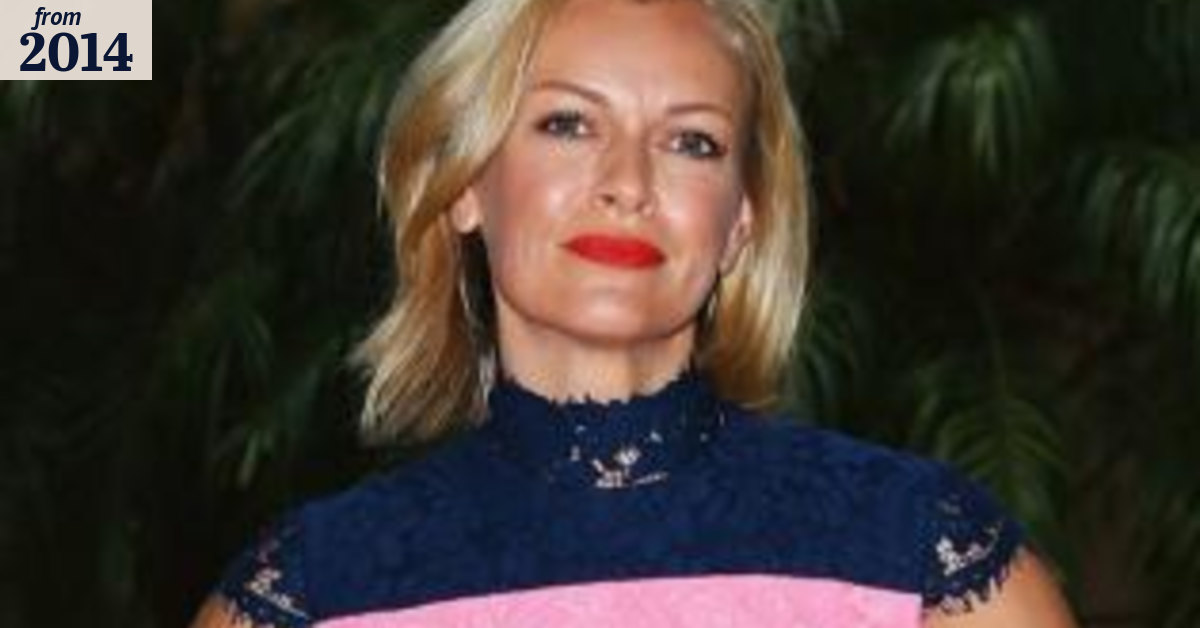
**Sarah Murdoch's role is confirmed.** In 2014, Sarah Murdoch (wife of Lachlan Murdoch, daughter-in-law of Rupert Murdoch) was indeed the **deputy chair** of The Australian Ballet board [5].
**The claim omits important budgetary context.** The 2014 cuts were part of a broader austerity budget following the Global Financial Crisis, with cuts across multiple government departments - not unique to the arts [6].
The $87.1 million figure represented reductions to "uncommitted funding" rather than cuts to existing programs in many cases [7].
**The $1 million was specifically targeted.** The Australian Ballet's $1 million increase was earmarked specifically for "student boarding accommodation" for aspiring ballet dancers [5], not for general operational funding.
The Australian Ballet itself noted it receives only 16% of its revenue from government funding, relying primarily on philanthropic pledges [5].
**The 2015 NPEA funding redirection was controversial but different from cuts.** The $110 million redirected in 2015 (not 2014) was moved from the Australia Council to create a new minister-administered fund, not eliminated entirely [4].
**The Australian (original source)** is a News Corp publication owned by the Murdoch family, making it potentially conflicted when reporting on Murdoch family interests.
However, the article itself reported on the cuts negatively (describing them as "devastating"), suggesting the publication did not simply provide favorable coverage [8].
**SMH (key verification source)** is a mainstream Fairfax publication with no demonstrated conflict of interest in this case [5].
**Parliamentary committee records** are authoritative government sources documenting the actual budget figures [1][2].
**Did Labor make similar arts funding decisions?**
**Labor's record on arts funding is mixed.** The Keating Labor government established "Creative Nation" in 1994, Australia's first national cultural policy, which significantly increased arts funding [9].
* * * *
The Rudd/Gillard Labor government also established "Creative Australia" in 2013 [9].
**However, Labor also made difficult arts funding decisions.** The 2013 Labor government introduced efficiency dividends and budget measures that reduced arts funding in some areas [10].
According to the Abbott government's 2014 budget papers, the cuts were partly justified by returning to "historical levels" of funding that existed under previous Labor governments [1].
**The Labor government elected in 2022** introduced a new national cultural policy "Revive" with $286 million in funding over four years [11], suggesting Labor currently positions itself as more supportive of the arts than the Coalition.
**Comparative assessment:** While Labor has historically championed arts policy (Creative Nation, Creative Australia), both parties have made cuts to arts funding when facing budget pressures.
The Coalition's 2014-15 cuts were more significant in dollar terms than most Labor-era reductions, though the comparison is complicated by inflation and different budgetary contexts.
**The claim contains several factual issues that undermine its credibility:**
1. **The $110 million figure is inaccurate for 2014.** The actual cuts were $87.1 million over four years [1].
The $110 million figure refers to a separate 2015 funding redirection [4].
2. **The Murdoch connection is established but overstated.** Sarah Murdoch was indeed deputy chair (not chair, as implied) of The Australian Ballet board in 2014 [5].
The $1 million was specifically for student accommodation, not general operational funding [5].
3. **The claim presents correlation as causation.** While The Australian Ballet received $1 million more while other arts organizations faced cuts, there is no documented evidence this was specifically to benefit the Murdoch-connected organization.
Major performing arts companies often have different funding arrangements than small-to-medium organizations that were more affected by Australia Council cuts.
**Legitimate criticisms of the Coalition's approach:**
- The cuts did disproportionately affect smaller arts organizations dependent on Australia Council funding [6]
- The 2015 redirection of $110 million to a minister-controlled fund was widely criticized by the arts sector as politicizing funding decisions [4]
- The concurrent funding boost to an organization with Murdoch family connections, while making broad cuts, creates an appearance of favoritism that warranted scrutiny
**Counterbalancing context:**
- The Australian Ballet is one of Australia's flagship arts organizations and receives bipartisan support
- The $1 million increase was a small fraction of The Australian Ballet's overall budget (which is primarily privately funded) [5]
- Arts funding decisions often reflect complex policy trade-offs rather than simple favoritism
The claim accurately identifies that the Coalition made significant arts funding cuts in 2014-15 and that The Australian Ballet (where Sarah Murdoch was deputy chair) received $1 million additional funding.
The claim accurately identifies that the Coalition made significant arts funding cuts in 2014-15 and that The Australian Ballet (where Sarah Murdoch was deputy chair) received $1 million additional funding.