**The claim contains significant inaccuracies.**
The $12 million figure refers to the cost of holding **157 asylum seekers** (not "2 boatloads") at sea for 29 days in mid-2014, not "trying to convince Sri Lanka to accept" them [1][2].
* * * *
According to Fairfax Media's cost analysis based on Senate Estimates figures, the $12,020,778 expenditure included:
- Daily running costs of Navy frigate HMAS Perth (which intercepted the boat)
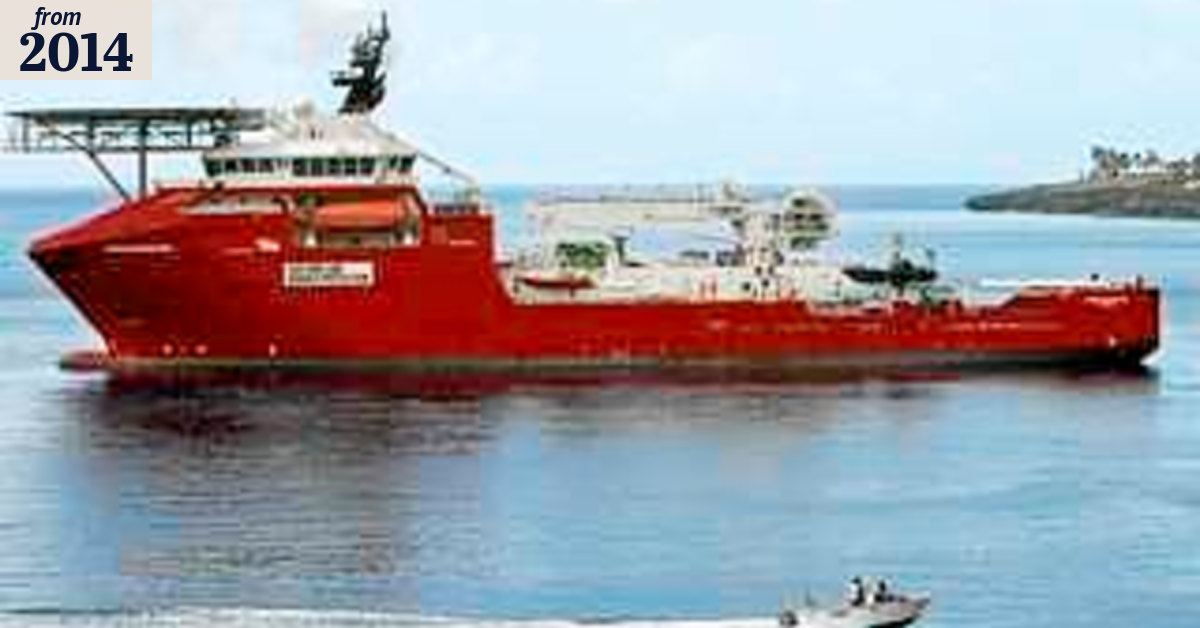
- Customs vessel Ocean Protector (where asylum seekers were held for 29 days)
- Accommodation at Cocos Island for 14 immigration officials ($5,345)
- Transfer of asylum seekers via three chartered flights to Curtin detention centre (~$600,000)
- Legal costs for High Court challenge (~$136,500)
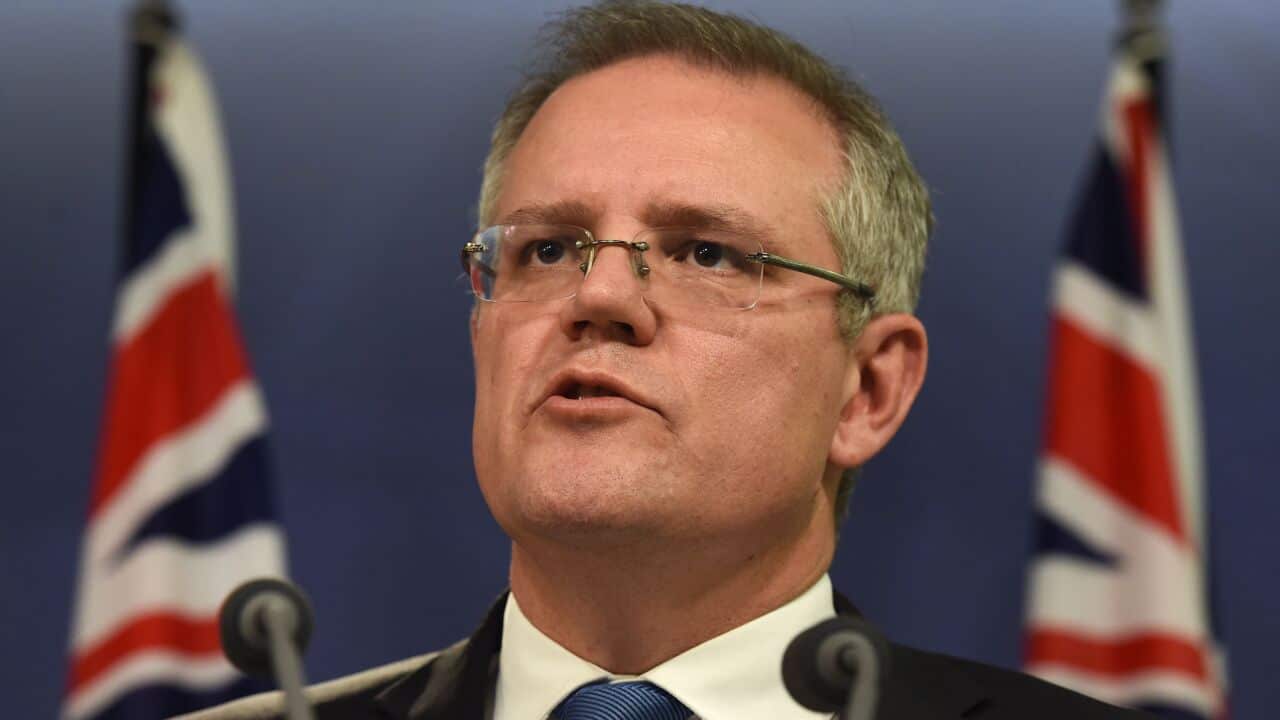
- Immigration Minister Scott Morrison's trip to New Delhi with cricket bats for Indian officials [1][2]
**Critical factual errors in the claim:**
1. **Wrong destination**: The asylum seekers were to be returned to **India** (where their boat departed from Pondicherry), not Sri Lanka [3][4].
India ultimately rejected Australia's request.
2. **Wrong number of people**: The $12 million cost related to holding **157 asylum seekers** on one boat, not "2 boatloads" [1][2].
There was a separate boat with 41 asylum seekers that was returned to Sri Lanka at a different time [3][5].
3. **Wrong characterization**: The money was spent holding people at sea and associated operational/legal costs, not "trying to convince Sri Lanka" [1][2].
**The "enhanced screening" process was introduced by the previous Labor government.** The claim omits that the rapid at-sea assessment process used for these asylum seekers was actually introduced by the Gillard Labor government in late 2012 [6].
According to Senate Estimates documents from 2013, the Department of Immigration stated this screening was brought in following "an unprecedented expansion of irregular movements from Sri Lanka to Australia" [6].
**The asylum seekers departed from India, not Sri Lanka.** The 157 Tamil asylum seekers had been living in a refugee camp in Tamil Nadu, India, and departed from the Indian port of Pondicherry [3][4].
Their boat developed an oil leak on June 26, 2014, and Australian maritime authorities were called for assistance [6].
**The operation occurred under established legal frameworks.** The Maritime Powers Act 2013, which authorized the interception and detention at sea, was introduced by the Gillard Labor government in May 2012 and passed by Parliament in March 2013 [6].
**The government maintained its broader cost-saving narrative.** The Coalition consistently claimed that stopping boats would save $2.5 billion by closing nine onshore detention centres [1].
SMH is generally regarded as a mainstream, center-left publication with a reputation for factual reporting, though like all media outlets, it has editorial perspectives [1].
However, the claim as presented in C0644 **misrepresents the SMH article's content** - the article describes costs of holding asylum seekers at sea and attempting to return them to India, not "trying to convince Sri Lanka to accept 2 boatloads."
**Did Labor do something similar?**
**Yes - Labor actually established the foundational policies:**
1. **Offshore processing reinstated by Labor in 2012**: In August 2012, the Gillard Labor government announced the resumption of transferring asylum seekers to Nauru and Manus Island (PNG) - reversing its 2008 closure of the "Pacific Solution" facilities [7][8].
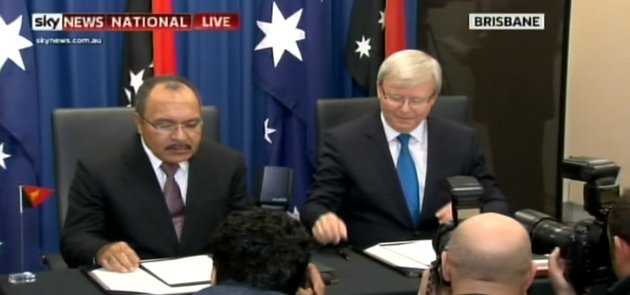
2. **PNG Solution by Kevin Rudd (July 2013)**: On July 19, 2013, Prime Minister Kevin Rudd announced that "asylum seekers who come here by boat without a visa will never be settled in Australia" - establishing the Regional Resettlement Arrangement with Papua New Guinea [9][10].
3. **Enhanced screening introduced by Labor**: The "enhanced screening" process used for at-sea assessments was introduced by the Gillard government in late 2012 [6].
4. **Maritime Powers Act passed by Labor**: The legislation authorizing maritime interceptions was introduced by the Gillard government in May 2012 [6].
5. **Labor also returned asylum seekers to Sri Lanka**: Former Labor Foreign Minister Bob Carr stated on radio in July 2014 that "I remember repeatedly our High Commission in Colombo saying there is no evidence of mistreatment of those we are returning" - confirming Labor had also returned asylum seekers to Sri Lanka [6].
**Cost comparison**: Offshore processing has cost Australian taxpayers approximately $9.65 billion from July 2013 to 2021-2022 across both Labor and Coalition governments [11].
* * * *
The policies have been consistently bipartisan in their harsh approach to boat arrivals.
The boat of 157 Tamil asylum seekers (including 37 children and 21 women) was intercepted in Australia's contiguous zone on June 29, 2014, after departing from India [3][6].
During the 29 days at sea, asylum seekers were held in windowless rooms with limited sunlight, separated by gender, while the government explored options [1].
A High Court challenge was launched, and the government eventually had to bring the asylum seekers to Curtin detention centre in Western Australia, then transfer them to Nauru [1][2].
**Legitimate policy context:**
The Coalition's Operation Sovereign Borders, launched in September 2013, had successfully stopped boat arrivals - by July 2014, there had been six months without a successful people smuggling venture [6].
The government maintained that preventing deaths at sea (an estimated 1,200 people died during the previous Labor government's tenure) justified the hardline approach [5].
**Criticism of the specific operation:**
Human rights organizations, legal scholars from 17 Australian universities, and the UNHCR raised concerns about the legality and ethics of the at-sea screening process [3][5].
The UNHCR stated that "shipboard processing has generally not been positive" and "rarely afford[s] an appropriate venue for a fair procedure" [5].
**Comparative context:**
This incident was not unique to the Coalition.
The key difference is operational style - the Coalition maintained secrecy around "on-water matters" while Labor was generally more transparent [5][7].
The fundamental policy architecture (offshore processing, enhanced screening, maritime interdiction) was established by Labor and continued by the Coalition.
**Key context**: The claim frames this as wasteful spending to "convince Sri Lanka," but the reality was a complex operational challenge involving a boat from India, utilizing legal frameworks established by the previous Labor government, with costs inflated by legal challenges and the need to hold people at sea while diplomatic options were exhausted.
The claim contains multiple factual errors: (1) the $12 million was spent holding asylum seekers at sea for 29 days plus associated costs, not "trying to convince Sri Lanka"; (2) the asylum seekers were to be returned to India, not Sri Lanka; (3) the cost related to 157 people on one boat, not "2 boatloads"; and (4) the foundational policies and legal frameworks were established by the previous Labor government.
The claim contains multiple factual errors: (1) the $12 million was spent holding asylum seekers at sea for 29 days plus associated costs, not "trying to convince Sri Lanka"; (2) the asylum seekers were to be returned to India, not Sri Lanka; (3) the cost related to 157 people on one boat, not "2 boatloads"; and (4) the foundational policies and legal frameworks were established by the previous Labor government.