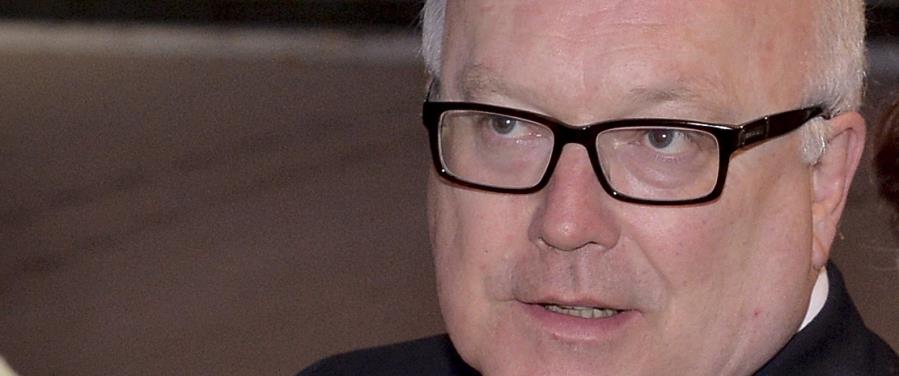
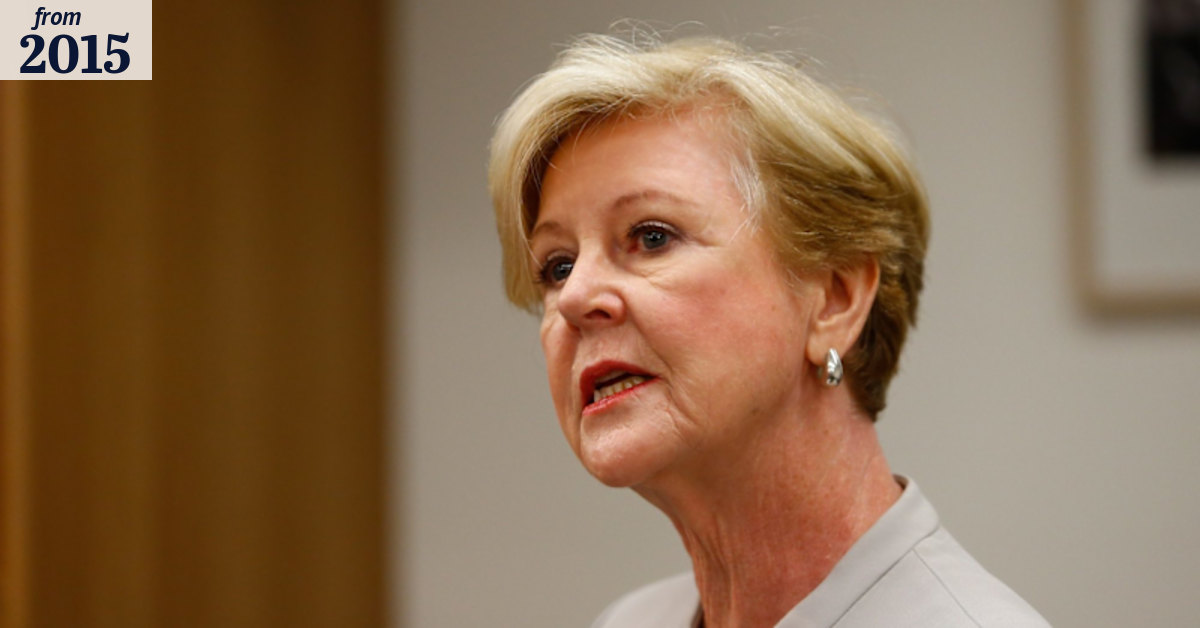
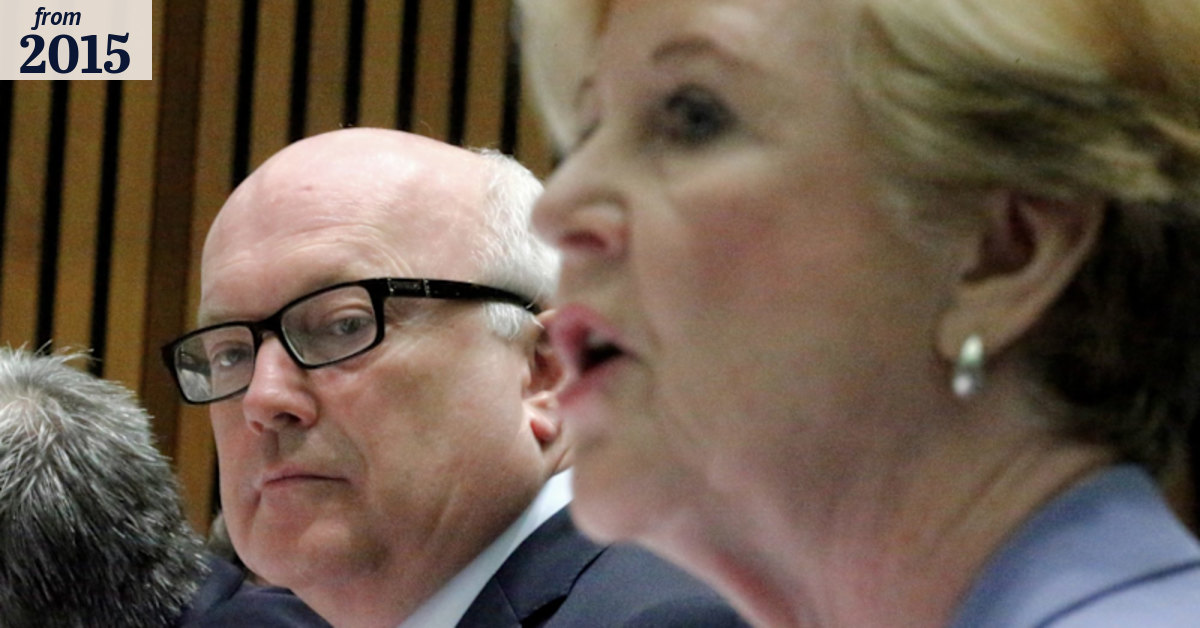
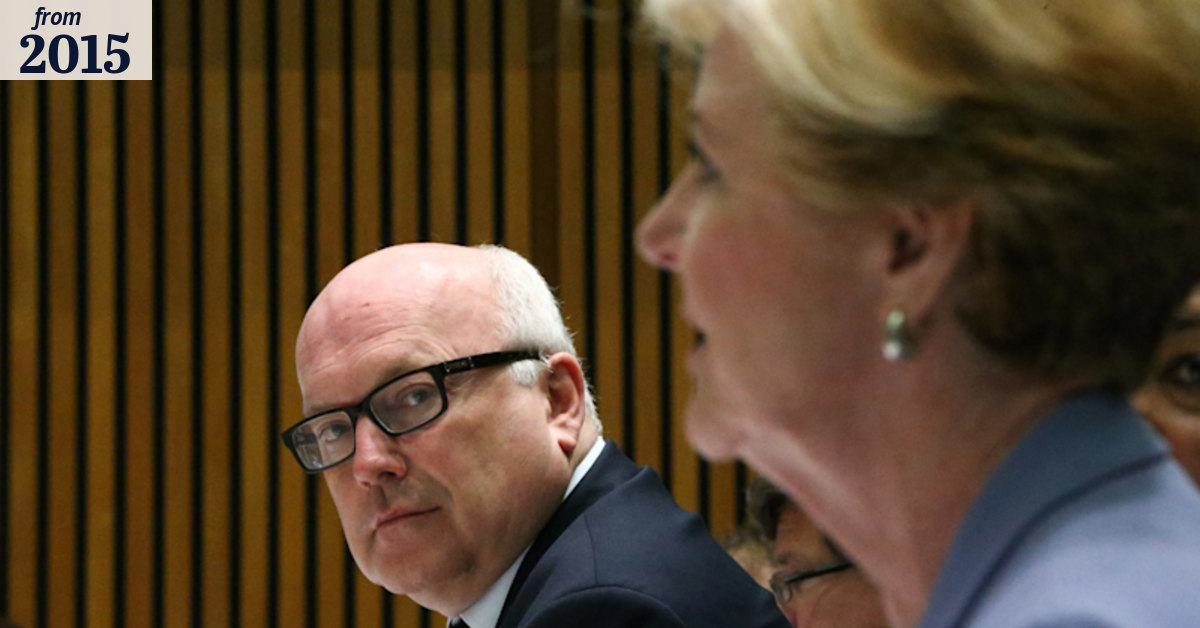
The core factual allegation is accurate: Attorney-General George Brandis's department secretary, Chris Moraitis, did approach Human Rights Commission President Gillian Triggs in February 2015 to request her resignation while simultaneously offering that "some other opportunity" or "senior legal role" would be available if she resigned [1][2].
The approach came on February 3, 2015, approximately two weeks before the government tabled the Human Rights Commission's damning report "The Forgotten Children" on children in immigration detention [1].
During the meeting, Moraitis conveyed that the Attorney-General had lost confidence in Triggs, but also that there would be a senior role available if she resigned [2].
However, the characterization that this constituted a "breach of the criminal code of conduct" was an allegation made by political opponents at the time, not a proven legal finding.
The Australian Federal Police (AFP) was subsequently asked to investigate whether this could constitute corrupt conduct under the Criminal Code [3][4].
The AFP's investigation concluded in May 2015 with the following findings:
- The AFP found "no evidence to support allegations" of an inducement [4]
- Professor Triggs herself declined to make a formal complaint [4][5]
- Evidence given under parliamentary privilege could not be used as evidence in a criminal investigation [5]
- The AFP ultimately decided not to investigate further due to insufficient evidence [4][5]
The AFP Investigation Outcome**: The claim presents the allegation as fact while omitting that the AFP investigated and found no evidence of wrongdoing.
Labor's shadow attorney-general Mark Dreyfus accepted the AFP's determination, stating: "I can understand that the president would want to put this matter behind her.
The Broader Political Context**: The government's actions came after the Human Rights Commission released a highly critical report on children in detention.
The government's criticism focused on the timing of the inquiry (which began under the Coalition rather than during Labor's tenure when numbers were higher) [6].
**3.
Professor Triggs' Own Position**: When asked directly during Senate estimates if she understood the offer as an "inducement," Triggs stated: "I'd prefer not to use that term" [2].
This creates a misleading impression that the allegation was proven or remained unanswered, when in fact it was investigated and no evidence of criminal conduct was found.
**Did Labor do something similar?**
Labor governments have also made appointments to the Human Rights Commission.
* * * *
Catherine Branson (a former Federal Court judge) was appointed President of the Australian Human Rights Commission by the Rudd Labor government in 2008 for a five-year term [7].
However, governments of both parties have historically:
- Appointed commissioners aligned with their political values
- Criticized independent officers whose findings were politically inconvenient
- Sought to influence the timing and focus of inquiries
The key difference in this case was the explicit linkage of a job offer to resignation, which created the appearance of impropriety.
**Comparative context**: During the Gillard Labor government, there were controversies regarding appointments to the Fair Work Australia tribunal and other independent bodies.
The Triggs affair represented a serious lapse in judgment by the Abbott government, but it did not constitute proven criminal conduct.
**The government's position**: The government maintained that Professor Triggs had compromised the Human Rights Commission's political impartiality by conducting an inquiry into children in detention that began during the Coalition government rather than during Labor's tenure when numbers were higher.
Attorney-General Brandis stated he reached the conclusion "sadly, that Professor Triggs should consider her position" after what he termed a "catastrophic error of judgment" [2].
The government's criticism focused on the perceived bias in the timing of the inquiry.
**The defense of the Commission**: Professor Triggs and supporters noted that the Commission had tabled numerous reports critical of Labor's immigration detention policies during 2012-2013, and that the inquiry was planned to coincide with the 10th anniversary of the Commission's first investigation into children in detention [1].
The report's findings were substantiated by evidence of mental and physical harm to children in detention.
**The legal assessment**: While the conduct was widely condemned as inappropriate (Senator Brandis was censured by the Senate in March 2015 [5]), the AFP found no basis for criminal prosecution.
The evidence was given under parliamentary privilege, Professor Triggs declined to pursue the matter, and the AFP concluded there was insufficient evidence to warrant investigation.
**This is not unique**: Governments of both parties have sought to influence independent office-holders whose findings are politically inconvenient.
The Triggs affair was unusual in its explicit nature but reflects a broader tension in the Australian political system between executive power and independent oversight bodies.
While the factual basis (that a job offer was made contingent on resignation) is accurate, the characterization as a "breach of the criminal code of conduct" was an unproven allegation that the AFP investigated and found no evidence to support.
The claim omits the AFP investigation outcome, Professor Triggs' own reluctance to characterize the offer as an "inducement," and the acceptance of the AFP determination by the opposition who originally raised the allegation.
While the factual basis (that a job offer was made contingent on resignation) is accurate, the characterization as a "breach of the criminal code of conduct" was an unproven allegation that the AFP investigated and found no evidence to support.
The claim omits the AFP investigation outcome, Professor Triggs' own reluctance to characterize the offer as an "inducement," and the acceptance of the AFP determination by the opposition who originally raised the allegation.