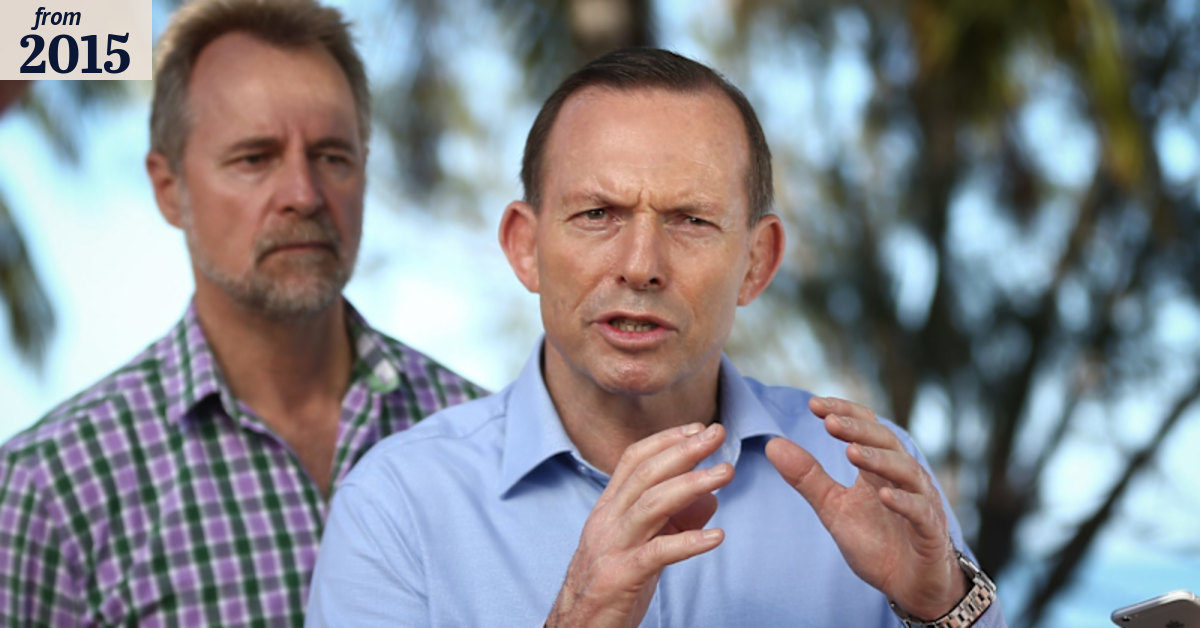
In August 2015, then-Prime Minister Tony Abbott undertook a week-long visit to Cape York and the Torres Strait with an entourage of ministers, backbenchers, journalists, and support staff [1].
The Department of Defence paid Cairns food wholesaler Bidvest $77,042 for "fresh foodstuffs" to supply the trip, which was reported as approximately $80,000 in media coverage [1].
According to Defence, 10,518 meals were prepared during a three-week period (before, during, and after the visit), and the army also provided catering support to 800 local community members who attended Mr Abbott's community events [1].
Most food was transported from Cairns to Bamaga and Thursday Island, with Defence stating this "was the most cost-effective manner in which to procure the food and catering items" [1].
The claim omits several important contextual factors that help explain the expenditure:
**Scale of the operation:** The $80,000 covered 10,518 meals over three weeks for a large delegation plus 800 local community attendees - averaging approximately $7.60 per meal [1].
This was not simply catering for one person but for a substantial official delegation and local participants.
**Remote location challenges:** Cape York and the Torres Strait are among Australia's most remote regions, where food costs are significantly higher due to transport logistics.
The need to ship food from Cairns to remote communities inherently increases costs [1].
**Official purpose:** This was not a personal holiday but an official government visit to Indigenous communities.
Abbott had made Indigenous affairs a priority during his prime ministership, including his annual volunteer visits to remote communities, though this particular trip was an official government visit with appropriate entitlements [1].
**Timing context:** The visit occurred in August 2015, and Abbott lost the prime ministership to Malcolm Turnbull on September 14, 2015 - making this his final official visit to remote Indigenous communities as PM [1].
The original source is The Sydney Morning Herald (SMH), a major Australian metropolitan newspaper owned by Fairfax Media (now part of Nine Entertainment Co.) [1].
**Assessment:**
- SMH is a mainstream, reputable media outlet with established journalistic standards
- The article was written by Adam Gartrell, a professional journalist who served as health and industrial relations correspondent
- The report is based on government tender documents, which are verifiable official records
- The headline framing ("parting gift") suggests some editorial perspective, as the article was published on October 10, 2015 - shortly after Abbott was removed as PM
- Fairfax Media/ SMH is generally considered center-left in editorial orientation, though its news reporting typically maintains professional standards
- No significant factual inaccuracies have been documented in this specific report
The source is credible for factual reporting, though readers should be aware that the framing and timing of the article (post-leadership change) may carry some editorial perspective.
**Did Labor do something similar?**
Search conducted: "Labor government prime minister travel expenses catering spending" and "Anthony Albanese travel expenses"
**Findings:**
Prime Ministerial travel expenses are substantial across all governments, regardless of party.
* * * *
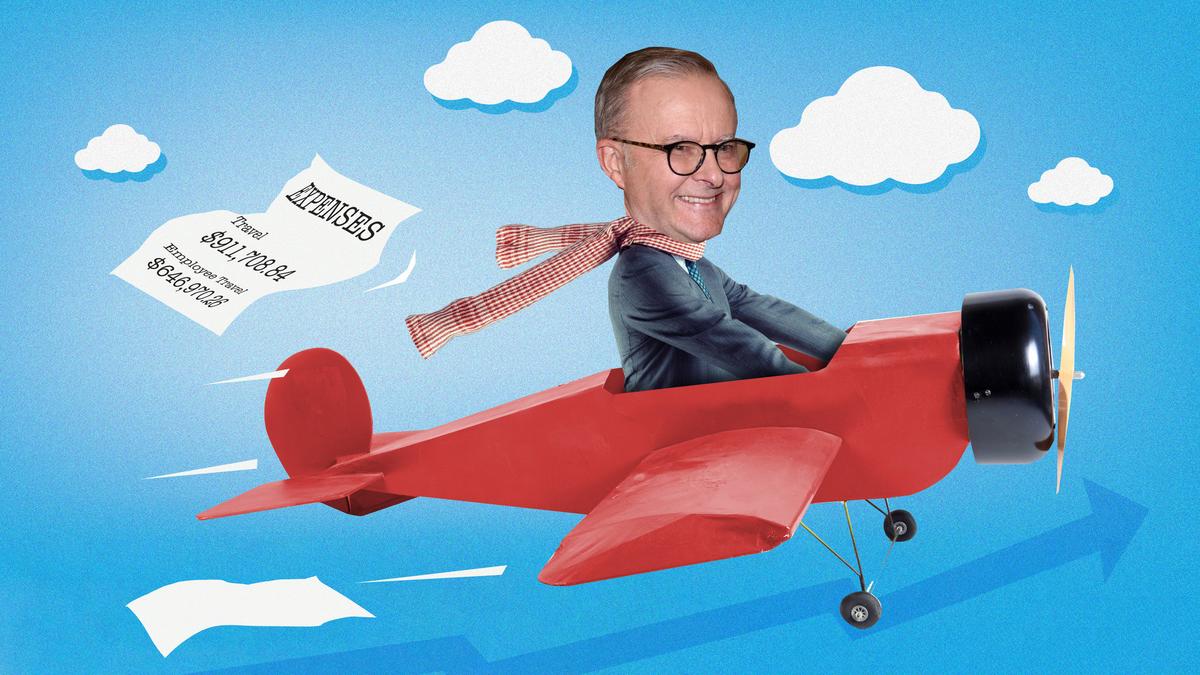
Current Labor Prime Minister Anthony Albanese has incurred significant travel costs since taking office in 2022:
- Albanese spent $1.8 million on travel costs in just three months (late 2023) according to expense records [2]
- His total travel-related expenses exceeded $3.6 million in 2025 [3]
- He spent nearly $4 million on VIP flights in his first year as PM [4]
**Comparative context from RMIT ABC Fact Check:**
Analysis of recent prime ministers shows travel patterns are consistent across parties [5]:
- At 12 months in office, Albanese had taken 11 trips overseas; Kevin Rudd (Labor) took 12 trips; Tony Abbott took 11 trips
- Days abroad at 12 months: Albanese 55 days, Rudd 71 days, Abbott 60 days, Gillard 47 days, Turnbull 42 days, Morrison 40 days
- Countries visited at 12 months: Albanese 18, Rudd 24, Abbott 22, Gillard 17, Turnbull 15, Morrison 17
The data demonstrates that all prime ministers incur substantial travel costs.
Albanese's international travel costs ($1.8M in 3 months) dwarf Abbott's $80,000 domestic catering bill for a remote community visit [2][5].
**Key point:** The Abbott catering expense was for a single domestic trip to remote Indigenous communities with significant local community participation (800 attendees).
* * * * 調査 nounChousa 結果 nounKekka : : * * * *
Albanese's expenses include international travel, but both reflect standard PM entitlements.
**Criticisms of the Abbott expenditure:**
- $80,000 for a single trip's catering is a substantial sum of taxpayer money [1]
- Critics could argue that less expensive arrangements might have been possible
- The timing - just before Abbott lost the leadership - raises questions about whether this was necessary official business
**Legitimate contextual factors:**
- The cost covered 10,518 meals over three weeks, averaging approximately $7.60 per meal - not extravagant per-person spending [1]
- Remote community visits are inherently expensive due to logistics and distance from supply centers [1]
- The trip included feeding 800 local community members, not just the official delegation [1]
- Army catering support was used as the "most cost-effective" option for the remote location [1]
- Prime ministers of all parties incur significant travel and logistical costs; this is standard government operations [5]
**Comparative analysis:**
The Abbott catering expense, while notable, is minor compared to travel costs incurred by Labor governments.
Current PM Anthony Albanese's travel expenses ($3.6 million in 2025 alone) are orders of magnitude larger than Abbott's single remote community visit [3][5].
Kevin Rudd spent 92 days abroad in his first 18 months (compared to Abbott's 77 days in the same period) [5].
**Key context:** This is not unique to the Coalition.
Remote community visits are particularly costly due to geography, and such visits are part of standard government engagement with Indigenous communities.
However, the framing omits important context: this covered 10,518 meals for a large delegation plus 800 local community members over three weeks in extremely remote locations where logistics costs are inherently high [1].
When compared to travel expenses of Labor prime ministers (Rudd's 92 days abroad, Albanese's $3.6 million in 2025 travel costs), this expenditure is consistent with standard prime ministerial operational costs across all governments [5].
However, the framing omits important context: this covered 10,518 meals for a large delegation plus 800 local community members over three weeks in extremely remote locations where logistics costs are inherently high [1].
When compared to travel expenses of Labor prime ministers (Rudd's 92 days abroad, Albanese's $3.6 million in 2025 travel costs), this expenditure is consistent with standard prime ministerial operational costs across all governments [5].