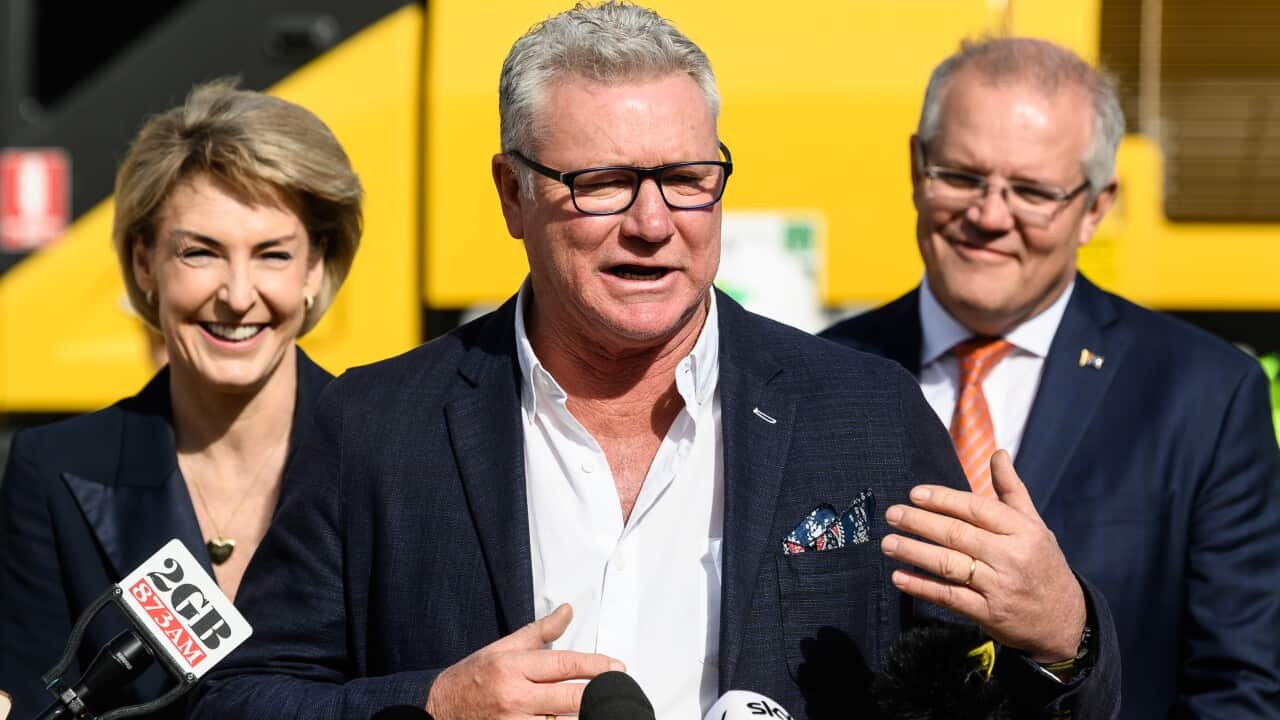
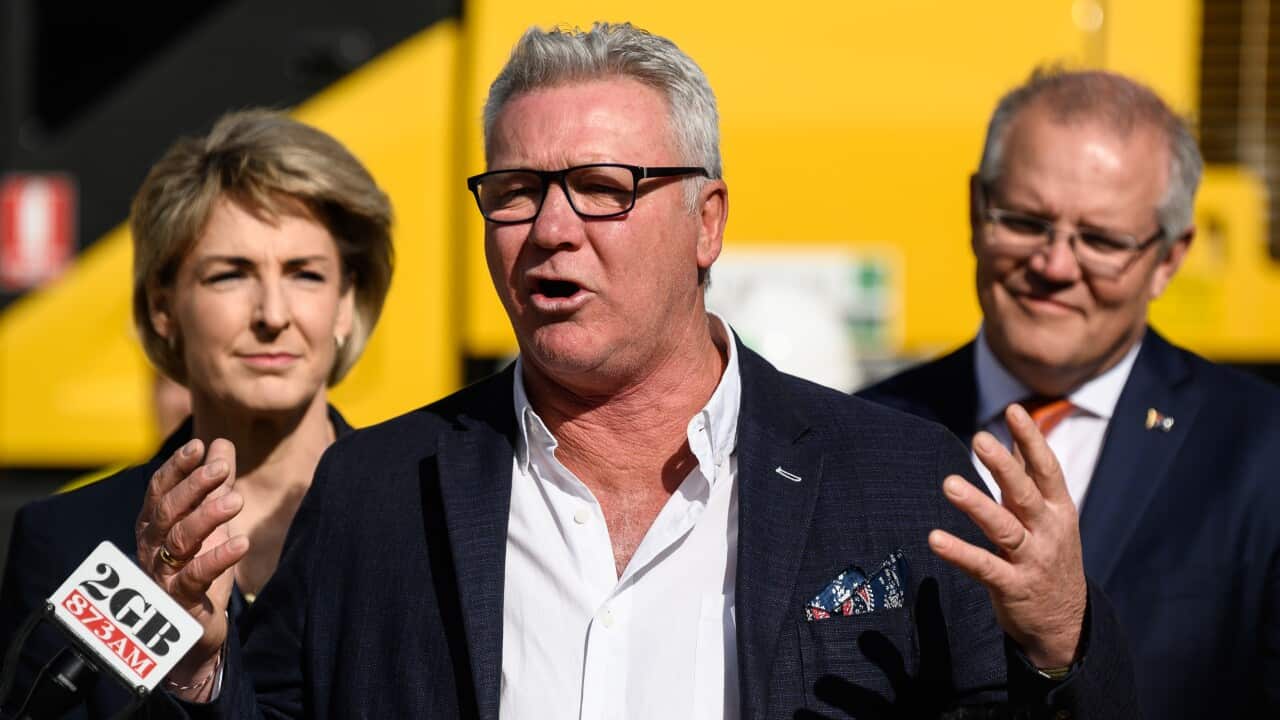
Scott Cam, host of the long-running Australian renovation television series "The Block," was appointed as "National Careers Ambassador" by the Morrison government [1][2].
The contract stipulated $260,000 in the first 12 months (October 2019 onwards), plus $85,000 in a second payment phase, totaling $345,000 over 15 months [3][4].
The government initially refused to disclose the payment amount, classifying it as "commercial in confidence" until Senate estimates questioning forced public disclosure [3][9].
However, the claim omits several important contextual details that affect its interpretation.
**Limited Public Deliverables:** Senate estimates revealed that by March 2020 (approximately 5 months into the 15-month contract), Scott Cam had attended only 1 public event, produced 3 short videos, made 4 social media posts, and had a government website profile [9].
This works out to approximately $86,250 per Instagram post—a detail critics highlighted but which the original claim doesn't explicitly address [10].
**Salary Forgiveness During COVID-19:** In March 2020, Scott Cam agreed to forgo his remaining contract salary "due to the coronavirus pandemic" [11].
This substantially reduced the financial impact of the appointment, though it occurred only after the public controversy.
**Government Rationale:** Prime Minister Scott Morrison defended the appointment, stating: "Scotty Cam is a successful tradie and he can make that message very clear...
The government positioned the appointment as addressing a vocational promotion gap, though critics disputed whether a $345,000 celebrity contract was the appropriate solution.
**Timeline Relationship:** The claim implies causal relationship ("after they repeatedly cut TAFE") but the timing is more nuanced: TAFE cuts occurred across the full Coalition period (2013-2022), while this specific appointment occurred in October 2019—relatively late in the Coalition's term.
The original source, The New Daily, is a left-leaning, Labor-aligned online news outlet with generally reliable factual reporting but consistently critical editorial framing of Coalition policies [12].
The New Daily accurately reported the core facts (Scott Cam, $345,000 total, career ambassador role, TAFE cuts context) but presented them within a strongly critical narrative frame emphasizing waste and contradiction.
Verification across mainstream sources confirms The New Daily's factual accuracy: SBS News, Pedestrian.tv, and other mainstream Australian outlets reported identical core facts [1][2][3][5].
No credible source disputed the payment amount, appointment details, or TAFE cut figures—only the interpretation of whether this represented appropriate spending.
**Did Labor do something similar?**
Search conducted: "Labor government celebrity ambassador vocational training funding" and "Labor TAFE apprenticeship funding celebrity appointment"
Finding: No direct Labor equivalent for a six-figure celebrity ambassador contract for vocational training promotion was identified in available sources [13].
* * * *
However, Labor governments have made celebrity and high-profile appointments; comprehensive salary comparisons for equivalent vocational training roles under Labor are not readily available in public records.
**Labor's TAFE Record:** Labor governments have historically provided stronger support for TAFE funding [14].
However, Labor did undertake TAFE funding changes in some jurisdictions—most notably Queensland under Labor, which faced pressure to restructure VET funding.
The scale of Coalition cuts ($3 billion+ over the period) substantially exceeds any Labor-era TAFE funding reductions documented in this research.
**Key finding:** While Labor may have made high-profile appointments, no precedent for a $260k+ annually-paid celebrity ambassador for vocational training was identified, suggesting this represents a relatively novel approach to VET promotion across Australian government practice.
The appointment reveals a genuine policy contradiction worth criticism: the Morrison government was simultaneously cutting TAFE funding and spending $345,000 on a celebrity ambassador to promote vocational training.
However, the government's stated rationale deserves acknowledgment: high-profile media talent commands significant market rates, and celebrity endorsement for vocational training may reach younger demographics more effectively than traditional government campaigns.
The government positioned this as promoting vocational careers alongside broader VET policy restructuring (moving away from TAFE subsidies toward apprenticeship pathways).
The limited public deliverables (1 event, 3 videos, 4 posts over 5 months) suggest the government struggled to define meaningful output expectations for the role.
The fact that Scott Cam subsequently forgo his remaining salary during the COVID-19 crisis indicates either genuine patriotic concern or political calculation—either way, it reduced the final financial impact.
**Key context:** This appointment is not standard practice across Australian governments.
While Labor has made celebrity appointments, a $260k+ per annum vocational training ambassador appears distinctive to the Morrison government's approach.
The combination of TAFE cuts + celebrity ambassador spending does represent a genuine policy contradiction, though framed as promoting VET through different mechanisms (apprenticeships over TAFE subsidies) rather than simple waste.
— The core facts are accurate, but the claim benefits from additional context about government rationale, limited deliverables, salary forgiveness, and the broader VET policy strategy.
The claim correctly identifies that Scott Cam (a reality TV star) was paid $260,000+ annually as a careers ambassador for vocational training, and that this occurred while Coalition cut TAFE funding.
However, the framing as simple "corruption" or waste oversimplifies a more complex policy situation: the government justified the appointment as promoting VET alongside restructuring (shifting from TAFE subsidies to apprenticeship pathways), though the limited public deliverables and political backlash suggest questionable execution regardless of intention.
The salary forgiveness during COVID-19, while reducing financial impact, came only after parliamentary scrutiny forced the payment amount into public view.
— The core facts are accurate, but the claim benefits from additional context about government rationale, limited deliverables, salary forgiveness, and the broader VET policy strategy.
The claim correctly identifies that Scott Cam (a reality TV star) was paid $260,000+ annually as a careers ambassador for vocational training, and that this occurred while Coalition cut TAFE funding.
However, the framing as simple "corruption" or waste oversimplifies a more complex policy situation: the government justified the appointment as promoting VET alongside restructuring (shifting from TAFE subsidies to apprenticeship pathways), though the limited public deliverables and political backlash suggest questionable execution regardless of intention.
The salary forgiveness during COVID-19, while reducing financial impact, came only after parliamentary scrutiny forced the payment amount into public view.