According to Guardian Australia investigations, Canstruct International Pty Ltd was initially awarded a contract worth only $8 million in October 2017, which was immediately amended to $385 million one month later, and has since been amended seven times without competitive tender, ultimately reaching $1.6 billion [1][2].
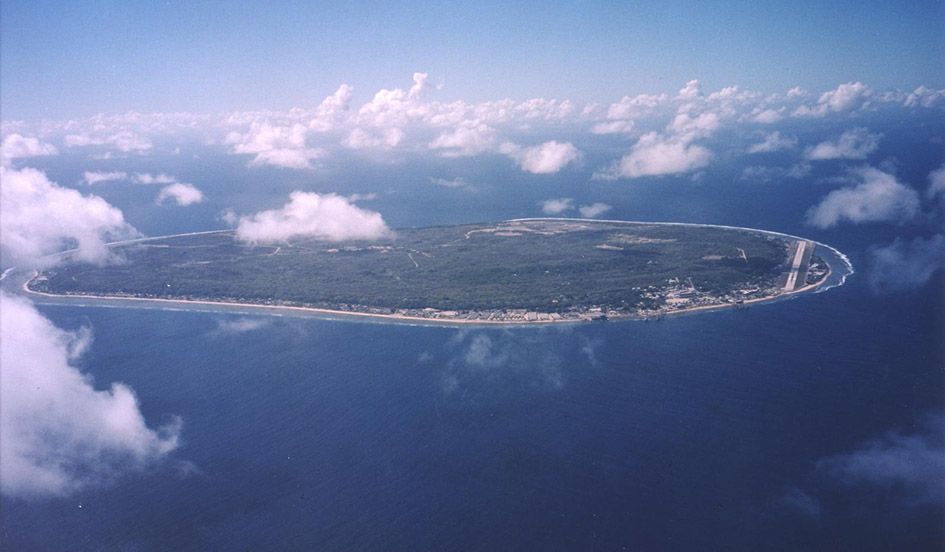
According to Guardian Australia, with approximately 115 asylum seekers and refugees held on Nauru after eight years, it costs more than $4.3 million each year – more than $350,000 per month – for each person held [1].
By comparison, Sydney's Four Seasons Hotel charges approximately $1,000-1,500 per night for premium suites, making the offshore processing cost approximately 8-12 times higher, which aligns with the "about 10 times higher" claim [1].
Guardian Australia obtained company filings showing Canstruct International Pty Ltd had eight $1 shares (totaling $8) in assets in 2017 when first awarded the contract [1][2].
The Australian National Audit Office criticized this process, stating "it is not clear why the department could not have secured a replacement supplier [using a more competitive procurement method]" [2].
KPMG's financial strength assessment report states it assessed Canstruct International Pty Ltd, but the department of home affairs has confirmed the assessment was actually conducted on a different company: Canstruct Pty Ltd [1].
Canstruct International had not commenced trading when assessed, making the assessment of a different entity particularly problematic for due diligence purposes [1].
Guardian Australia reports that "Canstruct, a Brisbane-based company and Liberal party donor" and that "Canstruct group, or entities associated with it, have made 11 donations to the Liberal National party in Queensland" [2][3].
While the claim emphasizes procedural failures, it omits an important government response: the Australian National Audit Office conducted an assessment which found the procurement and management of garrison and welfare services on Nauru was "largely appropriate" [1].
The claim does not mention that Canstruct Pty Ltd (the related entity) had previously constructed the Nauru detention centre and was therefore not an entirely untested contractor.
The high per-person cost is partly because Australia has not sent new asylum seekers to Nauru since 2014, yet maintains the facility as an "enduring" offshore processing capability [2].
The investigations in these articles are detailed, cite government documents and Senate questions, and include specific financial figures sourced from government tenders and parliamentary records.
However, The Guardian has a center-left editorial perspective and frequently publishes critical investigations into Coalition government policies, which should be noted as a contextual factor in how these stories are framed and which angles are emphasized.
When Labor returned to government under Julia Gillard, offshore processing policy continued, though at lower intensity [4].
**Key difference:** Labor dismantled offshore processing in 2008 when first elected, calling it "a cynical, costly and ultimately unsuccessful exercise" [4].
However, Labor Prime Minister Kevin Rudd (who had initially established it) re-established offshore processing in 2012 when boat arrivals increased, before the Coalition took office in 2013 [4].
The Coalition expanded and intensified the policy rather than inventing it [4].
**Labor's Contractor Issues:**
The search found limited specific information about Labor government paying contractors similar amounts, but the broader offshore processing framework itself was a Labor policy innovation.
Labor has not been investigated for similar sole-source contracts to companies with minimal assets, suggesting either: (a) this represents a new Coalition-era procurement problem, or (b) insufficient public scrutiny of Labor's own contractor arrangements during their use of offshore processing.
The evidence suggests this specific pattern (awarding large government contracts to shell companies with minimal assets and inappropriate due diligence) is not a common practice across Australian governments generally.
The facts presented in the claim represent genuine procurement and governance concerns:
1. **Procedural Failure:** Awarding a $1.6 billion contract through limited tender (rather than open competitive process) without adequate due diligence on the actual contract recipient is poor public administration [1][2].
2. **Due Diligence Fiasco:** Conducting KPMG's financial strength assessment on a different company than the actual contract recipient is a clear bureaucratic failure, compounded by government having to correct its Senate evidence twice [1].
3. **Cost Escalation:** The contract escalating 17,600% from $8 million to $1.6 billion through seven amendments without competitive re-tendering represents dramatic scope creep with minimal public scrutiny [2].
4. **Questionable Value for Money:** At $350,000+ per person per month with no new arrivals since 2014, this represents extraordinary government expenditure, though partly attributable to maintaining infrastructure for deterrent purposes rather than current operations.
The procedural issues may reflect inadequate oversight across both governments rather than unique Coalition corruption.
2. **Operational Constraints:** Once Broadspectrum (the previous operator) exited in 2017, the government needed an immediate replacement.
Limited tender may have reflected time pressure rather than deliberate impropriety, though it's unclear why competitive tender couldn't have proceeded in parallel.
3. **Political Donation Connection:** While Canstruct made donations to the Liberal-National parties, there is no evidence of quid pro quo arrangement or that donations influenced the contract award.
The investigations focus on procedural failure, not proven corruption.
4. **ANAO Finding:** The Australian National Audit Office, while critical of procurement methods, found management of the contract "largely appropriate," suggesting that despite procedural concerns, actual service delivery was acceptable [1].
5. **Per-Person Cost Context:** While $350,000 per month per person seems extraordinary, it includes: detention facility operation, security, medical and mental health services, administrative staff, and infrastructure maintenance spread across a small population.
They establish:
- Poor procurement practices (limited tender without adequate due diligence)
- Administrative incompetence (assessing wrong company)
- Political donations by a contractor (legal, though raising propriety questions)
These are governance failures, not proven corruption.
The financial figures, contractor details, company assets, tender process limitations, and KPMG due diligence errors are all factually accurate and well-documented.
However, the claim is misleading in three respects:
1. **Corruption framing:** The evidence supports poor procurement and due diligence, not proven corruption.
No investigations have established bribery, fraud, or embezzlement.
2. **Context omission:** The claim does not mention that offshore processing is a bipartisan policy established by Labor, or that the ANAO found management "largely appropriate."
3. **Causation overstated:** The $1.6 billion cost reflects both contractor management and government policy decisions (maintaining empty infrastructure for deterrent purposes since 2014), not solely contractor exploitation.
The claim is an accurate but selective presentation emphasizing procedural failures while omitting important context about policy origins and audit findings.
The financial figures, contractor details, company assets, tender process limitations, and KPMG due diligence errors are all factually accurate and well-documented.
However, the claim is misleading in three respects:
1. **Corruption framing:** The evidence supports poor procurement and due diligence, not proven corruption.
No investigations have established bribery, fraud, or embezzlement.
2. **Context omission:** The claim does not mention that offshore processing is a bipartisan policy established by Labor, or that the ANAO found management "largely appropriate."
3. **Causation overstated:** The $1.6 billion cost reflects both contractor management and government policy decisions (maintaining empty infrastructure for deterrent purposes since 2014), not solely contractor exploitation.
The claim is an accurate but selective presentation emphasizing procedural failures while omitting important context about policy origins and audit findings.