The core claim is factually accurate but requires significant context about what this reform actually entails.
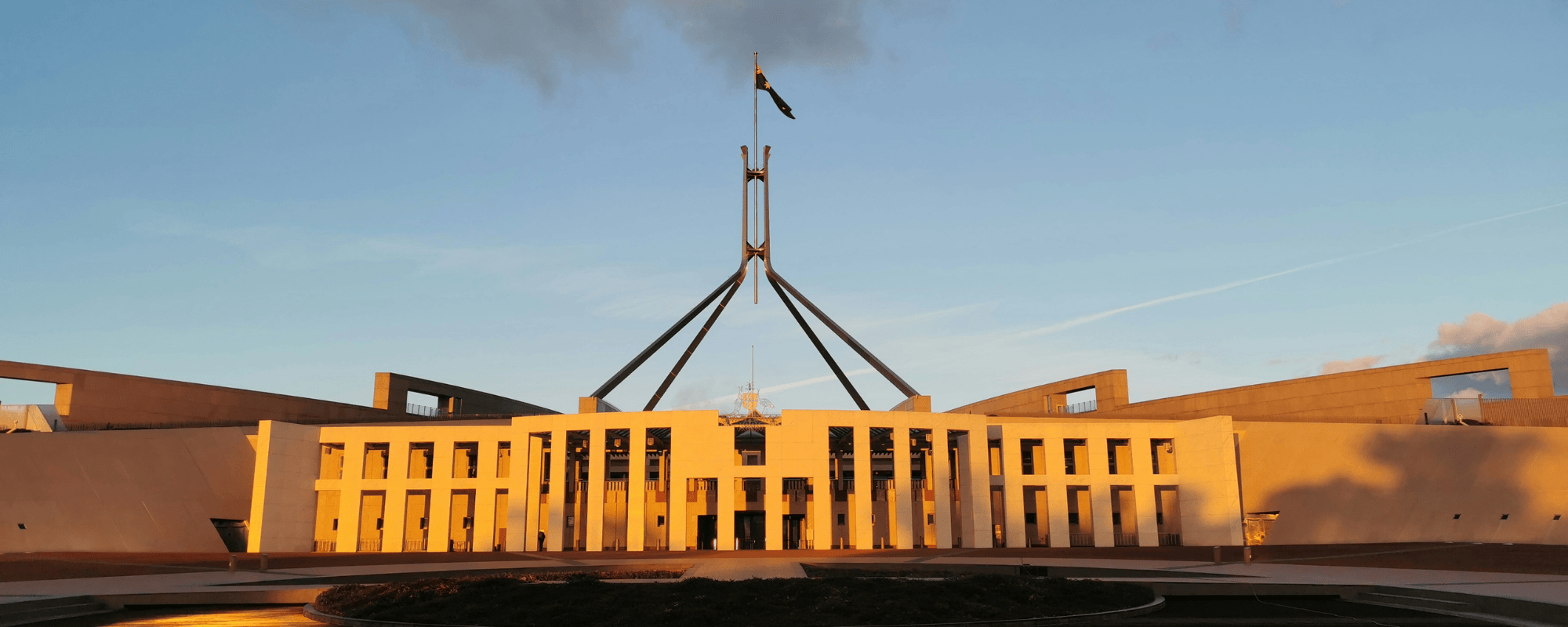
**Parliamentary Passage**: The Australian Parliament passed seven bills comprising the Environment Protection Reform package on 27-28 November 2025, with Royal Assent received on 1 December 2025 [1].
This represents the most significant change to Australia's national environmental law in 25 years [2].
**The Seven Bills**: The reform comprises the Environment Protection Reform Bill 2025, National Environmental Protection Agency Bill 2025, Environment Information Australia Bill 2025, and four Charges Bills relating to restoration and customs charges under the EPBC Act [3].
**National EPA Commencement**: The National Environmental Protection Authority (NEPA) will indeed commence operations on **1 July 2026**, as claimed [1].
However, the commencement is staggered, with land clearing restrictions effective immediately (2 December 2025) and most approval pathway amendments coming into effect mid-2026 [5].
**What It Actually Is**: The NEPA will be an independent enforcement and compliance agency separate from approval decision-making.
The NEPA will have powers to investigate, audit, issue Environment Protection Orders, and impose penalties up to $825 million for large entities [7].
**Previous Framework**: Currently, EPBC Act compliance and enforcement functions are handled by the Department of Climate Change, Energy, Environment and Water (DCCEEW).
Professor Samuel's review recommended an independent authority with approval powers; instead, the NEPA only handles enforcement and compliance, while Ministers retain approval authority [10].
Ministerial Discretion Preserved**:
The "unacceptable impacts" test still allows substantial ministerial discretion through the language "if the Minister is satisfied" [12].
National Environmental Standards Still Under Development**:
The centerpiece of the reform—binding National Environmental Standards—has not yet been finalized [15].
Fossil Fuel Compromise**:
Due to Greens Senate negotiations, coal extraction and petroleum production projects are explicitly excluded from the streamlined assessment pathway [18].
While this strengthens fossil fuel scrutiny, it represents the outcome of political compromise rather than environmental ideals, and indicates the reform still allows substantial fossil fuel development to proceed [19].
**5.
Climate Gap**:
The reform requires disclosure of direct emissions (Scope 1 & 2) for projects but does not mandate that decision-makers consider climate impacts when approving projects [20].
Land Clearing Loopholes Remain**:
Greenpeace notes that deforestation loopholes persist through grandfathering clauses, allowing "mass bulldozing" of land if it was in continuous use since 2000 [22].
Offsets Framework Creates "Pay-to-Destroy" Risk**:
Rather than preventing environmental damage, the reform allows developers to offset impacts by paying restoration charges elsewhere [23].
Academic analysis indicates this perpetuates the "offsets as default" approach rather than requiring avoidance and minimization of damage first [24].
**8.
Implementation Timeline Uncertain**:
While commencement is set for 1 July 2026, critical elements are not yet in place: NEPA leadership and budget not confirmed, regulations not finalized, standards still in consultation, and state accreditation framework not yet developed [25].
The reform is both an improvement and a compromise that falls significantly short of what environmental experts recommend.
**The Achievement and Its Limits**:
The establishment of an independent NEPA does represent meaningful institutional reform [27].
However, compared to what the Samuel Review recommended—a true independent regulator with approval authority and rigorous, legally binding standards—what was delivered represents a "modest improvement amid many compromises" [30].
**Greens Compromise Reveals Underlying Weakness**:
That the Greens, holding Senate balance of power, had to negotiate explicitly to exclude fossil fuel projects from streamlined assessment reveals the extent to which this reform does not genuinely reshape environmental protection [31].
If environmental protection were truly the priority, coal and oil projects would naturally require rigorous assessment; instead, they required specific carve-outs to preserve that standard.
Environmental Defenders Office analysis notes this indicates the base framework still allows weak assessment of major impacts [32].
**Standards-Based Framework—But Standards Not Ready**:
The theoretical centerpiece—binding National Environmental Standards—does not yet exist [33].
If standards are weak or full of loopholes, this entire framework becomes a "best-looking bad option" rather than genuine reform [35].
**Comparison to International Peers**:
Australia's approach of relying primarily on an independent enforcement agency (rather than strict upfront prevention) differs from more effective environmental frameworks in comparable economies [36].
The OECD Environmental Performance Review of Australia (2023) noted that Australian environmental regulation relies too heavily on discretionary approvals rather than binding standards [37].
Environmental Logic**:
The claim represents excellent political messaging ("passed environment law," "new EPA") but reflects political compromise rather than environmental effectiveness [38].
Government faced mining industry pressure to weaken the EPA and Greens pressure to strengthen it; the outcome serves neither comprehensively but allows both to claim victory [39].
**What Remains Unaddressed**:
Greenpeace, Climate Council, Australian Conservation Foundation, and Environmental Defenders Office all emphasized that major Samuel Review recommendations remain unimplemented [40]:
- Cumulative impact assessment remains absent [41]
- Non-regression principle not included [42]
- Climate change consideration explicitly limited [43]
- True biodiversity net gain requires further implementation [44]
- Indigenous cultural heritage reform only partial [45]
**The Implementation Gamble**:
The July 2026 commencement date appears increasingly ambitious given that National Environmental Standards are still in consultation, NEPA leadership not yet appointed, regulations not yet drafted, and state accreditation frameworks not yet developed [46].
History of such reforms shows implementation often lags timelines, potentially undermining the authority's effectiveness in its critical first months [47].
Technically accurate claim about bill passage and NEPA commencement, but significantly misleading without context about the reform's actual scope, constrained independence, unfinalized standards, persistent loopholes, and ambitious implementation timeline.
Implementation is dependent on regulatory work not yet complete
A claim stating "passed major environmental law creating enforcement agency to commence July 2026 while standards are still being developed, fossil fuel projects retain exemptions, and full implementation depends on work not yet complete" would be more accurate but far less politically attractive.
Technically accurate claim about bill passage and NEPA commencement, but significantly misleading without context about the reform's actual scope, constrained independence, unfinalized standards, persistent loopholes, and ambitious implementation timeline.
Implementation is dependent on regulatory work not yet complete
A claim stating "passed major environmental law creating enforcement agency to commence July 2026 while standards are still being developed, fossil fuel projects retain exemptions, and full implementation depends on work not yet complete" would be more accurate but far less politically attractive.