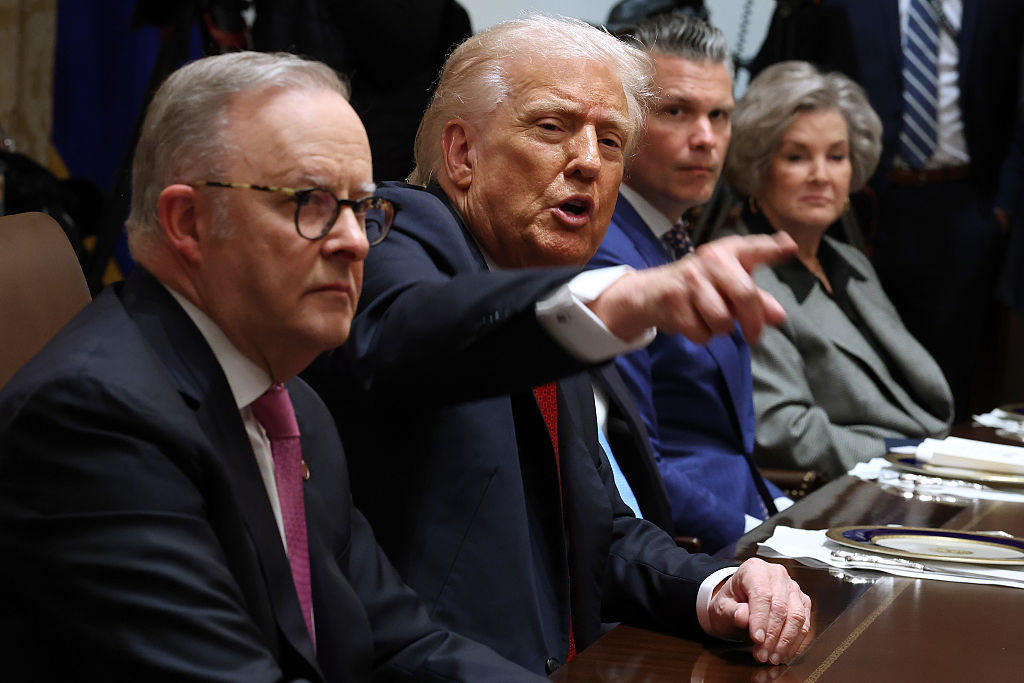
During a White House meeting with Prime Minister Anthony Albanese in October 2025, President Trump publicly reaffirmed US commitment to AUKUS, declaring "full steam ahead" on the agreement [1].
これ Kore は topic-markerWa 重要 Juuyou で auxiliary-verbDe あっ verbA た auxiliary-verbTa 。 .
This was significant because questions had been raised about whether the Trump administration would continue the Biden-era security pact, with the Pentagon initially conducting a review of the agreement for alignment with Trump's "America First" approach [1].
However, the $8.5 billion figure requires significant clarification.
**The $8.5 billion represents a PROJECT PIPELINE, not committed funding.** The actual funding commitments are substantially smaller [2]:
- Within 6 months of the agreement, each country committed at least $1 billion in financing = $2 billion joint commitment [2]
- The Export-Import Bank issued "letters of interest" (non-binding) for more than $2.2 billion in potential financing [2]
- These letters of interest could unlock up to $5 billion in total private/leveraged investment [2]
The $8.5 billion is the stated value of **prospective projects** in the pipeline, not the committed government funding [2].
The $8.5 Billion Figure Is Misleading**
The claim presents "$8.5 billion critical minerals agreement" as if the agreement commits $8.5 billion in funding.
AUKUS Has Massive Costs and Timeline Delays**
The claim presents Trump's endorsement as a success without mentioning critical implementation challenges [3]:
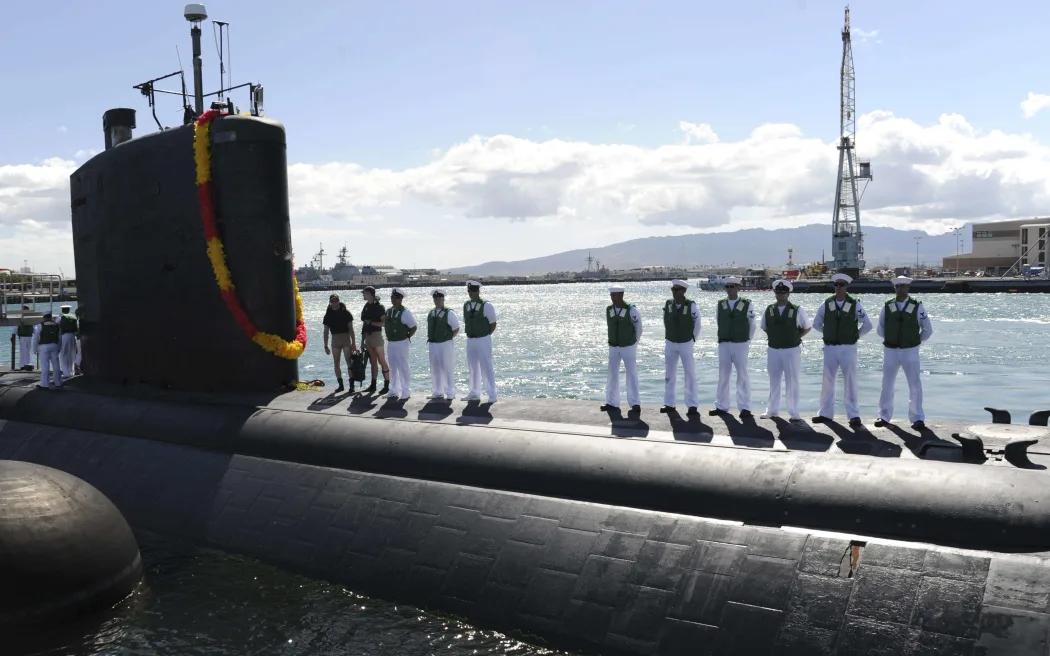
- **Total cost: $368 billion** - Australia's nuclear submarine program is one of the most expensive defense programs ever undertaken [3]
- **Severe timeline delays:** The Department of Defence does not expect submarines until the 2040s, not the 2030s [3]
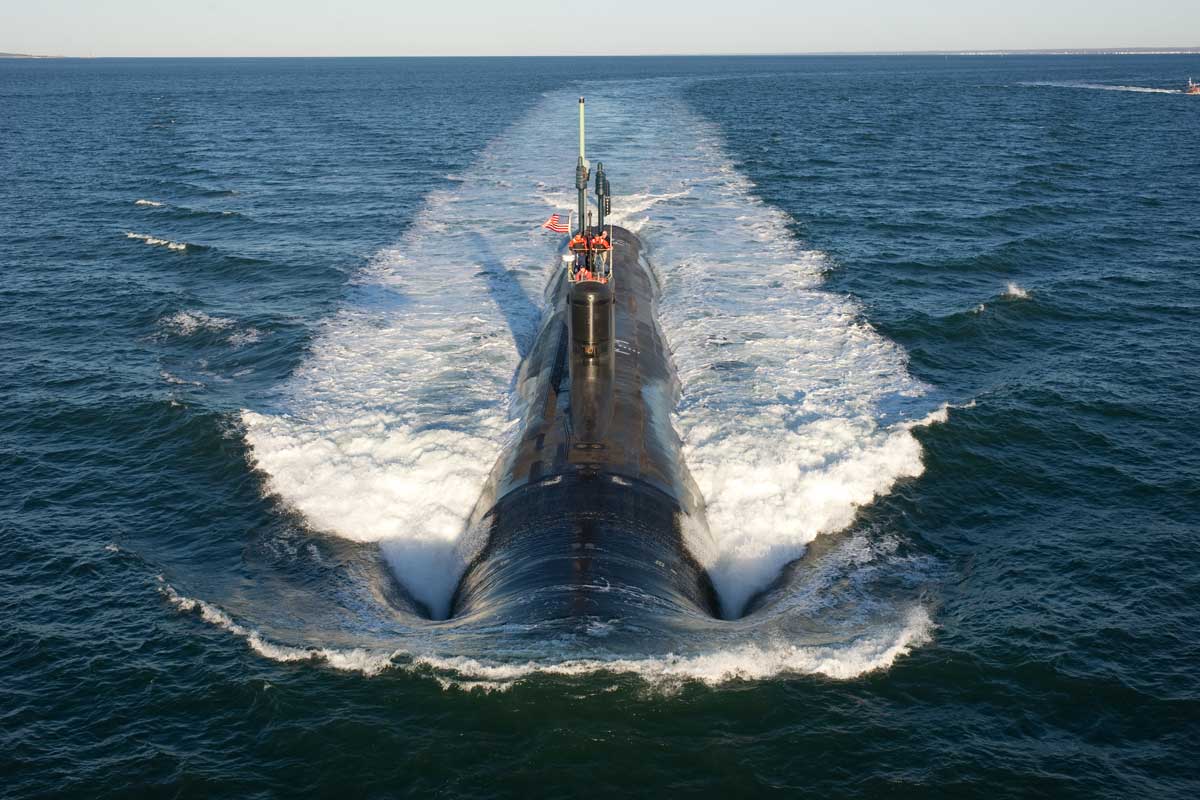
- **Delivery challenges:** The US can only build 1.3 submarines per year, creating supply bottlenecks [3]
- **Construction issues at HMAS Stirling and Henderson:** Infrastructure upgrades are drifting off-schedule [3]
Trump's endorsement is positive news, but it doesn't resolve the underlying cost and delivery problems that have plagued AUKUS since inception [3].
**3.
Political Uncertainty Remains**
While Trump endorsed AUKUS in October 2025, the agreement requires continued political commitment from three governments across multiple administrations [3].
The earlier Pentagon review that questioned the agreement's alignment with Trump's "America First" agenda indicates potential fragility in US support [1].
**4.
Missing Context on Albanese's Role**
The claim credits Albanese with "securing" these agreements without noting:
- The critical minerals framework was negotiated over months and finalized during Albanese's visit to Trump [2]
- AUKUS was negotiated by the Biden administration; Albanese inherited it, and Trump's endorsement came at least 3 years after the original agreement [1]
- Trump's endorsement represents validation of an existing agreement, not a new Albanese achievement [1]
**5.
The Critical Minerals Framework Priorities Are US-Focused**
The framework is explicitly designed to reduce US dependence on China, not primarily to benefit Australia [2].
The Pentagon commitment to build a gallium refinery in western Australia serves US defense manufacturing needs, not Australian economic development as primary goal [2].
**6.
Implementation Timeline Uncertain**
The critical minerals framework was just signed in October 2025 (only ~3 months old as of this analysis date in January 2026) [2].
In October 2025, Trump endorsed AUKUS during a meeting with Albanese, signaling continued US commitment to the trilateral security partnership with Australia and the UK [1].
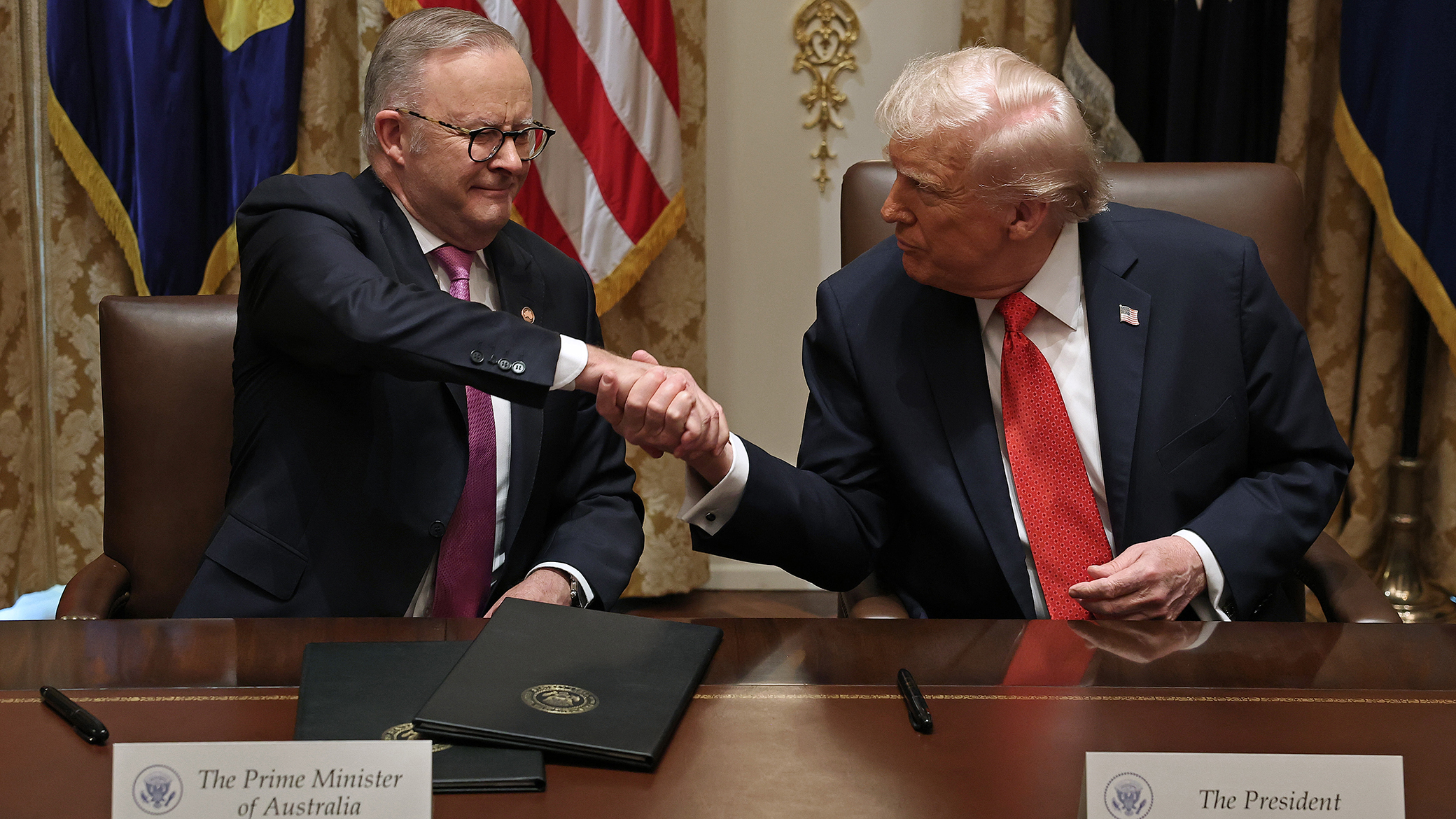
Separately, on the same occasion (October 20, 2025), Trump and Albanese signed a critical minerals framework designed to reduce both nations' dependence on China for essential materials used in defense, semiconductors, and energy transition [2].
The framework establishes a project pipeline estimated at $8.5 billion, with $2 billion in firm 6-month government commitments and additional potential financing through non-binding letters of interest [2].
**The AUKUS Endorsement: Context and Limitations**
Trump's endorsement is noteworthy because questions existed about whether his administration would continue a Biden-era defense agreement.
However, this endorsement doesn't address the fundamental challenges AUKUS faces:
1. **Cost catastrophe:** $368 billion is a massive commitment that will consume a significant portion of Australia's defense budget for decades [3]
2. **Timeline slippage:** Submarines not arriving until the 2040s rather than 2030s represents a critical security gap [3]
3. **Implementation risk:** Pentagon review of AUKUS indicates vulnerability to future administration changes [1]
Trump's endorsement is a positive policy signal but doesn't resolve these structural problems [3].
**The Critical Minerals Framework: Limited Near-Term Impact**
The critical minerals framework is strategically sound (reducing China dependence is legitimate) but overstated in presentation [2]:
- The $8.5 billion is prospective, not committed
- Actual near-term funding ($2 billion) is modest relative to the scale of global critical minerals transformation needed
- Implementation is at framework stage; no projects are operational
- The framework is primarily a US strategic initiative with Australia as a secondary beneficiary
**Who Benefits**
AUKUS Endorsement:
- Australia: Continued US security commitment and potential submarine acceleration
- UK: Trilateral security continuity
- US: Indo-Pacific security positioning
Critical Minerals Framework:
- US: Reduced China dependence in critical supply chains
- Australian mining companies: New markets and partnerships
- Defense manufacturers in both countries: Secured supply chains
Australian consumers benefit indirectly through improved strategic security and manufacturing competitiveness, but these are long-term effects [1], [2].
**What's Missing**
- No public details on how Australia will fund the $368 billion AUKUS program alongside other defense needs [3]
- No timeline for submarine delivery acceleration; Trump said "we're doing that" but provided no specifics [1]
- No clarity on whether the critical minerals commitment will survive beyond the Trump administration (ending January 2029) [2]
- No discussion of trade-offs: funding AUKUS submarines versus other defense, infrastructure, or social spending [3]