Parzialmente Vero

Valutazione: 6.0/10

Coalition
C0616

L'Affermazione

“Ha obbligato i beneficiari del welfare indigeni a lavorare a tempo pieno, per 52 settimane all'anno, per ricevere $5 all'ora.”
Fonte Originale: Matthew Davis
Analizzato: 31 Jan 2026

Fonti Originali

VERIFICA DEI FATTI

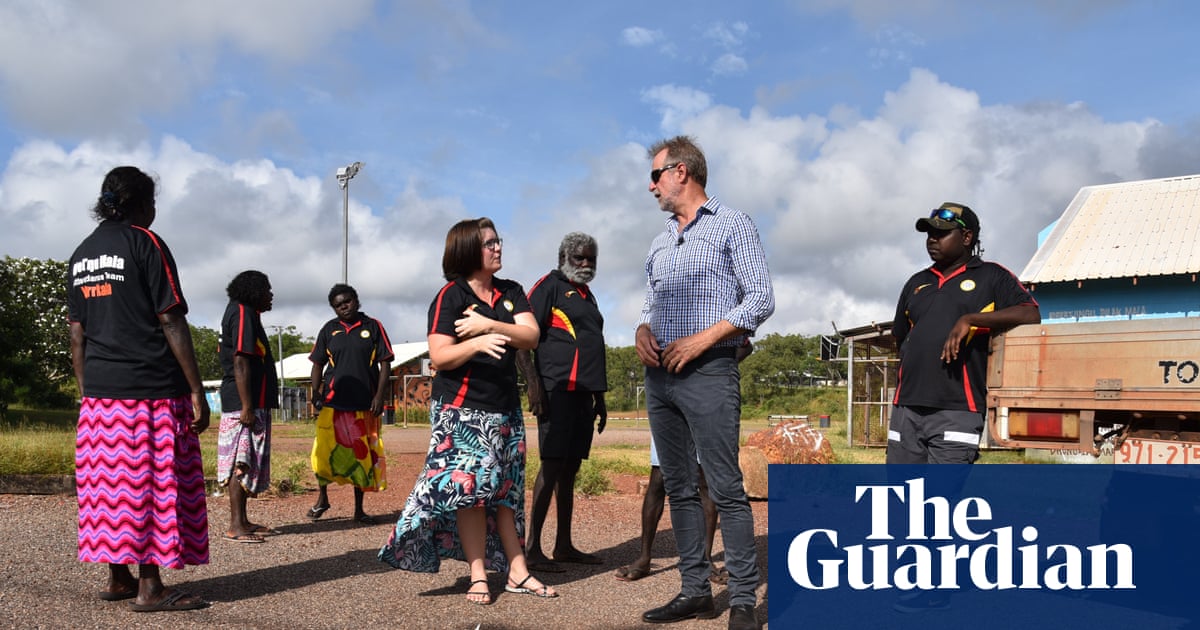
L'affermazione si riferisce al **Community Development Program (CDP)**, introdotto dal governo Coalition nel luglio 2015 sotto il Ministro per gli Affari Indigeni Nigel Scullion [1][2]. **Elementi fattuali chiave verificati:** 1. **Requisiti di lavoro**: Ai sensi del CDP, i partecipanti nelle comunità remote dovevano lavorare fino a **25 ore alla settimana, 52 settimane all'anno** (50 ore per quindicina, cinque giorni a settimana) per ricevere i pagamenti di welfare [3][4].
The claim refers to the **Community Development Program (CDP)**, introduced by the Coalition government in July 2015 under Indigenous Affairs Minister Nigel Scullion [1][2]. **Key factual elements verified:** 1. **Work Requirements**: Under the CDP, participants in remote communities were required to work up to **25 hours per week, 52 weeks per year** (50 hours per fortnight, five days a week) to receive welfare payments [3][4].
Questo superava significativamente i requisiti di Work for the Dole per le aree urbane secondo Jobactive, che richiedevano un massimo di 30 ore per quindicina e solo per sei mesi all'anno [1][5]. 2. **Demografia indigena**: Circa l'**84% dei partecipanti al CDP erano Aborigeni o Torres Strait Islander** residenti nelle comunità remote [3][6].
This significantly exceeded city-based Work for the Dole requirements under Jobactive, which required a maximum of 30 hours per fortnight and only for six months of the year [1][5]. 2. **Indigenous Demographics**: Approximately **84% of CDP participants were Aboriginal or Torres Strait Islander** people living in remote communities [3][6].
Il programma operava in 60 comunità remote in Queensland, Northern Territory, Western Australia, South Australia e New South Wales [1]. 3. **Tasso orario effettivo**: Se i partecipanti ricevevano il Newstart Allowance (circa $260-$280 per quindicina per una persona single nel 2015-2016) e lavoravano 50 ore per quindicina, il tasso orario effettivo era di circa **$5.20-$5.60 all'ora** [5][7].
The program operated in 60 remote communities across Queensland, Northern Territory, Western Australia, South Australia, and New South Wales [1]. 3. **Effective Hourly Rate**: If participants received the Newstart Allowance (approximately $260-$280 per fortnight for a single person in 2015-2016) and worked 50 hours per fortnight, the effective hourly rate was approximately **$5.20-$5.60 per hour** [5][7].
Questo era significativamente inferiore al salario minimo (circa $17.29/ora nel 2015). 4. **Sanzioni**: Il CDP imponeva gravi sanzioni finanziarie per la mancata conformità.
This was significantly below the minimum wage (approximately $17.29/hour in 2015). 4. **Penalties**: The CDP imposed severe financial penalties for non-compliance.
In due anni, furono emesse circa **350.000 sanzioni finanziarie** ai partecipanti per attività mancate o ritardi [5].
In two years, approximately **350,000 financial penalties** were issued to participants for missing activities or being late [5].
I partecipanti potevano vedersi sospesi i pagamenti per quattro-otto settimane per violazioni ripetute [1][5].
Participants could have payments cut off for four to eight weeks for repeated breaches [1][5].

Contesto Mancante

L'affermazione omette diversi elementi di contesto critici: 1. **Precedente storico**: Il CDP ha sostituito il **Remote Jobs and Communities Program (RJCP)**, introdotto dal **governo Gillard Labor nel luglio 2013** [6][8].
The claim omits several critical pieces of context: 1. **Historical Precedent**: The CDP replaced the **Remote Jobs and Communities Program (RJCP)**, which was introduced by the **Gillard Labor government in July 2013** [6][8].
L'RJCP aveva a sua volta sostituito il consolidato **Community Development Employment Projects (CDEP)**, iniziato sotto il **governo Fraser Coalition nel 1977** [6][9].
The RJCP itself had replaced the long-standing **Community Development Employment Projects (CDEP)**, which began under the **Fraser Coalition government in 1977** [6][9].
Il CDEP forniva impiego pubblico a tempo parziale di circa 15 ore alla settimana [9]. 2. **Programma equivalente del Labor**: L'RJCP (2013-2015) era la versione Labor dei servizi di impiego nelle aree remote, progettata per adattarsi alle circostanze delle comunità remote con una clientela indigena attesa all'85% [8].
The CDEP provided part-time publicly-funded employment of approximately 15 hours per week [9]. 2. **Labor's Equivalent Program**: The RJCP (2013-2015) was Labor's version of remote employment services, designed to accommodate remote community circumstances with an anticipated 85% Indigenous client base [8].
Il CDP della Coalition era essenzialmente una continuazione e intensificazione di un modello che entrambi i maggiori partiti stavano sviluppando da decenni. 3. **Razionale dichiarato dal governo**: Il governo Coalition ha difeso il CDP come necessario per aumentare l'occupazione e l'attività nelle aree remote.
The Coalition's CDP was essentially a continuation and intensification of a model that both major parties had been evolving for decades. 3. **Government's Stated Rationale**: The Coalition government defended the CDP as necessary to increase employment and activity in remote areas.
Il governo credeva fortemente che "tutti gli australiani possano dare un contributo alla loro comunità e che la migliore forma di welfare sia il supporto pratico per trovare un lavoro" [5].
The government strongly believed that "all Australians can make a contribution to their community and that the best form of welfare is practical support to find a job" [5].
Il Ministro Nigel Scullion ha respinto le critiche come attacchi partigiani [5]. 4. **Impatto sproporzionato**: L'affermazione non spiega *perché* questo ha colpito sproporzionatamente i popoli indigeni.
Minister Nigel Scullion dismissed criticism as partisan attacks [5]. 4. **Disproportionate Impact**: The claim doesn't explain *why* this affected Indigenous people disproportionately.
Il CDP operava in aree remote dove la popolazione è prevalentemente Aborigena o Torres Strait Islander.
The CDP operated in remote areas where the population is predominantly Aboriginal or Torres Strait Islander.
La progettazione del programma applicava servizi di impiego mainstream a contesti remoti dove le opportunità di impiego formale sono scarse [4]. 5. **Modifiche successive**: Nel 2021, il requisito di svolgere attività work-for-the-dole è diventato volontario (sebbene altri obblighi rimanessero), e il programma è stato completamente sostituito dal Remote Australia Employment Service (RAES) nel novembre 2025 [3][10].
The program's design applied mainstream employment services to remote contexts where formal employment opportunities are scarce [4]. 5. **Subsequent Changes**: In 2021, the requirement to undertake work-for-the-dole activities became voluntary (though other obligations remained), and the program was fully replaced by the Remote Australia Employment Service (RAES) in November 2025 [3][10].

Valutazione Credibilità Fonte

**New Matilda** (la fonte originale) è una pubblicazione online indipendente fondata nel 2004 che si definisce "giornalismo indipendente al suo meglio" [11]. - **Valutazione del bias**: Secondo valutazioni di terze parti, New Matilda ha un **bias anti-establishment** e si concentra particolarmente sulla copertura critica dei governi Coalition [12].
**New Matilda** (the original source) is an independent online publication founded in 2004 that describes itself as "independent journalism at its best" [11]. - **Bias Assessment**: According to third-party assessments, New Matilda has an **anti-establishment bias** and particularly focuses on critical coverage of Coalition governments [12].
La pubblicazione "cerca e si concentra su articoli con un bias anti-establishment, specialmente quelli che coinvolgono l'attuale governo di Coalizione Liberale/Nazionale" [12]. - **Credibilità**: Sebbene New Matilda abbia pubblicato giornalismo investigativo legittimo, i lettori dovrebbero essere consapevoli della sua linea editoriale che favorisce prospettive critiche sui governi conservatori. - **Data dell'articolo**: L'articolo citato è del dicembre 2014, pubblicato prima che il CDP fosse pienamente implementato (luglio 2015), il che significa che riportava modifiche proposte piuttosto che risultati effettivi di implementazione.
The publication "seeks out and concentrates on articles with an anti-establishment bias especially those involving the current Liberal/National Coalition government" [12]. - **Credibility**: While New Matilda has published legitimate investigative journalism, readers should be aware of its editorial stance favoring critical perspectives on conservative governments. - **Article Date**: The cited article is from December 2014, published before the CDP was fully implemented (July 2015), meaning it was reporting on proposed changes rather than actual implementation outcomes.
⚖️

Confronto con Labor

**Il Labor ha fatto qualcosa di simile?** Ricerca condotta: "Labor government RJCP remote indigenous employment program" **Risultato**: Sì.
**Did Labor do something similar?** Search conducted: "Labor government RJCP remote indigenous employment program" **Finding**: Yes.
Il **governo Gillard Labor ha introdotto il Remote Jobs and Communities Program (RJCP) nel luglio 2013**, che era l'immediato predecessore del CDP [6][8]. **Confronti chiave:** 1. **Continuità del programma**: RJCP (Labor, 2013-2015) CDP (Coalition, 2015-2021) RAES (Labor, 2025-presente) rappresenta un approccio in evoluzione ma continuo all'impiego nelle comunità indigene remote da parte di entrambi i maggiori partiti [3][6]. 2. **Scala e portata**: Il programma CDEP (che entrambi i partiti hanno modificato) aveva circa 35.000 partecipanti al suo apice nel 2016, con circa l'84% Aborigeni o Torres Strait Islander [3]. 3. **Impegno del Labor 2022**: Alle elezioni del 2022, il Labor ha promesso di "abolire il punitivo Community Development Program", definendolo "rotto e discriminatorio" [3].
The **Gillard Labor government introduced the Remote Jobs and Communities Program (RJCP) in July 2013**, which was the immediate predecessor to the CDP [6][8]. **Key comparisons:** 1. **Program Continuity**: The RJCP (Labor, 2013-2015) → CDP (Coalition, 2015-2021) → RAES (Labor, 2025-present) represents an evolving but continuous approach to remote Indigenous employment by both major parties [3][6]. 2. **Scale and Scope**: The CDEP program (which both parties modified) had approximately 35,000 participants at its peak in 2016, with around 84% being Aboriginal or Torres Strait Islander [3]. 3. **Labor's 2022 Commitment**: In the 2022 election, Labor promised to "abolish the punitive Community Development Program," calling it "broken and discriminatory" [3].
Questo suggerisce che il Labor riconosceva l'intensificazione dei requisiti sotto la versione della Coalition, pur mantenendo la propria versione di servizi di impiego nelle aree remote (RJCP) quando era all'opposizione. 4. **Contesto storico**: Entrambi i partiti hanno faticato con politiche di impiego efficaci nelle comunità indigene remote.
This suggests Labor acknowledged the intensification of requirements under the Coalition's version, while maintaining their own version of remote employment services (RJCP) when last in office. 4. **Historical Context**: Both parties have struggled with effective employment policy in remote Indigenous communities.
Il CDEP del governo Fraser (1977) era considerato innovativo per l'epoca, fornendo 15 ore a settimana di lavoro basato sulla comunità [9].
The Fraser government's original CDEP (1977) was considered innovative for its time, providing 15 hours per week of community-based work [9].
I governi successivi hanno inasprito i requisiti riducendo i risultati occupazionali effettivi.
Successive governments have tightened requirements while reducing actual employment outcomes.
🌐

Prospettiva Equilibrata

**Mentre i critici sostengono:** - Il CDP era discriminatorio razzialmente in effetti, richiedendo ai popoli indigeni nelle aree remote di lavorare molte più ore rispetto ai cercatori di lavoro nelle città per lo stesso pagamento di welfare [1][5] - I partecipanti avevano 27 volte più probabilità di ricevere sanzioni finanziarie rispetto agli equivalenti nelle città [1] - Il programma ha causato "danni reali alle persone" e ha spinto le comunità nella povertà, con persone che "mendicavano fuori dai supermercati" [1][5] - L'ACTU lo ha definito uno schema "razzista work-for-the-dole" che costringeva i lavoratori a lavorare senza protezioni OHS, ferie, superannuazione o risarcimento per infortuni sul lavoro [5] - Una class action della Federal Court presentata nel 2025 cerca un risarcimento per circa 20.000 partecipanti Aborigeni e Torres Strait Islander [1][2] **Il governo ha dichiarato:** - Tutti gli australiani dovrebbero contribuire alle loro comunità - Il programma era progettato per aumentare l'occupazione e l'attività nelle aree remote - Le critiche sono state respinte come attacchi partigiani da parte del Labor e dei Greens [5] - Sono state apportate modifiche nel tempo, inclusa la resa volontaria del work-for-the-dole nel 2021 [3] **L'analisi indipendente suggerisce:** - Il CDP era effettivamente significativamente più esigente dei programmi equivalenti nelle città [1][4] - La progettazione del programma creava incentivi perversi per i fornitori di emettere sanzioni piuttosto che supportare i partecipanti [1] - Il problema era sistemico: entrambi i maggiori partiti hanno faticato a creare servizi di impiego efficaci per le comunità indigene remote - La Coalition ha intensificato i requisiti esistiti sotto l'RJCP del Labor, ma entrambi operavano all'interno di un quadro "work for the dole" **Contesto chiave:** Questo **NON è esclusivo della Coalition** - entrambi i maggiori partiti hanno implementato ed evoluto programmi di impiego nelle comunità indigene remote dal 1977.
**While critics argue:** - The CDP was racially discriminatory in effect, requiring Indigenous people in remote areas to work far more hours than city-based jobseekers for the same welfare payment [1][5] - Participants were 27 times more likely to receive financial penalties than city-based equivalents [1] - The program caused "real harm to people" and drove communities into poverty, with people "begging outside supermarkets" [1][5] - The ACTU called it a "racist work-for-the-dole scheme" that forced workers to work without OHS protections, leave entitlements, superannuation, or worker's compensation [5] - A Federal Court class action filed in 2025 seeks compensation for approximately 20,000 Aboriginal and Torres Strait Islander participants [1][2] **The government stated:** - All Australians should contribute to their communities - The program was designed to increase employment and activity in remote areas - Criticism was dismissed as partisan attacks from Labor and Greens [5] - Changes were made over time, including making work-for-the-dole voluntary in 2021 [3] **Independent analysis suggests:** - The CDP was indeed significantly more demanding than equivalent city-based programs [1][4] - The program design created perverse incentives for providers to issue penalties rather than support participants [1] - The issue was systemic: both major parties have struggled to create effective employment services for remote Indigenous communities - The Coalition intensified requirements that existed under Labor's RJCP, but both operated within a "work for the dole" framework **Key context:** This is **NOT unique to the Coalition** - both major parties have implemented and evolved remote Indigenous employment programs since 1977.
Il CDP rappresentava un'intensificazione dei requisiti di lavoro iniziati sotto governi precedenti, ma il modello fondamentale (work-for-dole nelle comunità remote) è stato mantenuto da entrambi i governi Labor e Coalition per decenni.
The CDP represented an intensification of work requirements that began under previous governments, but the fundamental model (work-for-dole in remote communities) has been maintained by both Labor and Coalition governments for decades.

PARZIALMENTE VERO

6.0

/ 10

L'affermazione descrive accuratamente i requisiti di lavoro (25 ore/settimana, 52 settimane/anno) e il tasso orario effettivo (circa $5/ora) ai sensi del CDP.
The claim accurately describes the work requirements (25 hours/week, 52 weeks/year) and the effective hourly rate (approximately $5/hour) under the CDP.
Il programma ha effettivamente colpito sproporzionatamente i popoli indigeni (84% dei partecipanti) e richiedeva molto più lavoro rispetto agli equivalenti nelle aree urbane [1][3][5].
The program did disproportionately affect Indigenous people (84% of participants) and required far more work than city-based equivalents [1][3][5].
Tuttavia, l'affermazione è fuorviante nel suggerire che questo fosse esclusivo del governo Coalition.
However, the claim is misleading in implying this was unique to the Coalition government.
Il CDP era una continuazione dell'RJCP introdotto dal governo Gillard Labor nel 2013, che a sua volta si evolveva dal CDEP istituito dal governo Fraser Coalition nel 1977 [6][8][9].
The CDP was a continuation of the RJCP introduced by the Gillard Labor government in 2013, which itself evolved from the CDEP established by the Fraser Coalition government in 1977 [6][8][9].
Entrambi i maggiori partiti hanno mantenuto ed evoluto programmi simili di impiego nelle comunità indigene remote.
Both major parties have maintained and evolved similar remote Indigenous employment programs.
La Coalition ha intensificato i requisiti, ma non ha inventato questo modello.
The Coalition intensified requirements, but did not invent this model.

📚 FONTI & CITAZIONI (12)

  1. 1
    Federal class action lodged over 'racially discriminatory' work for the dole scheme

    Federal class action lodged over 'racially discriminatory' work for the dole scheme

    The community development program required those in remote areas – mostly Indigenous people – to work more than city-based participants

    the Guardian
  2. 2
    Class action against Work for the Dole alleges racial discrimination

    Class action against Work for the Dole alleges racial discrimination

    A class action on behalf of Aboriginal and Torres Strait Islander people alleges a Commonwealth Work for the Dole scheme was tougher on remote participants than on jobseekers in cities.

    Abc Net
  3. 3
    Promise check: Scrap the Community Development Program

    Promise check: Scrap the Community Development Program

    At the 2022 election, Labor promised to scrap the Community Development Program. Here's how that promise is tracking.

    Rmit Edu
  4. 4
    niaa.gov.au

    The Community Development Program (CDP)

    The Community Development Program (CDP) was the previous remote employment and community development service operating in remote Australia. It was replaced by the Remote Australia Employment Service (RAES) on 1 November 2025.  

    Niaa Gov
  5. 5
    Indigenous work-for-the-dole scheme 'cannot and should not continue', Senate committee report warns

    Indigenous work-for-the-dole scheme 'cannot and should not continue', Senate committee report warns

    Malarndirrimccarthy Com
  6. 6
    openresearch-repository.anu.edu.au

    The untimely abolition of the Community Development Employment Program

    Openresearch-repository Anu Edu

  7. 7
    servicesaustralia.gov.au

    How much JobSeeker Payment you can get

    Servicesaustralia Gov

  8. 8
    yumi-sabe.aiatsis.gov.au

    Implementing the remote jobs and communities program: how is policy translated into action?

    Yumi-sabe Aiatsis Gov

  9. 9
    en.wikipedia.org

    Community Development Employment Projects

    Wikipedia

  10. 10
    New remote jobs program to replace 'failed' work-for-the-dole scheme begins

    New remote jobs program to replace 'failed' work-for-the-dole scheme begins

    The federal government's new employment program - designed to replace the previous Coalition scheme - officially launches on Saturday, promising tailored support for around 40,000 job seekers.The Remo...

    National Indigenous Times
  11. 11
    New Matilda

    New Matilda

    New Matilda is independent journalism at its best. The site has been publishing intelligent coverage of Australian and international politics, media and culture since 2004. You’ll find new stories on the homepage daily.

    New Matilda
  12. 12
    New Matilda - Alchetron

    New Matilda - Alchetron

    newmatilda.com, commonly known as New Matilda, is a leftwing independent Australian website of news, analysis and satire. The website was established by John Menadue in August 2004. Its founding editor was Natasha Cica. The website is now registered in the name of Cordell Media Pty Ltd, a company w

    Alchetron.com

Metodologia della Scala di Valutazione

1-3: FALSO

Fattualmente errato o fabbricazione malevola.

4-6: PARZIALE

Un po' di verità ma il contesto è mancante o distorto.

7-9: PREVALENTEMENTE VERO

Tecnicismi minori o problemi di formulazione.

10: ACCURATO

Perfettamente verificato e contestualmente equo.

Metodologia: Le valutazioni sono determinate attraverso il confronto incrociato di documenti governativi ufficiali, organizzazioni indipendenti di verifica dei fatti e documenti di fonti primarie.