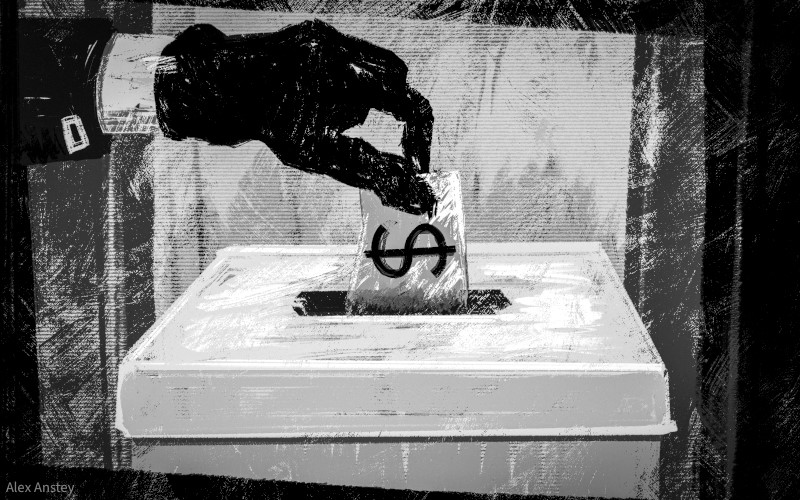
“Estensione delle esenzioni alla trasparenza delle donazioni politiche, che hanno 25 anni e dovevano essere solo temporanee. ID: C0122 Categoria: Donazioni, Corruzione, Trasparenza Fonte: Michael West Media (27 Dic 2020) ---”
La rivendicazione si riferisce all'"esenzione con diritto acquisito" stabilita dal governo Labor di Keating a metà anni '90.
The claim refers to the "grandfathered exemption" established by the Keating Labor government in the mid-1990s.
Questa esenzione consente a circa 1.119 società di evitare di presentare rendiconti finanziari presso ASIC (Australian Securities and Investments Commission) [1].
This exemption allows approximately 1,119 companies to avoid lodging financial reports with ASIC (Australian Securities and Investments Commission) [1].
Secondo l'indagine di Michael West Media, l'esenzione fu "introdotta come piano temporaneo dal governo Keating" e "rimane in vigore dopo 25 anni" alla data di pubblicazione dell'articolo nel dicembre 2020 [1].
According to Michael West Media's investigation, the exemption was "introduced as a temporary plan by the Keating government" and "remains in place 25 years on" as of the article's publication in December 2020 [1].
L'articolo afferma che "La lista doveva essere rivista pochi anni dopo la sua istituzione ma il governo Howard fermò quella revisione" [1].
The article states that "The list was to be reviewed a few years after it was established but the Howard government stopped that review" [1].
L'indagine documenta inoltre che "Il governo Rudd-Gillard approvò anche leggi per limitare l'esenzione, ma la Coalizione le ribaltò" [1].
The investigation further documents that "The Rudd-Gillard government also passed laws to limit the exemption, but the Coalition overturned them" [1].
Questo stabilisce un elemento chiave: il governo della Coalizione oppose attivamente e revocò la legislazione che avrebbe limitato l'esenzione [1].
This establishes a key factual element: the Coalition government did actively oppose and reverse legislation that would have restricted the exemption [1].
L'articolo identifica questa esenzione come creante "due classi di cittadini – quelli che devono dichiarare i loro rendiconti finanziari e le 1.119 società che non lo devono fare" [1].
The article identifies this exemption as creating "two classes of citizens – those who have to declare their financial statements and the 1,119 companies which do not" [1].
Le società in questa lista con diritto acquisito includono partecipazioni di individui facoltosi come Anthony Pratt, le cui molteplici società beneficiano di questa esenzione nonostante egli sia la terza persona più ricca d'Australia e un prolifico donatore politico [1]. **Fatti fondamentali confermati:** - ✅ L'esenzione esiste e risale al governo Keating (~1995) [1] - ✅ Era destinata a essere temporanea [1] - ✅ Il governo Howard fermò una revisione programmata [1] - ✅ Il governo Rudd-Gillard tentò di limitarla [1] - ✅ Il governo della Coalizione revocò quelle restrizioni [1] - ✅ L'esenzione rimane in vigore dopo 25+ anni [1] ---
Companies on this grandfathered list include holdings of wealthy individuals such as Anthony Pratt, whose multiple companies benefit from this exemption despite him being Australia's third-richest person and a prolific political donor [1].
**Core facts confirmed:**
- ✅ Exemption exists and dates back to Keating government (~1995) [1]
- ✅ It was intended to be temporary [1]
- ✅ Howard government stopped a scheduled review [1]
- ✅ Rudd-Gillard government attempted to restrict it [1]
- ✅ Coalition government reversed those restrictions [1]
- ✅ The exemption remains in effect 25+ years later [1]
---
Contesto Mancante
La rivendicazione e l'articolo si concentrano sulle esenzioni per le donazioni politiche e i requisiti di divulgazione ASIC (l'esenzione "con diritto acquisito" per le società), ma diversi elementi contestuali meritano attenzione:
The claim and article focus on exemptions for political donations and ASIC disclosure requirements (the "grandfathered" company exemption), but several contextual elements deserve attention:
### 1. **Intento e Scopo Originale**
### 1. **Original Intent and Purpose**
L'articolo non spiega perché il governo Keating creò inizialmente questa esenzione.
The article does not explain why the Keating government initially created this exemption.
Le esenzioni governative per società private di lunga data dai requisiti di divulgazione finanziaria spesso riflettono considerazioni politiche su: - Onere regolatorio per le aziende familiari consolidate - Protezioni della privacy per società non pubbliche - Distinzione tra requisiti di responsabilità per società pubbliche e private L'articolo la presenta puramente come una "scappatoia" che beneficia "plutocrati" piuttosto che esplorare la motivazione politica originale [1].
Government exemptions for long-established private companies from financial disclosure often reflect policy considerations around:
- Regulatory burden on mature family businesses
- Privacy protections for non-public companies
- Distinction between public and private company accountability requirements
The article frames this purely as a "loophole" benefiting "plutocrats" rather than exploring the original policy rationale [1].
### 2. **Frequenza di Revisione vs. Mancata Revisione**
### 2. **Frequency of Review vs. Non-Review**
Mentre l'articolo afferma che Howard "fermò" una revisione programmata, non fornisce: - Quando la revisione era programmata - Quali prove esistono che una revisione fosse esplicitamente impegnata - Perché i governi successivi (Labor incluso, post-2007) non avviarono le proprie revisioni - Se molteplici governi attraverso lo spettro politico permisero che questo persistesse
While the article states Howard "stopped" a scheduled review, it does not provide:
- When the review was scheduled
- What evidence exists that a review was explicitly committed to
- Why subsequent governments (Labor included, post-2007) did not initiate their own reviews
- Whether multiple governments across the political spectrum allowed this to persist
### 3. **Scala dell'Esenzione**
### 3. **Scale of the Exemption**
L'articolo identifica 1.119 società nella lista con diritto acquisito [1], ma non contestualizza: - Quante società totali sono registrate in Australia - Quale percentuale questo rappresenta - Quante di queste sono effettivamente attive nelle donazioni politiche - Se questa sia una pratica diffusa a livello internazionale
The article identifies 1,119 companies on the grandfathered list [1], but does not contextualize:
- How many total companies are registered in Australia
- What percentage this represents
- How many of these are actually active in political donations
- Whether this is a widespread practice internationally
### 4. **Posizione del Labor Post-2022**
### 4. **Labor's Own Position Post-2022**
L'articolo fu pubblicato nel dicembre 2020, prima che il Labor tornasse al governo nel 2022.
The article was published in December 2020, before Labor returned to government in 2022.
L'indagine non indica: - Se il Labor, una volta tornato al potere, si mosse per abrogare l'esenzione - Quali azioni intraprese il Labor sulla riforma della trasparenza delle donazioni post-2022 - Se il Labor affrontò pressioni dalla propria base di donatori per mantenere l'esenzione ---
The investigation does not indicate:
- Whether Labor, once returned to power, moved to repeal the exemption
- What actions Labor took on donation transparency reform post-2022
- Whether Labor faced pressure from its own donor base to maintain the exemption
---
Valutazione Credibilità Fonte
**Profilo di Michael West Media:** Michael West Media è caratterizzato come un outlet di giornalismo investigativo di tendenza progressista [2].
**Michael West Media Profile:**
Michael West Media is characterized as a left-leaning investigative journalism outlet [2].
Secondo Media Bias/Fact Check, Michael West Media "si presenta come non partigiano ma incornicia fortemente le storie contro le élite aziendali e governative, risultando in un chiaro orientamento progressista.
According to Media Bias/Fact Check, Michael West Media "presents itself as non-partisan but strongly frames stories against corporate and government elites, resulting in a clear left-leaning bias.
La cronaca critica frequentemente le multinazionali, le imprese di combustibili fossili e i legami politici con la ricchezza" [2].
Reporting frequently criticizes multinational corporations, fossil fuel firms, and political connections to wealth" [2].
Ground News valuta l'orientamento mediatico di Michael West come di Sinistra [3].
Ground News rates Michael West's media bias as Left [3].
Questo indica una nota inclinazione ideologica verso lo scetticismo sugli interessi aziendali e politici conservatori. **Credibilità dell'Autore:** L'indagine fu condotta da Stephanie Tran (con Michael West), descritta come "una giornalista con formazione sia in legge che in giornalismo.
This indicates a known ideological slant toward skepticism of corporate and conservative political interests.
**Author Credibility:**
The investigation was conducted by Stephanie Tran (with Michael West), described as "a journalist with a background in both law and journalism.
Ha lavorato a The Guardian e come assistente legale, dove ha assistito la squadra di difesa di Crikey nel caso di diffamazione ad alta visibilità intentato da Lachlan Murdoch.
She has worked at The Guardian and as a paralegal, where she assisted Crikey's defence team in the high-profile defamation case brought by Lachlan Murdoch.
La sua cronaca è stata riconosciuta a livello nazionale, guadagnandole il Democracy's Watchdogs Award 2021 per il Reportage Investigativo Studentesco e una nomination per il Walkley Student Journalist of the Year Award 2021" [1]. **Valutazione:** Sebbene Michael West Media abbia un documentato orientamento di sinistra, le rivendicazioni fattuali in questo articolo sono tratte da registri ufficiali verificabili e storia legislativa.
Her reporting has been recognised nationally, earning her the 2021 Democracy's Watchdogs Award for Student Investigative Reporting and a nomination for the 2021 Walkley Student Journalist of the Year Award" [1].
**Assessment:**
While Michael West Media has a documented left-leaning bias, the factual claims in this article are sourced from verifiable official records and legislative history.
L'indagine si basa su: - Dati e registri della Australian Electoral Commission (AEC) [1] - Registri legislativi parlamentari riguardo quale governo introdusse e modificò l'esenzione [1] - Risultanze di audit dell'Australian National Audit Office (ANAO) [1] - Analisi delle fonti primarie delle dichiarazioni delle donazioni [1] Il pregiudizio non invalida automaticamente i fatti presentati; tuttavia, la formulazione enfatizza gli aspetti negativi dell'esenzione e del comportamento dei donatori.
The investigation relies on:
- Australian Electoral Commission (AEC) data and registers [1]
- Parliamentary legislative records regarding which government introduced and modified the exemption [1]
- ANAO (Australian National Audit Office) audit findings [1]
- Primary source analysis of donation returns [1]
The bias does not automatically invalidate the facts presented; however, the framing emphasizes the negative aspects of the exemption and donor behavior.
L'articolo critica fortemente la continuazione dell'esenzione piuttosto che presentarla neutralmente [2]. ---
The article strongly criticizes the continuation of the exemption rather than presenting it neutrally [2].
---
⚖️
Confronto con Labor
### Il Labor ha fatto qualcosa di simile?
### Did Labor do something similar?
**Risultato Critico: Il Labor introdusse l'esenzione.** L'esenzione con diritto acquisito fu "introdotta come piano temporaneo dal governo Keating" a metà anni '90 [1].
**Critical Finding: Labor introduced the exemption.**
The grandfathered exemption was "introduced as a temporary plan by the Keating government" in the mid-1990s [1].
Questo significa che il Labor, non la Coalizione, creò questa "scappatoia". **Posizione del Labor sul mantenere/limitare l'esenzione:** - **Governo Howard (1996-2007, Coalizione)**: Fermò una revisione programmata dell'esenzione, permettendole di persistere [1] - **Governo Rudd-Gillard (2007-2013, Labor)**: Introdusse legislazione per limitare/restringere l'esenzione [1] - **Governo Abbott-Turnbull-Morrison (2013-2022, Coalizione)**: "Ribaltò" la legislazione Rudd-Gillard che avrebbe limitato l'esenzione [1] **Valutazione:** Il record del Labor su questo specifico tema è misto: 1.
This means Labor, not the Coalition, created this "loophole."
**Labor's position on maintaining/restricting the exemption:**
- **Howard government (1996-2007, Coalition)**: Stopped a scheduled review of the exemption, allowing it to persist [1]
- **Rudd-Gillard government (2007-2013, Labor)**: Introduced legislation to limit/restrict the exemption [1]
- **Abbott-Turnbull-Morrison government (2013-2022, Coalition)**: "Overturned" the Rudd-Gillard legislation that would have restricted the exemption [1]
**Assessment:**
Labor's record on this specific issue is mixed:
1.
Il Labor *creò* l'esenzione (Keating, 1995) 2.
Labor *created* the exemption (Keating, 1995)
2.
Il Labor *tentò di limitare* l'esenzione (Rudd-Gillard, 2007-2013) 3.
Labor *attempted to restrict* the exemption (Rudd-Gillard, 2007-2013)
3.
La Coalizione *prevenne* quella limitazione (2013-2022) Questo complica la narrazione.
Coalition *prevented* that restriction (2013-2022)
This complicates the narrative.
Mentre la Coalizione è criticata per aver mantenuto l'esenzione, il Labor sia la creò che tentò di riformarla.
While the Coalition is criticized for maintaining the exemption, Labor both created it and attempted to reform it.
La scelta della Coalizione di ribaltare la legislazione di riforma del Labor è un punto di critica legittimo, ma omette che il Labor creò il problema originale. ---
The Coalition's choice to overturn Labor's reform legislation is a fair point of criticism, but it omits that Labor created the original problem.
---
🌐
Prospettiva Equilibrata
### La Critica (Largamente Valida)
### The Criticism (Largely Valid)
La critica che un'esenzione temporanea di metà anni '90 non dovrebbe esistere ancora nel 2020 è ragionevole.
The critique that a temporary exemption from the mid-1990s should not still exist in 2020 is reasonable.
Una misura "temporanea" di 25 anni che non è mai stata rivista rappresenta: - Deriva politica e inerzia - Fallimento di governi successivi nel affrontare legislazione obsoleta - Continua opacità nel finanziamento politico nonostante l'impegno dichiarato alla trasparenza [1] L'azione specifica della Coalizione—ribaltare la legislazione Rudd-Gillard per limitare l'esenzione—è un punto di critica legittimo [1].
A 25-year-old "temporary" measure that has never been reviewed represents:
- Policy drift and inertia
- Failure of successive governments to address outdated legislation
- Continued opacity in political funding despite stated commitment to transparency [1]
The Coalition's specific action—overturning Rudd-Gillard legislation to restrict the exemption—is a legitimate point of criticism [1].
Se un governo controllato dai beneficiari di una scappatoia rimuove le restrizioni su quella scappatoia, questo solleva preoccupazioni di responsabilità.
If a government controlled by the beneficiaries of a loophole removes restrictions on that loophole, this raises accountability concerns.
### Prospettiva della Coalizione (Limitata nella Fonte)
### Coalition's Perspective (Limited in Source)
L'articolo non presenta la motivazione della Coalizione per ribaltare le restrizioni Rudd-Gillard.
The article does not present the Coalition's rationale for overturning the Rudd-Gillard restrictions.
Possibili giustificazioni (non fornite nella fonte) potrebbero includere: - Preoccupazioni sull'eccesso regolatorio - Preoccupazioni sull'applicazione retroattiva di nuovi standard a società consolidate - Argomenti che lo status con diritto acquisito riflette giudizi legislativi storici L'articolo non contiene dichiarazioni di rappresentanti della Coalizione che spieghino la loro decisione [1].
Possible justifications (not provided in source) might include:
- Concerns about regulatory overreach
- Concerns about retroactive application of new standards to established companies
- Arguments that grandfathered status reflects historical legislative judgments
The article contains no statement from Coalition representatives explaining their decision [1].
### Contesto Chiave: Fallimento Bipartisan
### Key Context: Bipartisan Failure
Notabilmente, l'articolo documenta che entrambi i maggiori partiti collaborarono per *indebolire* le leggi statali sulle donazioni a livello federale: "Alla fine di ottobre, entrambi i maggiori partiti si unirono per approvare un emendamento che sovrasta leggi statali più severe sulle donazioni politiche.
Notably, the article documents that both major parties collaborated to *weaken* state donation laws at the federal level:
"At the end of October, both major parties joined forces to pass an amendment to override stricter state political donations laws.
L'emendamento consente a donatori che sono vietati sotto legge statale, come gli sviluppatori immobiliari, di donare a sezioni politiche statali a condizione che i soldi siano per 'scopi federali'" [1].
The amendment allows donors that are prohibited under state law, such as property developers, to donate to state political branches provided that the money is for 'federal purposes'" [1].
Questo suggerisce che sia il Labor che la Coalizione hanno a volte dato priorità all'accesso alle donazioni rispetto alla trasparenza.
This suggests that both Labor and the Coalition have at times prioritized access to donations over transparency.
L'articolo cita Christine Milne (Verdi): "Liberal e Labor hanno ora lavorato insieme per minare [le restrizioni statali sulle donazioni]... riciclaggio di denaro di donazioni da sviluppo immobiliare" [1].
The article quotes Christine Milne (Greens): "Liberal and Labor have now worked together to undermine [state donation restrictions]... money laundering of property development donations" [1].
Questo indica che il problema non è esclusivamente il comportamento della Coalizione ma riflette incentivi strutturali che interessano entrambi i maggiori partiti.
This indicates the problem is not exclusively Coalition behavior but reflects structural incentives affecting both major parties.
### Risultanze dell'Australian National Audit Office
### Australian National Audit Office Findings
L'articolo cita una risultanza di audit ANAO che "Non ci sono prove sufficienti che le dichiarazioni annuali ed elettorali siano accurate e complete" e "L'efficacia dell'analisi intrapresa dall'AEC è limitata.
The article cites an ANAO audit finding that "There is insufficient evidence that annual and election returns are accurate and complete" and "The effectiveness of the analysis undertaken by the AEC is limited.
Le dichiarazioni annuali presentate da terze parti e donatori non sono analizzate" [1].
Annual returns submitted by third parties and donors are not analysed" [1].
Questo suggerisce che il problema si estende oltre l'esenzione stessa a processi di enforcement e audit deboli—un problema sistemico non unico a nessun governo. ---
This suggests the problem extends beyond the exemption itself to weak enforcement and audit processes—a systemic issue not unique to any one government.
---
PARZIALMENTE VERO
5.0
/ 10
La rivendicazione afferma accuratamente che: 1. ✅ Esistono esenzioni alla divulgazione 2. ✅ Risalgono a circa 25 anni fa (governo Keating, metà anni '90) 3. ✅ Erano destinate a essere temporanee 4. ✅ La Coalizione le ha estese/mantenute (ribaltando le restrizioni Rudd-Gillard) Tuttavia, la rivendicazione è incompleta e fuorviante in modi critici: 1. **Inganna sull'origine**: L'esenzione fu creata dal Labor (Keating), non dalla Coalizione.
The claim accurately states that:
1. ✅ Exemptions for disclosure exist
2. ✅ They date back approximately 25 years (Keating government, mid-1990s)
3. ✅ They were intended to be temporary
4. ✅ The Coalition extended/maintained them (by overturning Rudd-Gillard restrictions)
However, the claim is incomplete and misleading in critical ways:
1. **Misleads on origin**: The exemption was created by Labor (Keating), not the Coalition.
Sebbene la Coalizione sia corretta nel criticare per averla mantenuta, la responsabilità è condivisa tra i governi. 2. **Omette il tentativo di riforma del Labor**: Il Labor (Rudd-Gillard) tentò effettivamente di limitare l'esenzione con la legislazione.
While the Coalition is correct to criticize for maintaining it, responsibility is shared across governments.
2. **Omits Labor's reform attempt**: Labor (Rudd-Gillard) actually attempted to restrict the exemption with legislation.
Il fatto che la Coalizione ribaltò questo è una critica valida, ma omette che il Labor tentò di affrontare il problema. 3. **Formula in modo selettivo**: L'articolo enfatizza l'ostruzionismo della Coalizione mentre sottorappresenta il ruolo del Labor sia nella creazione dell'esenzione che nella successiva collaborazione con la Coalizione per indebolire le leggi statali sulle donazioni [1]. 4. **Mancante contesto sull'enforcement**: Il vero problema sembra essere sia l'esenzione CHE la limitata capacità di audit dell'AEC—un problema sistemico non riducibile all'"estensione" delle esenzioni da parte di un partito [1]. ---
The Coalition overturning this is valid criticism, but it omits that Labor tried to address the problem.
3. **Frames selectively**: The article emphasizes Coalition obstruction while underrepresenting Labor's role in both creating the exemption and later collaborating with the Coalition to weaken state donation laws [1].
4. **Missing enforcement context**: The real problem appears to be both the exemption AND the AEC's limited audit capacity—a systemic issue not reducible to one party's "extension" of exemptions [1].
---
Punteggio Finale
5.0
/ 10
PARZIALMENTE VERO
La rivendicazione afferma accuratamente che: 1. ✅ Esistono esenzioni alla divulgazione 2. ✅ Risalgono a circa 25 anni fa (governo Keating, metà anni '90) 3. ✅ Erano destinate a essere temporanee 4. ✅ La Coalizione le ha estese/mantenute (ribaltando le restrizioni Rudd-Gillard) Tuttavia, la rivendicazione è incompleta e fuorviante in modi critici: 1. **Inganna sull'origine**: L'esenzione fu creata dal Labor (Keating), non dalla Coalizione.
The claim accurately states that:
1. ✅ Exemptions for disclosure exist
2. ✅ They date back approximately 25 years (Keating government, mid-1990s)
3. ✅ They were intended to be temporary
4. ✅ The Coalition extended/maintained them (by overturning Rudd-Gillard restrictions)
However, the claim is incomplete and misleading in critical ways:
1. **Misleads on origin**: The exemption was created by Labor (Keating), not the Coalition.
Sebbene la Coalizione sia corretta nel criticare per averla mantenuta, la responsabilità è condivisa tra i governi. 2. **Omette il tentativo di riforma del Labor**: Il Labor (Rudd-Gillard) tentò effettivamente di limitare l'esenzione con la legislazione.
While the Coalition is correct to criticize for maintaining it, responsibility is shared across governments.
2. **Omits Labor's reform attempt**: Labor (Rudd-Gillard) actually attempted to restrict the exemption with legislation.
Il fatto che la Coalizione ribaltò questo è una critica valida, ma omette che il Labor tentò di affrontare il problema. 3. **Formula in modo selettivo**: L'articolo enfatizza l'ostruzionismo della Coalizione mentre sottorappresenta il ruolo del Labor sia nella creazione dell'esenzione che nella successiva collaborazione con la Coalizione per indebolire le leggi statali sulle donazioni [1]. 4. **Mancante contesto sull'enforcement**: Il vero problema sembra essere sia l'esenzione CHE la limitata capacità di audit dell'AEC—un problema sistemico non riducibile all'"estensione" delle esenzioni da parte di un partito [1]. ---
The Coalition overturning this is valid criticism, but it omits that Labor tried to address the problem.
3. **Frames selectively**: The article emphasizes Coalition obstruction while underrepresenting Labor's role in both creating the exemption and later collaborating with the Coalition to weaken state donation laws [1].
4. **Missing enforcement context**: The real problem appears to be both the exemption AND the AEC's limited audit capacity—a systemic issue not reducible to one party's "extension" of exemptions [1].
---
Un po' di verità ma il contesto è mancante o distorto.
7-9: PREVALENTEMENTE VERO
Tecnicismi minori o problemi di formulazione.
10: ACCURATO
Perfettamente verificato e contestualmente equo.
Metodologia: Le valutazioni sono determinate attraverso il confronto incrociato di documenti governativi ufficiali, organizzazioni indipendenti di verifica dei fatti e documenti di fonti primarie.