
Sebagian Benar

Penilaian: 6.0/10

Coalition
C0471

Klaim

“Meningkatkan biaya tes pap smear.”
Sumber Asli: Matthew Davis

Sumber Asli

VERIFIKASI FAKTA

Klaim ini mengacu pada perubahan yang diumumkan oleh pemerintah Koalisi dalam Outlook Fiskal Ekonomi Pertengahan Tahun (MYEFO) Desember 2015.
The claim refers to changes announced by the Coalition government in its December 2015 Mid-Year Economic Fiscal Outlook (MYEFO).
Pemerintah mengusulkan penghapusan pembayaran insentif bulk-billing untuk layanan patologi dan pencitraan diagnostik, dengan target penghematan $650 juta dolar Australia selama empat tahun [1].
The government proposed removing bulk-billing incentive payments for pathology and diagnostic imaging services, aiming to save $650 million over four years [1].
Insentif ini, senilai antara $1,40 hingga $3,40 per layanan, dibayarkan langsung ke penyedia patologi untuk mendorong bulk-billing [1].
These incentives, worth between $1.40 and $3.40 per service, were paid directly to pathology providers to encourage bulk-billing [1].
Artikel The Guardian dari Januari 2016 mengutip kekhawatiran Partai Buruh (Labor) dan Partai Hijau (Greens) bahwa pemotongan ini akan mengakibatkan pasien membayar untuk layanan yang sebelumnya di-bulk-bill, termasuk tes pap smear [1].
The Guardian article from January 2016 cited Labor and Greens concerns that these cuts would result in patients paying for previously bulk-billed services, including pap smears [1].
Namun, situasi berkembang setelah pengumuman awal.
However, the situation evolved after the initial announcement.
Pada Mei 2016, pemerintah mencapai kesepakatan dengan Pathology Australia (yang mewakili penyedia besar termasuk Sonic Healthcare dan Genea) untuk mengatur sewa ruang pengambilan sampel patologi yang berlokasi bersama praktik dokter umum [1].
In May 2016, the government struck a deal with Pathology Australia (representing major providers including Sonic Healthcare and Genea) to regulate rents for pathology collection rooms co-located in GP practices [1].
Kesepakatan ini dimaksudkan untuk mengimbangi penghapusan insentif bulk-billing dengan mengurangi biaya overhead untuk penyedia besar.
This deal was intended to offset the removal of bulk-billing incentives by reducing overhead costs for large providers.
Verdik FactCheck dari The Conversation (Juni 2016) mengonfirmasi bahwa meskipun Koalisi memang memotong pembayaran bulk-billing, "bagian kedua dari pernyataan [tersebut] 'untuk membuat pasien membayar lebih' tidak menceritakan seluruh kisah" [1].
The FactCheck verdict from The Conversation (June 2016) confirmed that while the Coalition did cut bulk-billing payments, "the second part of [the] statement – 'to make patients pay more' – didn't tell the whole story" [1].
Hasilnya tergantung pada apakah penyedia individual memilih untuk meneruskan biaya kepada pasien.
The outcome depended on whether individual providers chose to pass costs to patients.

Konteks yang Hilang

Klaim ini mengabaikan beberapa faktor kontekstual kritis: 1. **Kebijakan diubah setelah reaksi keras**: Pemerintah menegosiasikan kompromi dengan Pathology Australia pada Mei 2016 setelah kampanye ekstensif (kampanye "Don't Kill Bulk Bill" mengumpulkan hampir 600.000 tanda tangan) [1]. 2. **Tidak semua penyedia akan membebankan biaya kepada pasien**: Penyedia korporat besar seperti Sonic Healthcare (dengan pendapatan tahunan ~$4 miliar) memiliki kapasitas untuk menyerap biaya atau mengambil manfaat dari regulasi sewa.
The claim omits several critical contextual factors: 1. **The policy was modified after backlash**: The government negotiated a compromise with Pathology Australia in May 2016 after extensive campaigning (the "Don't Kill Bulk Bill" campaign collected nearly 600,000 signatures) [1]. 2. **Not all providers would charge patients**: Large corporate providers like Sonic Healthcare (with ~$4 billion annual revenue) had capacity to absorb costs or benefit from rent regulation.
Hasilnya bervariasi menurut jenis penyedia [1]. 3. **Penyedia yang lebih kecil menghadapi tantangan berbeda**: Penyedia patologi nirlaba dan independen, khususnya di daerah regional dan pedesaan yang diwakili oleh Catholic Health Australia, berpendapat bahwa kesepakatan sewa tidak proporsional membantu penyedia korporat besar dan tidak akan cukup untuk operator yang lebih kecil [1]. 4. **Rasional kebijakan**: Menteri Kesehatan Sussan Ley berpendapat bahwa insentif bulk-billing tidak dimaksudkan untuk "mensubsidi silang biaya operasional lainnya bagi perusahaan besar beberapa di antaranya dimiliki oleh perusahaan ekuitas swasta pada saat biaya perawatan kesehatan tumbuh" [1]. 5. **Tingkat bulk-billing yang tinggi**: Grattan Institute melaporkan bahwa hampir 99% tes patologi untuk pasien rawat jalan sudah di-bulk-bill, naik dari 93% satu dekade sebelumnya, menunjukkan insentif tersebut telah mencapai tujuan awalnya [1].
The outcome varied by provider type [1]. 3. **Smaller providers faced different challenges**: Not-for-profit and independent pathology providers, particularly in regional and rural areas represented by Catholic Health Australia, argued the rent deal disproportionately assisted large corporate providers and wouldn't be sufficient for smaller operators [1]. 4. **Policy rationale**: Health Minister Sussan Ley argued that bulk-billing incentives were not intended to "cross-subsidise other costs of doing business for large companies – some of which are owned by private equity firms – at a time when health care costs are growing" [1]. 5. **High bulk-billing rates**: The Grattan Institute reported that almost 99% of pathology tests for out-of-hospital patients were already bulk-billed, up from 93% a decade prior, suggesting the incentive had achieved its original purpose [1].

Penilaian Kredibilitas Sumber

Sumber aslinya adalah The Guardian, yang umumnya dianggap sebagai organisasi berita arus utama yang bereputasi.
The original source is The Guardian, which is generally regarded as a mainstream reputable news organization.
The Guardian memiliki pandangan editorial center-left dan bukan organisasi advokasi partisan.
The Guardian has a center-left editorial stance and is not a partisan advocacy organization.
Artikel spesifik mengutip lawan politik (Partai Buruh dan Greens) yang membuat prediksi tentang konsekuensi kebijakan, yang merupakan pelaporan politik standar tetapi tidak merupakan verifikasi independen dari hasil.
The specific article cited political opponents (Labor and Greens) making predictions about policy consequences, which is standard political reporting but does not constitute independent verification of outcomes.
Artikel bertanggal Januari 2016, di awal kontroversi.
The article is dated January 2016, early in the controversy.
Perkembangan selanjutnya (kesepakatan sewa Mei 2016) memodifikasi dampak aktual.
Subsequent developments (the May 2016 rent deal) modified the actual impact.
Oleh karena itu, meskipun The Guardian adalah sumber yang kredibel, artikel tersebut mewakili peringapan tahap awal daripada dokumentasi hasil yang terverifikasi.
Therefore, while The Guardian is a credible source, the article represents an early-stage warning rather than verified outcome documentation.
Verifikasi otoritatif tambahan berasal dari: - Election FactCheck The Conversation (fact-checking peer-review akademis) [1] - Kantor Audit Nasional Australia dan catatan parlemen - Pernyataan Pathology Australia sendiri
Additional authoritative verification comes from: - The Conversation's Election FactCheck (academic peer-reviewed fact-checking) [1] - Australian National Audit Office and parliamentary records - Pathology Australia's own statements
⚖️

Perbandingan Labor

**Apakah Partai Buruh (Labor) melakukan hal serupa?** Ya, sejarah Partai Buruh dengan rebate Medicare sangat relevan: 1. **Partai Buruh memulai insentif bulk-billing patologi asli**: Pengumuman Desember 2015 Koalisi berusaha menghapus insentif yang dicatat oleh Menteri Kesehatan Sussan Ley "diperkenalkan oleh Partai Buruh telah menelan biaya $500 juta dolar Australia selama lima tahun dan memiliki dampak kecil pada tingkat bulk-billing" [2]. 2. **Partai Buruh memulai pembekuan rebate Medicare**: Pembekuan rebate Medicare yang menjadi masalah politik besar sebenarnya dimulai oleh pemerintah Partai Buruh Gillard pada Mei 2013.
**Did Labor do something similar?** Yes, Labor's history with Medicare rebates is directly relevant: 1. **Labor initiated the original pathology bulk-billing incentives**: The Coalition's December 2015 announcement sought to remove incentives that Health Minister Sussan Ley noted "introduced by Labor had cost $500 million over five years and had had little impact on bulk-billing rates" [2]. 2. **Labor started the Medicare rebate freeze**: The Medicare rebate freeze that became a major political issue was actually initiated by the Gillard Labor government in May 2013.
Koalisi melanjutkan dan memperpanjang pembekuan ini setelah memenangkan pemerintahan pada September 2013 [3].
The Coalition continued and extended this freeze after winning government in September 2013 [3].
AAP FactCheck mengonfirmasi ini, mencatat bahwa klaim Perdana Menteri Albanese yang menuduh pembekuan semata-mata kepada Koalisi adalah "misleading" karena menghilangkan inisiasi 2013 oleh Partai Buruh [3]. 3. **Janji pemilihan Partai Buruh 2016**: Selama pemilihan 2016, Partai Buruh berjanji untuk membalikkan pemotongan insentif bulk-billing Koalisi dan mengangkat pembekuan rebate Medicare (yang dimulai oleh Partai Buruh sendiri) [4].
AAP FactCheck confirmed this, noting that Prime Minister Albanese's claims attributing the freeze solely to the Coalition were "misleading" because they omitted Labor's 2013 initiation [3]. 3. **Labor's 2016 election promise**: During the 2016 election, Labor promised to reverse the Coalition's bulk-billing incentive cuts and lift the Medicare rebate freeze (which Labor itself had started) [4].
Ini memposisikan Partai Buruh sebagai pembela Medicare, meskipun telah memulai pembekuan tersebut. **Perbandingan**: Kedua partai telah menerapkan atau memperpanjang pembatasan rebate Medicare ketika menghadapi tekanan anggaran.
This positioned Labor as defending Medicare, despite having initiated the freeze. **Comparison**: Both parties have implemented or extended Medicare rebate constraints when facing budget pressures.
Perubahan patologi Koalisi mewakili modifikasi terarah dari program yang diperkenalkan Partai Buruh, sedangkan pembekuan rebate Medicare yang lebih luas merupakan kontinuitas bipartisan dari pemerintahan Partai Buruh melalui pemerintahan Koalisi.
The Coalition's pathology changes represented a targeted modification of a Labor-introduced program, whereas the broader Medicare rebate freeze was a bipartisan continuity from Labor through Coalition governments.
🌐

Perspektif Seimbang

Klaim "Meningkatkan biaya tes pap smear" secara teknis akurat karena Koalisi menghapus insentif yang dirancang untuk menjaga layanan patologi tetap di-bulk-bill.
The claim "Increased the cost of pap smears" is technically accurate in that the Coalition removed incentives designed to keep pathology services bulk-billed.
Namun, kisah lengkapnya meliputi: **Kritik terhadap kebijakan:** - Penghapusan insentif menciptakan ketidakpastian tentang biaya pasien - Kekhawatiran bahwa perempuan mungkin menghindari skrining kanker serviks karena biaya baru - Penyedia nirlaba dan independen berpendapat kesepakatan sewa menguntungkan korporasi besar - Kritikus memberi label "co-payment by stealth" [5] **Pembenaran pemerintah:** - Tingkat bulk-billing patologi sudah mencapai 99%, menunjukkan insentif tersebut telah berhasil dan tidak lagi diperlukan - Penyedia patologi korporat besar (beberapa dimiliki ekuitas swasta) dilihat menggunakan insentif untuk mensubsidi silang biaya bisnis lain - Kesepakatan regulasi sewa bertujuan untuk mengatasi distorsi pasar yang sebenarnya (sewa ruang pengambilan sampel yang berlebihan) - Penghematan $650 juta dolar Australia selama empat tahun perlu ditimbang terhadap prioritas anggaran **Tindakan setara Partai Buruh:** - Partai Buruh memperkenalkan insentif patologi asli yang menelan biaya $500 juta dolar Australia selama lima tahun - Partai Buruh memulai pembekuan rebate Medicare 2013 yang berlanjut di bawah Koalisi - Kedua partai menghadapi tekanan biaya perawatan kesehatan serupa dan membuat pertukaran sulit terkait pendanaan Medicare **Konteks kunci**: Perubahan rebate patologi bukan kebijakan unik Koalisi mereka memodifikasi program yang diperkenalkan Partai Buruh.
However, the full story includes: **Criticisms of the policy:** - Removal of incentives created uncertainty about patient costs - Concerns that women might avoid cervical cancer screening due to new fees - Smaller and not-for-profit providers argued the rent deal favored large corporations - Critics labeled it a "co-payment by stealth" [5] **Government justifications:** - Pathology bulk-billing rates were already at 99%, suggesting the incentive had succeeded and was no longer necessary - Large corporate pathology providers (some private equity-owned) were seen as using incentives to cross-subsidize other business costs - The rent regulation deal aimed to address genuine market distortion (excessive collection room rents) - The $650 million savings over four years needed to be weighed against budget priorities **Labor's equivalent actions:** - Labor introduced the original pathology incentives that cost $500 million over five years - Labor initiated the 2013 Medicare rebate freeze that continued under the Coalition - Both parties have faced similar budget pressures regarding Medicare sustainability **Key context**: The pathology rebate changes were not uniquely Coalition policy – they modified a Labor-introduced program.
Kedua partai telah berjuang dengan meningkatnya biaya perawatan kesehatan dan membuat pertukaran sulit terkait pendanaan Medicare.
Both parties have grappled with rising healthcare costs and made difficult trade-offs regarding Medicare funding.
Kontroversi 2016 menjadi signifikan secara politik bukan karena kebijakannya belum pernah terjadi sebelumnya, tetapi karena berhasil dijadikan senjata politik oleh Partai Buruh dalam tahun pemilihan.
The 2016 controversy became politically significant not because the policy was unprecedented, but because it was successfully weaponized by Labor in an election year.

SEBAGIAN BENAR

6.0

/ 10

Koalisi memang mengumumkan pemotongan insentif bulk-billing patologi yang dapat meningkatkan biaya out-of-pocket untuk tes pap smear.
The Coalition did announce cuts to pathology bulk-billing incentives that could have increased out-of-pocket costs for pap smears.
Namun, klaim ini menghilangkan: (1) pemerintah kemudian menegosiasikan kesepakatan regulasi sewa dengan Pathology Australia untuk mengimbangi biaya; (2) penyedia besar dengan skala ekonomi dapat menyerap perubahan; (3) insentif bulk-billing awalnya diperkenalkan oleh Partai Buruh (Labor) dan telah mencapai tujuannya (tingkat bulk-billing 99%); dan (4) Partai Buruh sendiri memulai pembekuan rebate Medicare yang dipertahankan oleh kedua partai.
However, the claim omits: (1) the government subsequently negotiated a rent regulation deal with Pathology Australia to offset costs; (2) large providers with economies of scale could absorb the changes; (3) the bulk-billing incentives were originally introduced by Labor and had achieved their purpose (99% bulk-billing rates); and (4) Labor itself initiated the broader Medicare rebate freeze that both parties maintained.
Apakah pasien benar-benar membayar lebih tergantung pada pilihan penyedia individual, dan kebijakan ini diubah setelah reaksi keras publik.
Whether patients actually paid more depended on individual provider choices, and the policy was modified after public backlash.

📚 SUMBER DAN KUTIPAN (5)

  1. 1
    theconversation.com

    theconversation.com

    Labor’s shadow health minister Catherine King, said that the government has “cut bulk-billing payments for pathology and diagnostic imaging to make patients pay more”. Is that right?

    The Conversation
  2. 2
    afr.com

    afr.com

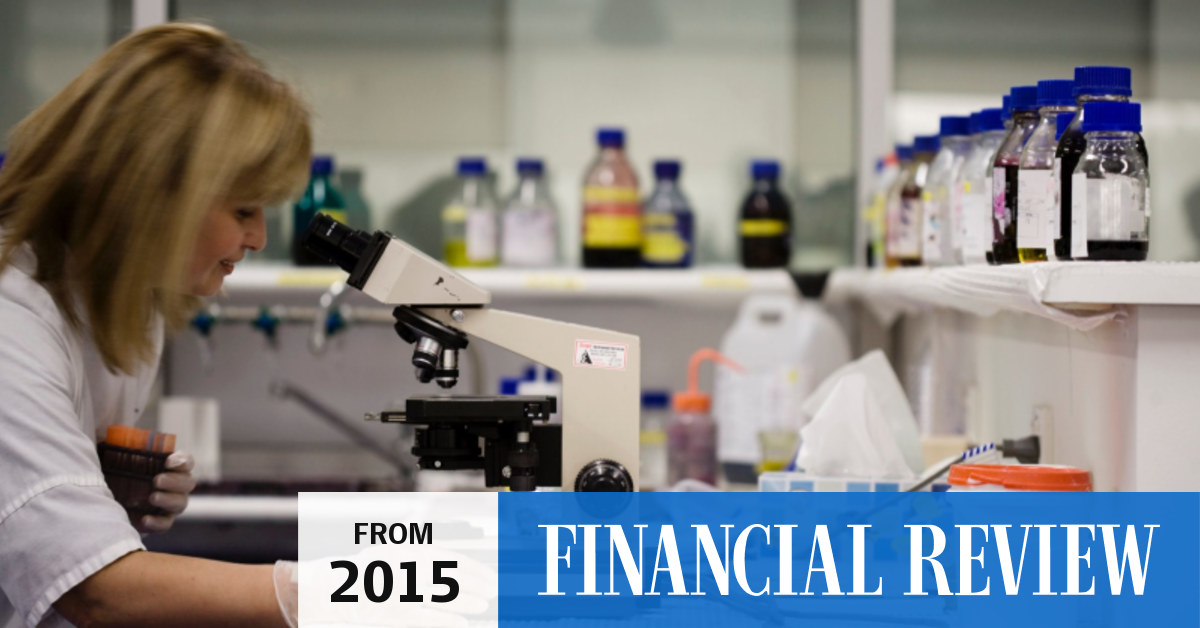
    Hefty government cuts to pathology and diagnostic imaging incentives have sparked a sharp sell-off of healthcare stocks.

    Australian Financial Review
  3. 3
    aap.com.au

    aap.com.au

    Anthony Albanese failed to mention that Labor initiated a rebate freeze when naming Peter Dutton as the man responsible.

    Aap Com
  4. 4
    theconversation.com

    theconversation.com

    Labor will lift the rebate freeze from 2017, while under the Coalition, GPs will be paid the same amount for delivering health services in 2020 as they were in 2014. So what does this mean for patients?

    The Conversation
  5. 5
    abc.net.au

    abc.net.au

    Sarah Ferguson presents Australia's premier daily current affairs program, delivering agenda-setting public affairs journalism and interviews that hold the powerful to account. Plus political analysis from Laura Tingle.

    Abc Net
Metodologi Skala Penilaian

1-3: SALAH

Secara faktual salah atau fabrikasi jahat.

4-6: SEBAGIAN

Ada kebenaran tetapi konteks hilang atau menyimpang.

7-9: SEBAGIAN BESAR BENAR

Masalah teknis kecil atau masalah redaksi.

10: AKURAT

Terverifikasi sempurna dan adil secara kontekstual.

Metodologi: Penilaian ditentukan melalui referensi silang catatan pemerintah resmi, organisasi pemeriksa fakta independen, dan dokumen sumber primer.