Sebagian Benar

Penilaian: 6.5/10

Labor
10.7

Klaim

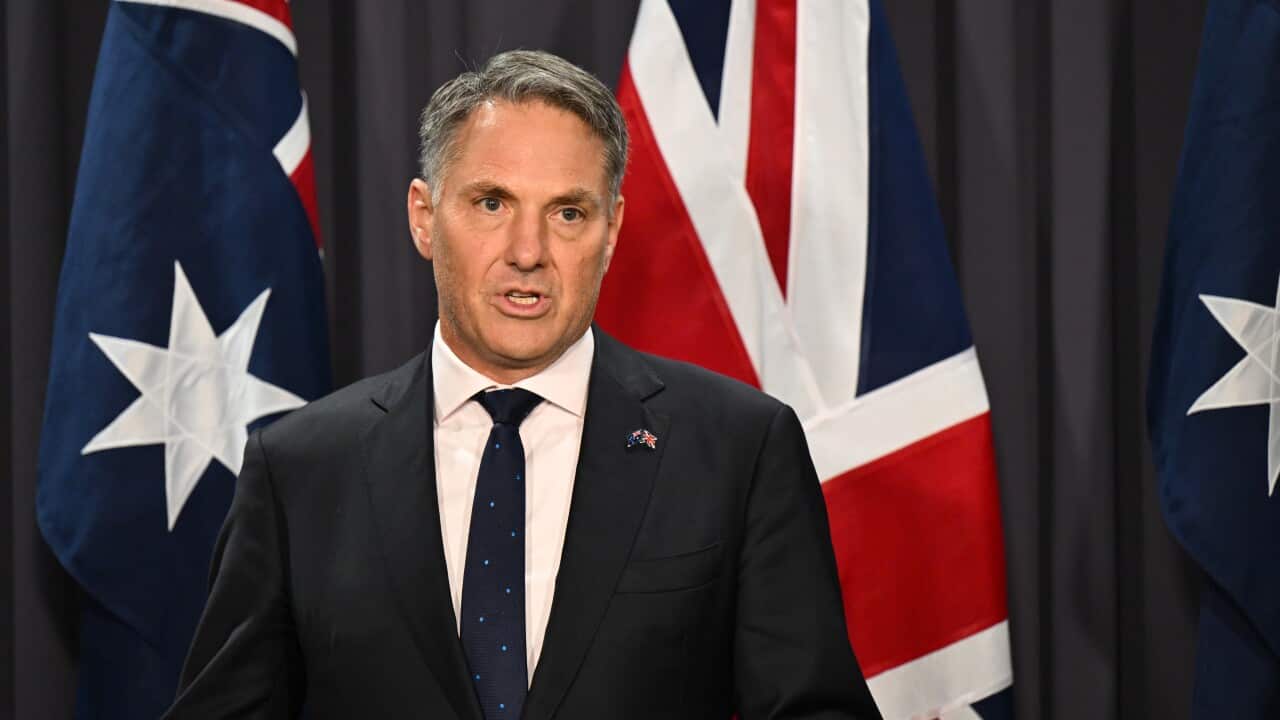
“Pengeluaran pertahanan meningkat sebesar A$50,3 miliar selama dekade, mencapai A$100 miliar pada 2033-34 (lebih dari 2,3% PDB)”
Sumber Asli: Albosteezy

Sumber Asli

VERIFIKASI FAKTA

Klaim inti ini akurat secara faktual menurut sumber-sumber resmi pemerintah.
The core claims are factually accurate according to official government sources.
Pemerintah Australia mengumumkan dalam Strategi Pertahanan Nasional dan Program Investasi Terpadu 2024 bahwa pengeluaran pertahanan akan meningkat sebesar A$50,3 miliar selama dekade berikutnya [1].
The Australian Government announced in its 2024 National Defence Strategy and Integrated Investment Program that defence spending would increase by $50.3 billion over the next decade [1].
Anggaran Pertahanan diproyeksikan akan mencapai sekitar A$100 miliar pada 2033-34, dibandingkan dengan A$56,6 miliar pada tahun keuangan 2024-25 [2].
The Defence budget is projected to reach approximately $100 billion by 2033-34, compared to $56.6 billion in the 2024-25 financial year [2].
Proyeksi PDB juga akurat.
The GDP projection is also accurate.
Pendanaan pertahanan sebagai proporsi dari PDB diproyeksikan akan mencapai 2,3% pada 2033-34, dibandingkan dengan 2,03% pada 2024-25 [3].
Defence funding as a proportion of GDP is projected to reach 2.3% by 2033-34, compared to 2.03% in 2024-25 [3].
Beberapa sumber pemerintah menyebutkan 2,4% dari PDB ketika diukur pada 2033-34, tergantung pada asumsi pertumbuhan PDB [4].
Some government sources cite 2.4% of GDP when measured by 2033-34, depending on GDP growth assumptions [4].
Tingkat peningkatan riil tahunan rata-rata 6,6% per tahun selama dekade tersebut, memberikan pertumbuhan di atas inflasi [5].
The annual real increase rate averages 6.6% per year over the decade, delivering growth ahead of inflation [5].

Konteks yang Hilang

Namun, klaim ini secara signifikan meremehkan cakupan penuh investasi pertahanan dengan menggunakan batas akuntansi yang sempit: **1.
However, the claim significantly understates the full scope of defence investment by using narrow accounting boundaries: **1.
Perbedaan Metode Akuntansi** Pemerintah menyatakan bahwa menurut standar akuntansi NATO - yang mencakup pensiun pertahanan untuk personel berseragam dan sipil - Australia sudah mengeluarkan 2,8% dari PDB untuk pertahanan [6].
Accounting Method Discrepancy** The government states that by NATO's accounting standards - which include defence pensions for uniformed and civilian personnel - Australia is already spending 2.8% of GDP on defence [6].
Klaim ini menggunakan definisi anggaran yang lebih sempit, membuat kesenjangan yang tampaknya menuju 2,3% tampak lebih kecil daripada sebenarnya relatif terhadap perbandingan internasional.
The claim uses the narrower budget definition, making the apparent gap to 2.3% seem smaller than it actually is relative to international comparisons.
Ketika diukur dengan standar NATO, angka 2,3% tersebut mewakili peningkatan yang kurang dramatis dari yang dinyatakan. **2.
When measured by NATO standards, the 2.3% figure represents a less dramatic increase than implied. **2.
Dominasi Kapal Selam Nuklir AUKUS** Klaim ini tidak mengungkapkan bahwa program kapal selam nuklir AUKUS mengonsumsi sebagian besar peningkatan ini.
AUKUS Nuclear Submarine Dominance** The claim does not disclose that the AUKUS nuclear submarine program is consuming an enormous portion of this increase.
Pemerintah memperkirakan total biaya akuisisi dan pengoperasian delapan kapal selam bertenaga nuklir sebesar A$268-368 miliar sepanjang masa program (dengan A$368 miliar termasuk penyangga kontinjensi 50%) [7].
The government estimates the total cost of acquiring and operating eight nuclear-powered submarines at $268-368 billion over the life of the program (with $368 billion including a 50% contingency buffer) [7].
Selama dekade hingga 2033-34, pengeluaran kapal selam AUKUS menyumbang sekitar 7-8% dari total anggaran pertahanan, atau 12-17% dari tingkat pengeluaran tahunan saat ini [8].
Over the decade to 2033-34, AUKUS submarine spending accounts for approximately 7-8% of the total defence budget, or 12-17% of current annual spending levels [8].
Ini berarti sekitar 12-17% dari peningkatan anggaran pertahanan yang direncanakan dialokasikan untuk satu kemampuan, meninggalkan proporsi yang lebih kecil untuk kebutuhan pertahanan lainnya. **3.
This means roughly 12-17% of the planned defence budget increase is committed to a single capability, leaving proportionally less for other defence needs. **3.
Pertukaran Kemampuan Tersembunyi** Para analis pertahanan telah memperingatkan bahwa tingkat pengeluaran ini tidak mencukupi tanpa mengurangi kemampuan lain.
Hidden Capability Trade-offs** Defence analysts have warned that this spending level is insufficient without reducing other capabilities.
Australian Strategic Policy Institute (ASPI) mencatat bahwa untuk memberikan kecukupan kemampuan dan kepastian pendanaan yang diperlukan, pengeluaran pertahanan harus mencapai 3% dari PDB - target yang tidak direncanakan oleh pemerintah [9].
The Australian Strategic Policy Institute notes that to deliver necessary capability breadth and funding certainty, defence spending would need to reach 3% of GDP - a target the government does not plan to meet [9].
Peningkatan A$50,3 miliar selama dekade, ketika disesuaikan dengan inflasi dan tuntutan strategis yang meningkat, mungkin mewakili pertumbuhan riil yang sederhana meskipun tampak besar dalam nominal. **4.
The $50.3 billion increase over a decade, when adjusted for inflation and growing strategic demands, may represent modest real growth despite appearing large in nominal terms. **4.
Janji Masa Depan vs Penyerahan Saat Ini** Sebagian besar dari pengeluaran yang diumumkan terjadi di tahun-tahun terakhir dekade.
Future Promises vs Current Delivery** Much of the announced spending occurs in the later years of the decade.
Peningkatan pengeluaran riil tidak akan terlihat hingga 2027-28 ketika pengeluaran AUKUS berakselerasi, dengan proyeksi mencapai A$67,3 miliar pada saat itu [10].
Real spending increases won't be seen until 2027-28 when AUKUS spending accelerates, with projections reaching $67.3 billion by then [10].
Empat tahun pertama dekade menunjukkan peningkatan yang lebih sederhana, artinya peredaan jangka pendek dari tuntutan pertahanan terbatas.
The first four years of the decade show more modest increases, meaning near-term relief from defence demands is limited.

💭 PERSPEKTIF KRITIS

Meskipun peningkatan A$50,3 miliar secara nominal benar-benar substansial, konteks strategis mengungkapkan kendala yang signifikan: **Realitas Perbandingan Internasional** Target 2,3% PDB Australia jauh di bawah garis dasar 2% NATO (yang dilampaui oleh sebagian besar negara sekutu), dan secara signifikan di bawah standar internasional yang sedang berkembang.
While the $50.3 billion increase is genuinely substantial in nominal terms, the strategic context reveals significant constraints: **International Comparison Reality** Australia's planned 2.3% of GDP is well below NATO's 2% baseline (which most allied nations exceed), and significantly below emerging international standards.
Para pemimpin NATO telah berkomitmen untuk 3,5-5% dari PDB pada 2035 [11].
NATO leaders have committed to 3.5-5% of GDP by 2035 [11].
Jepang telah meningkatkan pengeluaran pertahanannya menjadi lebih dari 3% dari PDB, dan negara-negara Indo-Pasifik lainnya terus mempercepat investasi militer.
Japan has increased defence spending to over 3% of GDP, and other Indo-Pacific nations continue accelerating military investment.
Pada 2033-34, 2,3% Australia kemungkinan akan tampak tidak mencukupi relatif terhadap rekan regional dan harapan aliansi. **Pertanyaan Keterjangkauan** Program kapal selam nuklir, yang kini diperkirakan mencapai A$394,5 miliar sepanjang masa pakainya, menciptakan biaya kesempatan yang signifikan [12].
By 2033-34, Australia's 2.3% will likely appear insufficient relative to regional peers and alliance expectations. **Affordability Questions** The nuclear submarine program, now estimated at up to $394.5 billion over its full life, creates a significant opportunity cost [12].
Para analis memperdebatkan apakah Australia seharusnya memilih opsi atau timeline kapal selam yang berbeda untuk membebaskan sumber daya untuk kemampuan lain.
Analysts debate whether Australia should have chosen a different submarine option or timeline to free resources for other capabilities.
Komitmen AUKUS saat ini berarti platform tunggal ini mengonsumsi bagian yang tidak proporsional dari dolar pertahanan dengan mengorbankan kemampuan siber, pengawasan maritim, pertahanan udara, dan domain strategis lainnya. **Risiko Penyerahan** Pemerintah memiliki rekam jejak yang buruk dalam timeline pengadaan pertahanan dan pengendalian biaya.
The current AUKUS commitment means this single platform consumes a disproportionate share of defence dollars at the expense of cyber capabilities, maritime surveillance, air defence, and other strategic domains. **Delivery Risk** The government has a poor track record on defence procurement timelines and cost containment.
Proyek-proyek besar sebelumnya telah mengalami lonjakan biaya dan penundaan yang signifikan.
Previous major projects have experienced significant cost overruns and delays.
Kompleksitas program kapal selam AUKUS - memerlukan koordinasi dengan mitra AS dan Inggris, fasilitas baru, pengembangan tenaga kerja, dan pengawasan regulasi - menciptakan risiko penyerahan yang substansial yang dapat memerlukan pendanaan tambahan. **Konteks Politik** Pengumuman tersebut dilakukan pada Mei 2024, segera setelah laporan media tentang memburuknya hubungan Australia-China setelah pembatasan perdagangan atas ekspor Australia.
The complexity of the AUKUS submarine program - requiring coordination with US and UK partners, new facilities, workforce development, and regulatory oversight - creates substantial implementation risk that could require additional funding. **Political Context** The announcement was made in May 2024, shortly after media reports of deteriorating Australia-China relations following trade restrictions on Australian exports.
Penentuan waktu dan framing menunjukkan respons strategis terhadap ketegangan regional, namun peningkatannya sederhana dibandingkan dengan yang telah dikomitmen oleh negara-negara regional lainnya.
The timing and framing suggest strategic response to regional tensions, yet the increase was modest compared to what other regional nations have committed.
Ini memunculkan pertanyaan tentang apakah pemerintah percaya tingkat ancaman hanya menjustifikasi pengeluaran 2,3% atau apakah kendala politik/fiskal membatasi respons.
This raises questions about whether the government believes the threat level justifies only 2.3% spending or if political/fiscal constraints are limiting the response.

SEBAGIAN BENAR

6.5

/ 10

Secara teknis akurat tetapi sangat menyesatkan melalui framing selektif dan konteks yang dihilangkan.
Technically accurate but highly misleading through selective framing and omitted context.
Angkanya benar: peningkatan A$50,3 miliar itu nyata, dan A$100 miliar pada 2033-34 adalah proyeksi yang sebenarnya.
The numbers are correct: $50.3 billion increase is real, and $100 billion by 2033-34 is the genuine projection.
Namun, klaim ini menyajikan ini sebagai komitmen keamanan yang signifikan sambil menyembunyikan bahwa (1) sebagian besar peningkatan dialokasikan untuk satu program kapal selam dengan risiko biaya dan penyerahan yang substansial, (2) pengeluaran masih jauh di bawah standar internasional dan harapan sekutu, (3) penentuan waktu memuat pengumuman politik di depan sementara menunda peningkatan pengeluaran aktual, dan (4) para analis pertahanan berpendapat totalnya tidak mencukupi untuk tantangan strategis yang dihadapi Australia.
However, the claim presents this as a significant security commitment while obscuring that (1) much of the increase is committed to a single submarine program with substantial cost and delivery risks, (2) the spending still falls below international standards and allied expectations, (3) the timing frontloads political announcement while backloading actual spending increases, and (4) defence analysts argue the total is insufficient for the strategic challenges Australia faces.
Klaim ini mengandalkan penampilan tindakan yang substansial sementara implikasi praktisnya lebih terbatas.
The claim trades on the appearance of substantial action while the practical implications are more constrained.

📚 SUMBER DAN KUTIPAN (12)

  1. 1
    minister.defence.gov.au

    A generational investment in Australia's Defence

    Minister Defence Gov

  2. 2
    Australia's Defence Budget Set to Increase by $50 Billion Over the Next Decade

    Australia's Defence Budget Set to Increase by $50 Billion Over the Next Decade

    The federal government will spend an extra $50 billion on defence over the next 10 years under a new strategy.

    SBS News
  3. 3
    Australia unveils 'historic' defense boost to 2.4% of GDP in decade, but critics say too little, too late

    Australia unveils 'historic' defense boost to 2.4% of GDP in decade, but critics say too little, too late

    Part of the shakeup includes tens of billions for nuclear-powered subs, and halting the pricey procurement of an additional F-35 fighter jet squadron.

    Breaking Defense
  4. 4
    Australian National Defence Strategy sees $50 billion spending increase over next decade

    Australian National Defence Strategy sees $50 billion spending increase over next decade

    The Australian government released its inaugural National Defence Strategy that sets out a new approach to the defence of Australia

    APDR
  5. 5
    Budget: 10-year defence spending up 11 percent from 2022 plan

    Budget: 10-year defence spending up 11 percent from 2022 plan

    The Australian federal budget shows defence will receive a significant increase in funding over the next decade under the new National Defence Strategy and Integrated Investment Plan. The budget papers, issued on 14 May, include ...

    The Strategist
  6. 6
    How to count Australian defence spending as (almost) 2.8 percent of GDP

    How to count Australian defence spending as (almost) 2.8 percent of GDP

    We can almost get there using available data, and with a bit of determined accountancy we could probably get the whole way. An examination of budget papers can largely explain the 14 September statement by ...

    The Strategist
  7. 7
    Unpacking the cost of our nuclear-powered submarine program

    Unpacking the cost of our nuclear-powered submarine program

    Strategic Analysis Australia

    Strategic Analysis Australia
  8. 8
    Attack Submarines Dominate Record High $36.8B Australian Defense Budget

    Attack Submarines Dominate Record High $36.8B Australian Defense Budget

    Last week, Australia revealed its federal budget for the 2024-25 fiscal year. The government allocated a record $36.8 billion to defense, up 6.3 percent compared to last year, with nuclear-powered submarines consuming a much enlarged portion of defense funding. The Royal Australian Navy will receive $7.14 billion in FY 2024-25, which is slightly lower than the Australian Army’s $7.87 billion but still higher than the $6.34 billion destined for the Royal Australian Air Force. Of the navy’s allotment, some $2.27 billion will go to sustainment of assets. Submarines As efforts ramp up to induct a fleet of nuclear-powered submarines (SSN),

    USNI News
  9. 9
    Cost of Defence's roadmap for spending 3 percent of GDP on defence

    Cost of Defence's roadmap for spending 3 percent of GDP on defence

    The current debate on Defence funding, sparked by our 29 May report The Cost of Defence: ASPI Defence budget brief 2025–2026, and a subsequent US request for Australia to spend more, has swung between a ...

    The Strategist
  10. 10
    The 2024-25 Defence budget: one project to rule them

    The 2024-25 Defence budget: one project to rule them

    Strategic Analysis Australia

    Strategic Analysis Australia
  11. 11
    NATO's 5% of GDP defence target ramps up pressure on Australia to spend vastly more

    NATO's 5% of GDP defence target ramps up pressure on Australia to spend vastly more

    In the event of a major crisis or conflict in the region, Australia would not presently be able to defend itself for a prolonged period.

    The Conversation
  12. 12
    AUKUS details unveiled: Australian nuclear submarine programme to cost up to $394.5 billion

    AUKUS details unveiled: Australian nuclear submarine programme to cost up to $394.5 billion

    Britain and the US will help Australia develop a nuclear-powered submarine programme, as part of the AUKUS pact.

    RNZ

Metodologi Skala Penilaian

1-3: SALAH

Secara faktual salah atau fabrikasi jahat.

4-6: SEBAGIAN

Ada kebenaran tetapi konteks hilang atau menyimpang.

7-9: SEBAGIAN BESAR BENAR

Masalah teknis kecil atau masalah redaksi.

10: AKURAT

Terverifikasi sempurna dan adil secara kontekstual.

Metodologi: Penilaian ditentukan melalui referensi silang catatan pemerintah resmi, organisasi pemeriksa fakta independen, dan dokumen sumber primer.