
The Claim
“Made Orwellian threats about cutting ABC funding because the government didn't like one of their stories, and because their quality of journalism is too high, thereby creating competition which threatens the corporate newspaper duopoly (who are now floundering because they didn't see the internet coming).”
Original Sources Provided
✅ FACTUAL VERIFICATION
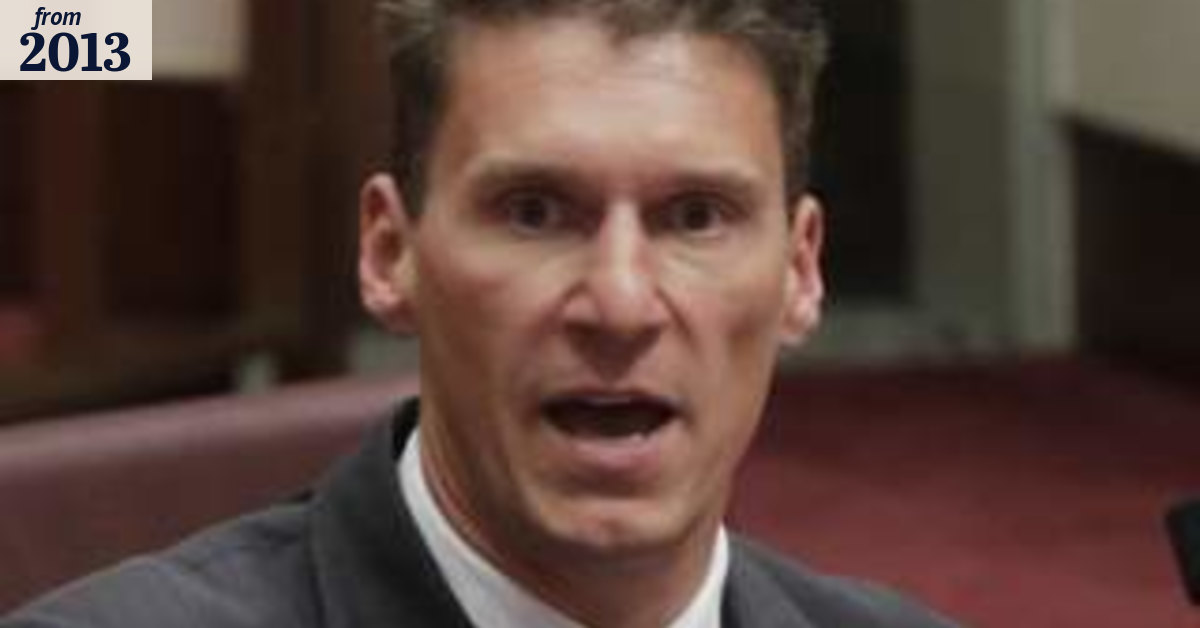
The claim references events from late 2013 involving Liberal Senator Cory Bernardi's criticism of the ABC. On December 4, 2013, Senator Bernardi publicly called for ABC funding to be cut and the broadcaster to be forced to sell advertising and paid subscriptions online to compete with commercial newspapers [1].
The timing is significant. The criticism came after the ABC collaborated with The Guardian Australia to report on alleged Australian phone-tapping of Indonesian President Susilo Bambang Yudhoyono, based on documents leaked by Edward Snowden [1]. Prime Minister Tony Abbott publicly condemned ABC CEO Mark Scott for exercising "very, very poor judgment" in publishing the spying revelations [1].
Senator Bernardi specifically stated the ABC was "encroaching into the newspapers of the 21st century, which is the online space" and said this would "destroy newspapers published by Fairfax Media and News Corp" [1]. He described the ABC's behavior as "cannibalisation of commercial media" [1].
However, the Coalition government did not immediately cut ABC funding. Actual funding cuts came later - $254 million over five years was announced in November 2014 [2], following an efficiency review commissioned by Communications Minister Malcolm Turnbull [3].
Missing Context
Pre-election promise: On the eve of the September 2013 election, Tony Abbott explicitly promised "no cuts to the ABC or SBS" [4]. The government broke this promise with the November 2014 cuts, which ABC Fact Check verified as a broken promise [4].
Efficiency review rationale: The cuts were officially justified through the Lewis efficiency review, which examined ABC and SBS operations [3]. Communications Minister Malcolm Turnbull argued the cuts were "not of a scale that required any particular change to programming" and could be achieved through back-office efficiencies [2].
Budget context: The cuts were part of broader budget repair efforts following the 2014-15 budget, not solely linked to the Indonesia spying story or newspaper competition concerns [2].
Coalition divided on approach: Communications Minister Malcolm Turnbull actually defended the ABC's charter during party room discussions, telling the meeting the ABC did a "pretty good job" while acknowledging "outdated work practices" [1]. He disagreed with suggestions that the ABC should not engage in digital services, stating "in the 21st century that is part of where any modern media organisation has to be" [2].
Source Credibility Assessment
The original source (Sydney Morning Herald, December 4, 2013) is a mainstream, reputable Australian newspaper [1]. The article was written by Jonathan Swan and Mark Kenny, established political journalists. SMH is generally regarded as center-left in its editorial stance but maintains professional journalism standards. The article directly quotes Bernardi and contains multiple named sources.
Additional sources include ABC News (the subject of the claim itself) and The Guardian Australia, both reputable mainstream outlets [2][4].
Labor Comparison
Did Labor governments cut ABC funding?
ABC funding history shows fluctuations across governments of both persuasions. According to ABC chair Kim Williams (speaking in 2024), the ABC's funding in real terms was $150 million less in 2024 than it was in 2013 when the Coalition came to power [5].
Both major parties have at various times implemented funding changes, indexation freezes, or efficiency dividends affecting the ABC. The Howard government (1996-2007) also implemented efficiency dividends affecting the ABC. The Rudd/Gillard Labor governments (2007-2013) maintained ABC funding with some adjustments, though specific year-by-year comparisons would require detailed budget analysis.
Was this unique to the Coalition?
Attacks on ABC bias and calls for funding cuts have come from both sides of politics when in government. Labor politicians have also criticized ABC coverage at various times. However, the specific framing of ABC online operations as threatening commercial newspapers appears more closely associated with conservative criticism.
Balanced Perspective
While Senator Bernardi did make comments linking ABC funding to competition with commercial newspapers, the claim conflates several distinct elements:
Bernardi's comments were from a backbencher, not government policy: While Bernardi called for funding cuts in December 2013, the actual government cuts came a year later through an efficiency review process [2][3]. Bernardi was one voice among many in the party room, and his views were contested - Turnbull defended the ABC's charter during the same meeting [1].
Multiple motivations existed: The Indonesia spying story controversy, budget repair imperatives, and concerns about ABC online expansion were separate issues that overlapped in time but had distinct policy rationales [1][2].
"Orwellian" characterization is subjective: While some commentators might view government threats to public broadcaster funding as concerning, "Orwellian" implies totalitarian state control of media, which overstates the situation. The ABC remained editorially independent throughout, and the funding cuts, while significant, did not eliminate the ABC's core operations.
Newspaper industry disruption predated ABC Online: The claim that newspapers were "floundering because they didn't see the internet coming" is accurate in broad terms - the newspaper industry globally faced digital disruption challenges. However, ABC Online was one factor among many (Google, Facebook, classified advertising migration) affecting newspaper revenues, not the primary cause.
Key context: This was not unique behavior - governments of both parties have criticized ABC coverage and adjusted funding. The Coalition did break an explicit pre-election promise of "no cuts to the ABC," which represents a significant political accountability issue [4]. However, the framing as purely retaliatory for specific stories or designed to protect newspaper monopolies simplifies a more complex policy landscape involving budget priorities, efficiency reviews, and differing views within the Coalition itself.
PARTIALLY TRUE
6.0
out of 10
Senator Cory Bernardi did call for ABC funding cuts in December 2013, explicitly linking this to concerns about ABC online operations competing with Fairfax and News Corp newspapers [1]. The Coalition government did eventually cut ABC funding by $254 million over five years (announced November 2014) [2], breaking Tony Abbott's pre-election promise of "no cuts to the ABC" [4].
However, the claim overstates the case in several ways: (1) the "Orwellian" characterization is rhetorical framing rather than factual description; (2) Bernardi was a backbencher expressing his views, not the government speaking; (3) actual cuts were justified through an efficiency review and budget repair rather than explicitly as retaliation for stories or newspaper protection; (4) Communications Minister Malcolm Turnbull defended the ABC's right to operate online services during the same period [2].
The claim captures real tensions between the Coalition and ABC, and real concerns about commercial media competition, but conflates individual MP comments with government policy and oversimplifies the motivations behind the 2014 funding cuts.
Final Score
6.0
OUT OF 10
PARTIALLY TRUE
Senator Cory Bernardi did call for ABC funding cuts in December 2013, explicitly linking this to concerns about ABC online operations competing with Fairfax and News Corp newspapers [1]. The Coalition government did eventually cut ABC funding by $254 million over five years (announced November 2014) [2], breaking Tony Abbott's pre-election promise of "no cuts to the ABC" [4].
However, the claim overstates the case in several ways: (1) the "Orwellian" characterization is rhetorical framing rather than factual description; (2) Bernardi was a backbencher expressing his views, not the government speaking; (3) actual cuts were justified through an efficiency review and budget repair rather than explicitly as retaliation for stories or newspaper protection; (4) Communications Minister Malcolm Turnbull defended the ABC's right to operate online services during the same period [2].
The claim captures real tensions between the Coalition and ABC, and real concerns about commercial media competition, but conflates individual MP comments with government policy and oversimplifies the motivations behind the 2014 funding cuts.
📚 SOURCES & CITATIONS (5)
-
1
smh.com.au
The ABC''s funding should be cut and the national broadcaster forced to sell advertising and paid subscriptions online to compete with commercial newspapers, according to Liberal Senator Cory Bernardi.
The Sydney Morning Herald -
2
abc.net.au
Communications Minister Malcolm Turnbull concedes there will be job losses after confirming more than $250 million in cuts to the ABC over the next five years, including the reduction already flagged in the May budget.
Abc Net -
3PDF
abc and sbs efficiency study executive summary
Infrastructure Gov • PDF Document -
4
abc.net.au
On the eve of the September 2013 election, Tony Abbott promised that there would be no cuts to the ABC or SBS under a Coalition government. The Government broke these promises when it handed down its first budget in May. Communications Minister Malcolm Turnbull has now announced further cuts, calling on Mr Abbott's pre-election pledge to be "understood in context".
Abc Net -
5

theconversation.com
In Donald Trump’s America, public broadcasters have felt the full force of his swingeing cuts – it would be disastrous if the same happened in Australia.
The Conversation
Rating Scale Methodology
1-3: FALSE
Factually incorrect or malicious fabrication.
4-6: PARTIAL
Some truth but context is missing or skewed.
7-9: MOSTLY TRUE
Minor technicalities or phrasing issues.
10: ACCURATE
Perfectly verified and contextually fair.
Methodology: Ratings are determined through cross-referencing official government records, independent fact-checking organizations, and primary source documents.