
The Claim
“Convinced Cambodia (one of the poorest countries in our region) to take in some of the refugees currently in our detention centres. Serious human rights abuse continue to be committed regularly under the Cambodian government and military.”
Original Sources Provided
✅ FACTUAL VERIFICATION
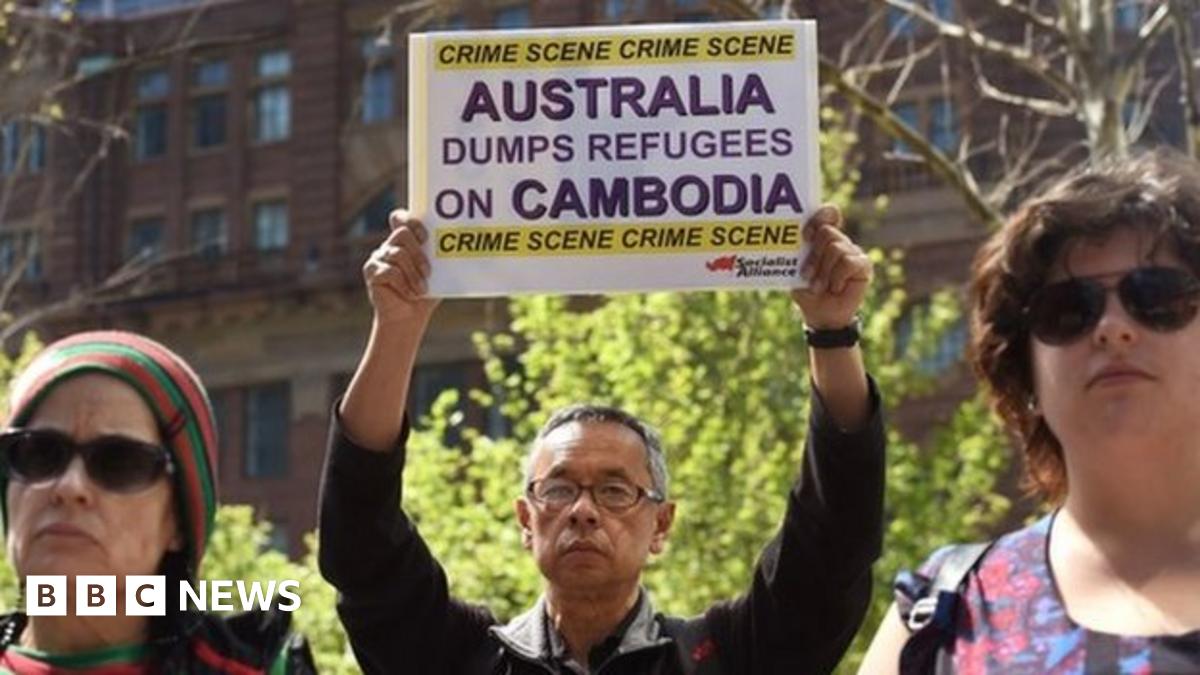
The Australia-Cambodia refugee resettlement agreement was signed on September 26, 2014, between the Abbott Coalition Government and the Cambodian government [1]. Under the deal, Australia agreed to pay approximately A$55 million total—comprising A$40 million over four years in development aid and up to A$15.5 million for direct resettlement costs [2][3].
The agreement applied specifically to refugees who had been transferred to Nauru after attempting to seek asylum in Australia, had undergone refugee status determination in Nauru, and were recognized as genuine refugees [2]. Participation was supposedly voluntary—only refugees who consented would be relocated [3].
The deal's outcomes were extremely limited: only seven refugees ever relocated to Cambodia under the agreement [2][3]. Of these seven, four returned to their home countries (Iran and Myanmar) between October 2015 and April 2016 rather than remain in Cambodia [3][4]. By the time the agreement expired in September 2018, only three refugees remained in Cambodia [2].
Regarding Cambodia's human rights situation, the claim is accurate. Amnesty International and other human rights organizations documented ongoing serious human rights concerns in Cambodia during this period, including restrictions on political opposition, crackdowns on civil society, and a history of refoulement (forcibly returning refugees to countries where they face persecution) [5][6]. The UNHCR described the Cambodia deal as "a disturbing precedent" and "a worrying departure from international norms" [2].
Missing Context
The claim omits several critical contextual factors:
The policy context: The Cambodia deal emerged from the Australian government's commitment that no refugees transferred to Nauru or Papua New Guinea (PNG) would ever be resettled in Australia [2]. This created a need for third-country resettlement options. The government had rejected a New Zealand offer to resettle 150 refugees made in 2013 [7].
Voluntary nature: The agreement only applied to refugees who voluntarily agreed to relocate—Cambodia explicitly stated it would not accept forced transfers [3]. The small number of participants (only seven) suggests most refugees did not view Cambodia as a viable option despite being in detention on Nauru.
Offshore processing history: The claim presents this as a unique Coalition initiative, but offshore processing was first introduced by the Howard Coalition government in 2001 (the "Pacific Solution"), dismantled by Labor in 2008, then reinstated by the Labor Gillard government in August 2012 [8][9]. Both major parties have employed offshore detention policies.
Cost efficiency: While the $55 million cost for resettling only seven refugees (approximately $7.8 million per refugee) appears wasteful, the context suggests this was an attempt to create a resettlement pathway rather than the sole solution. The US later agreed to resettle up to 1,250 refugees from Nauru and Manus Island starting in 2016 [7].
Broader resettlement efforts: The Cambodia agreement was one component of a broader strategy that included resettlement negotiations with the United States and other countries. By November 2019, approximately 700 refugees had been resettled from Nauru and PNG to the US [7].
Source Credibility Assessment
The original sources provided include a mix of reputable and advocacy-oriented organizations:
Amnesty International: A well-established international human rights organization with a reputation for rigorous research, though it operates as an advocacy organization rather than a neutral news source [5].
Sydney Morning Herald (SMH): Mainstream Australian newspaper with established journalistic standards and generally balanced reporting [original source 3].
ABC News: Australia's public broadcaster, widely regarded as authoritative and bound by editorial policies requiring balance and accuracy [original source 5].
Crikey: Independent Australian news website known for investigative journalism but also opinion and commentary pieces that may present critical perspectives [original source 4].
Wolfram Alpha: A computational knowledge engine, not a news or analysis source—its inclusion as a source is puzzling and appears irrelevant to the claim's substance [original source 2].
Overall, the sources are generally credible, though Amnesty International and Crikey have advocacy/critical orientations that should be balanced against government perspectives and broader context.
Labor Comparison
Did Labor do something similar?
Search conducted: "Labor government refugees offshore processing Nauru Manus Island"
Finding: Labor has an extensive history with offshore processing that predates and parallels Coalition policies:
Labor reinstated offshore processing in 2012: The Gillard Labor government restarted offshore processing in August 2012, sending asylum seekers to Nauru and Manus Island [8][9]. This was explicitly described as reviving the "Howard era" Pacific Solution.
Labor created the infrastructure: The detention facilities and processing arrangements on Nauru and Manus Island that housed refugees later targeted for Cambodia resettlement were established under Labor's 2012 policy reinstatement.
Labor declined resettlement alternatives: The Gillard Labor government in 2012-2013 maintained the same policy position that refugees transferred offshore would never settle in Australia, creating the same third-country resettlement dilemma the Coalition later faced with the Cambodia deal.
No direct Cambodia equivalent: While Labor did not sign a deal with Cambodia specifically, they established and operated the offshore processing regime that made third-country resettlement necessary. The Malaysia Agreement proposed by Labor in 2011 (which was ruled invalid by the High Court) similarly sought to send asylum seekers to a country with questionable refugee protection standards [10].
Key distinction: The Cambodia deal was a Coalition initiative, but it emerged from a bipartisan offshore processing framework that Labor had reinstated and operated. Both parties have pursued policies requiring refugees to be processed outside Australia and denied permanent resettlement in Australia.
Balanced Perspective
While the claim accurately identifies that the Coalition government negotiated the Cambodia resettlement deal and that Cambodia has serious human rights concerns, the framing omits important policy context and bipartisan history.
The Cambodia agreement was a controversial and ultimately unsuccessful attempt to address a problem the government had created for itself: having pledged that no refugees sent to Nauru or PNG would ever come to Australia, the government needed alternative resettlement destinations. The $55 million deal yielded minimal results—only seven refugees relocated, and most of those subsequently left Cambodia for their home countries or other destinations.
However, the claim's implicit framing that this was uniquely problematic Coalition conduct ignores that:
Offshore processing is bipartisan: Labor reinstated offshore processing in 2012 and operated the Nauru and Manus Island facilities that created the need for third-country resettlement. The number of deaths, self-harm incidents, and mental health crises in these facilities peaked during both Labor and Coalition administrations [7].
Both parties rejected New Zealand's offer: Both Labor and Coalition governments declined repeated New Zealand offers to resettle refugees, with the Coalition maintaining this position throughout the Cambodia agreement period [7].
Regional resettlement is common: Many countries engage in third-country refugee resettlement. The US-Canada Safe Third Country Agreement and EU-Turkey deal involve similar arrangements, though the Cambodia deal's implementation was notably ineffective.
The policy rationale: The government's stated goal was deterring dangerous boat journeys—over 1,200 people had died attempting to reach Australia by boat between 2008-2013 [1]. Whether the Cambodia deal advanced this goal is questionable given its minimal uptake.
Key context: This was not unique to the Coalition—both major Australian governments have employed offshore processing and sought third-country resettlement solutions. The Cambodia deal's poor outcomes (only seven refugees resettled) make it a policy failure, but the broader framework of offshore processing and denial of Australian resettlement has been maintained by both parties.
TRUE
6.0
out of 10
The core factual claims are accurate: the Coalition did negotiate a refugee resettlement deal with Cambodia, paid significant funds ($55 million), and only a handful of refugees (seven) ever resettled there. Cambodia does have documented human rights abuses and is one of the poorest countries in the region. However, the claim omits that:
- The refugees had to volunteer for resettlement (it wasn't forced deportation)
- The deal emerged from a bipartisan offshore processing policy framework that Labor had reinstated in 2012
- Both parties have maintained the "no resettlement in Australia" policy that made third-country deals necessary
- The US subsequently resettled hundreds of refugees from the same facilities under a similar arrangement
The claim presents this as a distinctive Coalition policy failure when it was actually an extension of bipartisan offshore processing arrangements, albeit an unusually ineffective and expensive one.
Final Score
6.0
OUT OF 10
TRUE
The core factual claims are accurate: the Coalition did negotiate a refugee resettlement deal with Cambodia, paid significant funds ($55 million), and only a handful of refugees (seven) ever resettled there. Cambodia does have documented human rights abuses and is one of the poorest countries in the region. However, the claim omits that:
- The refugees had to volunteer for resettlement (it wasn't forced deportation)
- The deal emerged from a bipartisan offshore processing policy framework that Labor had reinstated in 2012
- Both parties have maintained the "no resettlement in Australia" policy that made third-country deals necessary
- The US subsequently resettled hundreds of refugees from the same facilities under a similar arrangement
The claim presents this as a distinctive Coalition policy failure when it was actually an extension of bipartisan offshore processing arrangements, albeit an unusually ineffective and expensive one.
📚 SOURCES & CITATIONS (10)
-
1
Australia and Cambodia sign refugee resettlement deal
Cambodia agrees to take in some of Australia's rejected asylum-seekers in exchange for A$40m (£22m, $35m), in a deal criticised by rights groups.
BBC News -
2PDF
Australia-Cambodia Agreement for Refugees in Nauru - Factsheet
Unsw Edu • PDF Document -
3

Cambodia Agreement - Fact Sheet
ASRC Fact Sheet: Cambodia Agreement. The Australian and Cambodian governments agreed to resettle some refugees in Cambodia.
Asylum Seeker Resource Centre -
4
Resettled refugees in Cambodia return home to Iran
News Com
-
5
Amnesty International Report 2014/15 - Cambodia
Refworld
-
6
Cambodia: UN expert alarmed by disturbing human rights situation
Ohchr
-
7

Australia's offshore processing regime - Resettlement
What is offshore processing? Why does Australia have an offshore processing policy? How has offshore processing caused harm?
Refugee Council of Australia -
8PDF
Offshore Processing Factsheet
Unsw Edu • PDF Document -
9PDF
Australia: Offshore Processing of Asylum Seekers
Tile Loc • PDF Document -
10

Pacific Solution
Wikipedia
Rating Scale Methodology
1-3: FALSE
Factually incorrect or malicious fabrication.
4-6: PARTIAL
Some truth but context is missing or skewed.
7-9: MOSTLY TRUE
Minor technicalities or phrasing issues.
10: ACCURATE
Perfectly verified and contextually fair.
Methodology: Ratings are determined through cross-referencing official government records, independent fact-checking organizations, and primary source documents.