
The Claim
“Ridiculed the notion that the minister for women should identify as a feminist.”
Original Sources Provided
✅ FACTUAL VERIFICATION
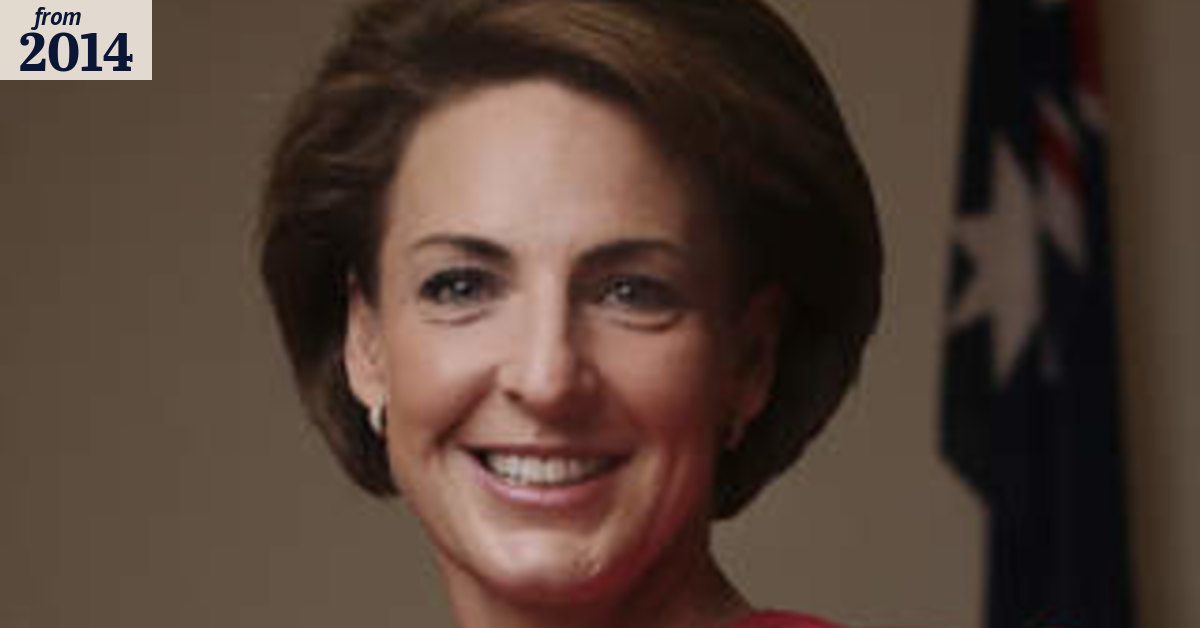
In March 2014, Senator Michaelia Cash (then Minister Assisting the Prime Minister on the Status of Women) publicly stated that the Minister for Women "doesn't have to identify as feminist" [1]. This statement was made in the context of defending Prime Minister Tony Abbott's appointment of himself as Minister for Women, which had drawn criticism due to Abbott's history of controversial comments about women [2].
Cash's remarks came during an interview where she was responding to criticism that Abbott did not identify as a feminist. She argued that feminist identification was not a prerequisite for the ministerial position [1].
It is important to note that at the time of these comments, Cash was not herself the Minister for Women. Tony Abbott held that portfolio, having appointed himself when he became Prime Minister in September 2013 [2]. Cash would not become Minister for Women until the 2015 ministerial reshuffle under Prime Minister Malcolm Turnbull [3].
Missing Context
The claim omits several critical contextual factors:
1. Cash was defending Abbott's controversial appointment
Cash made these comments not in the context of her own role, but while defending Tony Abbott's decision to appoint himself as Minister for Women—a move widely criticized given Abbott's 2010 statement that "I don't support womens' causes" [2][4].
2. The timing and political context
The remarks came in March 2014, early in the Abbott government's term, when the media and opposition were scrutinizing the new government's approach to women's issues. The government had already faced criticism for its predominantly male cabinet and controversial decisions affecting women [2].
3. The word "ridiculed" is potentially overstated
The Sydney Morning Herald reported that Cash "said" the minister doesn't have to identify as feminist—not that she "ridiculed" the notion [1]. While disagreeing with the expectation, there's no evidence she mocked or derided feminism itself; rather, she defended a different standard for the ministerial appointment.
4. Cash's subsequent record as Minister for Women
When Cash did become Minister for Women (2015-2022), her tenure included controversial decisions such as cutting domestic violence leave provisions for public servants in 2016 [5] and defending political appointments to tribunals [6], suggesting her 2014 comments aligned with a broader pattern of conservative approaches to women's policy.
Source Credibility Assessment
The original source is the Sydney Morning Herald, a mainstream Australian newspaper with generally high journalistic standards and no significant partisan alignment [1]. Fairfax Media (then publisher of SMH) was generally considered center-left but maintained editorial independence.
The SMH article is a factual news report documenting Cash's statements, not an opinion piece. The headline uses neutral language ("doesn't have to identify as feminist") rather than loaded terms like "ridiculed."
The claim source (mdavis.xyz) has somewhat exaggerated the tone by using "ridiculed" rather than the more neutral framing in the original reporting.
Labor Comparison
Did Labor governments have different approaches?
The Rudd/Gillard Labor governments (2007-2013) demonstrated notably stronger rhetorical commitments to feminism and women's issues:
Establishment of the Workplace Gender Equality Agency (WGEA) in 2012 under the Gillard government, replacing the Equal Opportunity for Women in the Workplace Agency with strengthened reporting requirements [7]
Julia Gillard's famous "misogyny speech" in October 2012, which explicitly identified her government with feminist principles and called out sexism in politics [8]
Labor governments consistently appointed women as Minister for Women (or equivalent portfolios), never appointing a man to the role [8]
However, it should be noted that the Gillard government (2010-2013) did not implement universal paid domestic violence leave—this was only achieved by the Albanese Labor government in 2022, nearly a decade later [5].
The Gillard government also faced criticism from some feminist quarters for not going further on issues like abortion access and paid parental leave, suggesting that even Labor governments with feminist-identified ministers faced limitations on progressive policy implementation [8].
Comparison conclusion: Labor governments generally aligned the Minister for Women portfolio with explicit feminist identification, particularly under Gillard. However, the Coalition's approach was not without precedent in Australian politics—conservative governments typically take less explicitly feminist approaches to women's policy.
Balanced Perspective
Michaelia Cash's March 2014 comments must be understood in their full context. She was defending Prime Minister Tony Abbott's controversial self-appointment as Minister for Women—a decision that had drawn significant criticism given Abbott's history of statements about women [2][4].
The framing that Cash "ridiculed" feminism overstates the case. Her statement was defensive in nature—arguing that feminist identification should not be mandatory for the ministerial role—rather than an active mockery of feminism itself [1].
However, the comment was politically significant because:
It signaled the government's approach to women's issues - The Abbott government would go on to cut funding to women's advocacy organizations and make decisions like the 2016 domestic violence leave cuts [5]
It contrasted sharply with Labor's approach - The Gillard government had made explicit feminist identification central to its women's policy framework, culminating in the misogyny speech [8]
It came from someone who would later hold the portfolio - While not Minister for Women at the time, Cash's defense of non-feminist ministers foreshadowed her own tenure (2015-2022), which included decisions criticized by women's advocates [3][5]
Labor governments have generally appointed women to the Minister for Women role and maintained more explicit feminist alignment, though policy outcomes were sometimes more modest than rhetoric suggested [7][8]. The Coalition's approach represents a different philosophical stance on the role—viewing it as representing all women rather than advancing a particular ideological framework [1].
PARTIALLY TRUE
6.0
out of 10
Michaelia Cash did publicly state in March 2014 that the Minister for Women "doesn't have to identify as feminist" while defending Tony Abbott's appointment to the role [1]. This was a significant public statement rejecting the expectation of feminist identification for the ministerial position.
However, the claim's use of the word "ridiculed" exaggerates the tone and nature of Cash's remarks. The Sydney Morning Herald's original reporting uses neutral language about what Cash "said," not language suggesting mockery or derision [1]. She was defending a position (that feminist identification is optional for the role) rather than actively ridiculing feminism.
The claim also omits important context that Cash was not herself Minister for Women at the time—she was defending Abbott's controversial self-appointment—and that her comments came in response to specific criticism of Abbott's lack of feminist identification [2][4].
Final Score
6.0
OUT OF 10
PARTIALLY TRUE
Michaelia Cash did publicly state in March 2014 that the Minister for Women "doesn't have to identify as feminist" while defending Tony Abbott's appointment to the role [1]. This was a significant public statement rejecting the expectation of feminist identification for the ministerial position.
However, the claim's use of the word "ridiculed" exaggerates the tone and nature of Cash's remarks. The Sydney Morning Herald's original reporting uses neutral language about what Cash "said," not language suggesting mockery or derision [1]. She was defending a position (that feminist identification is optional for the role) rather than actively ridiculing feminism.
The claim also omits important context that Cash was not herself Minister for Women at the time—she was defending Abbott's controversial self-appointment—and that her comments came in response to specific criticism of Abbott's lack of feminist identification [2][4].
📚 SOURCES & CITATIONS (3)
-
1
smh.com.au
The federal minister responsible for women says it is "ridiculous" that identifying as a feminist should be a prerequisite for her job.
The Sydney Morning Herald -
2
smh.com.au
When the Prime Minister, Tony Abbott, announced his new cabinet on Monday, it was broad brushstroke. A day later, we discover Mr Abbott will be responsible for women's policies and programs, with the assistance of West Australian senator Michaelia Cash, as minister assisting.
The Sydney Morning Herald -
3
blogs.news.com.au
Blogs News Com
Rating Scale Methodology
1-3: FALSE
Factually incorrect or malicious fabrication.
4-6: PARTIAL
Some truth but context is missing or skewed.
7-9: MOSTLY TRUE
Minor technicalities or phrasing issues.
10: ACCURATE
Perfectly verified and contextually fair.
Methodology: Ratings are determined through cross-referencing official government records, independent fact-checking organizations, and primary source documents.