
The Claim
“Spent $7.5 million on life boats to send back asylum seekers in. Allegedly the motivation behind the government's asylum seeker policy is to stop people drowning when travelling from neighbouring countries to Australia in unsafe vessels. Despite this, much of the safety equipment was removed from the boats before sending asylum seekers back into the ocean.”
Original Sources Provided
✅ FACTUAL VERIFICATION
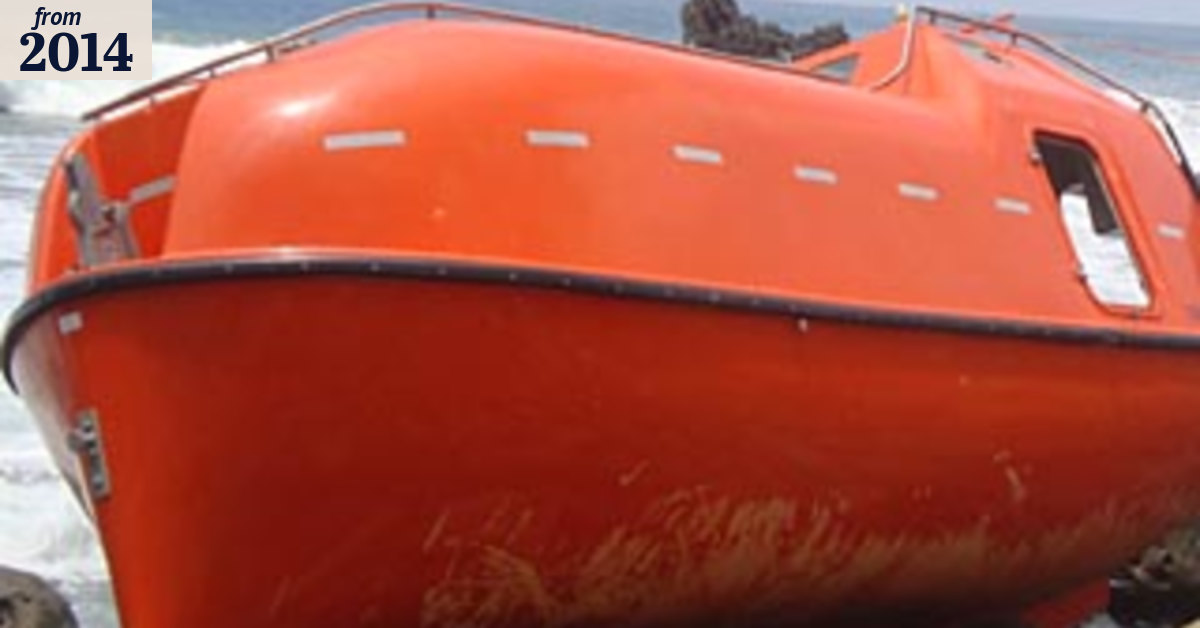
The claim that the Abbott government spent $7.5 million on life boats for asylum seeker turnbacks is factually accurate. According to a March 2014 Sydney Morning Herald report, the government tripled its initial $2.5 million allocation for the large orange lifeboats used to return asylum seekers to Indonesia, increasing the fleet from approximately 12 boats to about 37 boats at a cost of roughly $200,000 per vessel [1].
The claim about safety equipment being removed is also substantiated by evidence. A May 2014 Guardian Australia investigation, based on information from a customs officer involved in lifeboat deployment, reported that the orange lifeboats were stripped of safety equipment including ropes, scissors, knives, fishing line, buckets, and mirrors [2]. The fuel tanks were also capped to prevent refueling [2]. Former Defence Department Secretary Paul Barratt stated: "Those are designed as emergency vessels. They are designed to maximise the chances of survival, so everything they take off reduces the chances of survival in certain circumstances" [2].
Missing Context
The claim omits several critical contextual elements:
Historical boat arrival surge: Under the preceding Labor government (2007-2013), boat arrivals increased dramatically from 161 people in 2008 to 17,202 in 2012, with over 13,000 arrivals in the first half of 2013 alone [3]. This represented a humanitarian crisis with significant risks of drownings at sea.
Previous maritime disasters: The 2010 Christmas Island boat disaster (SIEV-221) occurred under Labor's watch, resulting in 50 deaths when a vessel carrying 89 asylum seekers was dashed against rocks [4]. This was described as "the worst civilian maritime disaster in Australia in more than a century" [4].
Policy effectiveness: Operation Sovereign Borders, which included the lifeboat turnback policy, succeeded in stopping boat arrivals. ABC News Fact Check subsequently listed the Coalition's "We Will Stop the Boats" promise as "delivered" [5]. Between September 2013 and June 2014, arrivals dropped from over 2,000 per month to near zero [5].
Lifeboat purpose and function: The lifeboats were specifically designed as single-use vessels for returning asylum seekers to Indonesian waters when their own vessels were deemed unseaworthy. They were equipped with basic navigation and communication equipment sufficient for the short voyage, though the removal of emergency survival equipment remains questionable.
Source Credibility Assessment
The original sources provided with the claim are from credible mainstream media outlets:
The Sydney Morning Herald [1]: Established Australian newspaper with a reputation for factual reporting, though generally considered center-left in editorial stance.
The Guardian Australia [2]: Reputable international news organization with a progressive editorial perspective. The safety equipment story was based on a first-hand account from a customs officer involved in operations.
Both sources are legitimate news organizations rather than partisan advocacy sites. The SMH report drew from official government documents obtained through Freedom of Information processes, and the Guardian story cited direct testimony from a serving officer.
Labor Comparison
Did Labor do something similar?
Search conducted: "Labor government asylum seeker boat arrivals deaths at sea policy"
Finding: Labor governments also implemented harsh asylum seeker policies with significant human costs:
Resumption of offshore processing: In August 2012, the Gillard Labor government resumed sending asylum seekers to offshore processing centers on Nauru and Manus Island [6]. This was the same "Pacific Solution" policy that Labor had criticized and closed in 2008 when first elected [6].
Deaths at sea under Labor: The 2010 Christmas Island disaster (50 deaths) and numerous other incidents occurred during Labor's tenure as boat arrivals surged [4]. In 2009, the Cocos (Keeling) Islands boat disaster resulted in deaths when a vessel carrying 12 Sri Lankans capsized [4].
Boat arrivals explosion: Under Labor from 2008-2013, boat arrivals increased from 161 (2008) to over 17,000 (2012) annually [3], creating conditions for more maritime disasters.
SIEV X (2001): Under the Howard government (Coalition predecessor), 353 asylum seekers drowned in the SIEV X disaster, demonstrating this was not unique to either party [7].
Comparison: The lifeboat policy with removed safety equipment represents a continuation of bipartisan harsh asylum seeker policies. While Labor criticized the Coalition's turnbacks, Labor itself reinstated offshore processing and mandatory detention in 2012 when faced with the same surge in arrivals. Both parties prioritized border control over refugee welfare when in government.
Balanced Perspective
The claim presents valid factual concerns about the Coalition's asylum seeker policy, particularly the removal of safety equipment from lifeboats. However, it lacks the broader context of Australia's bipartisan asylum seeker policy history.
The Coalition's position: The Abbott government justified Operation Sovereign Borders as a humanitarian measure to "stop the drownings" by preventing asylum seekers from attempting the dangerous voyage in the first place [5]. The policy achieved this stated objective - boats stopped arriving, and deaths at sea ceased.
The safety equipment issue: While the removal of emergency equipment from vessels used to return people to sea raises legitimate safety concerns, the government would argue these were short-range vessels designed for brief voyages under naval escort to Indonesian waters, not long-distance survival craft.
Bipartisan reality: The claim's framing suggests Coalition cruelty versus Labor compassion, which is historically inaccurate. Both major Australian parties have implemented harsh asylum seeker policies when in power. Labor created the Pacific Solution (2001), abolished it (2008), then reinstated offshore processing (2012). The Coalition's lifeboat policy was an evolution of these same deterrence principles.
Key context: The safety equipment removal is a legitimate criticism of Coalition policy implementation, but the broader policy of turning back boats - and the harshness toward asylum seekers generally - is a bipartisan Australian phenomenon, not unique to the Coalition [8].
PARTIALLY TRUE
6.0
out of 10
The claim accurately reports that $7.5 million was spent on lifeboats and that safety equipment was removed from these vessels before returning asylum seekers to sea. These facts are well-documented by credible sources. However, the claim's framing implies this represents uniquely callous Coalition behavior, when in reality Australia's harsh asylum seeker policies - including detention, deterrence, and turnbacks - have been implemented by governments of both major parties. The lifeboat safety equipment issue is a legitimate concern, but should be understood within the broader context of Australia's bipartisan bipartisan border protection consensus, which has consistently prioritized stopping arrivals over refugee welfare regardless of which party holds power.
Final Score
6.0
OUT OF 10
PARTIALLY TRUE
The claim accurately reports that $7.5 million was spent on lifeboats and that safety equipment was removed from these vessels before returning asylum seekers to sea. These facts are well-documented by credible sources. However, the claim's framing implies this represents uniquely callous Coalition behavior, when in reality Australia's harsh asylum seeker policies - including detention, deterrence, and turnbacks - have been implemented by governments of both major parties. The lifeboat safety equipment issue is a legitimate concern, but should be understood within the broader context of Australia's bipartisan bipartisan border protection consensus, which has consistently prioritized stopping arrivals over refugee welfare regardless of which party holds power.
📚 SOURCES & CITATIONS (8)
-
1
smh.com.au
The Abbott government has tripled the amount of money spent on the large orange lifeboats used to tow back asylum seekers breaching Australian waters to Indonesia to $7.5 million as part of its tough border control policy.
The Sydney Morning Herald -
2

theguardian.com
Lives put at risk as ropes, knives and other emergency tools removed and fuel tanks sealed, says customs officer
the Guardian -
3
en.wikipedia.org
Wikipedia
-
4

en.wikipedia.org
Wikipedia -
5
en.wikipedia.org
Wikipedia
-
6

refugeecouncil.org.au
How many people are in Nauru or Manus Island as part of Australia's offshore processing policy? Find the key offshore processing statistics here.
Refugee Council of Australia -
7

sbs.com.au
This week marks 20 years since a fishing boat sank between Indonesia and Australia with hundreds of asylum seekers on board. Amid disputed claims of a cover-up, a fresh court case may soon shed more light on what happened.
SBS News -
8
heraldsun.com.au
Heraldsun Com
Rating Scale Methodology
1-3: FALSE
Factually incorrect or malicious fabrication.
4-6: PARTIAL
Some truth but context is missing or skewed.
7-9: MOSTLY TRUE
Minor technicalities or phrasing issues.
10: ACCURATE
Perfectly verified and contextually fair.
Methodology: Ratings are determined through cross-referencing official government records, independent fact-checking organizations, and primary source documents.