
The Claim
“Awarded a $6.3 million contract for armoured cars for politicians to a foreign company, even though the company did not bid for the tender and an Australian company did.”
Original Sources Provided
✅ FACTUAL VERIFICATION
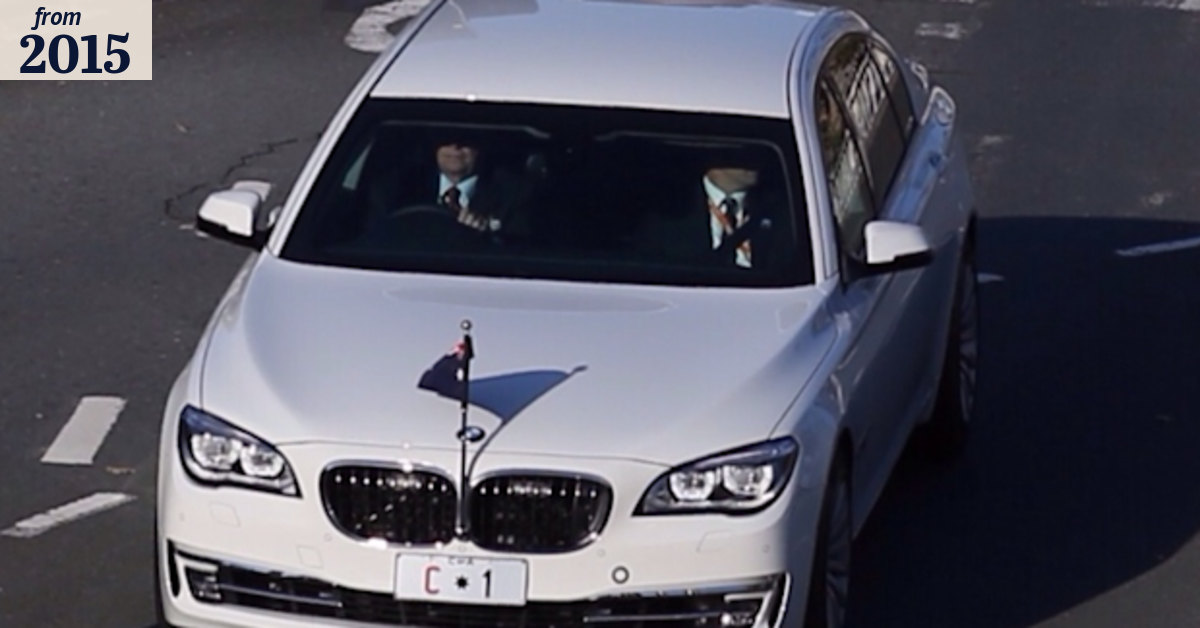
The $6.3 million contract is accurate. The Australian government purchased nine BMW 7 Series High Security vehicles for approximately $6.3 million (about $550,000 per vehicle) under a contract signed in 2014 [1][2]. These vehicles replaced a 12-year-old fleet of armoured Holden Caprices that had reached end-of-life and were subsequently crushed for security reasons in 2014 [3].
BMW did not bid in the original tender. According to Senate hearings, officials from the Attorney-General's department confirmed that BMW did not participate in the original tender process [1]. The original tender winner "turned out not to meet the full requirements" and the department subsequently sought the best "value for money" option, which led to the BMW contract [1].
However, the claim that "an Australian company did" bid appears INCORRECT. According to multiple reports, Holden actually "decided not to bid for the armoured car project" [2]. This contradicts the claim's assertion that an Australian company bid but was passed over. The previous fleet of Holden Caprices (in service from 2003-2014) was built by Holden in partnership with British defence contractor BAE Systems [3].
Missing Context
End-of-life replacement: The $6.3 million expenditure replaced a 12-year-old fleet of armoured Holden Caprices that had reached the end of their service life in 2014 [3]. The vehicles were specifically built for the Howard government in 2003 and were custom-fitted with bulletproof doors, windows, armoured floor, and protected fuel tank [1]. These vehicles were disposed of in accordance with the Public Governance, Performance and Accountability Act 2013 [3].
Reversal of prior agreement: There was a prior agreement approved by the secretary of the Attorney-General's department to replace the Holden fleet with another fleet of Holden-BAE vehicles. The Coalition government reversed this decision in favor of BMW [3]. This was described by Labor's industry spokesman Kim Carr as "a snub for Australian manufacturing" [3].
Security requirements: The BMW 7 Series High Security vehicles meet VR7 security rating for glass and VR9 for metal plating, with features including 60mm thick bulletproof glass, 10mm extra steel-plating, self-sealing fuel tank, and tyres designed to remain inflated when punctured [2]. The vehicles were specifically chosen for their ability to withstand AK-47 rounds and roadside bomb blasts amid heightened terrorism alerts [1].
International precedent: The article notes that other heads of state use domestically-produced armoured vehicles - Barack Obama uses a Cadillac (GM), David Cameron uses a Jaguar [2]. However, Australian manufacturing of such vehicles ceased with Holden's closure.
Source Credibility Assessment
The original source is a Brisbane Times article syndicated from The Sydney Morning Herald (Fairfax Media). Fairfax Media is mainstream Australian media with a center-left editorial stance. The article cites Senate hearings and official government sources, making it generally credible. However, the Labor-aligned claim source (mdavis.xyz) appears to have mischaracterized the bidding situation by asserting an Australian company bid when reports indicate Holden chose not to participate [2].
Labor Comparison
Did Labor do something similar?
The armoured BMW fleet was procured during the Abbott Coalition government in 2014. However, the vehicles continued in service through subsequent Labor (Shorten opposition, Albanese government) and Coalition (Turnbull, Morrison) administrations. The procurement was not reversed by subsequent governments.
Coalition precedent on Australian manufacturing:
The previous Coalition government under John Howard (2003) actually chose Australian-made Holden Caprices over BMW for the prime ministerial fleet, despite BMW being the other option at that time. According to reports, "John Howard and the Attorney-General's Department... were prepared to wear the extra cost to ensure ministers and visiting guests rode in an Australian-made armoured fleet" [4]. This demonstrates that Coalition governments have historically supported Australian automotive manufacturing when viable options existed.
Labor's criticism:
Labor's industry spokesman Kim Carr criticized the 2014 BMW decision as part of "a vendetta against Holden" [3], though the record shows Holden declined to bid rather than being excluded.
Balanced Perspective
The claim frames the procurement as awarding a contract to a foreign company that didn't bid, while an Australian company did. This framing contains significant inaccuracies:
Holden chose not to bid - Reports indicate Holden made a business decision not to participate in the tender process [2], rather than being excluded after bidding.
The Coalition had previously prioritized Australian manufacturing - The Howard government (Coalition) specifically chose Holden over BMW in 2003, accepting higher costs to support local manufacturing [4].
Legitimate security justification - The Attorney-General's department stated the original tender winner did not meet full requirements, necessitating a value-for-money assessment that led to BMW [1].
Fleet lifecycle - The expenditure replaced 12-year-old vehicles that had reached end-of-life and required replacement regardless of manufacturer [3].
The decision was politically controversial at the time, with Labor criticizing it as undermining Australian manufacturing. However, the specific claim that an Australian company bid and lost is not supported by available evidence. The more accurate characterization is that no viable Australian bid was submitted, following Holden's decision not to participate, and the department selected BMW based on value-for-money after the original tender winner proved unsuitable.
PARTIALLY TRUE
5.0
out of 10
The core facts are accurate: a $6.3 million contract was awarded to BMW (a foreign company), and BMW did not bid in the original tender. However, the claim's assertion that "an Australian company did" bid is contradicted by reports that Holden decided not to bid for the project [2]. The claim omits important context about the 12-year lifecycle of the previous fleet, the Coalition's historical support for Australian manufacturing (the Howard government chose Holden over BMW in 2003), and the legitimate security requirements that drove the procurement decision.
Final Score
5.0
OUT OF 10
PARTIALLY TRUE
The core facts are accurate: a $6.3 million contract was awarded to BMW (a foreign company), and BMW did not bid in the original tender. However, the claim's assertion that "an Australian company did" bid is contradicted by reports that Holden decided not to bid for the project [2]. The claim omits important context about the 12-year lifecycle of the previous fleet, the Coalition's historical support for Australian manufacturing (the Howard government chose Holden over BMW in 2003), and the legitimate security requirements that drove the procurement decision.
📚 SOURCES & CITATIONS (4)
-
1
Designed to resist AK-47s: Tony Abbott's new bulletproof BMW
It's not quite The Beast, the legendary armoured limousine that protects the US President, but it can stop an AK-47 round or a roadside bomb blast.
The Sydney Morning Herald -
2

PM Abbott's bulletproof BMWs are go
German armoured cars for Australian Prime Minister enter official service
carsales.com.au -
3

Bullet-proof Holden Caprices "crushed"
Federal government parts ways with VIP armoured Holden Caprices
GoAuto -
4
Holden to supply for PM
Forums Justcommodores Com
Rating Scale Methodology
1-3: FALSE
Factually incorrect or malicious fabrication.
4-6: PARTIAL
Some truth but context is missing or skewed.
7-9: MOSTLY TRUE
Minor technicalities or phrasing issues.
10: ACCURATE
Perfectly verified and contextually fair.
Methodology: Ratings are determined through cross-referencing official government records, independent fact-checking organizations, and primary source documents.