
The Claim
“Claimed 'good government starts today', after 18 months of governing.”
Original Sources Provided
✅ FACTUAL VERIFICATION
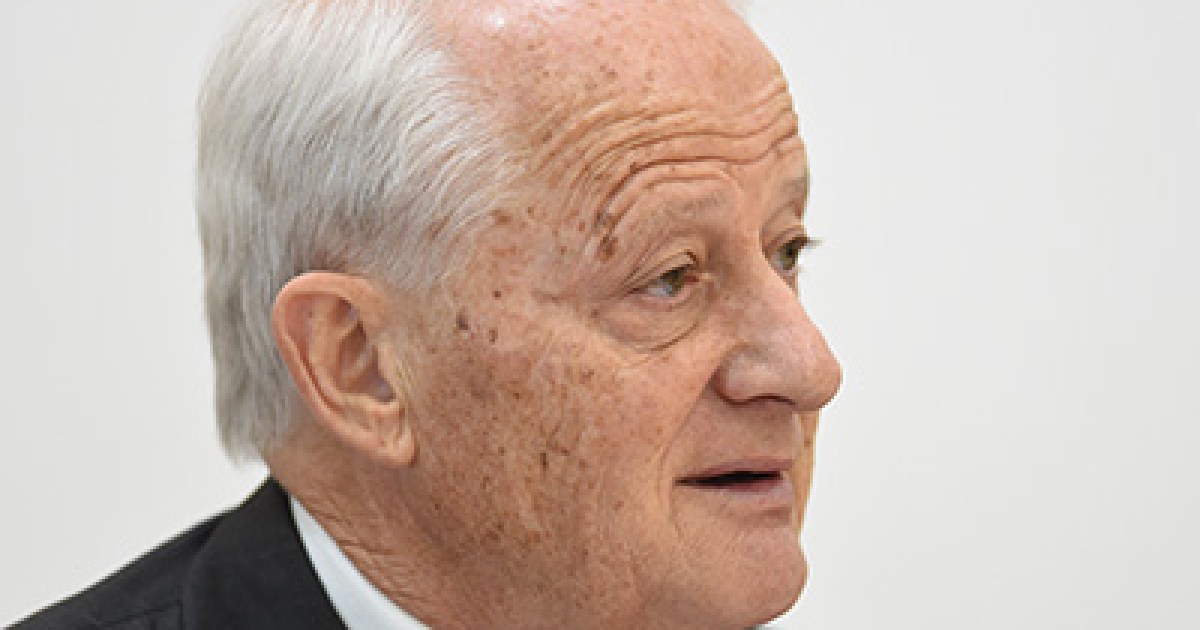
TRUE. Prime Minister Tony Abbott did make this statement on February 9, 2015, after surviving a leadership spill motion against his leadership [1]. The Abbott government was sworn into office on September 18, 2013, following the federal election on September 7, 2013 [2]. The statement was made approximately 17 months into his government's term, which is consistent with the "18 months" timeframe claimed [3].
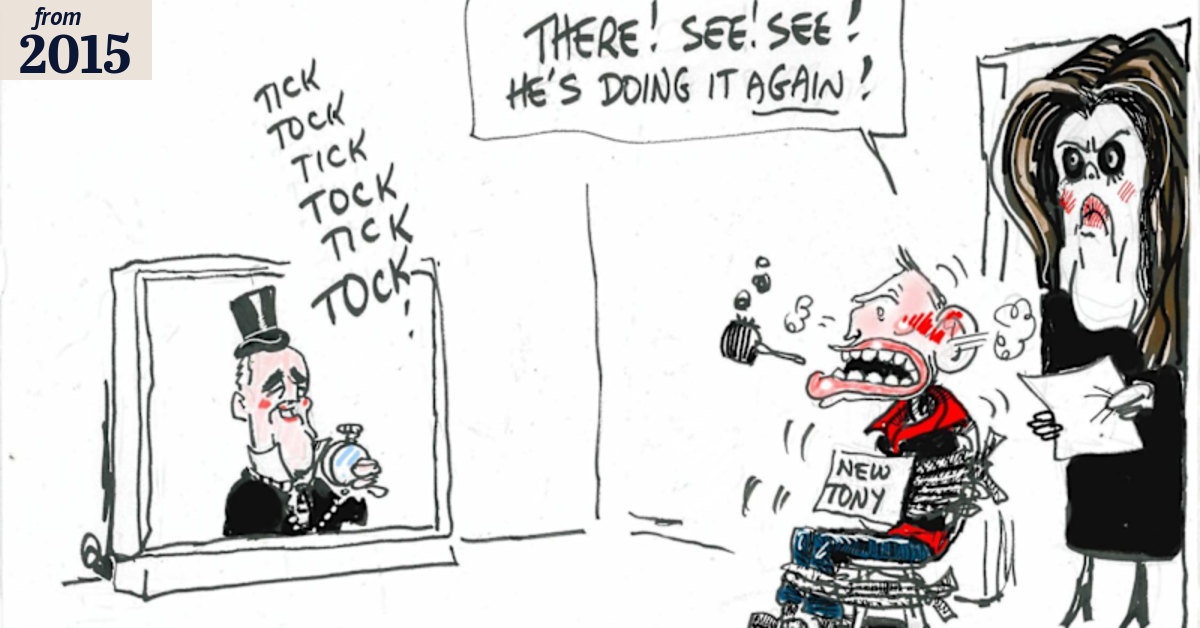
The context was a press conference at Parliament House where Abbott, having just survived the spill motion by 61 votes to 39, declared: "Good government starts today" [1][4]. He also promised to consult more with backbench MPs, reduce the role of his chief of staff Peta Credlin, and deliver a 2015 budget that would leave families better off [5].
Missing Context
The claim omits critical context about the circumstances surrounding the statement:
Leadership Crisis Context: The statement was made immediately after surviving a leadership spill motion that had been triggered by poor polling and internal dissent [6]. Abbott's approval rating had fallen to 29% by early February 2015, with 67% disapproval [7]. The Fairfax/Ipsos poll showed he trailed Bill Shorten as preferred Prime Minister 34% to 50% [7].
The "Empty Chair Spill": This was an unusual spill motion where no alternative candidate officially declared - hence dubbed the "Empty Chair spill" [6]. The 39 votes against Abbott represented nearly 40% of the party room voting against his continued leadership.
Acknowledgment of Poor Performance: In the same period, Abbott had described his first budget as "too bold and ambitious" (or "unfair" as critics characterized it) [3], effectively conceding the first 17 months had been problematic.
Australia Day Knighthood Controversy: The spill was triggered in part by Abbott's controversial decision to award Prince Philip a knighthood on Australia Day 2015, a "captain's call" made without cabinet consultation that was widely mocked [8].
Source Credibility Assessment
The original source provided is a YouTube video link with no additional context, making it impossible to assess the specific source's credibility. However, the claim itself is factually accurate and has been reported by multiple authoritative sources including ABC News, The Sydney Morning Herald, The Australian Financial Review, and Wikipedia [1][3][4][6].
Labor Comparison
Did Labor have similar leadership instability and rhetorical moments?
YES. The Labor government (2007-2013) experienced significantly worse leadership instability:
Leadership Spills: The Gillard/Rudd era involved multiple leadership challenges:
- June 2010: Julia Gillard replaced Kevin Rudd as Prime Minister (not a spill but a challenge that led to Rudd not contesting)
- February 2012: Rudd challenged Gillard and lost 71-31 [9]
- March 2013: Rudd supporters attempted to force a spill but failed to get necessary numbers
- June 2013: Rudd successfully challenged Gillard and returned as Prime Minister [10]
The "Real Julia" Comparison: Commentators immediately compared Abbott's "good government starts today" statement to Gillard's infamous "real Julia" campaign during the 2010 election, where she declared she would show voters the "real Julia" [3]. Both statements were widely seen as admissions that their leadership to that point had been flawed or inauthentic.
Leadership Instability Pattern: Both major parties have experienced significant leadership instability. During the Labor government (2007-2013), Australia had three Prime Ministers (Rudd, Gillard, Rudd). During the Coalition government (2013-2022), there were also three (Abbott, Turnbull, Morrison) [2].
Balanced Perspective
The statement was indeed made and was widely mocked as an admission of failure. The Sydney Morning Herald editorialized: "He declares 'good government starts today'. What was the first 17 months, a dry run?" [3]. Letter writers noted the absurdity: "I wonder how many chief executives, surgeons, airline pilots and ship's captains would be permitted to blunder along unchecked for nearly 18 months" [3].
However, political context matters:
Survival Mode: Abbott made the statement while fighting for his political survival. The promise to change and do better is a common political tactic when leaders face challenges - similar to Gillard's "real Julia" attempt to reset her leadership.
Historical Pattern: Leadership instability and rhetorical "reset" moments are not unique to either party. Both Labor and Coalition governments in recent Australian history have faced internal challenges and leadership changes.
Outcome: Abbott survived the February 2015 spill but was defeated by Malcolm Turnbull in a subsequent leadership challenge on September 14, 2015, just seven months later [2]. This suggests the "good government" pledge failed to restore confidence sufficiently.
Key context: This was a genuine admission of poor performance during a leadership crisis, but similar patterns have occurred across both major parties in Australian politics. The statement is accurately quoted, though the original YouTube source lacks credibility indicators.
TRUE
7.0
out of 10
The claim is factually accurate. Tony Abbott did declare "good government starts today" on February 9, 2015, approximately 17-18 months after his government was sworn in. The statement was made in the context of surviving a leadership spill motion and was widely interpreted as an admission that the first 17 months of his government had been suboptimal. The comparison to Labor's leadership instability and Julia Gillard's "real Julia" moment provides important context that this was part of a broader pattern of leadership challenges in Australian politics during this period.
Final Score
7.0
OUT OF 10
TRUE
The claim is factually accurate. Tony Abbott did declare "good government starts today" on February 9, 2015, approximately 17-18 months after his government was sworn in. The statement was made in the context of surviving a leadership spill motion and was widely interpreted as an admission that the first 17 months of his government had been suboptimal. The comparison to Labor's leadership instability and Julia Gillard's "real Julia" moment provides important context that this was part of a broader pattern of leadership challenges in Australian politics during this period.
📚 SOURCES & CITATIONS (11)
-
1
"Tony Abbott keeps leadership of Liberal Party but some supporters fear he is doomed"
Tony Abbott hangs on in a crucial test of his leadership but some of his most ardent supporters now believe he is mortally wounded and cannot survive the year.
Abc Net -
2

"Abbott government"
Wikipedia -
3
"Tony Abbott's 'good government starts today' may well be his 'real Julia' moment"
Our Prime Minister describes his first budget as "too bold and ambitious" ("Abbott's near death experience", February 10). Try unfair.
The Sydney Morning Herald -
4
"'Damaged goods': Abbott survives leadership coup"
PM maintains grip on leadership, with 61-39 vote against spill motion.
Thenewdaily Com -
5

"Tony Abbott pleads with colleagues for six-month reprieve"
Prime Minister Tony Abbott hit the phones to plead for six months to turn around the fortunes of his embattled government on Sunday night.
Canberra Times -
6
"February 2015 Liberal Party of Australia leadership spill motion"
Wikipedia -
7
"Tony Abbott reels from Queensland election debacle"
Afr
Original link unavailable — view archived version -
8

"Prince Philip and former Defence chief Angus Houston named as Australian knights"
Tony Abbott says the Duke of Edinburgh has served Australia with distinction throughout the Queen’s reign
the Guardian -
9
"Rudd loses leadership vote to Gillard"
Smh Com
Original link no longer available -
10
"June 2013 Australian Labor Party leadership spill"
Wikipedia
-
11
Claude Code
Claude Code is an agentic AI coding tool that understands your entire codebase. Edit files, run commands, debug issues, and ship faster—directly from your terminal, IDE, Slack or on the web.
AI coding agent for terminal & IDE | Claude
Rating Scale Methodology
1-3: FALSE
Factually incorrect or malicious fabrication.
4-6: PARTIAL
Some truth but context is missing or skewed.
7-9: MOSTLY TRUE
Minor technicalities or phrasing issues.
10: ACCURATE
Perfectly verified and contextually fair.
Methodology: Ratings are determined through cross-referencing official government records, independent fact-checking organizations, and primary source documents.