
The Claim
“Abolished the $10,000 limit on political donations.”
Original Sources Provided
✅ FACTUAL VERIFICATION
The claim is PARTIALLY TRUE but significantly misleading in its framing.
The $10,000 cap on political donations was indeed abolished in the Australian Capital Territory (ACT) in February 2015 [1]. The Electoral Act Amendment Bill passed the ACT Legislative Assembly with support from both ACT Labor and the Canberra Liberals, with only the ACT Greens voting against the changes [2].
However, the claim contains a critical omission: this was an ACT territory-level decision made by the ACT Legislative Assembly, not a decision by the federal Coalition Government. The Coalition was in power federally from 2013-2022, but the ACT has had a Labor-led government continuously since 2001 [3]. The ACT Legislative Assembly is a territory parliament with jurisdiction over local electoral laws, not a federal government body.
The reform was part of a comprehensive package that included:
Missing Context
Critical jurisdictional error: The claim implies this was a federal Coalition Government action, when it was actually an ACT territory-level decision. The ACT has been governed by Labor since 2001, and the 2015 decision was supported by both ACT Labor and the Canberra Liberals [1][2].
The trade-off mechanism: The abolition of the donation cap was paired with:
- A fourfold increase in public funding to reduce reliance on private donations
- Spending caps to prevent an "arms race" between parties
- Maintained disclosure requirements for donations over $1,000
Attorney-General Simon Corbell stated the policy focused on "disclosure and transparency on who donates what" rather than caps [2].
Bipartisan support: Both major parties in the ACT supported this change. Liberal leader Jeremy Hanson argued the package "struck a balance" and would stop the "arms race" on election spending [2].
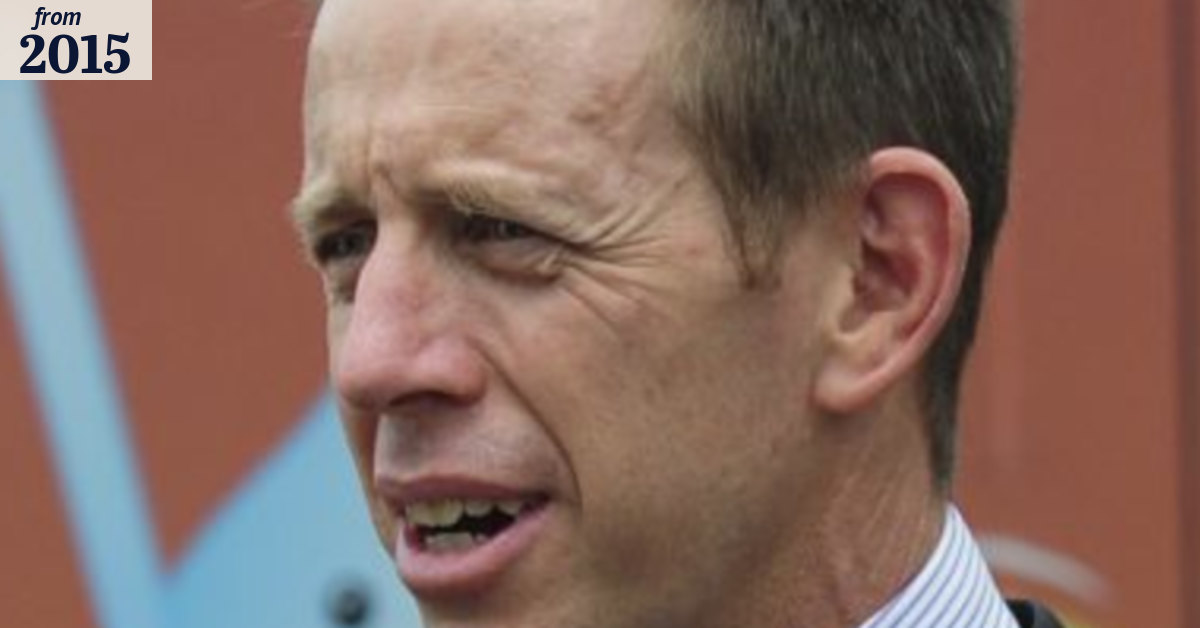
Greens opposition: The ACT Greens, led by Shane Rattenbury, were the sole opponents, arguing the changes represented "an unjustifiable transfer of public wealth to the political class" [1].
Source Credibility Assessment
The Age is a mainstream Fairfax newspaper (now part of Nine Entertainment) based in Melbourne. It is generally considered a reputable, centrist-to-center-left news source with established journalistic standards [1].
Assessment: The Age article is factual and accurately reports the ACT Legislative Assembly's decision. However, the original claim (from a Labor-aligned source) appears to have extracted this event and presented it misleadingly as a federal Coalition action, when it was actually a bipartisan territory-level decision in a Labor-governed jurisdiction.
Labor Comparison
Did Labor do something similar?
Federal Labor position: At the federal level, the Coalition maintained a disclosure threshold of approximately $15,200 (indexed). Labor actually campaigned for stricter donation limits, promising to lower the federal disclosure threshold to $1,000 - which would have made federal rules more restrictive than the ACT's $1,000 disclosure requirement [5].
Queensland Labor actions: In 2017, the Queensland Labor Government reduced the disclosure threshold from $13,000 to $1,000 and made the change retrospective, forcing the LNP to disclose donations made under the previous higher threshold [6]. This was stricter than the ACT approach.
Victoria: In 2018, the Victorian Labor Government implemented donation caps of $4,320 per election period and disclosure thresholds of $1,080 - significantly stricter than the ACT's approach [4].
ACT context: The ACT itself has been governed by Labor since 2001. The 2015 donation reform was supported by ACT Labor, making this a bipartisan territory-level decision, not a Coalition-specific policy.
Balanced Perspective
The claim presents the abolition of the $10,000 cap as a negative, corruption-related action by the Coalition. However, several important factors provide context:
Jurisdictional reality: This was an ACT territory-level decision, not federal. The ACT has been Labor-led since 2001. Framing this as a "Coalition" action is misleading when both ACT Labor and Canberra Liberals supported it.
Policy rationale: The change was part of a broader electoral reform package designed to:
- Reduce reliance on private donations through increased public funding
- Control overall campaign spending through expenditure caps
- Maintain transparency through disclosure requirements
Supporters argued this would prevent the "arms race" mentality seen in other jurisdictions [2].
Comparative context: While the ACT removed its donation cap, other jurisdictions under Labor governments implemented stricter limits. Queensland Labor reduced disclosure thresholds retrospectively, and Victorian Labor implemented donation caps. Federal Labor campaigned for lower disclosure thresholds than the Coalition maintained.
The trade-off: The ACT's approach prioritized reducing donation reliance through public funding over capping individual donations. Whether this is "corrupt" or "reform" depends on perspective - the Greens opposed it as benefiting major parties, while Labor and Liberal argued it reduced overall donor influence.
Key context: This is not unique to the Coalition - it was a bipartisan ACT decision, and Labor governments elsewhere implemented different but comparable electoral finance reforms.
PARTIALLY TRUE
4.0
out of 10
The claim is technically true that a $10,000 donation limit was abolished, but the framing is highly misleading. The claim implies this was a federal Coalition Government action when it was actually a bipartisan decision by the ACT Legislative Assembly (a Labor-governed territory since 2001). Both ACT Labor and the Canberra Liberals supported the change as part of a broader electoral reform package that increased public funding and implemented spending caps. Presenting this as a Coalition-specific "corruption" issue ignores the bipartisan nature of the decision and the Labor governance of the ACT. Furthermore, Labor governments in other jurisdictions implemented different but significant donation limit reforms, suggesting this was a jurisdictional variation rather than a partisan pattern.
Final Score
4.0
OUT OF 10
PARTIALLY TRUE
The claim is technically true that a $10,000 donation limit was abolished, but the framing is highly misleading. The claim implies this was a federal Coalition Government action when it was actually a bipartisan decision by the ACT Legislative Assembly (a Labor-governed territory since 2001). Both ACT Labor and the Canberra Liberals supported the change as part of a broader electoral reform package that increased public funding and implemented spending caps. Presenting this as a Coalition-specific "corruption" issue ignores the bipartisan nature of the decision and the Labor governance of the ACT. Furthermore, Labor governments in other jurisdictions implemented different but significant donation limit reforms, suggesting this was a jurisdictional variation rather than a partisan pattern.
📚 SOURCES & CITATIONS (6)
-
1
Labor and Liberal scrap cap on donations, boost public funding
Labor and Liberal combined on Thursday to scrap the $10,000 limit on donations to political parties and boost public funding from $2 a vote to $8 a vote.
The Age -
2
Cap on political donations removed by new ACT laws
New laws removing the $10,000 cap on political donations are passed by the ACT Legislative Assembly.
Abc Net -
3
Australian Capital Territory elections
Elections ACT -
4

Election funding and disclosure in Australian jurisdictions: a quick guide
Updated 6 December 2022 This Quick Guide summarises the complex funding and disclosure laws federally, and in each Australian state and territory. These laws regulate who can make and receive political donations, how and when those donations must be disclosed, how much m
Aph Gov -
5

Political donations rules are finally in the spotlight
World
The Times -
6
Parliament passes retrospective laws for Queensland political donations
Queensland political parties now have to declare all donations more than $1,000 after the Labor Government scraps its LNP predecessor's initiatives.
Abc Net
Rating Scale Methodology
1-3: FALSE
Factually incorrect or malicious fabrication.
4-6: PARTIAL
Some truth but context is missing or skewed.
7-9: MOSTLY TRUE
Minor technicalities or phrasing issues.
10: ACCURATE
Perfectly verified and contextually fair.
Methodology: Ratings are determined through cross-referencing official government records, independent fact-checking organizations, and primary source documents.