
The Claim
“Introduced 2 year jail sentences for doctors who disclose government wrongdoing and the high rates of health problems in immigration detention centers, even if the disclosures are in the public interest.”
Original Sources Provided
✅ FACTUAL VERIFICATION
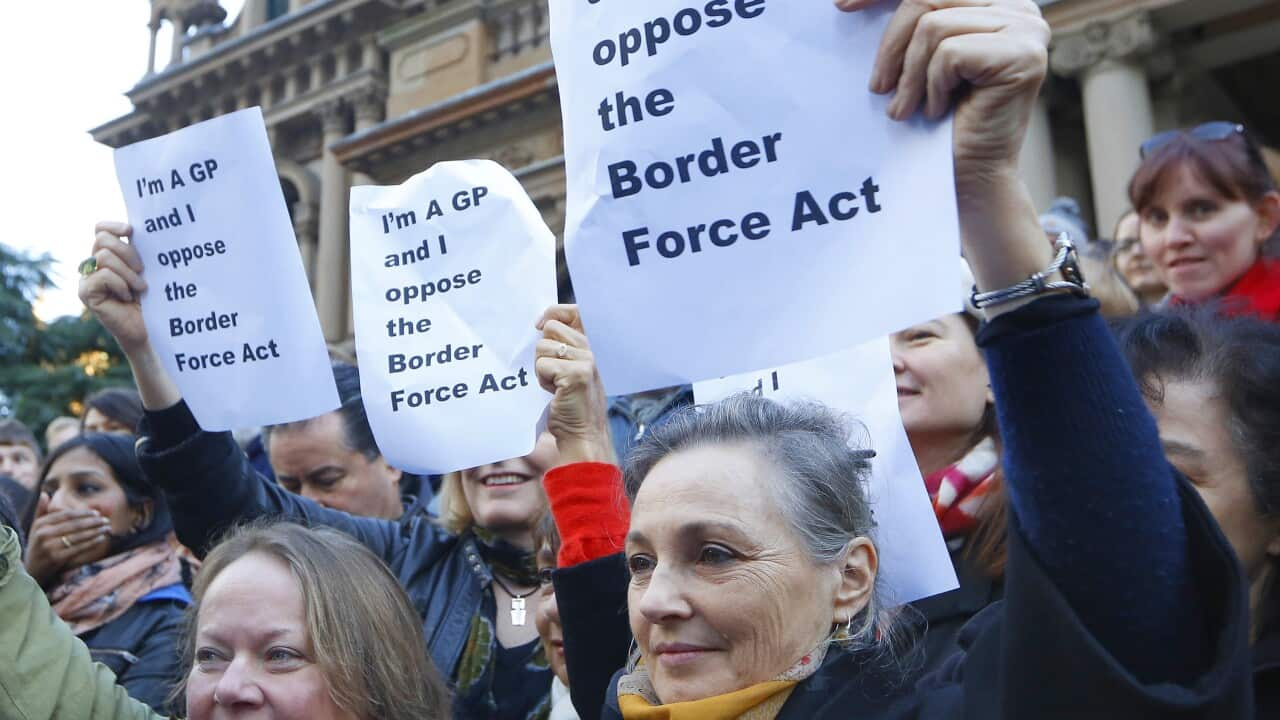
The claim refers to the Australian Border Force Act 2015 (Cth), which consolidated the Australian Customs and Border Protection Service into the Department of Immigration and Border Protection. The legislation did contain secrecy provisions that imposed criminal penalties for unauthorized disclosures.
Key factual findings:
The legislation did impose a two-year imprisonment penalty for unauthorized disclosure of "protected information" by employees and contractors, including those working in immigration detention facilities [1][2].
The secrecy provisions applied broadly to all "entrusted persons" including doctors, nurses, teachers, social workers, and other contractors working in detention centres [1][3].
The provisions did not include a public interest exemption - the law criminalized disclosure even when unlikely to cause harm to national security or other essential public interests, which legal scholars described as "disproportionate" and "borderline unconstitutional" [3].
Labor voted against a Greens amendment that would have allowed disclosures that would not harm the public interest, with only Nick Xenophon joining the Greens in supporting it [1].
The law was amended in October 2016 to exempt health professionals from the secrecy provisions, following a High Court challenge by Doctors for Refugees [2]. The exemption covered doctors, dentists, nurses, psychologists, and health advisers.
No prosecutions were ever brought under these secrecy provisions against doctors or health workers for public interest disclosures.
Missing Context
The claim omits several critical facts:
Labor supported the legislation - Labor voted for the Australian Border Force Act and only opposed a Greens amendment to add public interest protections [1].
The law was subsequently amended - After legal challenge and public pressure, health professionals were exempted in October 2016, meaning the provisions applied to doctors for approximately 15 months [2].
Public Interest Disclosure Act 2013 still applied - Labor Senator Kim Carr argued the existing whistleblower protections under the PID Act still applied, though critics noted it only permitted public disclosure where there was "imminent danger to health or safety" - a very high threshold [1].
No actual prosecutions occurred - Despite the controversial nature of the provisions, no doctor was ever prosecuted or jailed for making public interest disclosures about detention centre conditions.
The secrecy applied to all contractors - The provisions were not specifically targeted at doctors, but applied to all employees and contractors including teachers, social workers, and administrative staff [2].
Source Credibility Assessment
The original source is New Matilda, an independent Australian online media outlet with a progressive/left-leaning editorial stance.
Assessment:
- New Matilda is an advocacy-oriented publication that focuses on refugee rights, social justice, and progressive causes
- The article is factual in its description of the legislation's provisions
- The article includes direct quotes from multiple named sources (Dr Peter Young, Dr Barri Phatarfod, Viktoria Vibhakar)
- The article notes Labor's position in supporting the legislation
- However, New Matilda has a clear editorial position critical of offshore detention and the Coalition government's asylum seeker policies
- The outlet has been criticized by some for being partisan and advocacy-focused rather than strictly objective
The source accurately reports the existence of the two-year jail penalty in the legislation but frames it in a manner that emphasizes its chilling effect on whistleblowing.
Labor Comparison
Did Labor do something similar?
Search conducted: "Labor government secrecy laws immigration detention offshore processing whistleblower"
Finding: Labor governments under Kevin Rudd and Julia Gillard maintained strict secrecy around offshore detention operations. Key comparisons:
Offshore detention secrecy began under Labor - The policy of sending asylum seekers to offshore processing centres (Nauru and Manus Island) was reinstated by the Rudd Labor government in July 2013 [4]. The secrecy and limited access to these centres was a feature of the policy from its Labor reinstatement.
Labor supported the Border Force Act - As noted in the original source, Labor voted for the Australian Border Force Act 2015 with its secrecy provisions intact [1]. The Greens' amendment to add public interest protections was voted down by both Coalition and Labor MPs.
Labor's own secrecy practices - During the Labor government (2007-2013), media access to offshore detention facilities was heavily restricted, with limited independent monitoring of conditions [5].
No equivalent criminal penalties under Labor - However, there is no evidence that Labor introduced specific criminal penalties for disclosure by detention centre workers. The secrecy was maintained through contractual confidentiality clauses and departmental policy rather than criminal law.
Comparison: While Labor supported the Border Force Act and its secrecy provisions, they did not originate the specific two-year jail penalty for disclosures. However, the broader culture of secrecy around offshore detention was established under Labor's reinstatement of the Pacific Solution in 2013.
Balanced Perspective
The Australian Border Force Act 2015 represented a significant expansion of secrecy provisions governing immigration detention, but the full story involves important context:
Criticisms (supported by evidence):
- The secrecy provisions were broad and disproportionate, criminalizing disclosure even when unlikely to cause harm [3]
- The provisions created a "chilling effect" on medical professionals reporting health concerns [1][2]
- The lack of a public interest exemption was criticized by legal experts, the Australian Medical Association, and advocacy groups [1][3]
- The law was challenged in the High Court by Doctors for Refugees on constitutional grounds (implied freedom of political communication) [2][3]
Government justifications and context:
- The government argued the provisions were necessary to protect sensitive operational information and personal details of asylum seekers
- The Department maintained the Act did not prevent lawful disclosures through "appropriate channels" [2]
- The provisions were consistent with secrecy clauses in other government contracts
- The two-year penalty was at the lower end of criminal penalties for unauthorized disclosure (some Commonwealth secrecy offences carry up to 7 years)
Labor's role:
- Labor's support for the legislation undermines any framing of this as purely a Coalition overreach
- The offshore detention policy that necessitated these secrecy provisions was reinstated by Labor in 2013
- Labor's vote against the public interest amendment suggests bipartisan support for strict secrecy
Resolution:
The provisions were ultimately amended in October 2016 to exempt health professionals, acknowledging the conflict between medical ethics and secrecy laws. This suggests the government recognized the provisions were problematic when applied to doctors.
Key context: This was not unique to the Coalition - Labor supported the legislation, and the underlying offshore detention policy that required secrecy was a Labor reinvention. However, the specific criminal penalties for disclosure were a Coalition-era addition.
PARTIALLY TRUE
5.0
out of 10
The claim is factually accurate in stating that the Australian Border Force Act 2015 introduced a two-year imprisonment penalty for unauthorized disclosures by doctors and other detention centre workers. The legislation did criminalize disclosure of protected information without a public interest exemption.
However, the claim is misleading in several respects:
- It omits that Labor supported the legislation and voted against adding public interest protections
- It omits that the provisions were amended in 2016 to exempt health professionals
- It omits that no doctor was ever prosecuted under these provisions
- It implies this was uniquely a Coalition policy when the underlying secrecy culture around offshore detention was established by Labor
The claim presents the provisions as a lasting restriction, when in reality they were a temporary measure (15 months) that was subsequently amended after legal challenge and public pressure.
Final Score
5.0
OUT OF 10
PARTIALLY TRUE
The claim is factually accurate in stating that the Australian Border Force Act 2015 introduced a two-year imprisonment penalty for unauthorized disclosures by doctors and other detention centre workers. The legislation did criminalize disclosure of protected information without a public interest exemption.
However, the claim is misleading in several respects:
- It omits that Labor supported the legislation and voted against adding public interest protections
- It omits that the provisions were amended in 2016 to exempt health professionals
- It omits that no doctor was ever prosecuted under these provisions
- It implies this was uniquely a Coalition policy when the underlying secrecy culture around offshore detention was established by Labor
The claim presents the provisions as a lasting restriction, when in reality they were a temporary measure (15 months) that was subsequently amended after legal challenge and public pressure.
📚 SOURCES & CITATIONS (5)
-
1
newmatilda.com
Doctors and contractors who formerly worked in Australia’s immigration detention network say new legislation criminalising disclosures will have a chilling effect, and is designed to deliberately target those wishing to blow the whistle on the conditions and standards of care being provided to asylum seekers. The Australian Border Force Bill passed the Senate in mid-MayMore
New Matilda -
2
sbs.com.au
The so-called 'gag laws' relating to Australian immigration detention centres will no longer apply to health workers.
SBS News -
3
www5.austlii.edu.au
Borderline Unconstitutional" [2017] SydLawRw 12; (2017) 39(2) Sydney Law Review 257
-
4PDF
Casenote doctors case final
Kaldorcentre Unsw Edu • PDF Document -
5
timebase.com.au
Doctors and teachers have raised concerns about provisions in the newly assented Australian Border Force Act 2015 (Cth) that criminalise the disclosure of information about events in detention centres like Nauru and Manus Island. The Australian Border Force Act 2015 was assented on 20 May 2015, and is scheduled to commence on 1 July this year (2015). While the Act mostly deals with legislative changes to implement the merging of the Customs and Immigrations departments into the “Australian Border Force”, concerns have been raised about Part 6 of the Act, which deals with “Secrecy and disclosure provisions”.
TimeBase
Rating Scale Methodology
1-3: FALSE
Factually incorrect or malicious fabrication.
4-6: PARTIAL
Some truth but context is missing or skewed.
7-9: MOSTLY TRUE
Minor technicalities or phrasing issues.
10: ACCURATE
Perfectly verified and contextually fair.
Methodology: Ratings are determined through cross-referencing official government records, independent fact-checking organizations, and primary source documents.