
The Claim
“Spent thousands of government dollars on limousine rides, and fudged the declaration paperwork to say they were taxi rides.”
Original Sources Provided
✅ FACTUAL VERIFICATION
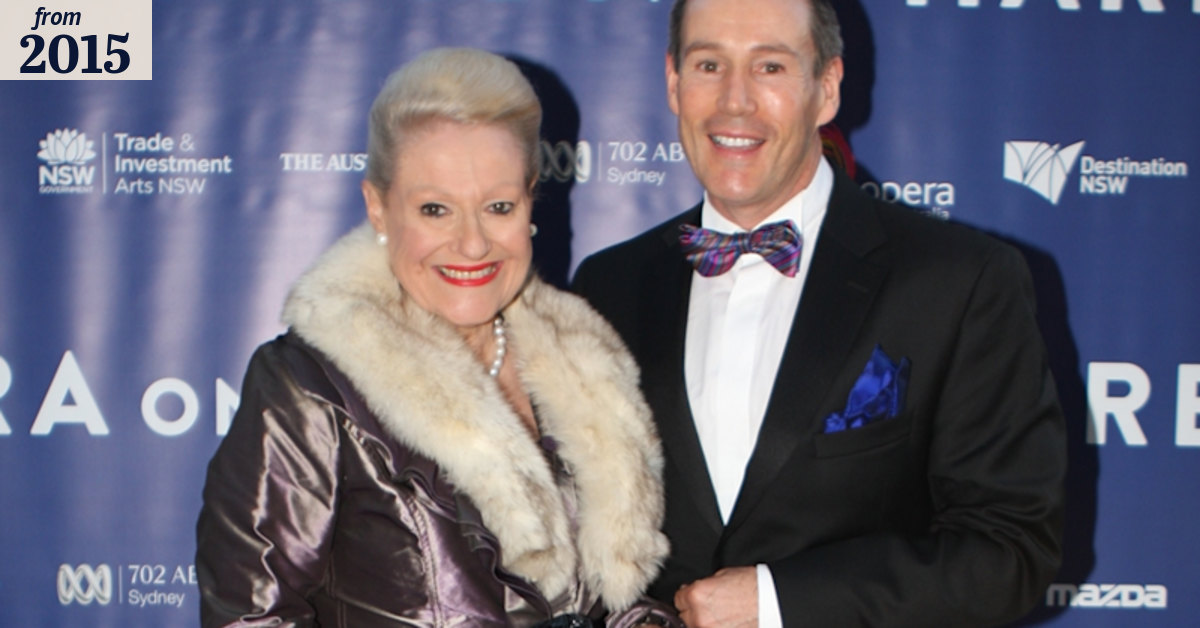
The claim relates to Bronwyn Bishop, who served as Speaker of the House of Representatives from 2013 to 2015. A Fairfax Media analysis of her travel entitlement claims between 2010 and 2013 showed she charged taxpayers more than $3,300 across at least eight days she attended theatre and arts events [1].
The specific limousine issue: Mrs Bishop displayed a preference for hire cars from Royale Limousines - a chauffeured car service for "discerning executives" - which were classified as "taxis" on expense reports [1]. On 11 of approximately 17 days analyzed between 2011 and 2012, Mrs Bishop hired cars from Royale Limousines for amounts up to $700 per day, all listed as "taxis" [1]. For example, on February 2, 2013, she charged taxpayers more than $1,000 for car use on a day she attended an Opera Australia performance of La Boheme [1].
However, the article notes that "politicians are not required to provide details of their expenditure on car transport" [1]. The classification of limousines as "taxis" appears to have been standard practice within the parliamentary expenses system rather than unique fraudulent behavior by Bishop.
Missing Context
The claim omits several critical pieces of context:
Systemic practice, not individual fraud: The classification of hire cars/limousines as "taxis" was not unique to Bishop. Parliamentary expense rules at the time did not require detailed breakdowns of car transport costs, and this categorization was standard practice [1].
Bishop's defense: Her office defended the expenses, stating "Members of both sides use entitlements for [such] events. They get invited because of the position that they hold. She would not have been invited otherwise. It's not like she bought a ticket herself" [1].
The broader expenses scandal: This was part of a larger controversy that became known as "Choppergate," which primarily centered on Bishop's $5,227 helicopter trip from Melbourne to Geelong for a Liberal party fundraiser [2]. The limousine issue was a secondary revelation during this period.
Outcome: Bishop ultimately repaid nearly $14,000 for various travel claims, including the helicopter trip and other disputed expenses, and resigned as Speaker in August 2015 [3]. She also paid a 25% penalty on the helicopter expense [1].
Source Credibility Assessment
The original source is the Sydney Morning Herald (Fairfax Media), which is a mainstream, reputable Australian news organization. The reporting was based on Freedom of Information (FOI) requests and analysis of official parliamentary expense records [1]. SMH has no particular partisan alignment and has reported critically on both Labor and Coalition governments. The reporting is factual and based on documentary evidence.
Labor Comparison
Did Labor do something similar?
Yes, Labor MPs have also been involved in comparable expenses controversies:
Anthony Albanese: The same SMH article that exposed Bishop's expenses noted that "Opposition spokesman for infrastructure Anthony Albanese charged taxpayers $1,300 for a trip to Melbourne on the day of the 2014 AFL grand final" [1]. Albanese appeared on the Bolt Report program in Melbourne the following day.
Peter Slipper: The article notes Labor MP Pat Conroy compared Bishop's treatment to former speaker Peter Slipper, who was investigated by the AFP for alleged misuse of entitlements [2]. Slipper was charged with fraud over $900 in taxi vouchers, though the charges were eventually dropped [4].
Broader parliamentary practice: The article explicitly states that "Members of both sides use entitlements for [such] events" [1]. Bishop's office made this defense, and the SMH reporting did not dispute it.
Recent Labor expenses issues: A 2025 parliamentary expenses controversy revealed that senior politicians from all parties had claimed significant family travel expenses, with the Albanese Labor government seeing over $4 million spent on travel for politicians' families and spouses since their election [5].
Balanced Perspective
While Bishop's use of limousines classified as taxis raises legitimate questions about the transparency and appropriateness of parliamentary expense claims, several factors provide important context:
Criticisms: The optics of charging taxpayers for luxury car services to attend opera performances were poor, especially given amounts like $1,000 for a single day. The classification system allowed premium limousine services to be obscured under the generic "taxi" category, reducing transparency [1].
Context: The parliamentary entitlements system at the time was opaque and poorly defined. The rules stated taxpayers could be charged for car travel for "official parliamentary or party business or official business as a minister," but what constituted "official business" was broadly interpreted [1]. The system itself enabled this behavior - politicians weren't required to detail car transport expenditure, and both major parties used these entitlements [1].
Comparative analysis: When placed alongside the $5,227 helicopter trip that triggered her resignation, the limousine expenses were relatively minor. More importantly, similar expense controversies have affected politicians across the political spectrum, from Peter Slipper (Labor) to Barnaby Joyce (Nationals), who refused to repay $5,000 for attending NRL games in 2013 [1].
Outcome: Bishop faced significant consequences - she repaid nearly $14,000 in total, paid penalties, was forced to resign as Speaker, and ultimately lost preselection for her seat [3]. This suggests the oversight mechanisms, while slow, eventually functioned.
Key context: This was not unique to the Coalition. Parliamentary expense issues have been a bipartisan problem in Australian politics, with reform only coming after periodic scandals expose systemic weaknesses in the entitlements system.
PARTIALLY TRUE
6.0
out of 10
The core facts are accurate: Bishop did spend thousands on limousine services that were classified as "taxis" on expense declarations. However, the framing as "fudged the declaration paperwork" suggests deliberate individual wrongdoing when this was actually standard practice enabled by a lack of transparency requirements in the parliamentary expenses system. Both Labor and Coalition MPs used similar expense categorizations, and the rules at the time did not require detailed disclosure of car transport costs. The characterization implies fraud where there was systemic opacity.
Final Score
6.0
OUT OF 10
PARTIALLY TRUE
The core facts are accurate: Bishop did spend thousands on limousine services that were classified as "taxis" on expense declarations. However, the framing as "fudged the declaration paperwork" suggests deliberate individual wrongdoing when this was actually standard practice enabled by a lack of transparency requirements in the parliamentary expenses system. Both Labor and Coalition MPs used similar expense categorizations, and the rules at the time did not require detailed disclosure of car transport costs. The characterization implies fraud where there was systemic opacity.
📚 SOURCES & CITATIONS (5)
-
1
smh.com.au
Under-fire Speaker Bronwyn Bishop has defended charging the taxpayer thousands on expensive hire cars for attending the opera and other arts events.
The Sydney Morning Herald -
2
abc.net.au
Look back about the events that led up to Bronwyn Bishop's resignation over her alleged misuse of travel entitlements.
Abc Net -
3

theguardian.com
Former Speaker reimburses public purse for expenses including trips to three weddings and to Kerry Packer’s funeral
the Guardian -
4
abc.net.au
Abc Net
Original link no longer available -
5
smh.com.au
Australian taxpayers have spent more than $4 million on travel for politicians’ families and spouses since the election of the Albanese government.
The Sydney Morning Herald

Rating Scale Methodology
1-3: FALSE
Factually incorrect or malicious fabrication.
4-6: PARTIAL
Some truth but context is missing or skewed.
7-9: MOSTLY TRUE
Minor technicalities or phrasing issues.
10: ACCURATE
Perfectly verified and contextually fair.
Methodology: Ratings are determined through cross-referencing official government records, independent fact-checking organizations, and primary source documents.