
The Claim
“Laughed and joked about the pacific islands because their very existence is threatened by climate change sea rises.”
Original Sources Provided
✅ FACTUAL VERIFICATION
On September 11, 2015, Immigration Minister Peter Dutton was recorded making a joke about rising sea levels threatening Pacific island nations during a conversation with Prime Minister Tony Abbott [1]. The incident occurred after Abbott returned from talks with Pacific Island leaders in Papua New Guinea.
The conversation unfolded as follows:
- Dutton remarked that a meeting was running to "Cape York time" [1]
- Abbott replied: "We had a bit of that up in Port Moresby" [1]
- Dutton then quipped: "Time doesn't mean anything when you're about to have water lapping at your door" [1]
- Both men laughed before Social Services Minister Scott Morrison pointed out there was a boom microphone recording the conversation [1]
The incident received widespread coverage from mainstream Australian media including ABC News, SBS, and Fairfax media [1][2][3]. The joke occurred in the context of the Pacific Islands Forum, where leaders from low-lying nations had been campaigning for stronger Australian action on climate change [1].
Missing Context
The claim omits important contextual details about the circumstances and subsequent responses:
1. The immediate political context: The joke was made during a meeting where Pacific Island leaders, including Kiribati President Anote Tong, had just urged Australia to commit to stronger emissions reductions and consider stopping new coal mine construction [1]. Australia had declined these requests, creating diplomatic tension [4].
2. Australia's Pacific climate aid: The Coalition government did maintain climate-related assistance programs for Pacific nations during 2013-2022. Australia's foreign affairs department notes ongoing "real and significant climate action" partnerships with Pacific countries, including climate change and resilience programs [5].
3. Dutton's response: When questioned, Dutton refused to answer questions about the remark, stating only "I had a private conversation with the Prime Minister" [1]. He did not apologize publicly for the comment.
4. Abbott's defense: Prime Minister Abbott defended Dutton, stating he should be remembered instead for his work on refugee resettlement, having "masterminded the plan to bring 12,000 needy people to this country" [2]. Abbott characterized the subsequent controversy as a "Twitter storm which... reflects Australia at its worst" [2].
5. The nature of the joke: The quip combined a reference to "Cape York time" (suggesting delays in remote areas) with the serious threat of sea level rise facing Pacific nations. Cape York traditional owner Gerhardt Pearson criticized this as representing "soft bigotry and low expectations" that harked back to colonial-era attitudes [1].
Source Credibility Assessment
The original source provided is ABC News (Australian Broadcasting Corporation), which is Australia's national public broadcaster. ABC News is generally considered a credible, mainstream news source with editorial standards and fact-checking processes. The specific article includes direct quotes from multiple sources including:
- Kiribati President Anote Tong
- Marshall Islands Foreign Minister Tony de Brum
- Cape York traditional owner Gerhardt Pearson
- Labor Senator Nova Peris
- Opposition Leader Bill Shorten
- Prime Minister Tony Abbott
The reporting is corroborated by multiple other mainstream Australian media outlets including SBS News, Sydney Morning Herald, and Guardian Australia [1][2][3][4]. This cross-verification across multiple independent news sources strengthens the credibility of the account.
There is no indication this reporting is partisan or fabricated; the incident was widely reported across the political spectrum of Australian media.
Labor Comparison
Did Labor do something similar?
Search conducted: "Labor government Pacific islands climate change comments controversy"
Finding: While Labor governments have not had equivalent recorded incidents of making dismissive jokes about climate threats to Pacific nations, there are relevant comparative points:
1. Climate policy approach: The Rudd and Gillard Labor governments (2007-2013) generally maintained stronger rhetorical commitments to climate action than the Abbott/Turnbull/Morrison Coalition governments. Labor implemented carbon pricing and more aggressive emissions reduction targets, which aligned more closely with Pacific island nation priorities [6].
2. Current Labor climate-migration policy: The Albanese Labor government (elected 2022) signed the Australia-Tuvalu Falepili Union agreement in November 2023 - described as "the world's first bilateral agreement to create a special visa" for climate-related migration [7]. This offers 280 Tuvaluans (2.5% of the population) permanent residency in Australia annually due to climate change threats [8]. The first climate migrants arrived in December 2025 [9].
3. Historical context: Both major Australian parties have struggled with the tension between domestic climate politics and Pacific island relationships. The Coalition's 2015 position of rejecting Pacific calls for stronger emissions targets was consistent with their domestic policy platform, while Labor's subsequent climate-migration agreement represents a different approach to the same underlying issue.
Key distinction: While Labor has not had equivalent "gaffes" recorded, the substantive policy differences between the parties on climate change and Pacific relations are significant. The Coalition maintained weaker emissions targets and opened new coal mines; Labor has implemented formal climate migration pathways.
Balanced Perspective
The incident was widely condemned as insensitive:
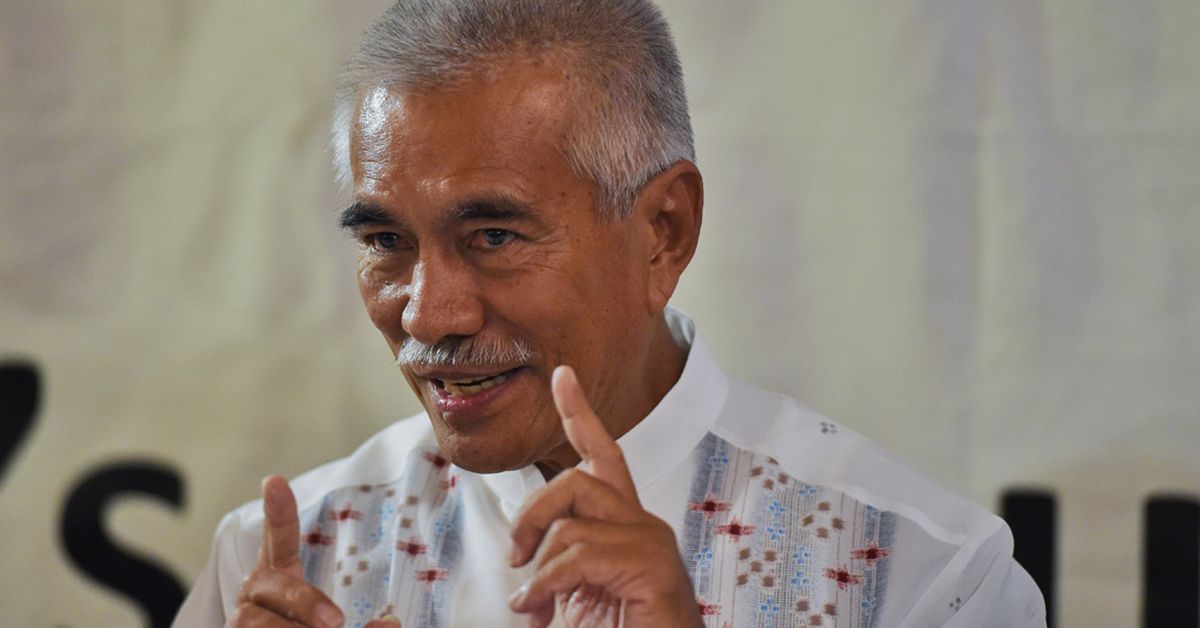
President Anote Tong, responding more in "sadness than anger," stated Dutton showed "a sense of moral irresponsibility quite unbecoming of leadership in any capacity" [1]. He warned that future Australian immigration ministers would have to deal with waves of Pacific climate refugees if sea levels continued to rise, stating "the science is quite categorical" [1].
Marshall Islands Foreign Minister Tony de Brum tweeted: "Dismayed Aust ministers joking about sea level rise in Pacific. Seems insensitivity knows no bounds in the big polluting island down sth" [1].
Labor leader Bill Shorten called it a "bad joke by a minister who is a bad joke" and stated "the fact that the Prime Minister is laughing along with it reminds me of what Barack Obama said: any leader who doesn't take climate change seriously is not fit to lead" [2].
Counterpoint - Government perspective:
The Coalition government's position was that their 26-28% emissions reduction target by 2030 (on 2005 levels) was "strong, responsible and achievable" [10]. They argued this represented appropriate climate action while maintaining economic growth. Dutton's defenders might argue the comment was an unfortunate private aside, not reflective of government policy toward Pacific nations.
However, the incident occurred against a backdrop where Australia had just rejected Pacific leaders' specific requests for stronger climate action, including calls to stop new coal mine construction [4]. The joke reinforced a perception that Coalition leaders did not take Pacific climate concerns seriously.
Comparative context: This incident is unique in being caught on microphone, but reflects broader tensions in Australia-Pacific climate relations that have persisted across governments. The Coalition's weaker climate stance and coal-friendly policies created ongoing friction with Pacific neighbors, while Labor has subsequently taken steps to repair these relationships through the Tuvalu climate-migration agreement.
TRUE
7.0
out of 10
The claim is factually accurate. Peter Dutton did make a recorded joke about Pacific island nations facing rising sea levels from climate change, and both he and Prime Minister Tony Abbott laughed. The comment - "Time doesn't mean anything when you're about to have water lapping at your door" - was widely reported by mainstream media and condemned by Pacific leaders including Kiribati President Anote Tong. The incident occurred in September 2015 during Pacific Islands Forum discussions where Australia had declined requests for stronger climate action [1][2][3].
Final Score
7.0
OUT OF 10
TRUE
The claim is factually accurate. Peter Dutton did make a recorded joke about Pacific island nations facing rising sea levels from climate change, and both he and Prime Minister Tony Abbott laughed. The comment - "Time doesn't mean anything when you're about to have water lapping at your door" - was widely reported by mainstream media and condemned by Pacific leaders including Kiribati President Anote Tong. The incident occurred in September 2015 during Pacific Islands Forum discussions where Australia had declined requests for stronger climate action [1][2][3].
📚 SOURCES & CITATIONS (10)
-
1
abc.net.au
The president of Kiribati labels Immigration Minister Peter Dutton arrogant and morally irresponsible for making a quip about the plight of Pacific Island nations facing rising seas from climate change.
Abc Net -
2

sbs.com.au
The opposition has joined the growing backlash against Peter Dutton's climate change gaffe, with Labor leader Bill Shorten slamming the remarks.
SBS News -
3
9news.com.au
The president of Kiribati has hit out at Immigration Minister Peter Dutton's "vulgar" joke about rising sea...
9news Com -
4
abc.net.au
Prime Minister Tony Abbott holds his Government's line on climate change despite pleas from low-lying Pacific island nations for a stronger stance on emissions and temperature rises.
Abc Net -
5
dfat.gov.au
Dfat Gov
-
6
abc.net.au
The new Australian Labor government's climate change policy has been pegged as a possible turning point for Australia-Pacific relations.
ABC Pacific -
7
unsw.edu.au
The Australia-Tuvalu Falepili Union, as it is known, is the world’s first bilateral agreement to create a special visa like this in the context of climate change.
UNSW Sites -
8
cgdev.org
Cgdev
-
9
reuters.com
Reuters
-
10
pmtranscripts.pmc.gov.au
24813 | PM Transcripts
Rating Scale Methodology
1-3: FALSE
Factually incorrect or malicious fabrication.
4-6: PARTIAL
Some truth but context is missing or skewed.
7-9: MOSTLY TRUE
Minor technicalities or phrasing issues.
10: ACCURATE
Perfectly verified and contextually fair.
Methodology: Ratings are determined through cross-referencing official government records, independent fact-checking organizations, and primary source documents.