
The Claim
“Refused to investigate, prosecute or do anything to a foreign company who built a large port and cut down large areas of forest home to endangered species, without environmental approval.”
Original Sources Provided
✅ FACTUAL VERIFICATION
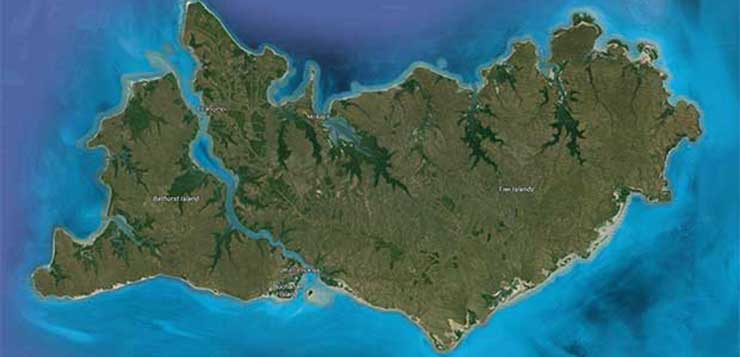
The core facts of this claim are substantially accurate. In 2015, the Department of Environment (DoE) did indeed drop its investigation into Port Melville, a $130 million port facility on the Tiwi Islands constructed by Singaporean company Ezion Holdings (via its subsidiary Teras Australia) without proper environmental approvals under the EPBC Act [1]. The port was built on Melville Island in the Apsley Strait, an area home to 38 threatened species including dugongs, dolphins, marine turtles, and internationally significant bird populations [2].
The Department of Environment confirmed in September 2015 that its investigation was complete and stated that "no breach of national environmental law has been identified" [1]. Internal documents revealed that the department had been aware of the construction since late 2014 but failed to properly follow up on concerns due to staff being overworked and the case being transferred between sections [3]. Parliamentary Secretary to the Minister for the Environment, Bob Baldwin, publicly conceded that Ezion "did the wrong thing" but noted the company had not gone outside the bounds of the legislation from a federal perspective [3].
However, the claim contains some misleading elements. The assertion that the government "refused to investigate" is inaccurate—an investigation was conducted but concluded no breach occurred. Additionally, the claim about "cutting down large areas of forest" overstates the environmental impact described in sources. The port was primarily an expansion of an existing wharf destroyed by a cyclone in 2007, not a massive forest-clearing operation [1].
Missing Context
The claim omits several critical contextual factors:
Legislative loopholes, not just government inaction: The Northern Territory government acknowledged that a "loophole in the legislation" meant no minister was responsible for signing off on port developments, and the Territory lacked legal power to compel environmental impact statements [4]. This was a systemic legislative failure predating the Coalition government.
Departmental resource constraints: Internal FOI documents revealed the investigation failure was partly attributed to overworked staff and the case being transferred between sections due to high workloads [3]. The Environment Department was in the process of losing 26% of its staff (670 positions) through efficiency dividends imposed by both Labor and Coalition governments [1].
Post-hoc approval process: Following the controversy, the government did require the project to undergo environmental assessment for its operational phase. The developers were forced to submit formal referrals and provide additional information [1].
Role of the Tiwi Land Council: The project was developed in partnership with the Tiwi Land Council, the statutory Aboriginal land rights body for the islands, which has authority under the Aboriginal Land Rights Act to approve developments on traditional lands [5].
Source Credibility Assessment
The original source, New Matilda, is rated by Media Bias/Fact Check as Left Biased with High factual reporting [6]. Founded in 2004, it is an independent Australian news site with a clear progressive editorial stance. The specific article by Thom Mitchell was based on Freedom of Information documents, lending it documentary credibility. However, the framing is consistently critical of the Abbott Government, with headlines emphasizing "incompetence" and quotes from environmental advocacy groups prominently featured. The article's factual claims about the investigation being dropped are corroborated by ABC News [3], but the interpretation of this as deliberate government refusal rather than bureaucratic failure represents a partisan framing.
Labor Comparison
Did Labor have similar environmental enforcement failures?
Search conducted: "Labor government EPBC Act enforcement failures environmental breaches"
Finding: While no direct equivalent involving a major port construction was found, historical EPBC Act enforcement has been inconsistent across governments of both stripes. The claim's framing suggests unique Coalition negligence, but the systemic issues—legislative loopholes, resource-constrained departments, and complex approval pathways—predated the 2013 change of government.
Notably, Larissa Waters (Greens Environment Spokesperson) acknowledged in parliamentary statements that "Labor and Coalition governments have imposed round after round of indiscriminate efficiency dividends and cuts which have gradually chipped away at our capacity to protect our precious places and wildlife" [1]. This suggests the environmental protection failures were not unique to the Coalition but reflected bipartisan funding decisions over multiple terms.
The Northern Territory's "toothless" environmental legislation was also a pre-existing condition not created by the Abbott Government [4].
Balanced Perspective
What the full story reveals:
While the claim accurately describes the outcome—no prosecution and the investigation being dropped—it mischaracterizes the nature of the government's response. The Department of Environment did investigate the matter but concluded no breach of national environmental law had occurred, attributing this to legislative limitations rather than a "refusal" to act.
The government's response was criticized by environmental groups and the NT Environmental Defender's Office for creating a precedent that developers could proceed with construction and seek approval later [1]. However, the government maintained that the project was now subject to proper assessment processes and that construction had not caused demonstrable environmental damage [3].
The controversy highlighted significant weaknesses in Australia's environmental protection framework, including:
- Overlapping and unclear federal/territory jurisdictional boundaries
- Resource-starved compliance divisions
- Legislative loopholes allowing major developments without assessment
- The "One-Stop Shop" policy push that would further devolve environmental powers to states
Comparative context: This case appears to reflect systemic environmental governance failures rather than unique Coalition malfeasance. Both major parties had contributed to departmental funding cuts that impaired compliance capacity, and the legislative loopholes predated the Abbott Government.
PARTIALLY TRUE
5.0
out of 10
The claim accurately describes that the investigation was dropped and no prosecution occurred against Ezion Holdings. However, the characterization of the government "refusing to investigate" is misleading—an investigation was conducted but concluded no breach of federal law had occurred. The claim overstates the forest clearing aspect (the port was primarily an expansion of existing infrastructure) and omits critical context about pre-existing legislative loopholes, resource constraints affecting the department, and bipartisan funding cuts that impaired environmental enforcement capacity. The framing suggests deliberate government protection of a foreign company, while the evidence points more toward bureaucratic failure and systemic legislative weaknesses.
Final Score
5.0
OUT OF 10
PARTIALLY TRUE
The claim accurately describes that the investigation was dropped and no prosecution occurred against Ezion Holdings. However, the characterization of the government "refusing to investigate" is misleading—an investigation was conducted but concluded no breach of federal law had occurred. The claim overstates the forest clearing aspect (the port was primarily an expansion of existing infrastructure) and omits critical context about pre-existing legislative loopholes, resource constraints affecting the department, and bipartisan funding cuts that impaired environmental enforcement capacity. The framing suggests deliberate government protection of a foreign company, while the evidence points more toward bureaucratic failure and systemic legislative weaknesses.
📚 SOURCES & CITATIONS (6)
-
1
Department Drops Investigation Into Tiwi Islands Port Built Without Environmental Approval
The Department of Environment has dropped an investigation into the apparent illegal construction of a port on Tiwi's Melville Island.
New Matilda -
2
Major Port Built On Tiwi Islands Without Environmental Approvals
Scandal is lapping the tropical shores of Tiwi Island, 80 kilometres north of Darwin, this week after the ABC revealed that a $130 million deep-sea port development has been built without any environmental approval. The federal Environment Minister has announced an inquiry, the Northern Territory Environment Minister has denounced its “toothless” and “failing” environmental legislation,More
New Matilda -
3
Government failed to follow up 'inadequate' responses to Tiwi Islands port, FOI documents show
The Federal Government received "inadequate" responses about a controversial port development on the Tiwi Islands but failed to follow up on its concerns, Freedom of Information documents show.
Abc Net -
4
NT govt admits planning 'loophole' meant Port Melville was built without environmental impact statement
The Northern Territory government admits it did not have the power to stop a port development on Melville Island from going ahead on environmental grounds due to a loophole in planning laws, and it does not have a minister responsible for signing off on port developments.
Abc Net -
5
Tiwi Islands land council 'partially briefed' on US military using port
An Aboriginal land council says it has been partially briefed about the US military using a port on the Tiwi Islands, to the north of Darwin.
Abc Net -
6

New Matilda - Bias and Credibility - Media Bias/Fact Check
LEFT BIAS These media sources are moderately to strongly biased toward liberal causes through story selection and/or political affiliation. They may
Media Bias/Fact Check
Rating Scale Methodology
1-3: FALSE
Factually incorrect or malicious fabrication.
4-6: PARTIAL
Some truth but context is missing or skewed.
7-9: MOSTLY TRUE
Minor technicalities or phrasing issues.
10: ACCURATE
Perfectly verified and contextually fair.
Methodology: Ratings are determined through cross-referencing official government records, independent fact-checking organizations, and primary source documents.