
The Claim
“Cut the pension for 35,000 public service retirees.”
Original Sources Provided
✅ FACTUAL VERIFICATION
The claim contains elements of truth but conflates two separate policy changes and misrepresents the scope and nature of the impact.
The Defined Benefit Income Stream Change ("10% Cap"):
In January 2016, the Coalition government implemented a change to the treatment of defined benefit income streams for Centrelink pension eligibility purposes [1]. The change reduced the "deductible amount" (the portion of superannuation payments exempt from the income test) from 50% to 10% for defined benefit pensioners [1].
The government initially projected this would affect approximately 47,000 retirees, but the Australian Council of Public Sector Retiree Organisations (ACPSRO) believed this was a "gross under-estimation" [1]. A later SMH article specifically referenced "35,000 former public servants" being affected [2].
Affected retirees included former state and federal public servants, police officers, firefighters, nurses, and teachers [1]. ACPSRO described the change as based on "an ideological dislike of public servants" [1].
The Broader Context - Pension Assets Test Changes:
The claim appears to conflate the defined benefit cap change with separate, more significant pension assets test changes announced in the 2015 budget. Those broader changes:
- Tightened eligibility for the part pension by reducing the asset threshold from $1.15 million to $823,000 for couples [3]
- Affected approximately 91,000 people who would lose access entirely, and 235,000 who would have payments reduced [3]
- Were legislated with Greens support after Labor opposed them [4]
- Saved $2.4 billion over four years [4]
Important Clarification:
The 35,000 figure in the claim appears to refer specifically to the defined benefit cap change affecting public servants, not the broader assets test changes. However, the claim uses language ("kicked off the pension") that suggests complete loss of pension entitlement, which is misleading. The defined benefit change reduced pension payments for many affected retirees but did not eliminate their eligibility entirely in all cases.
Missing Context
Government Justification:
The Coalition government argued the defined benefit change was about "consistency" and fairness [1]. Social Services Minister Christian Porter stated: "We simply want people to be treated consistently... This change will enable a fairer assessment of a person's need for income support" [1].
Under the previous rules, defined benefit pensioners had a significant advantage - they could exempt 50% of their superannuation payments from the income test, while other pensioners had different treatment [1]. The government argued this created an anomaly where "some people having a higher deductible amount, and consequently higher income support payments" than those with equivalent income from other sources [1].
Trade-offs in the Broader Policy:
The 2015 budget pension reforms were explicitly designed as a redistribution - taking from wealthier retirees to benefit poorer ones. The government claimed "more than 170,000 pensioners with low and modest levels of assets will have their pension increased by around $30 a fortnight" [3][4].
Prime Minister Tony Abbott described the target as "liquid assets millionaires" who could afford to be self-funded retirees [3]. The government also guaranteed those losing part-pension access would retain Commonwealth Seniors Health Cards for pharmaceutical concessions [3].
Timing and Parliamentary Support:
The defined benefit cap change was implemented in January 2016. The broader assets test changes were legislated in June 2015 with the support of the Greens, not as a purely Coalition measure [4]. Labor opposed both sets of changes.
Source Credibility Assessment
Original Source (Sydney Morning Herald):
The SMH is a mainstream, reputable Australian newspaper (Fairfax Media, now Nine Entertainment). The article cited is factual reporting from January 2016 by Noel Towell, Education Editor [1][2]. While Fairfax publications have been characterized as having a center-left editorial stance, this reporting contains direct quotes from both the government and advocacy groups, presenting both perspectives. The 35,000 figure appears to be drawn from union/advocacy group estimates rather than government projections.
Credibility Rating: Generally reliable mainstream source, though the specific figure may reflect advocacy group estimates rather than official data.
Labor Comparison
Did Labor do something similar?
Labor opposed the 2015-2016 pension changes when in opposition, but their record in government shows pension reform has been pursued by both major parties:
Labor's Superannuation Guarantee (1992): The Keating Labor government introduced compulsory superannuation, which fundamentally restructured retirement income in Australia - arguably the most significant change to retirement policy in Australian history [5].
Labor's 2009 Pension Reforms: The Rudd Labor government increased the pension base rate by around $30 per week for singles and $10 for couples, but also tightened some eligibility requirements [5].
Labor's Position on These Specific Changes: Labor explicitly opposed both the defined benefit cap change and the broader assets test changes, with Bill Shorten stating "the Liberal Party is coming after your pension" [4]. Shadow Minister Jenny Macklin later called for a review of the changes [6].
Comparative Analysis:
Both parties have made pension changes that reduced benefits for some retirees while increasing them for others. The key difference is that Labor's reforms (2009) generally increased base rates while the Coalition's 2015-2016 changes redistributed from wealthier to poorer retirees. Labor's position in opposition was to oppose these specific changes, but historical context shows both parties have reformed pension systems in ways that affected retiree incomes.
Balanced Perspective
The Criticism:
Public sector retirees and their advocates, including ACPSRO, argued the 10% cap change was unfair because:
- Public sector super schemes were originally designed as fully funded systems to provide living incomes [1]
- The change effectively clawed back retirement income that had been promised and contributed to over careers
- The retrospective nature affected people already retired who had planned their finances around existing rules
- One Tasmanian couple cited lost $161 per fortnight despite only owning a caravan and car [1]
The Government's Position:
The Coalition argued:
- Consistency across all pensioners was the primary goal
- The previous 50% exemption created an unfair advantage for defined benefit recipients
- Those with substantial assets ("liquid assets millionaires") should be self-funded
- The broader changes increased payments for 170,000 poorer pensioners [3][4]
- The family home remained exempt (addressing concerns about forcing people to sell homes)
Broader Context:
The pension changes came during a period of budget consolidation following the end of the mining boom. The government faced pressure to reduce the deficit while protecting vulnerable pensioners. The assets test approach was arguably less harsh than the earlier proposal (in the 2014 budget) to change indexation to CPI, which would have gradually eroded all pensions over time [3].
The changes were not unique to the Coalition - they represented a continuing evolution of Australia's retirement income system that both parties have contributed to. The Greens' support for the broader assets test changes (while not the defined benefit cap specifically) indicates these were not purely partisan measures.
PARTIALLY TRUE
5.0
out of 10
The claim contains factual elements but misrepresents the nature and scope of the policy change:
The 35,000 figure is consistent with advocacy group estimates (though the government projected 47,000), but the claim conflates this with the broader assets test changes affecting ~300,000 retirees total.
"Cut the pension" is misleading language - the defined benefit cap change reduced the deductible amount for income testing, which reduced pension payments for many but did not universally "kick people off" the pension entirely.
Missing context includes the government's fairness/consistency justification, the fact that poorer pensioners benefited from related changes, and that the Greens supported the broader assets test reforms.
Labor comparison shows both parties have reformed pension systems; Labor opposed these specific changes but made their own significant pension reforms in government.
The most accurate characterization is that the Coalition changed income testing rules for defined benefit retirees, reducing pension payments for an estimated 35,000-47,000 former public servants, while simultaneously increasing payments for 170,000 lower-asset pensioners through broader assets test reforms.
Final Score
5.0
OUT OF 10
PARTIALLY TRUE
The claim contains factual elements but misrepresents the nature and scope of the policy change:
The 35,000 figure is consistent with advocacy group estimates (though the government projected 47,000), but the claim conflates this with the broader assets test changes affecting ~300,000 retirees total.
"Cut the pension" is misleading language - the defined benefit cap change reduced the deductible amount for income testing, which reduced pension payments for many but did not universally "kick people off" the pension entirely.
Missing context includes the government's fairness/consistency justification, the fact that poorer pensioners benefited from related changes, and that the Greens supported the broader assets test reforms.
Labor comparison shows both parties have reformed pension systems; Labor opposed these specific changes but made their own significant pension reforms in government.
The most accurate characterization is that the Coalition changed income testing rules for defined benefit retirees, reducing pension payments for an estimated 35,000-47,000 former public servants, while simultaneously increasing payments for 170,000 lower-asset pensioners through broader assets test reforms.
📚 SOURCES & CITATIONS (7)
-
1
Public service retirees set for pension shock
Pension cut a "bull in a China policy shop", say retirees.
The Sydney Morning Herald -
2
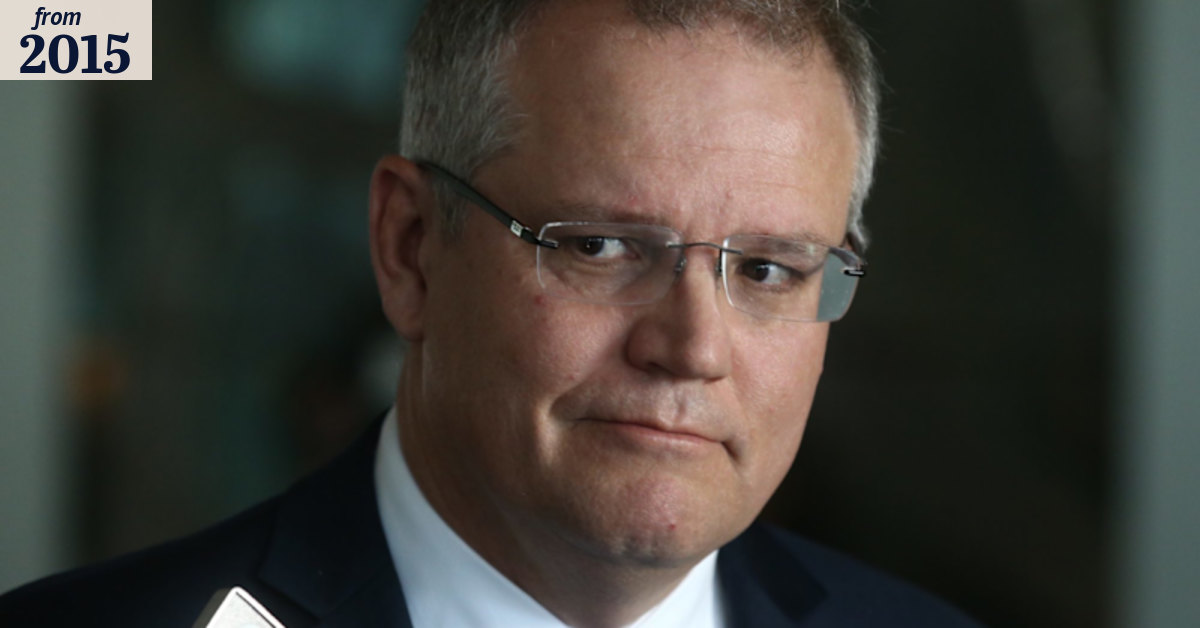
35,000 former public servants kicked off the pension
Former federal and state workers to see payments slashed on January 14.
The Sydney Morning Herald -
3
Budget 2015: Age pension eligibility criteria tightened in 'sustainable' overhaul
Tens of thousands of wealthier retirees will lose access to the age pension under changes targeting what Prime Minister Tony Abbott has described as "liquid assets millionaires".
Abc Net -
4
Pension assets test: Deal with Greens secures Coalition's changes
The federal government and the Greens have struck a deal that will see the proposed changes to the pensions assets test passed by the parliament, delivering $2.4 billion in savings over four years.
The Sydney Morning Herald -
5
History of superannuation in Australia
Ato Gov
-
6

Retiree wealth 'stripped away' by pension changes
Thenewdaily Com -
7
Claude Code
Claude Code is an agentic AI coding tool that understands your entire codebase. Edit files, run commands, debug issues, and ship faster—directly from your terminal, IDE, Slack or on the web.
AI coding agent for terminal & IDE | Claude


Rating Scale Methodology
1-3: FALSE
Factually incorrect or malicious fabrication.
4-6: PARTIAL
Some truth but context is missing or skewed.
7-9: MOSTLY TRUE
Minor technicalities or phrasing issues.
10: ACCURATE
Perfectly verified and contextually fair.
Methodology: Ratings are determined through cross-referencing official government records, independent fact-checking organizations, and primary source documents.