
The Claim
“Spent $1.3 million on CCTV surveillance for an impoverished indigenous community who are desperately in need of more funding for education, health, housing and welfare.”
Original Sources Provided
✅ FACTUAL VERIFICATION
The $1.3 million figure is substantially accurate, though understated.
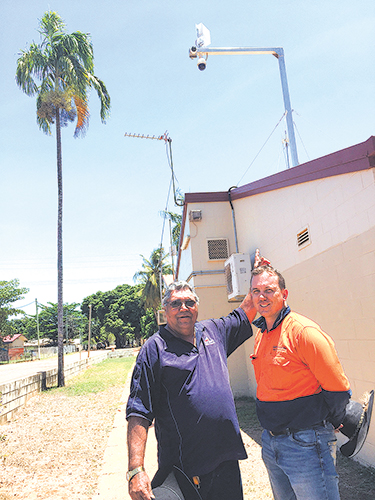
According to Aurukun Shire Council's official announcement, the CCTV system cost $1.47 million (later reported as over $1.7 million when expanded) [1]. The installation began in May 2016 and included 65 cameras by completion [2].
However, the claim contains significant factual errors about funding attribution:
The project was funded by THREE levels of government, not solely the federal Coalition:
- Aurukun Shire Council (local government)
- Queensland Department of Aboriginal and Torres Strait Islander Partnerships (state Labor government)
- Department of Prime Minister and Cabinet (federal Coalition government) [1][2]
This was explicitly described as a collaborative "three levels of government" project in official statements [3]. The Queensland Minister for Indigenous Affairs at the time was Curtis Pitt from the Queensland Labor government [4].
The CCTV system achieved measurable positive outcomes:
The system won a 2017 Australian Security Industry Award for Excellence [2]. According to Aurukun Mayor Dereck Walpo:
- "It is like living in a different town since the installation"
- "Dramatically reduced large scale unrest and ongoing community tensions"
- "Infrastructure damage and vandalism of Council property has been considerably reduced"
- "No vehicle thefts since October last year" (as of November 2017)
- "People living in Aurukun feel much safer" [2]
Aurukun did face severe disadvantage:
According to the "Dropping off the Edge" report cited in the original article, Aurukun ranked:
- #1 nationally for criminal convictions (up from 11th in 2007)
- #5 nationally for young adults not engaged in work or study
- #10 nationally for unemployment [4]
Missing Context
The claim omits critical contextual information:
Tripartite funding structure: The claim implies Coalition-only spending, when in fact the Queensland Labor government was an equal partner in funding this project [1][3].
Severe crime crisis in Aurukun: The community was experiencing extreme violence and crime, not just "disadvantage." The "Dropping off the Edge" report showed Aurukun had the worst criminal conviction rate in Australia [4]. Community safety is a prerequisite for education, health, and economic development.
Positive outcomes achieved: The claim makes no mention that the CCTV system won national awards and achieved measurable crime reduction [2].
Community support: The project had support from the Aurukun Shire Council, Queensland Police Service, and community stakeholders who had visited Palm Island to observe their successful CCTV system [1][4].
Part of broader strategy: The CCTV was part of a comprehensive community safety approach including private security guards, Community Police program, PCYC construction, and library refurbishment [1].
Different budget categories: The claim conflates capital expenditure on community safety (CCTV) with operational spending on education, health, housing, and welfare. These are funded through different budget lines and by different levels of government. State/territory governments primarily fund education and health, while the federal government provides Indigenous-specific funding through various programs.
Source Credibility Assessment
New Matilda - LEFT BIAS / Progressive Advocacy Journalism
According to Media Bias/Fact Check, New Matilda is rated as having "LEFT BIAS" - "moderately to strongly biased toward liberal causes through story selection and/or political affiliation" [5].
Key characteristics:
- Self-described: "Independent media outlet" focused on "investigative journalism and analysis"
- Owned/edited by: Chris Graham, a Walkley Award and Human Rights Award-winning journalist
- Political orientation: Progressive/left-wing perspective
- Approach in this article: Highly sarcastic and opinionated framing ("How to beat poverty... install a CCTV system")
Assessment: New Matilda is a partisan advocacy publication, not a mainstream balanced news source. The article presents selective facts, uses mocking language, and omits positive outcomes and collaborative funding structure. While the core dollar figure is accurate, the framing and omission of Labor government involvement represent significant bias.
Labor Comparison
Did Labor governments fund similar community safety initiatives in Indigenous communities?
Queensland Labor was a co-funder of THIS project. The Queensland Department of Aboriginal and Torres Strait Islander Partnerships contributed to the $1.47 million CCTV system [1][3]. This demonstrates bipartisan support for community safety spending when facing severe crime crises.
Historical context: Community safety spending in remote Indigenous communities has been supported by governments of both parties. The Palm Island CCTV system (referenced in the article as a model) was installed in August 2014 - during the Abbott Coalition government period at federal level, but also with state government involvement [4].
No direct equivalent found of a Labor federal government specifically funding CCTV in a comparable community, but this reflects that:
- Such spending is typically joint federal-state-local
- Community safety infrastructure has bipartisan support when crime crises emerge
- The Queensland Labor government explicitly supported THIS Coalition-era project
Key insight: The claim falsely implies this was uniquely Coalition spending. In reality, state Labor was an enthusiastic co-investor in the same project.
Balanced Perspective
The full story is more complex than the claim suggests:
Legitimate criticisms (acknowledged):
- Aurukun was indeed severely disadvantaged and needed substantial investment in education, health, housing, and welfare [4]
- CCTV alone cannot address root causes of poverty and disadvantage
- $1.47+ million is significant spending that could have funded other services
Important context and government rationale:
- Aurukun had Australia's highest criminal conviction rate - community safety was an urgent crisis [4]
- Without safety, education and economic development cannot succeed (teachers and professionals won't work in unsafe communities)
- The project had tripartite government support including the Queensland Labor government [1][3]
- The Aurukun community and Council requested and supported the installation [1]
- The system achieved measurable success: national award, reduced crime, no vehicle thefts, improved community perception of safety [2]
- It was part of broader investments including security guards, community police, PCYC, and library refurbishment [1]
Comparative analysis:
- This is NOT unique to Coalition - Queensland Labor co-funded the same project
- Community safety spending in remote Indigenous communities has bipartisan support
- The claim's framing suggests this was wasteful or unique to Coalition, when neither is accurate
The fundamental question: Should governments prioritize community safety infrastructure when a community has Australia's highest crime rate, even if other needs exist? Both Coalition and Queensland Labor governments answered "yes" to this question for Aurukun.
MISLEADING
4.0
out of 10
The claim is factually true about the dollar amount spent but deeply misleading in three critical ways:
Attribution error: It implies Coalition-only spending when Queensland Labor was an equal co-funder through the Department of Aboriginal and Torres Strait Islander Partnerships [1][3].
Selective framing: It presents the CCTV as wasteful spending while ignoring (a) the severity of Aurukun's crime crisis (#1 in Australia), (b) the positive outcomes achieved (national award, reduced crime), and (c) community support for the project [2][4].
False dichotomy: It suggests CCTV spending came at the expense of education/health/housing, when these are separate budget categories at different government levels. The Queensland Labor government was simultaneously investing in this CCTV while also funding other Indigenous services.
The article's sarcastic tone and omission of Labor involvement suggest partisan framing rather than objective reporting.
Final Score
4.0
OUT OF 10
MISLEADING
The claim is factually true about the dollar amount spent but deeply misleading in three critical ways:
Attribution error: It implies Coalition-only spending when Queensland Labor was an equal co-funder through the Department of Aboriginal and Torres Strait Islander Partnerships [1][3].
Selective framing: It presents the CCTV as wasteful spending while ignoring (a) the severity of Aurukun's crime crisis (#1 in Australia), (b) the positive outcomes achieved (national award, reduced crime), and (c) community support for the project [2][4].
False dichotomy: It suggests CCTV spending came at the expense of education/health/housing, when these are separate budget categories at different government levels. The Queensland Labor government was simultaneously investing in this CCTV while also funding other Indigenous services.
The article's sarcastic tone and omission of Labor involvement suggest partisan framing rather than objective reporting.
📚 SOURCES & CITATIONS (4)
-
1

aurukun.qld.gov.au
Aurukun Shire Council -
2
lgfocus.com.au
Aurukun Shire Council in Queensland has received a national award for excellence for it closed-circuit television (CCTV) security system, which is successfully reducing anti-social behaviour in the community. Installer SAPE Industries took out the Special Security Event or Project worth more than $500,000 category in the 2017 Australian Security Industry Awards for Excellence in October. [...]
LG Focus -
3
newmatilda.com
Sure, Aboriginal people in the remote Aboriginal community of Aurukun in the far north of Cape York might be living in abject poverty. And sure, they might have some of the worst life statistics on earth. Indeed, according to a report, Dropping off the Edge, released last year: “Aurukun… has experienced increased disadvantage between 2007More
New Matilda -
4

mediabiasfactcheck.com
LEFT BIAS These media sources are moderately to strongly biased toward liberal causes through story selection and/or political affiliation. They may
Media Bias/Fact Check
Rating Scale Methodology
1-3: FALSE
Factually incorrect or malicious fabrication.
4-6: PARTIAL
Some truth but context is missing or skewed.
7-9: MOSTLY TRUE
Minor technicalities or phrasing issues.
10: ACCURATE
Perfectly verified and contextually fair.
Methodology: Ratings are determined through cross-referencing official government records, independent fact-checking organizations, and primary source documents.