
The Claim
“Prohibited people who owe money to Centrelink from leaving the country, regardless of how small the debt is or how soon they will return.”
Original Sources Provided
✅ FACTUAL VERIFICATION
The Coalition government did introduce legislation in March 2016 to extend Departure Prohibition Orders (DPOs) to Centrelink/welfare debts. According to the HuffPost report, Social Services Minister Christian Porter announced that people owing Centrelink debts could be stopped at airports if they attempted to leave the country before paying back their debts [1].
The legislation proposed that DPOs could be applied to "a person who has not entered into a 'satisfactory' agreement to repay their welfare debts, and would apply to debtors regardless of the time they plan to spend overseas" [1]. This confirms the "regardless of how soon they will return" aspect of the claim.
However, the claim's assertion about "regardless of how small the debt is" requires closer examination. The legislation targeted the 270,000 people who owed a collective $870 million and "are not making an effort to repay the debt" [1]. Minister Porter specifically stated the policy would target "debtors who are no longer receiving welfare and therefore have the means to repay their debt, but refuse to enter into and honour an acceptable repayment arrangement" [1].
It is unclear from available sources whether this specific 2016 legislation passed Parliament or was implemented. Departure Prohibition Orders for welfare debts were later confirmed to be in use by 2018-2019 under Human Services Minister Michael Keenan, who stated over 150,000 people owed enough welfare debt to be subject to travel bans [2].
Missing Context
Pre-existing DPO framework: The claim omits that Departure Prohibition Orders were not new in 2016. DPOs for tax debts have existed since at least 1991 under Section 14S of the Taxation Administration Act 1953 [3]. DPOs for child support debts have also been in use for over a decade, modelled closely on the tax legislation [4].
Criteria for application: The policy applied to debtors who refused to enter repayment arrangements, not automatically to all debtors. The Ombudsman's report on child support DPOs notes they are only used "in very specific circumstances" where there are concerns about flight risk or asset dissipation [4].
Exemptions existed: The legislation allowed for humanitarian exemptions through Departure Authorisation Certificates for "cultural reasons or family emergencies such as a funeral" [1].
Purpose of the policy: The government stated the purpose was to recover $870 million in outstanding debts from 270,000 people who were not making repayment efforts, targeting those with means to pay but who refused to engage [1].
Source Credibility Assessment
HuffPost Australia: The original source is HuffPost Australia, which ceased operations in 2021. HuffPost is generally considered a mainstream news outlet, though its Australian edition had a reputation for progressive/left-leaning editorial stance. The specific article appears to be factual reporting based on government announcements and ministerial statements, with direct quotes from Ministers Christian Porter and Alan Tudge. The information aligns with government media releases from the period [1].
Labor Comparison
Did Labor do something similar?
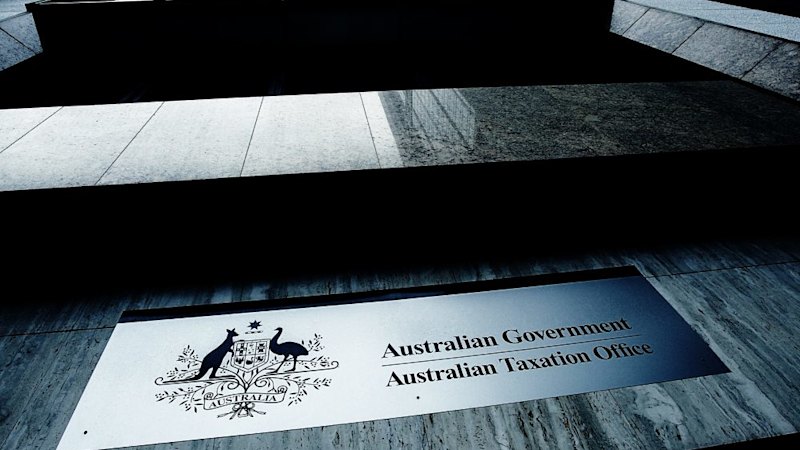
Tax Debt DPOs: The Taxation Administration Act 1953 (which includes Section 14S on DPOs) predates the Coalition government. This legislation has been used by governments of both persuasions for decades. The famous case of actor Paul Hogan being issued a DPO for a $150 million tax debt occurred in 2010 under the Labor government [5].
Child Support DPOs: DPOs for child support debts have been in use since at least the 2000s. The Commonwealth Ombudsman's 2009 investigation into CSA DPO administration found these powers were actively used during the Howard, Rudd, and Gillard governments [4].
Labor's position on welfare debt: The 2016 legislation was introduced by the Coalition. While Labor may have opposed the specific bill (parliamentary records are unclear), the broader DPO framework existed under previous Labor governments for other debt types. The Albanese Labor government (2022-present) has maintained and expanded DPO usage - the ATO issued 21 DPOs in just the first half of 2025-26, exceeding the entire previous financial year [6].
Balanced Perspective
The Coalition's 2016 proposal to extend DPOs to welfare debts was controversial but occurred within a broader context of debt recovery enforcement that has existed across multiple governments.
Arguments supporting the policy:
- The government argued it targeted only those with means to pay who refused to engage, not genuine hardship cases
- Minister Porter defended the policy with the statement: "If you have enough money to fly the family to Bali, you have enough money to repay your debt" [1]
- The policy aimed to recover $870 million in taxpayer funds
- Similar DPO mechanisms existed for tax and child support debts with bipartisan support
Criticisms and concerns:
- Civil liberties concerns about restricting freedom of movement for welfare debts
- Risk of overreach - the claim about "regardless of how small" has some validity as the threshold criteria were not clearly defined in public announcements
- No parliamentary scrutiny evidence found regarding passage of the specific legislation
- Potential disproportionate impact on vulnerable populations
Comparative analysis: This policy was an extension of existing DPO frameworks rather than a novel restriction. The Labor government's use of DPOs against Paul Hogan in 2010 for tax debts (where he was trapped in Australia for his mother's funeral) demonstrates that both parties have used these powers. The key difference is that the Coalition extended DPOs to a new category (welfare debts) while Labor largely used them for tax and child support.
PARTIALLY TRUE
6.0
out of 10
The Coalition did propose and introduce legislation in March 2016 to extend Departure Prohibition Orders to Centrelink/welfare debts, which would prohibit people from leaving the country. The policy did apply "regardless of how soon they will return" - the HuffPost article confirms DPOs would apply regardless of the planned duration of overseas travel [1].
However, the claim's assertion about "regardless of how small the debt is" overstates the policy. The legislation specifically targeted the 270,000 debtors who collectively owed $870 million and were "not making an effort to repay" [1]. The policy focused on those who "refuse to enter into and honour an acceptable repayment arrangement" - not automatic application to all debts regardless of size.
The broader context is that DPOs have existed for decades under both Labor and Coalition governments for tax and child support debts. The 2016 proposal was an extension of an existing bipartisan enforcement framework to a new category, not a uniquely harsh Coalition innovation.
Final Score
6.0
OUT OF 10
PARTIALLY TRUE
The Coalition did propose and introduce legislation in March 2016 to extend Departure Prohibition Orders to Centrelink/welfare debts, which would prohibit people from leaving the country. The policy did apply "regardless of how soon they will return" - the HuffPost article confirms DPOs would apply regardless of the planned duration of overseas travel [1].
However, the claim's assertion about "regardless of how small the debt is" overstates the policy. The legislation specifically targeted the 270,000 debtors who collectively owed $870 million and were "not making an effort to repay" [1]. The policy focused on those who "refuse to enter into and honour an acceptable repayment arrangement" - not automatic application to all debts regardless of size.
The broader context is that DPOs have existed for decades under both Labor and Coalition governments for tax and child support debts. The 2016 proposal was an extension of an existing bipartisan enforcement framework to a new category, not a uniquely harsh Coalition innovation.
📚 SOURCES & CITATIONS (5)
-
1

huffingtonpost.com.au
If You Owe Centrelink Money, Border Force Will Stop You Leaving The Country
HuffPost -
2
classic.austlii.edu.au
SECT 14S Departure prohibition orders
-
3PDF
CSA administration of departure prohibition order powers investigation report
Ombudsman Gov • PDF Document -
4

waterhousetaxlawyers.com.au
The ATO can issue a Departure Prohibition Order (DPO) to stop you from leaving Australia. This is effective until you pay your tax or settle with the ATO.
Waterhouse Lawyers -
5
smh.com.au
Exclusive data shows the tax office used its powers to stop huge tax debtors leaving Australia just 46 times over six years.
The Sydney Morning Herald
Rating Scale Methodology
1-3: FALSE
Factually incorrect or malicious fabrication.
4-6: PARTIAL
Some truth but context is missing or skewed.
7-9: MOSTLY TRUE
Minor technicalities or phrasing issues.
10: ACCURATE
Perfectly verified and contextually fair.
Methodology: Ratings are determined through cross-referencing official government records, independent fact-checking organizations, and primary source documents.