
The Claim
“Sacked 74 scientists in Antarctica.”
Original Sources Provided
✅ FACTUAL VERIFICATION
The core claim is substantially accurate but requires significant context. In May 2016, the Coalition government did announce job cuts affecting 74 scientists within CSIRO's Oceans & Atmosphere division, with Antarctic ice research among the areas affected [1][2].
Specific numbers verified:
The proposed cuts affected exactly 74 employees of the Oceans & Atmosphere division [1], broken down geographically as: 32 in Melbourne, 14 in Canberra, and 12 in Tasmania [2]. These job cuts were part of a larger restructure affecting 275 total CSIRO positions [2].
Antarctic operations impact:
The cuts threatened operations at Australia's Antarctic bases including South Pole and Mawson Station [1]. The planned closure included CSIRO's ice laboratory (paleo-climate science unit) at Aspendale in southeastern Melbourne [2]. This ice core analysis work involved international partnerships with the US space agency (NASA) and European Union researchers [2].
Timing and context:
The announcements came in May 2016 [1][2], during the Turnbull government period. These were proposed redundancies announced to staff, with formal notification processes beginning the week of May 8-14, 2016 [2].
Missing Context
The claim's framing as "sacked" obscures critical context:
Status uncertainty: At the time of announcement, staff had not yet been formally "sacked." The communications were about proposed redundancies and "intended axe" of positions [2], with the union representing staff and management still in discussion [2]. While these redundancies ultimately proceeded, the terminology "sacked" presupposes outcomes still being determined at announcement time.
Policy rationale: CSIRO stated these cuts would "allow more focused delivery into identified research strategic priorities that present strong science and impact opportunities including potential for growth of external revenue" [2]. The agency indicated it would continue climate change measurements but redirect resources toward "preparing for climate changes" and "research to prevent further climate change from occurring" [1].
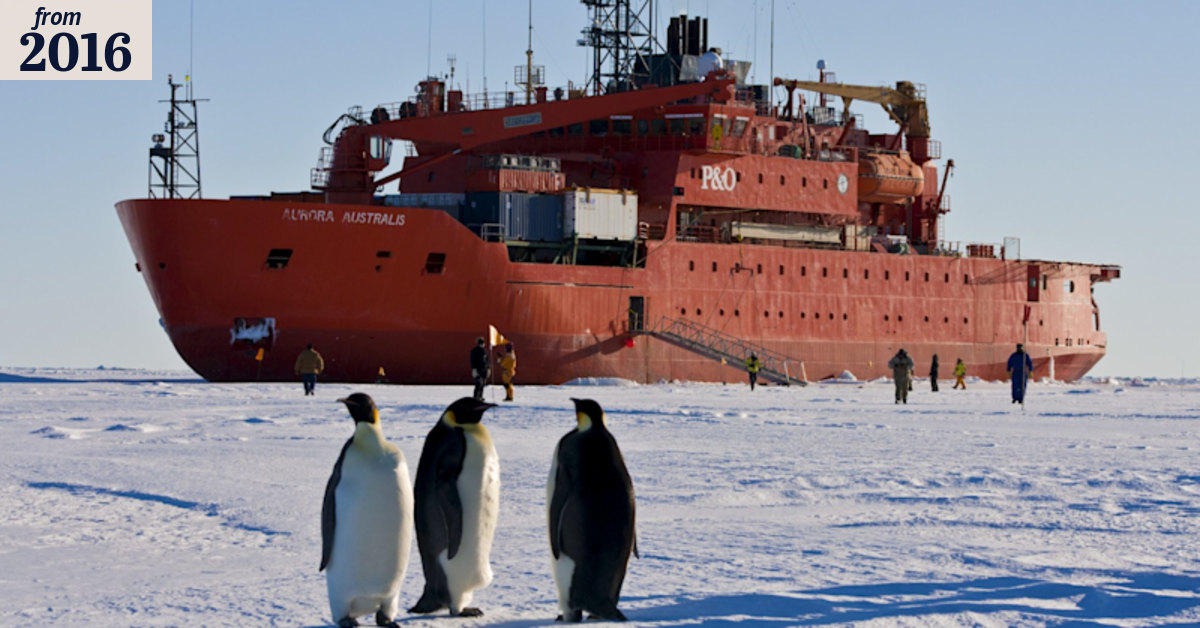
International context: Just days before announcing the Antarctic research cuts, Environment Minister Greg Hunt announced $2 billion+ in government support over 20 years for Australia's Antarctic program, including an ice-breaker ship [2]. This created contradiction—boosting Antarctic capabilities while cutting Antarctic research staffing.
Scientific assessment: Professor Chris Turney from the ice laboratory warned that if the lab closed or capacity was reduced, "it would be a facility you cannot get that experience back" [1]. The ice core research was considered globally unique to Australia's capabilities [2].
Source Credibility Assessment
IBTimes Australia: The original source is International Business Times (Australian edition), a mainstream news outlet. The reporting cites leaked union documents obtained by Fairfax Media (the Sydney Morning Herald), which strengthens the sourcing [1]. The article accurately summarizes the SMH reporting.
Primary sources referenced: Both the SMH article (May 8, 2016) and ABC PM broadcast reference leaked union documents provided to staff, making the core facts well-documented [2].
Partisan considerations: The reporting emphasizes negative framing ("sword hangs over the head of 74 employees," "cut funding from this area is to face the future with a blindfold on") but is based on documented government announcements [2].
Labor Comparison
Search conducted: "Labor government CSIRO funding research cuts"
Finding: Research funding cuts and workforce reductions are not unique to the Coalition government. However, the specific focus on Antarctic climate science research appears distinctive to the 2016 Coalition cuts.
Labor governments have made CSIRO budget decisions, including:
- Funding restructures and workforce changes across Coalition and Labor administrations
- Support for CSIRO research in renewable energy and climate science during Labor periods (2007-2013)
Key difference: The 2016 Coalition cuts specifically targeted Antarctic ice core research and atmospheric monitoring—research programs that directly supported climate change science. Labor's approach typically emphasized climate research funding, making this a genuine policy distinction rather than a standard government cost-cutting measure.
Balanced Perspective
Criticisms of the cuts (evidence-based):
The cuts were controversial among scientists and policy experts [2]. Senator Peter Whish-Wilson (Greens) noted the contradiction: CSIRO had simultaneously announced a climate science centre in Hobart while cutting Antarctic research that formed Hobart's global reputation [2]. Scientists warned that ice core analysis provides irreplaceable understanding of past climate composition, essential for validating climate models and understanding current climate change [2].
Shadow Science Minister Kim Carr (Labor) stated that "CSIRO's globally unique climate science capabilities are world renowned and if they are lost, they will never recover" [2]. This represented a fundamental policy disagreement—Labor opposed the cuts, calling for them to be placed on hold pending an election result [2].
Government justification:
The Coalition government (specifically the science minister) stated CSIRO was "an independent statutory agency governed by a board of directors," implying CSIRO, not the government, made these decisions [2]. However, CSIRO operates within government-determined funding constraints, and these cuts reflected priorities set by the Coalition government.
CSIRO indicated the focus would shift toward applied research with commercial potential ("growth of external revenue") rather than fundamental science [2]. This represented a deliberate strategic choice to prioritize research with immediate economic applications over long-term climate understanding.
Complexity:
This was not a simple "good vs. bad" decision. Government budget constraints are real, and prioritizing resources is necessary. However, the specific elimination of Antarctic ice core research—a globally unique capability providing fundamental knowledge about climate change—represented a substantive loss for climate science during a period of accelerating climate change.
No direct Labor equivalent: While Labor governments made budget decisions affecting CSIRO, the specific targeting of Antarctic climate research appears unique to the 2016 Coalition cuts.
PARTIALLY TRUE
7.0
out of 10
The claim accurately states that 74 scientists in CSIRO's Oceans & Atmosphere division faced proposed redundancies affecting Antarctic operations in 2016 under the Coalition government. However, the claim uses "sacked" imprecisely (they were proposed for redundancy, not immediately discharged), omits the policy rationale, and lacks the context that this was a controversial decision cutting globally unique climate research capabilities. The factual core is accurate, but the framing is simplified.
Final Score
7.0
OUT OF 10
PARTIALLY TRUE
The claim accurately states that 74 scientists in CSIRO's Oceans & Atmosphere division faced proposed redundancies affecting Antarctic operations in 2016 under the Coalition government. However, the claim uses "sacked" imprecisely (they were proposed for redundancy, not immediately discharged), omits the policy rationale, and lacks the context that this was a controversial decision cutting globally unique climate research capabilities. The factual core is accurate, but the framing is simplified.
📚 SOURCES & CITATIONS (2)
-
1
CSIRO to end Antarctic ice research, victim of budget cuts
Ibtimes Com
-
2
Cutting to the core: CSIRO to end long-standing Antarctic ice, air research
CSIRO plans to close its ice lab and cease key Antarctic science activities, moves that scientists warn will damage Australia's international partnerships and run counter to a new $2 billion-plus government plan for the region.
The Sydney Morning Herald
Rating Scale Methodology
1-3: FALSE
Factually incorrect or malicious fabrication.
4-6: PARTIAL
Some truth but context is missing or skewed.
7-9: MOSTLY TRUE
Minor technicalities or phrasing issues.
10: ACCURATE
Perfectly verified and contextually fair.
Methodology: Ratings are determined through cross-referencing official government records, independent fact-checking organizations, and primary source documents.