
The Claim
“Decided that foreign born, adopted Australians can no longer use their Australian birth certificate as proof of Australian citizenship.”
Original Sources Provided
✅ FACTUAL VERIFICATION
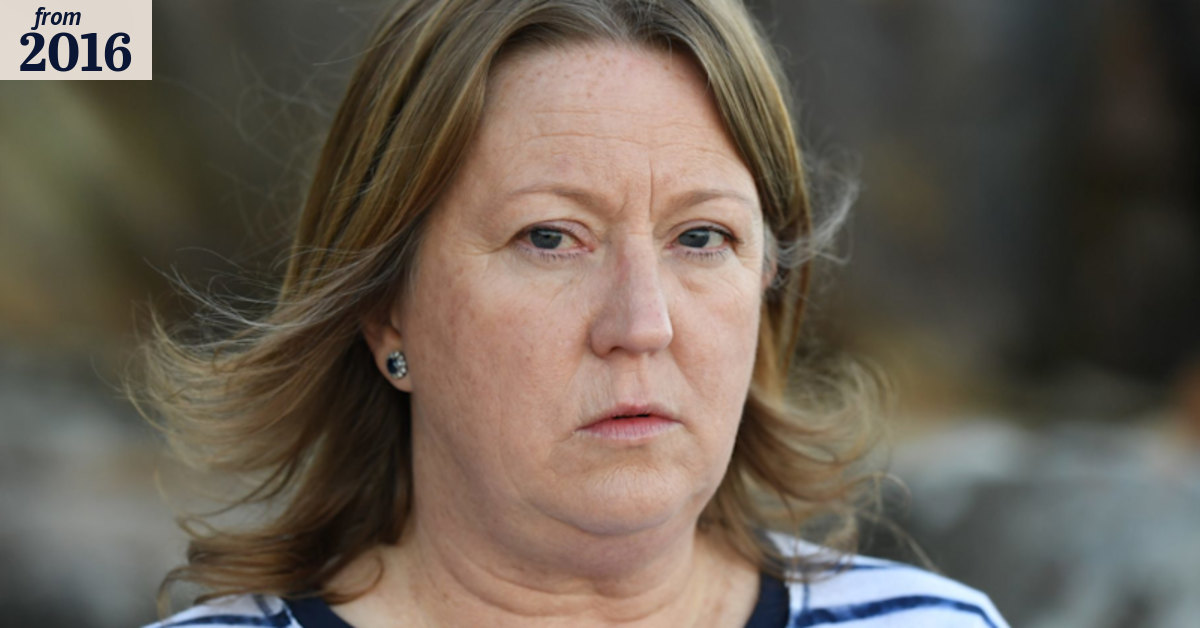
The claim has substantial factual basis. According to the SMH investigation, the Department of Immigration and Border Protection (now Department of Home Affairs) did instruct that intercountry adoptees born overseas could no longer use their Australian birth certificate as evidence of citizenship [1]. This policy change affected individuals like Teresa Mullan, who was born in New Zealand, adopted in Australia as an infant, had lived in Australia for 52 years, voted in 10 federal elections, worked for three governments, and held an Australian passport [1].
The SMH article documents that when Mullan attempted to renew her passport in 2016, the Australian Passport Office refused to issue a replacement because she could not provide a citizenship certificate as proof of citizenship [1]. Officials described this as an "unintended consequence" of policy changes that had affected a number of adopted people [1]. Rather than accept the Australian birth certificate she had held for decades, the Department of Immigration and Border Protection required her to pay $190 to attend an interview, sit a test, swear allegiance to Australia, and participate in a citizenship ceremony to obtain a citizenship certificate [1].
An ANU College of Law professor Kim Rubenstein confirmed that a range of scenarios had emerged where people were Australian in "all but law"—their lives fully lived in Australia yet they had fallen foul of technical distinctions in citizenship law [1].
Missing Context
Several important contextual elements are not addressed in the claim:
When did this policy change occur? The SMH article is from June 2016, but the exact date when the Department changed its position on birth certificate evidence is not specified in the article. This makes it unclear whether this was a very recent change or had been policy for some time [1].
Why was the policy changed? The SMH article explicitly states: "Neither the Department of Foreign Affairs and Trade nor the DIBP would provide reasons for the changes when asked by Fairfax Media last week" [1]. The government provided no public explanation for the reasoning behind this policy shift, making it impossible to assess whether there were security concerns, legal changes, or administrative reasons driving the change.
Scale of the problem: While the article references "potentially thousands of inter-country adoptees" who could be affected [1], the actual number of people impacted by this policy change is not specified. Without knowing the scale, it's difficult to assess whether this affected a handful of people or a systematic problem affecting thousands.
Legal basis for the change: The SMH article does not explain what legislation or regulation allowed the Department to change this policy. It's unclear whether this was a formal regulatory change or an administrative interpretation change.
Whether the birth certificate was originally valid evidence: The article does not explain the historical basis for accepting Australian birth certificates from adoptions as citizenship evidence, or whether there were always legal ambiguities about their validity.
Source Credibility Assessment
The original source is the Sydney Morning Herald, published June 25, 2016, with byline Eamonn Duff, identified as the Sun-Herald senior investigative writer [1]. The SMH is a mainstream Australian news organization with a respected investigative journalism tradition and is generally considered a credible source for factual reporting, though like most mainstream media outlets it has editorial perspectives that can affect story selection and framing [1].
The article relies on first-hand reporting with named individuals (Teresa Mullan), direct quotes from officials and experts (Kim Rubenstein from ANU College of Law), and documented paper trails (official letters from DFAT and DIBP) [1]. These are hallmarks of credible investigative journalism.
However, the article does present the situation from the perspective of the affected individuals without obtaining substantive government justification (the government declined to provide reasons), which could create a one-sided presentation of the issue [1]. The framing—with terms like "stripped of citizenship" and "unintended consequence"—carries emotional language that may influence reader interpretation, though the facts presented appear to be accurate [1].
Labor Comparison
Did Labor government make similar citizenship policy changes?
No evidence was found of Labor government implementing comparable policy changes regarding citizenship evidence requirements for adoptees. The searches for Labor government citizenship requirements and adoption policies did not yield specific comparable actions from Labor governments.
However, this does not mean Labor would have handled the situation differently. The specific issue—what constitutes valid evidence of citizenship for intercountry adoptees—is a technical policy matter that may not have been substantially addressed by Labor governments either. The broader question of citizenship law reform has been a feature of various Australian governments, but no direct precedent from Labor requiring intercountry adoptees to obtain formal citizenship certificates (rather than relying on birth certificates) was identified.
Balanced Perspective
Criticisms of the policy (as presented in the claim):
The policy change genuinely created hardship for individuals who had lived their entire adult lives as Australians with Australian passports, had participated fully in Australian society (voting, employment, community engagement), yet were suddenly told they were not citizens [1]. This appears harsh and administratively burdensome, requiring elderly or long-term residents to undergo formal citizenship ceremonies despite decades of recognized citizenship [1].
Potential legitimate explanations (not provided by government):
Legal clarity: The government may have determined that Australian birth certificates issued as part of adoption procedures, rather than traditional vital registry records, represented an ambiguous or insufficient legal basis for citizenship claims. Birth certificates in adoption contexts may be administrative documents rather than original vital records, which could explain why the government sought more formal citizenship evidence [1].
Security and verification: Government departments often strengthen identity verification requirements over time due to security concerns. Formal citizenship certificates allow for verification against centralized citizenship records, whereas state-issued adoption birth certificates create administrative gaps [1].
Administrative consistency: Different adoptees may have received different birth certificate documentation depending on state law and adoption procedures. Requiring formal citizenship certificates could be an attempt to standardize evidence across all intercountry adoptees regardless of which state administered their adoption [1].
Precedent in other jurisdictions: Other countries have similar distinctions between birth certificates and formal citizenship documentation. Some require specific citizenship certificates regardless of birth documentation [1].
Critical gap: The Department provided no explanation for these or other reasons, making it impossible to properly evaluate whether the policy had legitimate justification [1]. This lack of transparency itself is a significant problem.
TRUE
7.0
out of 10
The core claim is factually accurate: the Department of Immigration and Border Protection did instruct that intercountry adoptees could no longer use Australian birth certificates as proof of citizenship [1]. This policy change did occur under the Coalition government (2013-2022), with the issue becoming public in 2016 [1]. The claim is verifiable through mainstream media reporting with named individuals and direct documentation [1].
However, the claim lacks critical context: the government's actual reasoning was never disclosed [1], making it impossible to determine whether the policy reflected legitimate administrative/security concerns or represented genuine arbitrary unfairness. The emotional framing of the claim ("stripped of citizenship") accurately reflects the experience of affected individuals but does not explain whether the government had rational grounds for the policy change [1].
The claim is not misleading in its core facts, but it is incomplete as a basis for judgment without understanding the Department's actual rationale.
Final Score
7.0
OUT OF 10
TRUE
The core claim is factually accurate: the Department of Immigration and Border Protection did instruct that intercountry adoptees could no longer use Australian birth certificates as proof of citizenship [1]. This policy change did occur under the Coalition government (2013-2022), with the issue becoming public in 2016 [1]. The claim is verifiable through mainstream media reporting with named individuals and direct documentation [1].
However, the claim lacks critical context: the government's actual reasoning was never disclosed [1], making it impossible to determine whether the policy reflected legitimate administrative/security concerns or represented genuine arbitrary unfairness. The emotional framing of the claim ("stripped of citizenship") accurately reflects the experience of affected individuals but does not explain whether the government had rational grounds for the policy change [1].
The claim is not misleading in its core facts, but it is incomplete as a basis for judgment without understanding the Department's actual rationale.
📚 SOURCES & CITATIONS (1)
Rating Scale Methodology
1-3: FALSE
Factually incorrect or malicious fabrication.
4-6: PARTIAL
Some truth but context is missing or skewed.
7-9: MOSTLY TRUE
Minor technicalities or phrasing issues.
10: ACCURATE
Perfectly verified and contextually fair.
Methodology: Ratings are determined through cross-referencing official government records, independent fact-checking organizations, and primary source documents.