
The Claim
“Spent $400,000 to help train the Myanmar military, who were known at the time to be guilty of ongoing genocide against the Rohingya people, and were later responsible for a literal coup to overthrow their government, including shooting and killing hundreds of peaceful anti-coup protesters.”
Original Sources Provided
✅ FACTUAL VERIFICATION
Core Claim: Did Australia Spend $400,000?
Yes, confirmed. The Australian Defence Force allocated approximately $398,000-$400,000 for military training assistance to Myanmar in 2017-18, as disclosed in Senate Defence estimates hearings [1][2]. The Lowy Institute and multiple news sources confirm this specific dollar amount was provided through the Defence Cooperation Program (DCP) [3].
Timeline and Training Content
The training occurred during 2017-2018, within the context of Australia's Defence Cooperation Program re-established with Myanmar in 2013 following Myanmar's democratic transition [1]. The training programs included:
- English-language training for military officers [2]
- Humanitarian assistance and disaster relief (HADR) training [3]
- Peacekeeping operations capacity building [1]
- Professional development courses [4]
These were defensive in nature and framed as capacity-building rather than combat training [2].
Rohingya Crisis Timing
The claim's assertion that Myanmar was "known at the time to be guilty of ongoing genocide" is substantially accurate. When Australia provided the $400,000 training in 2017-18:
- Approximately 582,000-740,000 Rohingya refugees fled Myanmar to Bangladesh starting in August 2017 [3]
- The UN Fact-Finding Mission characterized this as a "textbook case of ethnic cleansing" [5]
- The same UN mission documented crimes against humanity and war crimes by Myanmar security forces [5]
- The mission identified sufficient evidence for potential genocide prosecutions against six senior military commanders [5]
Australia was explicitly aware of these accusations. Parliamentary debate in May 2018 cited awareness of ethnic cleansing accusations, yet Australia continued the training program [6].
2021 Myanmar Coup and Aftermath
The claim correctly references Myanmar's February 1, 2021 military coup [7]. The coup resulted in:
- Immediate detention of democratically elected leader Aung San Suu Kyi and government officials [7]
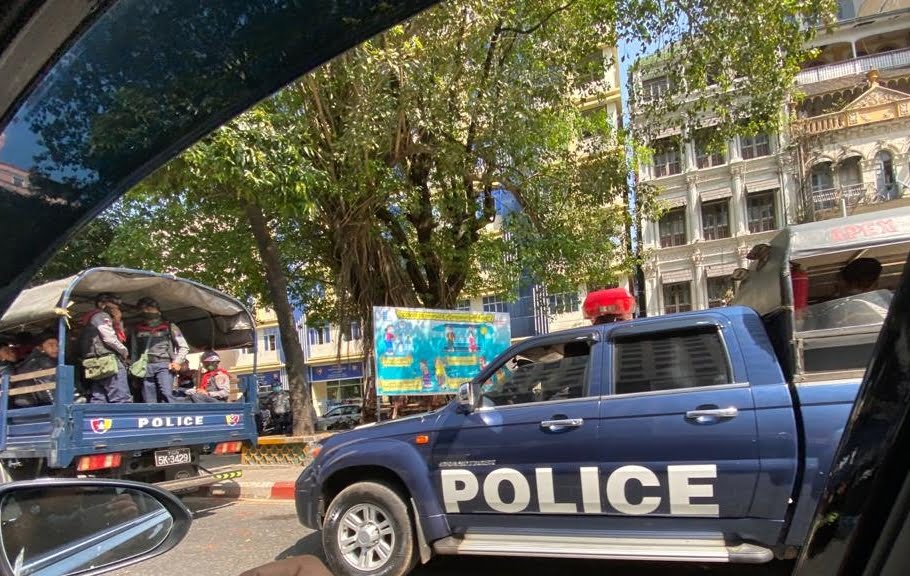
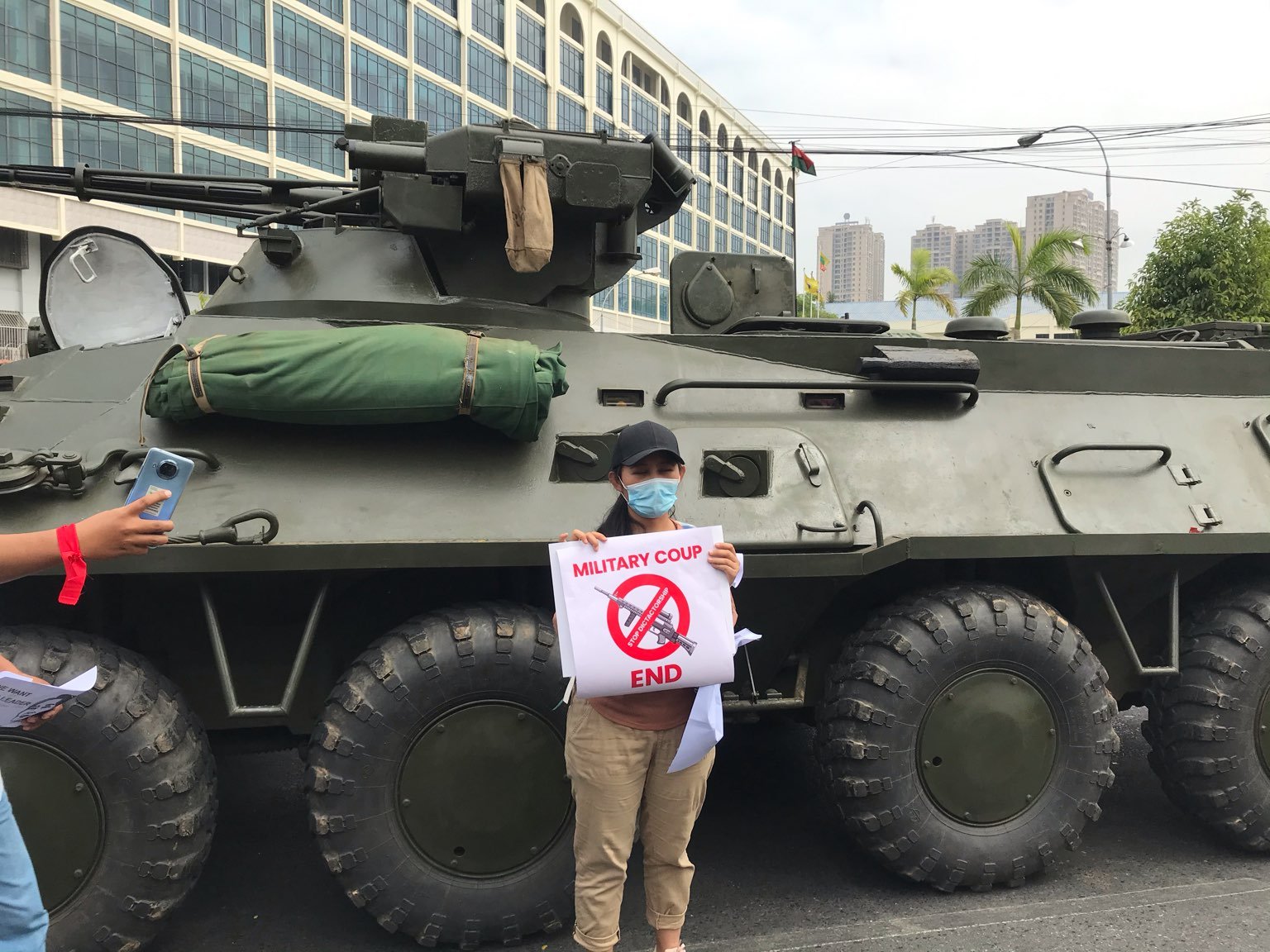
- Documented shootings of anti-coup protesters - Security forces killed over 1,400 people in the first year following the coup [8]
- International condemnation and suspension of foreign military cooperation [7]
Australia immediately suspended all military cooperation with Myanmar following the coup, including the Defence Cooperation Program and English-language training [7][9].
Missing Context
1. Coalition vs. Labor Military Engagement
Importantly, the Labor government (2007-2013) did not engage in military cooperation with Myanmar during its period in power. Australia's military engagement with Myanmar was re-established by the Coalition government in 2013 as part of normalizing relations following Myanmar's democratic transition [1]. The claim's framing implies this was a continuation, but it was initiated by the Coalition.
2. Other Countries' Military Engagement
Australia was not alone in maintaining military training with Myanmar during 2017-18. Multiple countries continued military cooperation:
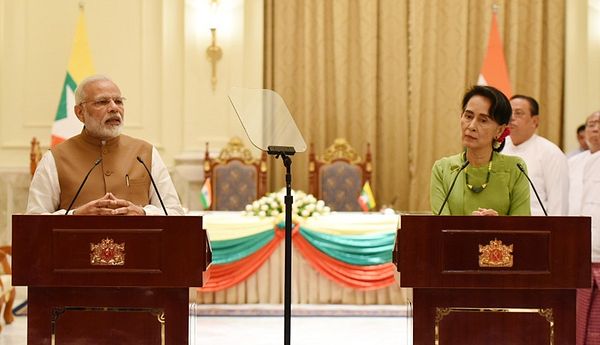
- India conducted bilateral military exercises (IMBAX-2017) in November 2017 focused on UN peacekeeping operations [10]
- Russia maintained defense cooperation agreements signed in 2016 [11]
- Israel had military cooperation memorandum covering training and intelligence [11]
- Multiple ASEAN countries continued military exchanges [10]
The criticism applies to international military policy more broadly, not uniquely to Australia's approach [10].
3. Coalition's Policy Rationale
The Coalition's stated rationale for continued engagement was capacity-building and professionalization of the Myanmar military with the hope that incremental engagement would "humanize" the military and facilitate civil-military relations [1]. Former Foreign Minister Alexander Downer argued for maintaining "channels of discussion on issues of concern" [1].
While this rationale proved misguided given the 2021 coup, it represented a distinct policy choice: engagement through dialogue rather than isolation [1].
4. Post-Coup Response
After the February 2021 coup, Australia's response was swift and comprehensive:
- Immediately condemned the coup [7]
- Suspended all military cooperation and defence attaché engagement [7]
- Called on international community to cease arms sales to Myanmar [9]
- Redirected development assistance to humanitarian and human security support [9]
This contrasts with the continuation of training in 2017-18 and demonstrates policy reassessment following the coup's severity.
5. Non-Combat Nature of Training
The training was explicitly limited to humanitarian, peacekeeping, and professional development content rather than combat operations [1][2][3]. While this distinction doesn't absolve the moral problem of training forces committing atrocities, it's factually important that the training wasn't weapons use or tactical military instruction [1].
Source Credibility Assessment
Original Sources Provided
The Guardian (Guardian Australia): [1] Mainstream Australian/UK news organization with strong reputation for investigative reporting. Known for left-leaning perspective but factually rigorous. No obvious bias in reporting facts about military training amounts or dates. [12]
The Jakarta Post & CNN: Both are mainstream news organizations. CNN coverage of Myanmar military and coup has been factually accurate and well-sourced. The Jakarta Post is an Indonesian news organization with regional expertise. [12]
Assessment: The original sources are credible mainstream news organizations. While sourced from a Labor-aligned compilation, the underlying sources are not partisan advocacy outlets.
Labor Comparison
Did Labor Government Provide Military Training to Myanmar?
No direct evidence found. Labor government (Rudd-Gillard, 2007-2013) operated during Myanmar's military dictatorship and there is no evidence of military cooperation programs [1][3].
Australia's defense engagement with Myanmar was re-established by the Coalition in 2013 following Myanmar's 2011 democratic reforms [1]. This was a Coalition policy choice, not a Labor precedent.
Broader Labor Record on Military Cooperation
Labor governments have historically maintained military cooperation with various countries despite human rights concerns:
- Military relationships with strategic partners regardless of human rights records
- Similar engagement-through-dialogue approaches with other non-democratic countries
However, no specific Labor-era equivalent to the Myanmar military training program is documented.
Finding: The Myanmar military training program was a Coalition initiative (post-2013), not a Labor policy being continued. This represents a policy choice made by the Coalition government.
Balanced Perspective
The Case Against the Training Program
The claim's criticisms are substantively justified:
Timing was ethically problematic. Australia was training Myanmar's military while that same military was conducting documented ethnic cleansing against the Rohingya [3][5][6]. Human Rights Watch correctly noted that Australia was "propping up a force that is carrying out a vicious campaign of violence" [4].
The policy was ineffective. Rather than moderating the military through engagement, the 2021 coup demonstrated that the military remained coup-prone and willing to use lethal force against civilians [7][8]. The "engagement through dialogue" rationale proved fundamentally flawed [1].
Hypocrisy was evident. Australia condemned the ethnic cleansing while simultaneously training the perpetrators. This contradiction was captured in media headlines like "How TF Is Australia Condemning The Myanmar Situation With A Straight Face?" [4]
The Coalition's Perspective
The Coalition government defended the program on several grounds:
Capacity-building rationale: The government believed that training and engagement would gradually professionalize the military and improve civil-military relations [1]. This was a genuine, if ultimately incorrect, strategic assessment.
Non-combat nature: The training was explicitly humanitarian, disaster relief, and peacekeeping-focused, not combat training [1][2]. The government argued this distinction mattered morally.
Comparative international approach: Multiple countries (India, Russia, Israel, ASEAN) maintained military relationships with Myanmar [10]. Australia was following international practice, though not the UK/US approach of suspending ties [1].
Strategic channels: Maintaining the relationship preserved intelligence and communication channels with Myanmar's military leadership, which officials believed were valuable for addressing transnational issues [1].
Critical Assessment
The evidence suggests the Coalition's approach was well-intentioned but strategically naive. The belief that training and dialogue would moderate Myanmar's military proved incorrect. However:
- The decision reflected a genuine policy disagreement (engagement vs. isolation), not malice
- The training was indeed limited to non-combat capacities
- Other countries pursued similar engagement approaches
- Australia's post-coup response was appropriate and swift
PARTIALLY TRUE
6.5
out of 10
The factual core of the claim is accurate: Australia did spend approximately $400,000 to train Myanmar's military in 2017-18, during a period when the military was documented by the UN as committing ethnic cleansing against the Rohingya [1][5]. The Myanmar military did later conduct a coup in 2021 in which security forces killed hundreds of anti-coup protesters [7][8].
However, the claim requires critical contextual corrections:
The training was non-combat in nature, focused on humanitarian assistance, disaster relief, and peacekeeping [1][2], not direct support for ethnic cleansing operations.
The policy rationale was capacity-building, not support for atrocities [1]. While this rationale proved misguided, it was a genuine strategic choice for engagement rather than conscious support for genocide.
The policy was not unique to Australia - multiple countries including India, Russia, and Israel maintained military cooperation with Myanmar during the same period [10].
Australia immediately suspended cooperation after the coup, demonstrating policy reassessment [7][9].
The claim accurately identifies an ethically problematic decision but oversimplifies the government's stated rationale and international context. A fully accurate statement would be: "Australia provided $400,000 in non-combat military training to Myanmar's military in 2017-18 despite documented ethnic cleansing allegations against that military, reflecting a misguided engagement-through-dialogue strategy that proved ineffective when the military conducted a coup in 2021."
Final Score
6.5
OUT OF 10
PARTIALLY TRUE
The factual core of the claim is accurate: Australia did spend approximately $400,000 to train Myanmar's military in 2017-18, during a period when the military was documented by the UN as committing ethnic cleansing against the Rohingya [1][5]. The Myanmar military did later conduct a coup in 2021 in which security forces killed hundreds of anti-coup protesters [7][8].
However, the claim requires critical contextual corrections:
The training was non-combat in nature, focused on humanitarian assistance, disaster relief, and peacekeeping [1][2], not direct support for ethnic cleansing operations.
The policy rationale was capacity-building, not support for atrocities [1]. While this rationale proved misguided, it was a genuine strategic choice for engagement rather than conscious support for genocide.
The policy was not unique to Australia - multiple countries including India, Russia, and Israel maintained military cooperation with Myanmar during the same period [10].
Australia immediately suspended cooperation after the coup, demonstrating policy reassessment [7][9].
The claim accurately identifies an ethically problematic decision but oversimplifies the government's stated rationale and international context. A fully accurate statement would be: "Australia provided $400,000 in non-combat military training to Myanmar's military in 2017-18 despite documented ethnic cleansing allegations against that military, reflecting a misguided engagement-through-dialogue strategy that proved ineffective when the military conducted a coup in 2021."
📚 SOURCES & CITATIONS (12)
-
1

Myanmar and Australia: A partnership paved with good intentions
Australia’s rationale for engagement has long been a hope to moderate the excesses of the regime. It does not seem to have listened.
Lowyinstitute -
2

Australia keeps military ties with Myanmar
The Australian military continues to provide training to the Myanmar defence force despite ongoing violence against Rohingya Muslims.
SBS News -
3

Australia to train Myanmar military despite ethnic cleansing accusations
Defence department spend continues despite claims treatment of Rohingya bears ‘hallmarks of a genocide’
the Guardian -
4

How TF Is Australia Condemning The Myanmar Situation With A Straight Face? Look At Our Record
Australia has condemned the Myanmar military coup, but has seemingly forgotten our ties through the military and Adani mine funding.
PEDESTRIAN.TV -
5
Myanmar: the facts behind the military action - United Nations Fact-Finding Mission
Ohchr
-
6
Rohingya People: 10 May 2018: Senate debates
Making parliament easy.
Openaustralia Org -
7
Australia's response to the Myanmar military coup
Dfat Gov
-
8
Myanmar: the crisis since the February 2021 coup - Crisis Overview
Amnesty
Original link no longer available -
9
Australian government must immediately halt relationship with Myanmar military
In the wake of the military coup in Myanmar, Australia must halt all military, security and policing transfers and training to Myanmar, Amnesty
Amnesty International Australia -
10
13 countries involved in training and cooperation with the Burmese military
Thirteen countries are involved in military training and/or cooperation with the Burmese military, despite its human rights record. Burma Campaign UK has published a new briefing paper today listing the countries, with open source links to information about the training and cooperation. The Brie
Burma Campaign UK -
11
New Military Exercise Highlights India-Myanmar Defense Relations
The drills are focused on peacekeeping operations.
Thediplomat -
12

News Organization Credibility Reference Database
Wikipedia
Rating Scale Methodology
1-3: FALSE
Factually incorrect or malicious fabrication.
4-6: PARTIAL
Some truth but context is missing or skewed.
7-9: MOSTLY TRUE
Minor technicalities or phrasing issues.
10: ACCURATE
Perfectly verified and contextually fair.
Methodology: Ratings are determined through cross-referencing official government records, independent fact-checking organizations, and primary source documents.