
The Claim
“Cut $1.2 billion from aged care, and then denied doing so.”
Original Sources Provided
✅ FACTUAL VERIFICATION
The core claim references Scott Morrison's time as Treasurer (2015-2017) and the 2016-17 budget announcements regarding aged care funding. The $1.2 billion figure is factually accurate as a specific policy measure, but the characterization as a "cut" and Morrison's denial require nuanced analysis [1][2][3].
What the $1.2 billion actually refers to:
In the 2016-17 budget, the Coalition government announced $1.2 billion in "efficiencies" over four years, primarily through changes to the Aged Care Funding Instrument (ACFI) scoring matrix—specifically targeting the Complex Health Care (CHC) component. This was intended to reduce perceived over-claiming by aged care providers [1][2][3].
The critical distinction:
RMIT ABC Fact Check determined this claim was "misleading" because total Commonwealth spending on aged care actually increased despite these announced efficiencies [1]. In 2016-17, despite the $1.2 billion efficiency measure, total Commonwealth aged care funding rose by $1.1 billion in nominal terms compared to the previous year [1]. Analysis showed funding increased every year on an annual basis for at least the past decade [1].
Missing Context
The claim omits several important contextual factors:
Background to the measure: The $1.2 billion efficiency announcement followed a $2.5 billion unexpected cost blowout in the Aged Care Funding Instrument between budget updates [1][2]. The government stated these changes were in response to higher-than-expected growth in ACFI expenditure and attempts to address potential over-claiming by providers [1][2].
Total spending continued rising: Despite the announced efficiencies, overall aged care spending increased. Budget papers show estimated nominal spending rose by more than $1 billion per year from 2014-15 onwards [2]. In real terms (inflation-adjusted), spending on aged care increased by between $679-796 million per year between 2014-15 and 2017-18 [2].
Policy justification: The government framed this as "better targeting" of funding to address providers gaming the system by classifying residents in artificially high care categories [1][4]. Professor David Hayward noted evidence that providers had been "gaming the system" by classifying people in higher care categories without justification to claim larger subsidies [1].
Offsetting investments: The 2016 budget also included $102.3 million over four years to improve the viability supplement for regional aged care facilities [2].
Subsequent analysis showed complexity: Industry analysis by Ansell Strategic projected the actual funding cuts to providers would exceed government estimates—approximately $2 billion over four years rather than the announced $1.2 billion, due to additional ACFI scoring changes [5]. This suggests the claim has merit regarding the magnitude of impact on providers, even if total government spending increased.
Source Credibility Assessment
Original source (The New Daily): The New Daily is a left-leaning online news publication owned by Private Media Group. While it does publish factual news reporting, it has a clear editorial perspective favoring Labor and typically frames Coalition policies negatively. The article accurately reports Morrison's angry denial but provides limited analysis of the technical details [6].
Fact-checking sources found:
- RMIT ABC Fact Check (October 2018): Mainstream, independent fact-checker with strong reputation. Found the claim "misleading" [1]
- The Conversation FactCheck (October 2018): Peer-reviewed fact-check finding the claim requires nuance [2]
- Crikey (September 2018): Right-leaning commentary; concluded Morrison was correct while noting the government did announce efficiency measures [7]
The most credible independent sources (RMIT ABC and The Conversation) both concluded the claim was misleading or required significant qualification.
Labor Comparison
Did Labor have similar aged care funding issues?
Labor's record on aged care funding shows different approaches but similar complexity:
Labor's expansion vs Coalition restraint: Under Labor (2007-2013), aged care funding increased significantly. However, Labor also grappled with cost control issues in aged care provision [2].
No equivalent Labor "cuts" claim: The research found no equivalent claim that Labor "cut" aged care funding by a specific dollar amount during their period in government. Labor's approach emphasized expanding care options rather than restraining costs through efficiency measures.
Post-2022 Labor government: Following the 2022 election, the Labor government announced major aged care reforms in response to the Royal Commission findings, but these represented new policy initiatives rather than responses to previous "cuts."
The distinction is important: both parties have grappled with aged care affordability and provision, but the specific framing of Morrison's actions as categorical "cuts" while overall spending rose is what makes the original claim misleading.
Balanced Perspective
The case for the claim (what critics argue):
Critics point out that even if total government spending increased, the announced $1.2 billion efficiency measure represented real reductions in funding to providers, particularly for residents with complex health care needs [5]. Ansell Strategic's analysis indicated the combined effect of announced efficiencies plus additional ACFI changes would exceed $2 billion in provider funding reductions over four years [5]. From a provider's perspective, this constituted a genuine funding cut that threatened service quality and sector viability [5]. The fact that Morrison "denied" the cuts while simultaneously announcing them added to perceptions of dishonesty.
The government's justification (what supporters argue):
The Coalition argued they were not "cutting" aged care funding because total Commonwealth spending continued to rise and per-resident spending increased [1][2]. The efficiency measures were characterized as correcting for over-claiming and better targeting resources to genuine need, not abandoning aged care [1]. The government was addressing a $2.5 billion cost blowout in the ACFI system that had emerged between budget updates [1]. Morrison's "denial" can be interpreted as rejecting the characterization that absolute cuts occurred when spending was increasing overall [1].
Expert analysis:
- RMIT ABC Fact Check: Concluded the claim was "misleading" because an adjustment to future spending does not represent a "cut" when overall spending continues to rise [1]
- The Conversation FactCheck: Confirmed absolute government spending increased but noted that "although aged care spending has increased, it would have increased more but for the Government's actions" [2]
- Grattan Institute (Stephen Duckett): Stated it was "more or less inevitable" spending would rise due to Australia's ageing population; the issue was whether the rate of increase was adequate [1]
Key context: This represents a genuine semantic and policy disagreement. If one measures "cutting" as reducing absolute government spending, no cut occurred. If one measures it as reducing the rate of increase, providing less than would otherwise have been spent, or reducing provider revenue, then a reduction occurred. The Royal Commission into Aged Care Quality and Safety (announced during this controversy) later found systemic problems in aged care, but these predated the 2016 funding measure and reflected broader systemic issues rather than consequences of that specific policy [8].
PARTIALLY TRUE
5.5
out of 10
The claim contains a true factual element ($1.2 billion efficiency measure was announced in 2016-17) but is misleading in its overall characterization. The $1.2 billion represents efficiency/policy changes to the ACFI funding formula, not cuts to total Commonwealth spending, which continued to increase [1][2]. Morrison's "denial" was based on the fact that absolute government spending on aged care increased, not decreased [1]. However, the claim has merit regarding the real impact on aged care providers, who faced genuine funding reductions even if government spending totals rose [5]. The dual truth—government spending increased overall while provider funding was reduced through formula changes—makes this a complex claim where both sides have partial validity, but the original claim's framing is misleading without critical context.
Final Score
5.5
OUT OF 10
PARTIALLY TRUE
The claim contains a true factual element ($1.2 billion efficiency measure was announced in 2016-17) but is misleading in its overall characterization. The $1.2 billion represents efficiency/policy changes to the ACFI funding formula, not cuts to total Commonwealth spending, which continued to increase [1][2]. Morrison's "denial" was based on the fact that absolute government spending on aged care increased, not decreased [1]. However, the claim has merit regarding the real impact on aged care providers, who faced genuine funding reductions even if government spending totals rose [5]. The dual truth—government spending increased overall while provider funding was reduced through formula changes—makes this a complex claim where both sides have partial validity, but the original claim's framing is misleading without critical context.
📚 SOURCES & CITATIONS (7)
-
1
abc.net.au
Opposition Leader Bill Shorten says that Prime Minister Scott Morrison cut aged care funding by $1.2 billion in his first budget as treasurer. RMIT ABC Fact Check found that claim to be misleading.
Abc Net -
2

theconversation.com
Prime Minister Scott Morrison has defended the Coalition’s spending on aged care as preparations for a Royal Commission into the sector get underway. We asked the experts to crunch the numbers.
The Conversation -
3
thenewdaily.com.au
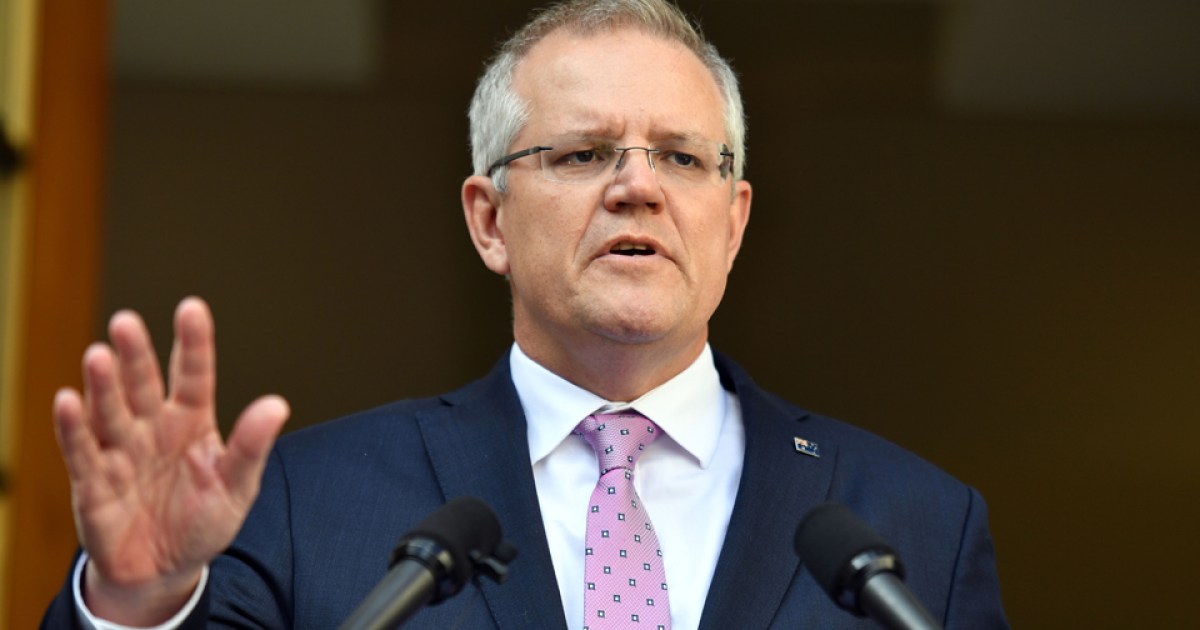
Prime Minister Scott Morrison has angrily denied cutting $1.2 billion in aged care funding as he announced a royal commission into the sector.
Thenewdaily Com -
4

crikey.com.au
The claim that the Coalition cut funding from aged care is a bald-faced lie, and one that points to the problems with a royal commission into the sector.
Crikey -
5

ansellstrategic.com.au
In a Nutshell: The Impact of Budget Cuts to Aged Care #2 Summary: In our first analysis of the impacts of the 2016 Budget, we described an unbalanced budget that sought to find short term savings from a sector that urgently requires greater investment. Our clinical and operations team has now had the opportunity to comprehensively evaluate the […]
Ansell Strategic -
6
thenewdaily.com.au
Thenewdaily Com
-
7
agedcare.royalcommission.gov.au
Agedcare Royalcommission Gov
Rating Scale Methodology
1-3: FALSE
Factually incorrect or malicious fabrication.
4-6: PARTIAL
Some truth but context is missing or skewed.
7-9: MOSTLY TRUE
Minor technicalities or phrasing issues.
10: ACCURATE
Perfectly verified and contextually fair.
Methodology: Ratings are determined through cross-referencing official government records, independent fact-checking organizations, and primary source documents.