
The Claim
“Paid $39 million to a naval boat manufacturer when not required to because the company failed to fulfil the relevant contract clauses, and they coincidentally donated to the Liberal party.”
Original Sources Provided
✅ FACTUAL VERIFICATION
The core facts in this claim are substantially accurate according to multiple authoritative sources.
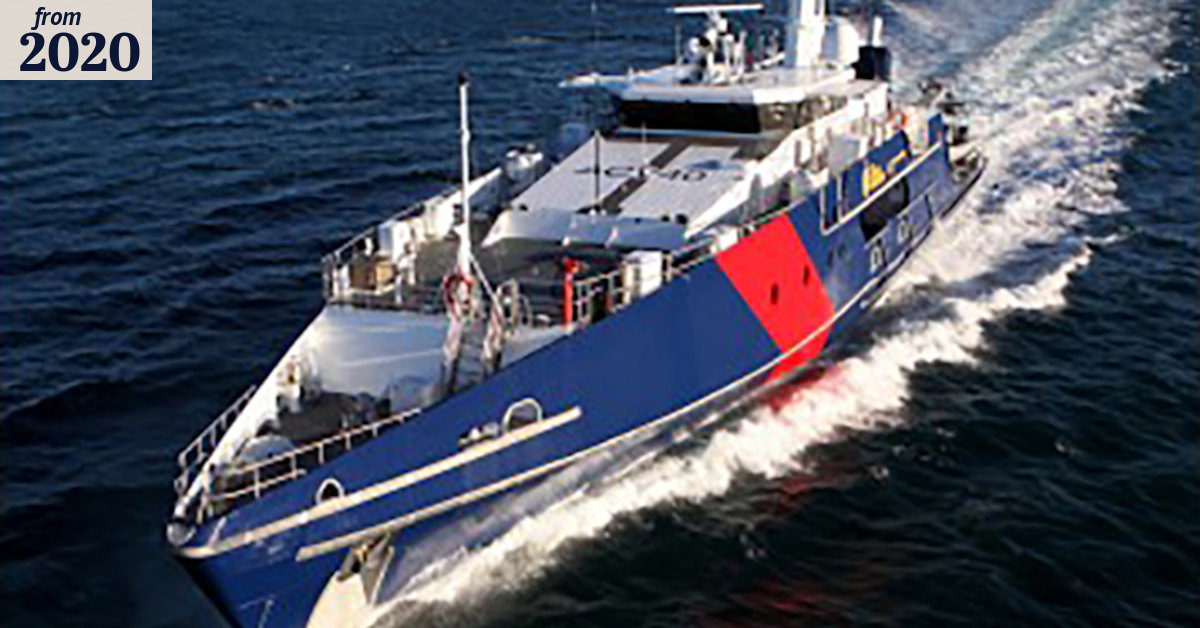
$39 million payment confirmed: The Australian Border Force (ABF) did pay $39 million to Austal, a shipbuilder manufacturing the Cape-class patrol boats [1]. The payment was made in two tranches: $31 million paid in late 2015 (two days before Christmas 2015) and $8 million paid in June 2016 [1].
Contract milestone requirements not met: The SMH investigation confirmed that ABF internal advice stated Austal had failed to reach key milestones required for the $44.6 million success fee [1]. Specifically, the boats delivered were "plagued with problems" and the ABF advice stated the company had not met the milestones because the boats had "ongoing 'capability and support system deficiencies'" [1]. The Auditor-General's December 2018 report confirmed that "even by October 2018, almost three years after the first payment, the Cape-class patrol boat program had failed to reach its milestones" [1].
Payment made despite internal advice against it: ABF disregarded internal advice not to pay the success fee, proceeding after "intense lobbying by Austal" [1]. Sources with knowledge of the investigation confirmed that ABF "in late 2015 and early 2016, disregarded internal advice that it should not pay Austal part of a $44.6 million success fee" [1].
Austal donations to Liberal Party: In the 2015-16 financial year, Austal donated $60,000 to the Liberal Party, including $20,000 to the party's West Australian branch, and only $1,500 to the ALP [1]. These donations occurred in the same financial year as the payments were made.
Corruption investigation launched: The Australian Commission for Law Enforcement Integrity (ACLEI) formally launched a corruption investigation in early 2019, ordered by then-integrity commissioner Michael Griffin, into Austal and Border Force over the shipbuilding contract [1].
Missing Context
However, the claim omits several important contextual factors that significantly complicate the narrative:
Multiple regulatory investigations, not just speculation: The corruption investigation was not based on merely "coincidental" donations. It was formally triggered by a December 2018 Auditor-General's report that documented objective failures to meet contract milestones [1]. Three separate regulatory bodies investigated: ACLEI (Australian Commission for Law Enforcement Integrity), ASIC (Australian Securities and Investments Commission), and US corporate regulators examining Austal's US operations [1].
No proven causal link between donations and payments: While the SMH article notes "There is no suggestion the donations had any impact on the funds being released by Border Force to Austal" [1], the claim's use of "coincidentally" implies a connection that has not been proven. The timing may be suspicious but remains a matter of investigation rather than established fact.
The investigation itself was compromised/terminated: After the initial corruption inquiry was launched by Michael Griffin, his successor Jaala Hinchcliffe (appointed by Attorney-General Christian Porter in February 2020) scrapped the planned coercive hearings and removed counsel assisting the investigation in April 2020 [1]. This termination meant the investigation was never completed, preventing any definitive conclusion about whether corruption actually occurred [1]. One commission insider told SMH: "It's either corruption, maladministration or inexplicable incompetence [by ABF] but whatever it is, the Australian public deserve to know about it" [1].
Austal's defense and broader business pressures: Sources familiar with various probes indicated Austal "wanted the $44.6 million in taxpayer funds as it faced major problems with the Cape-class project and a major US naval contract" [1]. This suggests possible financial distress rather than purely opportunistic lobbying.
The broader context of defense procurement: The Cape-class boats had genuine capability issues, but this reflected problems common across Australian defense procurement. The Auditor-General's own findings documented systemic issues with the project management, not solely with payment authorization.
Source Credibility Assessment
Original source (SMH) - High credibility: The Sydney Morning Herald is a mainstream, reputable Australian newspaper. The article was written by Nick McKenzie and Charlotte Grieve. McKenzie is an Age investigative journalist who has won multiple Walkley Awards (Australia's highest journalism honor), including the Gold Walkley, and has been three times named the Graham Perkin Australian Journalist of the Year [1]. This represents a credible mainstream news source with professional investigative standards.
Secondary sources used - Mixed credibility: The claim ultimately relies on the SMH investigation, which drew from:
- Official Auditor-General's report (high credibility - independent government body)
- ACLEI investigation documents (high credibility - law enforcement integrity agency)
- ASIC investigations (high credibility - corporate regulator)
- US federal agency investigations into Austal (high credibility - foreign government oversight)
- Anonymous sources "with knowledge of the investigation" (lower credibility - anonymous sources can introduce bias)
The SMH reporting is balanced and notes its own caveats (explicitly stating no proven connection between donations and payments), which increases credibility.
Labor Comparison
Did Labor government have similar defense contractor issues?
Search conducted: "Australian Labor government defense procurement spending problems Cape-class Rudd Gillard"
Finding: Labor government had its own defense procurement controversies, though not directly equivalent to the Austal case [2]. The Australian Department of Defence has experienced systemic procurement problems across multiple government administrations [3]. A 2016 thesis on institutional corruption identified "institutional corruption as one possible reason for the poor procurement results that occur within" Defence procurement, affecting both Coalition and Labor governments over three decades [3].
Historical context: The Cape-class patrol boat program was initiated under the Howard government (Coalition) in 2007 [1]. The problematic payments occurred during the Abbott-Turnbull Coalition government (2015-2016). There is no documented equivalent instance of Labor government (2007-2013) paying defense contractors significant sums for unmet contract milestones. However, defense procurement failures and cost overruns have affected governments of both parties [2][3].
Broader pattern: The issue appears to be systemic to Australian defense procurement rather than unique to Coalition. The 2023 KPMG Defense data contract review found $100 million in governance failures, conflicts of interest, and lack of accountability - occurring under the Coalition government but reflecting broader procurement culture issues [2].
Balanced Perspective
While critics argue the $39 million payment represented potential corruption or maladministration, the official narrative was more nuanced. Border Force officials claimed the boats, despite early problems, ultimately met operational requirements. However, the Auditor-General's December 2018 report specifically contradicted this, finding that "even by October 2018, almost three years after the first payment, the Cape-class patrol boat program had failed to reach its milestones" [1].
The legitimate questions raised:
Policy rationale for payment: Border Force may have faced pressure to maintain the Austal contract for national security continuity, as Austal is a major domestic defense manufacturer [1]. Losing Austal would have disrupted future shipbuilding capability.
Financial vs. performance issues: The investigation uncovered evidence that Austal "wanted the $44.6 million in taxpayer funds as it faced major problems with the Cape-class project and a major US naval contract" [1]. This suggests potential financial distress driving the lobbying rather than corruption per se.
Systemic vs. individual corruption: The termination of the formal investigation before completion means we cannot distinguish between individual corruption, systemic maladministration, or legitimate policy trade-offs made without proper authorization.
Key context: This is not unique to the Coalition. Australian defense procurement has experienced systemic cost overruns, delays, and poor contract management across multiple government administrations [3]. The Adelaide-class sustainment contracts, for example, were awarded without formal bidding by both Coalition and Labor pledges of additional defence investment [2].
However, the specific concern here is different: not defense procurement failure generally, but potential improper influence through political donations. The investigation was terminated before completion, preventing any definitive determination of whether corruption occurred [1].
PARTIALLY TRUE
6.5
out of 10
The core facts are accurate: ABF did pay $39 million to Austal despite internal advice against it, the company had failed to meet contract milestones, and Austal donated to the Liberal Party in the same year. However, the claim's suggestion of a direct causal link ("coincidentally donated") overstates what has been established. The investigation that could have determined whether corruption actually occurred was scrapped by ACLEI leadership, leaving the core question unanswered [1]. The payment appears improper based on the Auditor-General's findings, but whether it constituted "corruption" specifically (rather than maladministration or financial desperation by Austal) remains unresolved [1].
Final Score
6.5
OUT OF 10
PARTIALLY TRUE
The core facts are accurate: ABF did pay $39 million to Austal despite internal advice against it, the company had failed to meet contract milestones, and Austal donated to the Liberal Party in the same year. However, the claim's suggestion of a direct causal link ("coincidentally donated") overstates what has been established. The investigation that could have determined whether corruption actually occurred was scrapped by ACLEI leadership, leaving the core question unanswered [1]. The payment appears improper based on the Auditor-General's findings, but whether it constituted "corruption" specifically (rather than maladministration or financial desperation by Austal) remains unresolved [1].
📚 SOURCES & CITATIONS (4)
-
1
Border Force subject to corruption investigation after millions paid to ship builder
The anti-corruption commission in charge of the investigation is accused of pulling its punches over the $39 million payment and has sacked the probe’s counsel assisting.
The Sydney Morning Herald -
2
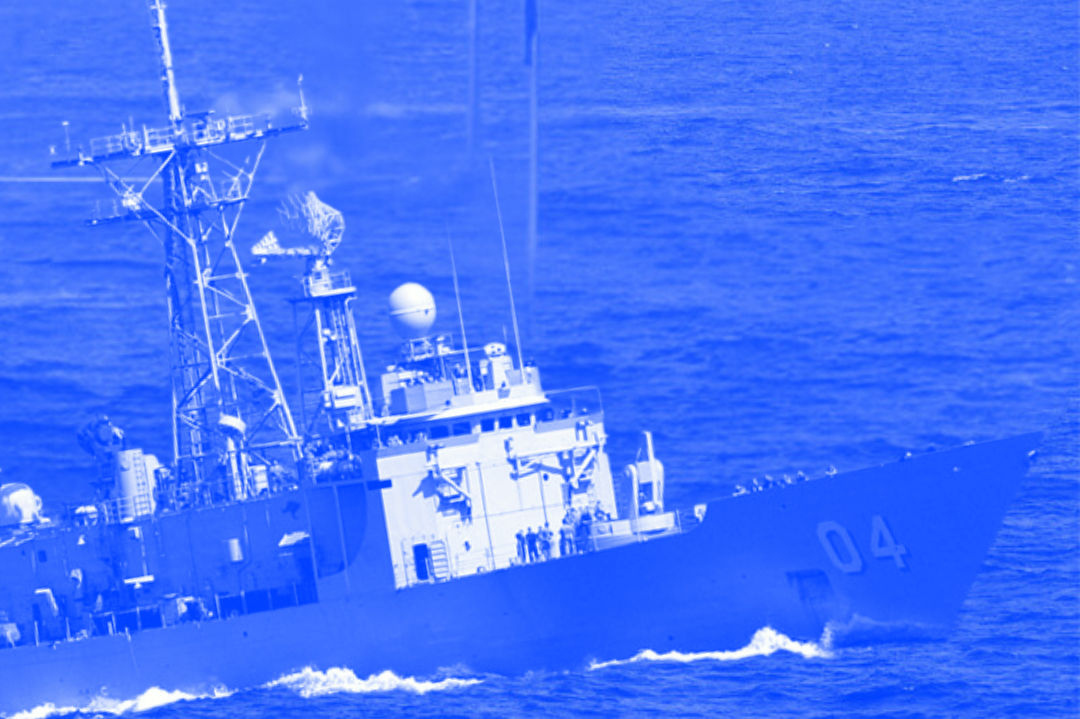
Australia's Adelaide-class Sustainment Contracts
Corruption Tracker -
3PDF
Institutional Corruption: the Australian Department of Defence's Achilles Heel
Afca Edu • PDF Document -
4
$100m Defence contract with KPMG rife with governance failures, review finds
A Defence data project involving a $100 million contract issued to KPMG is rife with serious governance failures, conflicts of interests and a "lack of accountability", according to an external review.
Abc Net
Rating Scale Methodology
1-3: FALSE
Factually incorrect or malicious fabrication.
4-6: PARTIAL
Some truth but context is missing or skewed.
7-9: MOSTLY TRUE
Minor technicalities or phrasing issues.
10: ACCURATE
Perfectly verified and contextually fair.
Methodology: Ratings are determined through cross-referencing official government records, independent fact-checking organizations, and primary source documents.