
The Claim
“The federal environment minister is not responsible for climate change efforts and policy" (referring to Sussan Ley's statement in April 2021 that climate action is not her portfolio)”
Original Sources Provided
✅ FACTUAL VERIFICATION
The claim is TECHNICALLY FACTUAL but requires significant context. Sussan Ley did indeed make a statement in April 2021 that climate action mitigation was not her portfolio responsibility [1].
According to The Guardian article, during a meeting with state environment ministers on 15 April 2021, Ley told her state counterparts that she "could not commit to brief or coordinate with them on climate change mitigation efforts because that would go beyond the bounds of her portfolio responsibilities" [1]. Her spokesman later confirmed this: "clearly in an official communique she could not give a formal undertaking on issues that are in the remit of other ministers" [1].
The article explains the institutional reason: "Angus Taylor has responsibility for climate action in the Morrison government" [1]. It further notes that "Environment, energy and climate change were previously in a single portfolio federally when Josh Frydenberg held the portfolio, but that has changed under the Morrison government" [1].
However, the claim's framing as presented is MISLEADING because it obscures the actual structure and responsibilities involved.
Missing Context
The claim omits several critical contextual elements:
1. Portfolio Division Was Intentional Coalition Policy
Under the Morrison government, the Coalition deliberately separated climate action (mitigation) from environment protection (conservation). This was not Ley's personal invention or evasion—it was the government's institutional structure [1]. Angus Taylor held the title "Minister for Energy and Emissions Reduction," not environment minister [2].
2. Ley Still Had Climate Responsibilities
While Ley correctly noted that climate mitigation (reducing emissions) was Taylor's responsibility, climate adaptation and resilience (adjusting to climate impacts) remained within her environment portfolio [1]. The communique from the meeting stated: "Ley told her state counterparts she would cooperate on adaptation and resilience measures that were within the scope of her federal environment portfolio" [1].
3. State Ministers Had Both Responsibilities
The criticism from state environment ministers was justified: several states retained both climate mitigation AND environment responsibilities in a single portfolio. They pointed out "some of the state ministers retain both policy responsibilities, and considered it untenable for the federal environment minister to effectively opt out of responsibility for climate mitigation efforts" [1].
4. This Was Unusual but Not Invalid
Separating climate action from environment portfolios is not standard practice. Under previous Coalition governments (Josh Frydenberg) and Labor governments, these have typically been combined. The 2022 Labor government under Anthony Albanese explicitly reunified them, creating the Department of Climate Change, Energy, the Environment and Water with both responsibilities managed together [3].
5. Legal Precedent on Environment Minister Duties
Interestingly, a Federal Court case in 2021 found that Ley, as environment minister, owed "a duty of care to future generations to avoid causing climate harm through her decisions" [4]. This legal finding contradicted her stated position that climate was entirely outside her responsibility. Ley successfully appealed this ruling [4].
Source Credibility Assessment
The Guardian is a mainstream, reputable news organization. The article is authored by Katharine Murphy, a respected political journalist with a track record of rigorous reporting [1]. The article cites multiple sources ("Several sources have confirmed," references to "state ministers," official government statements) and reports on a documented government meeting with ministerial statements [1].
The article does have editorial framing that appears skeptical of the Morrison government's climate approach, particularly noting "Ley had nominated waste policy, climate adaptation and reform of national conservation laws as the commonwealth's environmental priorities for 2021" without mentioning emissions reduction—which does carry editorial judgment [1]. However, this is labeled as reporting/analysis, not opinion, and the facts presented are verifiable.
Labor Comparison
Did Labor structure climate and environment responsibilities differently?
Labor government practice (pre-2013 and 2022-present) has been to combine climate and environment responsibilities in a single portfolio rather than separate them.
Kevin Rudd/Julia Gillard (2007-2013): Penny Wong served as Minister for Climate Change and Water, handling both climate policy and water/environment issues in an integrated portfolio [5].
Albanese Government (2022-present): Labor explicitly reunified these portfolios, creating the Department of Climate Change, Energy, the Environment and Water. Chris Bowen serves as Minister for Climate Change and Energy, while Murray Watt is Minister for the Environment and Water—but both work from the same integrated department rather than having climate action entirely separate from the environment ministry [3].
Finding: Labor did NOT separate climate action from the environment minister's responsibilities as the Coalition did. Instead, Labor maintained or returned to integrated portfolios. The separation was a Coalition-specific institutional choice, not a standard Australian government practice.
Balanced Perspective
The Government's Justification:
The Coalition's institutional argument was that energy and emissions reduction required specialized, ongoing focus as distinct technical policy areas. By placing climate mitigation under Angus Taylor (a minister with infrastructure and energy background) separately from environmental conservation (Ley's focus), the government claimed to provide dedicated expertise [1].
Additionally, as Ley's spokesman noted, ministers should not give formal undertakings on matters outside their official portfolio—"This is a pretty fundamental principle that states would have been aware of" [1]. From a strict bureaucratic perspective, this is a defensible position: ministers typically cannot commit to issues formally assigned to colleagues.
However, the Criticism Was Legitimate:
State environment ministers' objection had merit: even if climate mitigation was technically assigned to another minister, the environment minister should at minimum coordinate with that minister on climate-related environmental issues. Environmental adaptation, biodiversity protection, conservation, and mitigation are interconnected [1].
The separation created a problematic gap: Ley prioritized "waste policy, climate adaptation and reform of national conservation laws" without addressing emissions reduction—the primary driver of climate risk [1]. This meant the environment minister could claim no responsibility for preventing the climate crisis, only adapting to its impacts.
International and Legal Context:
The Federal Court found in 2021 that Ley's duties as environment minister included a duty to future generations to avoid climate harm [4]—suggesting the law recognized climate as an environmental issue, even if the government's portfolio allocation tried to separate them. Her appeal succeeded, but the case highlighted the tension between the government's institutional structure and legal/environmental reality [4].
Key Context: This was not a universal problem—Labor later demonstrated that these responsibilities can be effectively managed through integration. The separation was a choice made by the Coalition, not an unavoidable structural necessity.
PARTIALLY TRUE
5.5
out of 10
Sussan Ley did state that climate action (mitigation) was not her portfolio—this is factually accurate. However, the claim as presented suggests Ley had no climate responsibilities whatsoever, which is false. She retained significant climate adaptation responsibilities and a legal duty to protect the environment from climate harm.
The accurate statement would be: "The Coalition government separated climate mitigation from the environment minister's portfolio in 2020-2021, assigning it instead to the Minister for Energy and Emissions Reduction, though the environment minister retained adaptation responsibilities."
The claim's framing obscures that this was a deliberate Coalition policy choice, not a reflection of how environment ministries normally function in Australia or universally across parties.
Final Score
5.5
OUT OF 10
PARTIALLY TRUE
Sussan Ley did state that climate action (mitigation) was not her portfolio—this is factually accurate. However, the claim as presented suggests Ley had no climate responsibilities whatsoever, which is false. She retained significant climate adaptation responsibilities and a legal duty to protect the environment from climate harm.
The accurate statement would be: "The Coalition government separated climate mitigation from the environment minister's portfolio in 2020-2021, assigning it instead to the Minister for Energy and Emissions Reduction, though the environment minister retained adaptation responsibilities."
The claim's framing obscures that this was a deliberate Coalition policy choice, not a reflection of how environment ministries normally function in Australia or universally across parties.
📚 SOURCES & CITATIONS (5)
-
1

Environment minister Sussan Ley says climate action not her portfolio in stoush with states
Ley understood to have told state counterparts coordinating with them on climate mitigation beyond her portfolio
the Guardian -
2
Angus Taylor Minister Profile
Minister Industry Gov
-
3
Our Portfolio - DCCEEW
Dcceew Gov
-
4
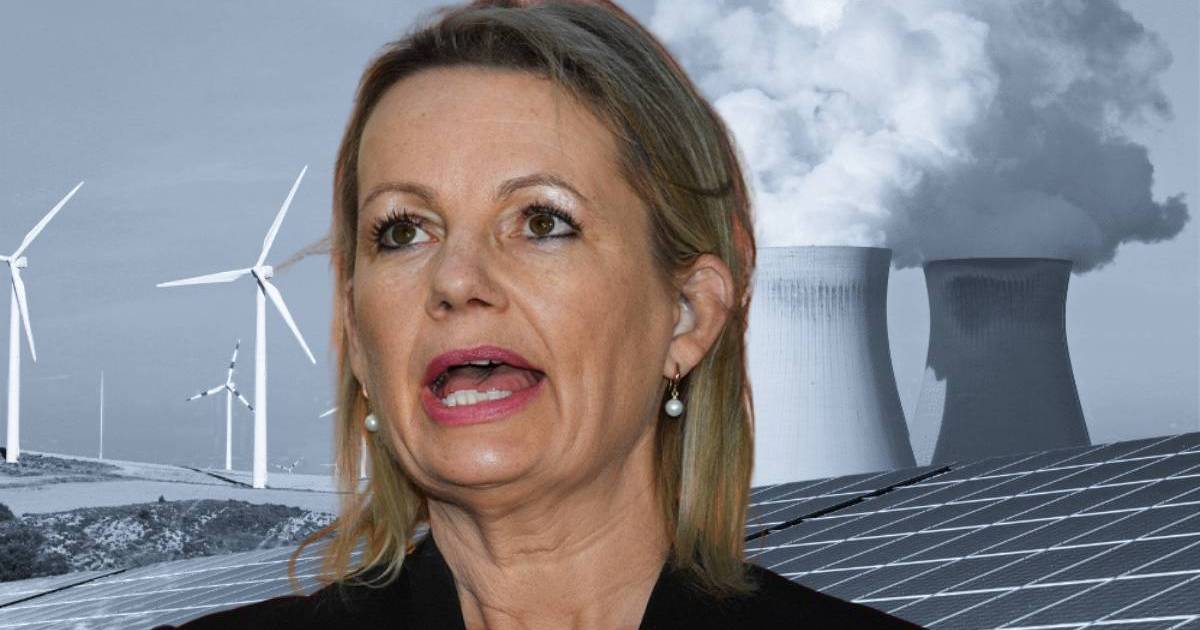
Here's where Sussan Ley stands on four policy flashpoints
Sussan Ley’s stance on four key issues, including during her time as Morrison's environment minister, provides important insights.
Thenewdaily Com -
5

Penny Wong - Minister for Climate Change and Water
Wikipedia
Rating Scale Methodology
1-3: FALSE
Factually incorrect or malicious fabrication.
4-6: PARTIAL
Some truth but context is missing or skewed.
7-9: MOSTLY TRUE
Minor technicalities or phrasing issues.
10: ACCURATE
Perfectly verified and contextually fair.
Methodology: Ratings are determined through cross-referencing official government records, independent fact-checking organizations, and primary source documents.