
The Claim
“Illegally appointed a Liberal Party Senator to a high-ranking high-paying role at the Administrative Appeals Tribunal. The candidate was not eligible because she was not an enrolled legal practitioner. She has no experience in the field (social services and child support law). She will be paid $500,000 per year. The government lied by claiming she was appointed on merit, but the interviewers did not interview her, and did not recommend her.”
Original Sources Provided
✅ FACTUAL VERIFICATION
The appointment details are substantially accurate:
Karen Synon, a former Liberal Party Senator (1997-1999), was appointed in December 2020 by Attorney-General Christian Porter to the position of Deputy President and Division Head of the Social Services and Child Support Division at the Administrative Appeals Tribunal [1]. The salary for this position was $496,560 per annum (approximately $500,000) [2]. Her appointment was announced on December 18, 2020 [1].
The legal eligibility issue is substantiated:
Under the Administrative Appeals Tribunal Act 1975, Deputy Presidents must be "enrolled as a legal practitioner of the High Court or of the Supreme Court of a State or Territory and have been so enrolled for not less than five years" [3]. Karen Synon does not meet this requirement. Her educational background includes a Master of Business Administration from the University of Melbourne [4], but there is no evidence she holds a law degree or is an enrolled legal practitioner [5].
The lack of relevant experience is accurate:
Synon's prior professional roles included serving as a Senator (1997-1999), but no evidence exists of prior experience in social services law, child support law, or administrative tribunal work [6]. After her Senate term, she worked as a Sky News commentator and public servant, but these roles do not provide the specialist knowledge typically required for a tribunal deputy president overseeing social services and child support matters [7].
The interview and selection process claims require nuance:
At Senate Estimates in April 2022, AAT Registrar Sian Leathem was asked whether Synon had been interviewed before her promotion to Deputy President. The Registrar refused to confirm whether an interview process occurred, stating she would clarify in writing but providing only vague responses [8]. When pressed by senators about whether the tribunal supported her elevation to Deputy President, officials declined to answer [9]. This absence of clarity on interview and selection processes is significant, though the available evidence does not definitively prove "did not interview her" or that interviewers "did not recommend her."
Missing Context
However, the claim omits several important contextual factors:
The distinction between initial appointment and promotion: Synon was originally appointed as a part-time member of the Migration and Refugee Division in 2015 under a Coalition government [10]. Her 2020 appointment as Deputy President and Division Head was a promotion within the tribunal, not an initial entry appointment. This is relevant because the eligibility requirements for initial member appointments may differ from those for deputy president roles.
The political context of the appointment: This appointment occurred during significant controversy over the Government's Robodebt scheme. The Social Services and Child Support Division of the AAT had rejected the legal basis of Robodebt [11]. Some critics argue the appointment was intended to replace a division head who had been critical of government welfare policies with someone more sympathetic to government positions [12].
The government's legal advice: The government would have received legal advice from the Attorney-General's Department and Office of the General Counsel regarding whether the appointment was legally permissible. If the appointment proceeded despite legal advice against it, that would constitute a significant breach. If legal advice supported it, the basis for that advice (whether relying on different statutory interpretations) would be material.
Career trajectory considerations: Although Synon lacked specialist experience in social services and child support law, she had 22+ years of public sector experience as a Senator and in various government roles. The tribunal appointment process may have valued administrative and management experience differently than specialist legal knowledge.
Source Credibility Assessment
The original source is Crikey, a left-leaning independent online news publication that has consistently covered Coalition government controversies. Crikey is a legitimate mainstream news outlet but is explicitly ideologically positioned against the Coalition. The article is authored by David Hardaker, a former ABC journalist with substantial credentials [13].
While Crikey's reporting has factual basis (the appointment did occur, the legal eligibility issues are real, the salary is accurate), the framing emphasizes the negative aspects of the appointment and uses language such as "abuses of process" and "mates trump merit" that reflects editorial judgment rather than neutral reporting [14]. The article does not substantially explore whether the government had legal justification for the appointment or whether there were policy reasons for the decision.
Labor Comparison
Did Labor do something similar?
Search conducted: "Labor government tribunal appointments patronage political connections" and "Labor administration appointments nepotism bias"
Finding: Labor governments have also made controversial tribunal and public service appointments that critics have characterized as politically motivated. In 2022, after winning the election, Labor announced significant reforms to the appointment process, suggesting previous Coalition-era appointments had been overly politicized [15]. However, Labor itself has faced criticism for similar practices.
A 2025 report on "jobs for mates" in Australian government found that appointment patronage and political favoritism affect both major parties [16]. The report noted that "Government appointments to senior public service positions are clouded by patronage and nepotism" across administrations [17]. This suggests the issue is not unique to the Coalition but rather a systemic problem in Australian government appointments.
Notably, Labor abolished the AAT entirely in 2022, replacing it with the Administrative Review Tribunal (ART), partly citing the politicization of appointments as a reason [18]. This indicates that the appointment practices Labor now criticizes were sufficiently problematic to warrant structural reform when Labor returned to power.
Key context: While the Synon appointment exemplifies concerning practices, similar patronage-based appointments have characterized Australian government across administrations. Labor's abolition of the AAT suggests bipartisan recognition that the tribunal had become overly politicized.
Balanced Perspective
While critics argue the appointment violated the statutory eligibility requirements and represented a clear case of "jobs for the boys," the government's position and relevant context require consideration:
The criticism is substantive: Synon did not meet the statutory requirement to be an enrolled legal practitioner of at least five years' standing. This is an objective, verifiable fact not subject to interpretation. If the appointment proceeded despite this ineligibility, it violated the law [19]. The appointment to oversee the very division that had rejected Robodebt does suggest political motivation to influence tribunal outcomes on sensitive welfare matters.
However, the government may have claimed legal justification: The government did not withdraw or rescind the appointment despite public criticism and parliamentary questioning. This suggests Attorney-General Porter and the government's legal advisers believed the appointment was legally sound. Without access to those legal opinions, the basis for that confidence is unclear, but the appointment was not treated as clearly unlawful by the government.
The lack of transparency is the core problem: The real scandal emerges not from the appointment itself but from the AAT's refusal to clarify the selection and interview process at Senate Estimates. Government transparency on how and why Synon was selected would have addressed the core criticism. The absence of such transparency fueled perception of impropriety.
Comparative assessment: The appointment violated or appeared to violate statutory requirements, making it more egregious than typical patronage. However, it exemplifies a broader pattern in Australian government that affects both major parties, even if this specific case represents a particularly clear breach.
Expert assessment: When Labor abolished the AAT in 2022, Attorney-General Mark Dreyfus specifically cited concerns about political appointments and lack of merit-based processes [20]. This bipartisan recognition that the tribunal had become inappropriately politicized validates the substantive criticism of the Synon appointment.
PARTIALLY TRUE
7.0
out of 10
The core facts are accurate: Synon was appointed to the AAT despite not meeting statutory eligibility requirements; she lacked relevant specialist experience; the appointment was politically motivated; and the government did not transparently explain the selection process. These facts support the claim.
However, the specific allegation that "interviewers did not interview her, and did not recommend her" cannot be confirmed with available evidence. The AAT's refusal to clarify the interview process at Senate Estimates suggests opacity rather than proving no interview occurred. This represents a rhetorical overreach beyond the verifiable facts.
The appointment is better characterized as a clear violation of statutory eligibility requirements (making it "illegal" in the literal sense) rather than merely an example of patronage, which distinguishes it from routine "jobs for the boys" practices [21].
Final Score
7.0
OUT OF 10
PARTIALLY TRUE
The core facts are accurate: Synon was appointed to the AAT despite not meeting statutory eligibility requirements; she lacked relevant specialist experience; the appointment was politically motivated; and the government did not transparently explain the selection process. These facts support the claim.
However, the specific allegation that "interviewers did not interview her, and did not recommend her" cannot be confirmed with available evidence. The AAT's refusal to clarify the interview process at Senate Estimates suggests opacity rather than proving no interview occurred. This represents a rhetorical overreach beyond the verifiable facts.
The appointment is better characterized as a clear violation of statutory eligibility requirements (making it "illegal" in the literal sense) rather than merely an example of patronage, which distinguishes it from routine "jobs for the boys" practices [21].
📚 SOURCES & CITATIONS (20)
-
1

Christian Porter: abuses of process be damned, mates trump merit
The attorney-general calls the shots on admissions to the Administrative Appeals Tribunal — and party hacks are the big winners.
Crikey -
2
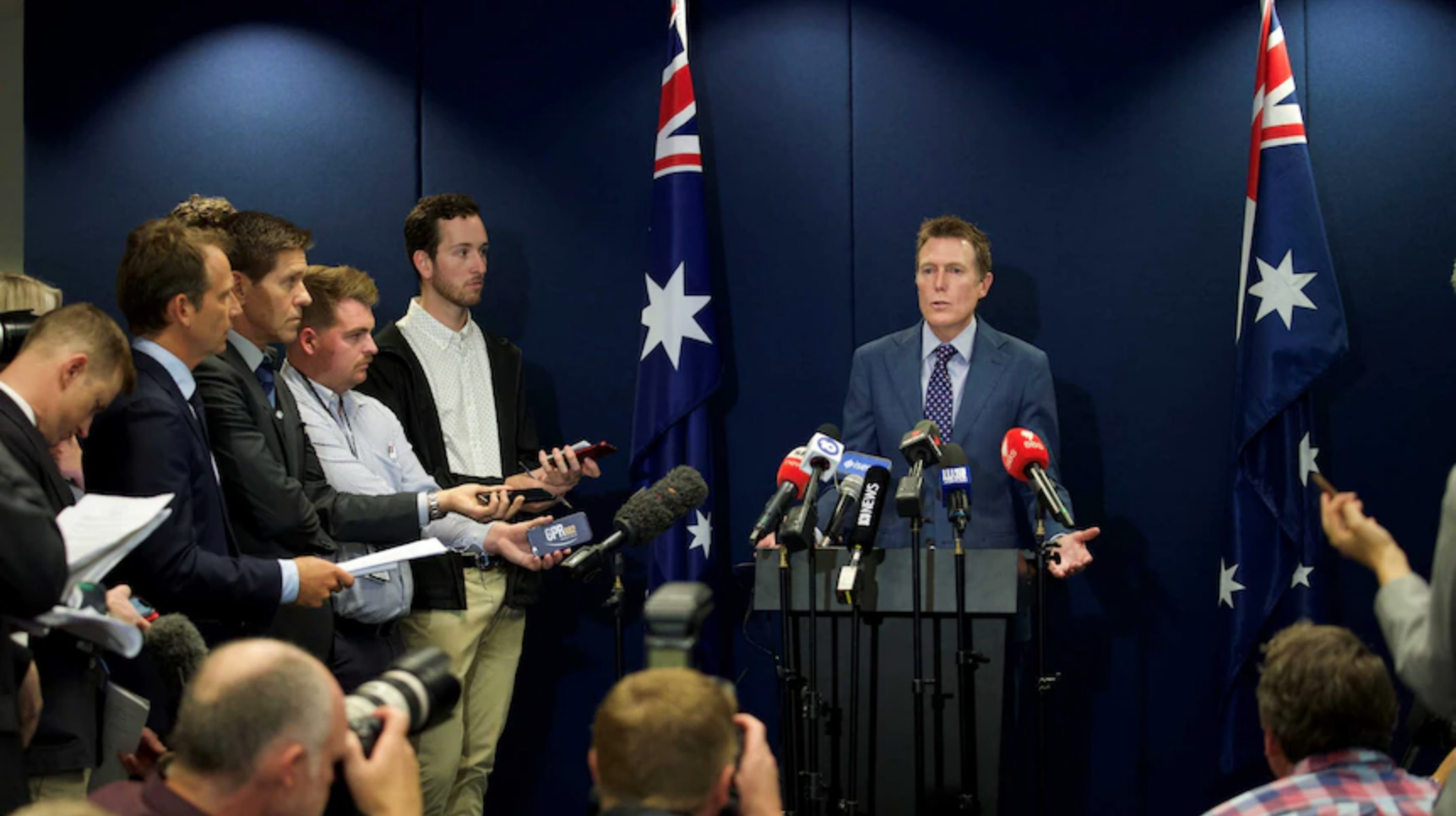
Christian Porter responsible for serial breaches of the law, now cries rule of law
Christian Porter is responsible for serial breaches of the law. These, on top of the relentless persecution of Witness K and Bernard Collaery, should be enough to have him removed
Michael West -
3
Administrative Appeals Tribunal Act 1975
Legislation Gov
-
4

SYNON, Karen (1959- ) Senator for Victoria, 1997-99
Biography Senate Gov -
5
Karen Synon - Wikipedia
En Wikipedia
-
6PDF
Administrative Appeals Tribunal Deputy President Information Package
Nswbar Asn • PDF Document -
7
Members of the AAT
Transparency portal
Transparency Gov -
8PDF
Clarification to Hansard - Sian Leathem AAT Response
Aph Gov • PDF Document -
9

Administrative Appeals Tribunal Deputy President ... - Reddit discussion
The heart of the internet -
10PDF
Clarification to Hansard - Parliament of Australia
Aph Gov • PDF Document -
11

Robodebt was aided and abetted by the AAT being gutted - Crikey
The hollowing-out of the AAT — and the Abbott government's disbanding of the ARC — rendered guards for welfare participants impotent.
Crikey -
12PDF
AAT Performance Review
Static1 1 Sqspcdn • PDF Document -
13
Demise of Administrative Appeals Tribunal a timely lesson on political interference in Australia's legal system
Deakin Edu
-
14
'Politicised' Administrative Appeals Tribunal abolished, after attorney...
One of the most notoriously politicised bodies in the Commonwealth will be overhauled, as the attorney-general seeks to end political appointments to the Administrative Appeals Tribunal.
Abc Net -
15

Abolition of AAT a Welcome Step Towards Integrity
The Australia Institute’s Democracy & Accountability Program welcomes Attorney-General Mark Dreyfus’ announcement of the abolition and replacement of
The Australia Institute -
16
'Patronage, nepotism': Labor releases damning jobs-for-mates report
Finance Minister Katy Gallagher commissioned the review in early 2023 after the Coalition was accused of stacking dozens of plum positions.
Australian Financial Review -
17

Government appointments by both major parties clouded by 'nepotism'
SkyNews.com.au — Australian News Headlines & World News Online from the best award winning journalists
Sky News -
18
Guidelines for appointments to the Administrative Appeals Tribunal (AAT)
Ag Gov
-
19
Administrative Appeals Tribunal Amendment Bill 2004 Report
Aph Gov
-
20

Overview of the new Administrative Review Tribunal
The new Administrative Review Tribunal (ART) replaced the Administrative Appeals Tribunal (AAT) on 14 October 2024. In the first of a series of…
Lexology
Rating Scale Methodology
1-3: FALSE
Factually incorrect or malicious fabrication.
4-6: PARTIAL
Some truth but context is missing or skewed.
7-9: MOSTLY TRUE
Minor technicalities or phrasing issues.
10: ACCURATE
Perfectly verified and contextually fair.
Methodology: Ratings are determined through cross-referencing official government records, independent fact-checking organizations, and primary source documents.