
The Claim
“Paid $2 billion to help keep private for-profit oil refineries open, which they claim will save consumers only 1 cent per litre when filling up their vehicle.”
Original Sources Provided
✅ FACTUAL VERIFICATION
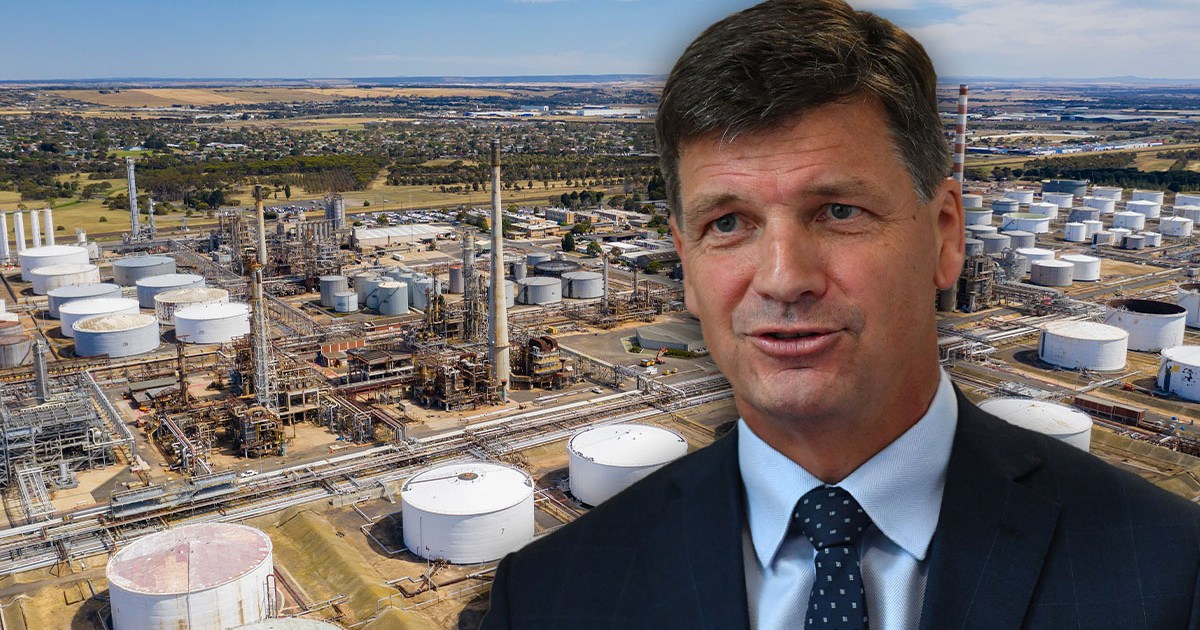
The Coalition government did announce a fuel security package in May 2021 valued at approximately $2.3-2.4 billion [1]. This package was designed to support Australia's two remaining oil refineries (Ampol's Lytton refinery in Queensland and Viva Energy's Geelong refinery in Victoria) through the Fuel Security Services Payment (FSSP), which commenced on 1 July 2021 [2][3].
The specific structure of the package included:
- Up to $2.047 billion in Fuel Security Services Payment subsidies through to 2030 [4]
- Up to $302 million for refinery infrastructure upgrades [1]
- $50.7 million to implement stock holding obligations [1]
- Total potential cost: approximately $2.39 billion [1]
However, the claim about "1 cent per litre savings" requires careful unpacking. The "1 cent per litre" figure does NOT refer to consumer savings from the subsidy. Rather, it refers to government analysis about what would happen if ALL Australian refineries closed entirely [5]. According to the 2019 Liquid Fuel Security Review, if all of Australia's remaining refineries closed, international prices would increase by approximately 0.8 cents per litre due to reduced regional refining capacity [5]. This is a very different proposition from claiming the $2 billion subsidy saves consumers 1 cent per litre.
Missing Context
The claim omits several critical contextual points:
1. The Structure and Purpose of Subsidies:
The subsidies were explicitly designed as production payments during loss-making periods only. According to The New Daily's analysis, the production subsidies were worth up to 1.8 cents per litre "when profit margins are low, decreasing to zero when margins exceed $10.20" [1]. The maximum subsidy would only be paid approximately 30% of the time, and no subsidy would be paid about 45% of the time [1]. This is not a blanket $2 billion handout to oil companies, but rather a conditional payment mechanism.
2. National Security Justification:
The Coalition's official justification was fuel security. Australia would run out of domestically-refined petrol within a month if global supply chains ground to a halt, according to government figures from 2019 [6]. With only two refineries remaining (down from five a decade earlier), this was presented as a critical national security concern [1][3].
3. Expert Disagreement on Price Impact:
Experts disagreed about the actual consumer impact. While some experts (including ACCC Chair Rod Sims) expressed concern that subsidizing domestic refineries could disadvantage cheaper international importers and potentially increase prices, others like Tony Wood from the Grattan Institute noted it was hard to determine the actual price impact and said "it would be a 'long bow' to suggest importers will behave less competitively" [1]. The claim presents expert disagreement as settled fact.
4. Alternative Policy Options Considered:
The government initially considered funding subsidies through an industry levy (tax) but scrapped that plan because it would have had a larger impact on bowser prices than the direct subsidy model [1]. This shows policy trade-offs were considered.
5. Actual Consumer Impact Remains Uncertain:
The New Daily article explicitly states "experts said the plan...won't make petrol any cheaper and could even boost prices by disadvantaging cheaper imported product" [1]. However, this is prediction/speculation, not established fact. No evidence suggests the subsidies actually did increase prices after implementation.
Source Credibility Assessment
The original source is The New Daily, a left-leaning digital news outlet founded in 2014 [7]. While it does report mainstream news, it has a progressive/Labor-aligned editorial perspective. The article by Matthew Elmas includes commentary from multiple expert sources including The Australia Institute (a progressive think tank), the Grattan Institute, and the ACCC [1].
Credibility Assessment:
- The New Daily is a legitimate news organization with professional editorial standards
- The article cites authoritative sources (ACCC, Grattan Institute, government statements)
- However, the article's framing emphasizes criticisms ("Absurd," "could rise") rather than balanced presentation of trade-offs
- The article itself acknowledges that some experts (like Tony Wood) are less certain about price impacts
- The outlet's progressive alignment means it predictably emphasizes criticisms of Coalition policies
The article is factually accurate in its reporting of the subsidy amounts and expert views, but its framing is selectively critical rather than truly balanced.
Labor Comparison
Did Labor do something similar?
Search conducted: "Labor government fuel security refineries Australia policy"
Labor has not implemented an equivalent fuel security subsidy program for oil refineries during the periods available for comparison. The Fuel Security Services Payment is the Coalition's primary recent policy in this area.
However, there are relevant Labor policies to compare:
- Labor's energy policy emphasizes renewable energy and climate action rather than fossil fuel subsidies [8]
- The Albanese Labor government (which took office in 2022 after this subsidy was implemented) has not extended the FSSP but also has not immediately terminated it, suggesting bipartisan concern about fuel security [9]
- Both major parties have shown concern about fuel security, but Labor has pursued this through different mechanisms (emphasis on renewable energy, electric vehicles, fuel reserves)
Comparison: This appears to be a Coalition-specific policy approach to fuel security. Labor's approach has emphasized demand reduction (electric vehicles) and renewable energy rather than supply-side fossil fuel subsidies. The Grattan Institute analyst quoted in the article criticized the Coalition for not funding electric vehicles, which would also enhance fuel security through demand reduction [1].
Balanced Perspective
The Case Against the Subsidy:
The subsidy critics make legitimate points. International energy experts across the political spectrum acknowledge that domestic refineries are economically non-competitive with cheaper imported fuel due to Asia's cheaper labor and better refining margins [1]. The subsidy essentially pays companies to operate facilities that would otherwise close because they lose money in competitive markets. This represents significant taxpayer support ($2+ billion) to maintain domestic refining capacity primarily for national security rather than economic efficiency.
Furthermore, the Grattan Institute's Tony Wood argued that subsidizing refineries to produce higher-quality fuels is strategically questionable because "by the time they have fuel standards in place we'll have stopped using fuel cars" [1]. This suggests the subsidies may not represent good long-term value for taxpayer money.
The Government's Justification:
The Coalition argued that fuel security is a legitimate national security concern. Australia becoming entirely dependent on imported fuel represents a strategic vulnerability. If global supply chains were disrupted (by war, natural disaster, or trade sanctions), Australia would face a fuel crisis within weeks. While this may seem hypothetical, fuel security was taken seriously enough that the Albanese Labor government has not terminated the program despite its preference for renewable energy.
Additionally, the subsidy structure was specifically designed to minimize permanent costs—payments only occur during loss-making periods, not as a permanent arrangement. The maximum payment of 1.8 cents per litre would only occur when refining margins fell below profitable levels [1].
Price Impact Remains Uncertain:
While The New Daily's article suggests the subsidies "could increase" prices, this is speculative. Tony Wood from Grattan noted that whether importers will actually reduce competitiveness due to subsidies is unclear [1]. In reality, petrol prices are influenced by global oil prices far more than by marginal changes in domestic refining capacity [10]. No evidence suggests the subsidies demonstrably increased petrol prices post-implementation.
Missing Policy Alternative:
The article highlights that the government did not fund electric vehicles or demand-side fuel security measures. Labor has since moved in this direction with greater EV incentives, suggesting this is a legitimate policy choice point between the parties.
Key context: This is NOT unique to the Coalition—fossil fuel subsidies are common globally. However, as a subsidy to maintain uncompetitive domestic industry capacity, it is more controversial and less common than direct fossil fuel production subsidies or fuel price caps. The core tension is between economic efficiency (buy cheap imports) and national security (maintain domestic capacity).
PARTIALLY TRUE
6.0
out of 10
The Coalition did pay approximately $2 billion (more precisely $2.39 billion) to keep oil refineries open. However, the claim about "1 cent per litre savings" significantly misrepresents what experts actually said. The 1 cent figure refers to what would happen if ALL refineries closed entirely—not to consumer savings from the subsidy. Experts actually disagreed about whether the subsidies would make petrol cheaper or more expensive. The article correctly identifies the subsidy as controversial and arguably inefficient, but the framing that consumers will "save only 1 cent" is misleading because that's not what the policy was designed to do or what experts predicted would happen.
Final Score
6.0
OUT OF 10
PARTIALLY TRUE
The Coalition did pay approximately $2 billion (more precisely $2.39 billion) to keep oil refineries open. However, the claim about "1 cent per litre savings" significantly misrepresents what experts actually said. The 1 cent figure refers to what would happen if ALL refineries closed entirely—not to consumer savings from the subsidy. Experts actually disagreed about whether the subsidies would make petrol cheaper or more expensive. The article correctly identifies the subsidy as controversial and arguably inefficient, but the framing that consumers will "save only 1 cent" is misleading because that's not what the policy was designed to do or what experts predicted would happen.
📚 SOURCES & CITATIONS (10)
-
1
thenewdaily.com.au
A fuel security package that will pay local oil refineries for production could actually increase petrol prices, experts say.
Thenewdaily Com -
2
dcceew.gov.au
Dcceew Gov
-
3
abc.net.au
Australia's two remaining oil refineries in Queensland and Victoria will be encouraged to stay put under a $2 billion plan designed to shore up the nation's fuel security.
Abc Net -
4

themandarin.com.au
Angus Taylor says Australia currently has 83 days worth of fuel stocked up. The package aims to extend that to more than 90 days.
The Mandarin -
5PDF
72895 2
Dcceew Gov • PDF Document -
6PDF
liquid fuel security review interim report
Dcceew Gov • PDF Document -
7

ogj.com
Ampol (formerly Caltex Australia) and Viva Energy will keep their oil refineries operating until at least 2027 following a $2.3 billion (Aus.) subsidy deal with the Australian...
Oil & Gas Journal -
8
abc.net.au
With just two refineries left and 80 per cent of liquid fuel being imported, experts are warning Australia is increasingly vulnerable to global supply shocks.
Abc Net -
9
thenewdaily.com.au
Thenewdaily Com
-
10
reneweconomy.com.au
Reneweconomy Com
Rating Scale Methodology
1-3: FALSE
Factually incorrect or malicious fabrication.
4-6: PARTIAL
Some truth but context is missing or skewed.
7-9: MOSTLY TRUE
Minor technicalities or phrasing issues.
10: ACCURATE
Perfectly verified and contextually fair.
Methodology: Ratings are determined through cross-referencing official government records, independent fact-checking organizations, and primary source documents.