
The Claim
“Agreed to procurement terms for new nuclear submarines which explicitly prohibit the Australian Navy from 'opening the bonnet' to look at the nuclear reactors to maintain or repair them. That must be outsourced to the US or UK.”
Original Sources Provided
✅ FACTUAL VERIFICATION
The core claim regarding restrictions on Australian access to nuclear reactors is factually accurate, though the phrasing and framing require important context [1].
According to the SMH article by Peter Hartcher (published May 14, 2022), the original source of this information came from negotiations during the Pentagon meetings in August 2021. The article states: "Experts on the Nuclear Non-Proliferation Treaty were consulted. They agreed that if the reactors on the submarines were run as sealed units, installed and later removed by the US or UK at the end of their 30-year life, then the treaty would not be breached. Australia may have use of, but not access to, the nuclear technology and materials. 'The Australians will never have to handle any of this material, it can't be lost or stolen,' a US official explained" [1].
This arrangement was designed to comply with the Nuclear Non-Proliferation Treaty (NPT). According to the Arms Control Association's analysis, "The practical implementation arrangements, which include the transfer of sealed power units, would make it exceedingly difficult for Australia to divert without detection the highly enriched uranium (HEU) fuel during the operational lifetime of the submarines" [2].
The Australian Strategic Assessment (ASA) official government pathway document confirms that submarines will be operated by Australia but with technical support from AUKUS partners. Australia is described as approaching "sovereign readiness" to "safely own, operate, maintain and regulate a nuclear-powered submarine fleet," but with planned support from US and UK naval forces through "increased forward presence of Royal Navy and US Navy nuclear-powered submarines to Australia, to assist in developing knowledge and industrial capabilities" [3][4].
Missing Context
The claim presents this arrangement as if Australia is uniquely prohibited from accessing the reactors, but omits several critical contextual elements:
1. This is a deliberate technical safety and non-proliferation measure, not a punishment:
The sealed reactor units are specifically designed to prevent the handling of highly enriched uranium (HEU) and to ensure non-proliferation compliance. As the SMH article explains, this arrangement was necessary to satisfy Biden's major political concerns about NPT compliance. The US official stated this clearly: "Biden had to protect his own left flank within the Democratic Party on the non-proliferation issue. It was his biggest political risk" [1].
2. Australia is building sovereign maintenance capability over time:
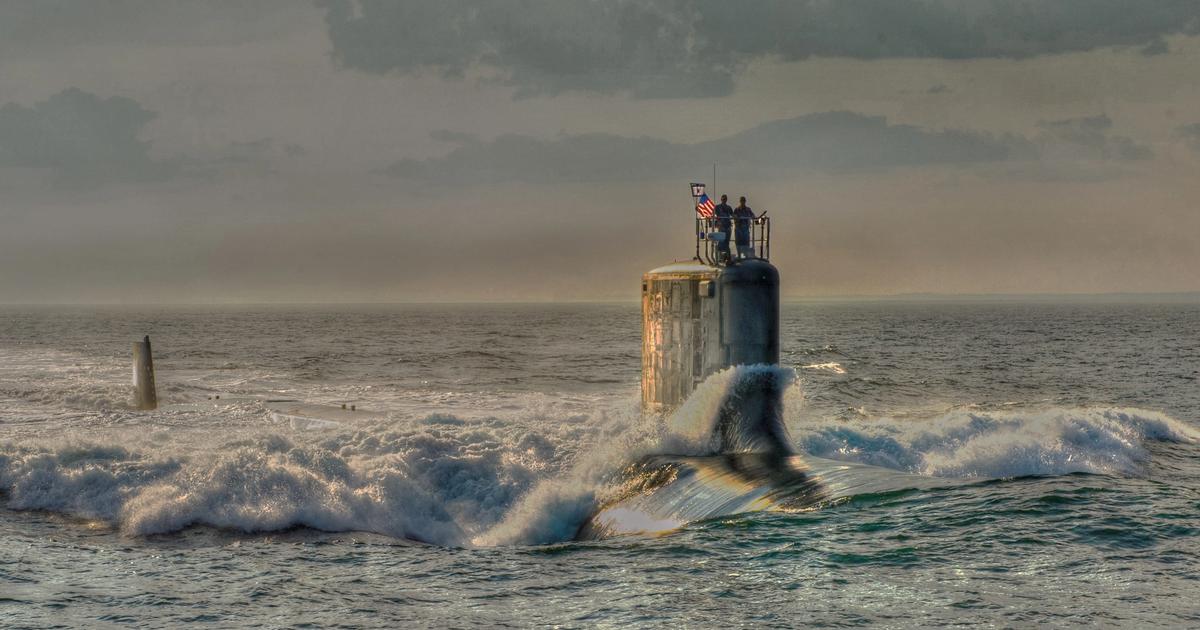
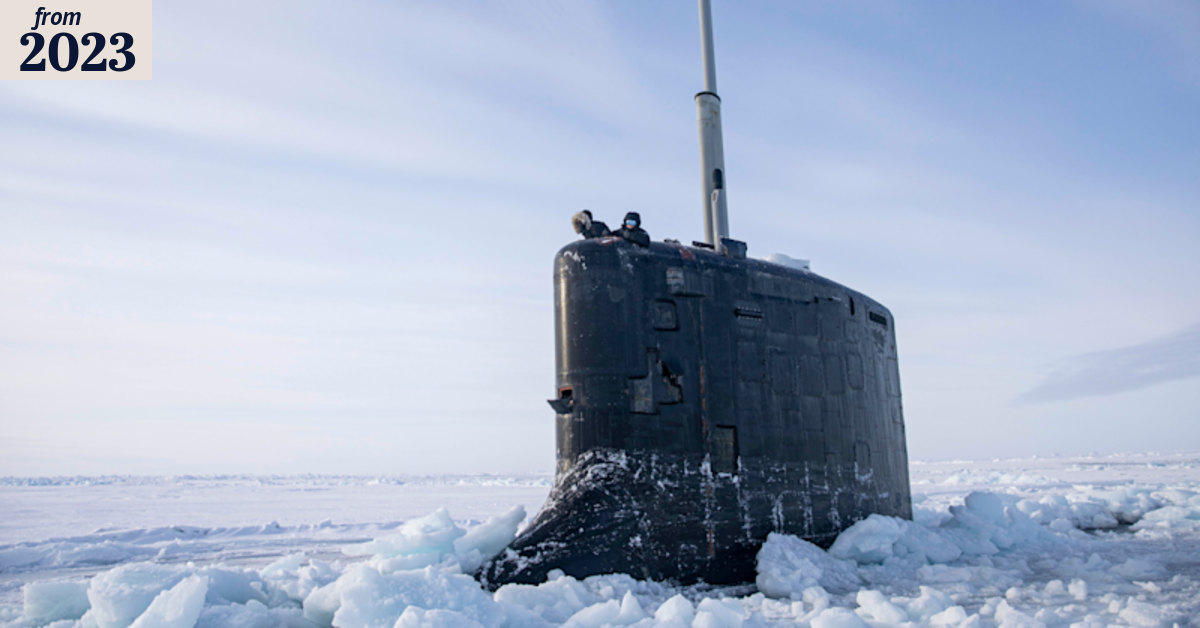
The AUKUS Optimal Pathway explicitly includes phases for Australia to develop its own nuclear submarine maintenance expertise. Government documents state that Australia will reach "sovereign readiness" to safely operate and maintain submarines by the early 2030s [3]. The recent 2024-2025 deployment of US Navy submarine USS Vermont to HMAS Stirling for maintenance is specifically described as "a key step in preparing our workforce to support the rotational presence" and Australia's "growing responsibility and capability" [5][6].
3. The restriction is temporary and structured for capability transfer:
This isn't a permanent prohibition. The arrangement is designed as a capacity-building phase where Australia gradually develops the industrial base and trained workforce to operate and support nuclear submarines. Australian officials, US Navy leadership, and defense analysts describe this as a deliberate, multi-phase transition to sovereign capability [3][7].
4. Reactor access differs from general submarine maintenance:
Australia will handle routine maintenance and repairs; it's specifically the nuclear reactor itself that remains restricted under the sealed-unit design. As the Arms Control Association notes, Australia will need to develop expertise in handling spent fuel disposal on its territory, which requires significant nuclear capability [2].
Source Credibility Assessment
The SMH Article (Peter Hartcher, May 2022):
The Sydney Morning Herald is Australia's leading mainstream media outlet with strong editorial standards. However, this particular article is part two of an investigative series titled "AUKUS fallout: double-dealing and deception came at a diplomatic cost." While the factual reporting appears accurate, the framing emphasizes alleged deception and diplomatic cost. The article is investigative journalism that brings to light previously unreported details about Morrison's secret AUKUS negotiations, which is legitimate reporting, but the narrative lens emphasizes criticism of the government's handling rather than presenting the technical justifications or Labor's subsequent acceptance of the arrangement [1].
Hartcher is a respected political correspondent with a track record of detailed reporting, but the article's framing and tone lean toward portraying the situation unfavorably. This is not an objective analysis but rather investigative reporting with a critical lens.
Important Note on Source Attribution:
The claim attributes this information to the SMH article, which is itself reporting on previously confidential information from Pentagon negotiations in August 2021. The original source is US government officials involved in the AUKUS negotiations, not SMH analysis.
Labor Comparison
Did Labor do something similar?
Labor's position on AUKUS has evolved from opposition to support. Initially, Labor opposed the AUKUS deal:
- In September 2021, Labor foreign affairs spokesperson Penny Wong criticized the Morrison government's secretive approach and demanded transparency about the deal [8]
- Labor questioned whether the submarines could be delivered on schedule and within budget [9]
- Labor expressed concerns about the cost to other defense programs [10]
However, Labor adopted AUKUS support after coming to government in May 2022:
- In August 2023, Prime Minister Anthony Albanese won a major party battle to keep nuclear submarines in Labor's election platform despite opposition from left-wing unions [11]
- The Albanese government has actively implemented and expanded the AUKUS submarine program, reaffirming commitment to the schedule and accelerating some aspects [12]
- Labor's defense policy now embraces the same reactor-access arrangements that were negotiated under the Coalition [13]
Relevance to the claim: Labor did not negotiate different terms regarding reactor access. Upon taking government, Labor adopted the existing AUKUS arrangement with sealed reactors, indicating acceptance of the non-proliferation framework and technical arrangement as reasonable policy [13]. This suggests Labor views the arrangement as a necessary compromise rather than as "corruption" or an unfair procurement term.
Balanced Perspective
The Criticism (What the Claim Emphasizes):
The claim suggests that prohibition on "opening the bonnet" represents Australia being locked into a disadvantageous arrangement where essential maintenance must be outsourced permanently. This framing implies Australia lost negotiating power or accepted an unreasonable constraint.
The Full Story (Context the Claim Omits):
Non-Proliferation Necessity: The sealed-reactor design isn't a negotiating weakness but rather a prerequisite for the transfer to occur at all. Biden explicitly stated NPT compliance was his "biggest political risk" domestically [1]. Without this arrangement, Australia would not have received the submarines at all. The US could have simply refused the deal. This was a condition, not punishment.
International Precedent: The sealed-unit design follows established international practice. NATO allies that operate nuclear reactors on submarines operate under similar safeguards arrangements with the US [2]. This is standard practice in nuclear submarine operations globally.
Capacity-Building Program: The AUKUS arrangement explicitly includes structured phases for Australia to develop sovereign maintenance capability. US Navy personnel are being rotated through Australian bases, Australian sailors are training on US submarines, and Australia is building the industrial base needed for eventual independence [5][6]. This is capacity transfer, not permanent dependence.
Temporary Advantage vs. Long-Term Goal: While initial submarines (Virginia-class from the US, Astute-class from the UK) will arrive with sealed reactors that Australia cannot access, Australia will design and build its own SSN-AUKUS submarines starting in the early 2040s, potentially with greater autonomy as capabilities mature [3].
Regulatory Reality: Even Australia's conventional Collins-class submarines required extensive foreign technical support for maintenance. Nuclear submarines are more complex, not fundamentally different in requiring advanced technical expertise. The sealed-reactor arrangement addresses the additional complexity of nuclear propulsion.
Expert Assessment:
The Arms Control Association's analysis, while critical of some aspects of the AUKUS non-proliferation framework, does not characterize the sealed-reactor arrangement as a corrupt or unfair deal. Instead, it views it as a necessary compromise to satisfy international non-proliferation requirements while transferring sensitive technology [2].
Key Context: This is not unique to Coalition or Australia. The UK and US operate under similar arrangements with each other's nuclear submarine technology. The arrangement represents standard practice in nuclear submarine operations, not a weakness in Australia's negotiating position.
PARTIALLY TRUE
5.0
out of 10
with important context
The factual claim that Australia's nuclear submarines will have sealed reactors that Australia cannot access is TRUE. However, the framing as "corruption" or an unreasonable procurement restriction is MISLEADING.
The sealed-reactor arrangement was:
- A prerequisite for the transfer to occur (a condition, not punishment)
- Required by international non-proliferation law
- A standard practice in nuclear submarine operations
- Part of a deliberate capacity-building program toward Australian sovereignty
- Accepted by the subsequent Labor government, indicating bipartisan agreement on reasonableness
The claim presents a technical non-proliferation requirement as if it were an unfair or corrupt procurement condition, when in fact it reflects necessary safeguards for transferring highly sensitive nuclear military technology to a non-nuclear-weapon state. While fair to note the initial restriction, characterizing it as "corruption" or suggesting Australia was improperly disadvantaged is not supported by the evidence.
Final Score
5.0
OUT OF 10
PARTIALLY TRUE
with important context
The factual claim that Australia's nuclear submarines will have sealed reactors that Australia cannot access is TRUE. However, the framing as "corruption" or an unreasonable procurement restriction is MISLEADING.
The sealed-reactor arrangement was:
- A prerequisite for the transfer to occur (a condition, not punishment)
- Required by international non-proliferation law
- A standard practice in nuclear submarine operations
- Part of a deliberate capacity-building program toward Australian sovereignty
- Accepted by the subsequent Labor government, indicating bipartisan agreement on reasonableness
The claim presents a technical non-proliferation requirement as if it were an unfair or corrupt procurement condition, when in fact it reflects necessary safeguards for transferring highly sensitive nuclear military technology to a non-nuclear-weapon state. While fair to note the initial restriction, characterizing it as "corruption" or suggesting Australia was improperly disadvantaged is not supported by the evidence.
📚 SOURCES & CITATIONS (10)
-
1
smh.com.au
Scott Morrison’s efforts by stealth to secure the AUKUS deal had global ramifications, with the French president enraged and the US president blindsided.
The Sydney Morning Herald -
2
armscontrol.org
Armscontrol
-
3
asa.gov.au
Asa Gov
-
4PDF
01. Pathway fact sheet
Defence Gov • PDF Document -
5

navyleaders.com
U.S. Navy submarine USS Vermont has arrived in Western Australia in another milestone towards sovereign Australian nuclear capabilities.
Navy Leaders -
6
navy.gov.au
Navy Gov
-
7
ussc.edu.au
Ussc Edu -
8

sbs.com.au
The Labor government has stamped its authority over rank-and-file members who wanted nuclear submarines stripped from the party's policy platform.
SBS News -
9
smh.com.au
A push by major Left faction unions to strip out all references to the AUKUS submarine deal from Labor’s national platform is set to fail.
The Sydney Morning Herald -
10
defence.gov.au
Defence Gov

Rating Scale Methodology
1-3: FALSE
Factually incorrect or malicious fabrication.
4-6: PARTIAL
Some truth but context is missing or skewed.
7-9: MOSTLY TRUE
Minor technicalities or phrasing issues.
10: ACCURATE
Perfectly verified and contextually fair.
Methodology: Ratings are determined through cross-referencing official government records, independent fact-checking organizations, and primary source documents.