
The Claim
“$10 billion Housing Australia Future Fund delivering 55,000 homes by mid-2029”
Original Sources Provided
✅ FACTUAL VERIFICATION
The core claim contains a critical inaccuracy regarding the target number of homes. The Housing Australia Future Fund was credited with $10 billion on establishment on 1 November 2023 [1]. However, the commitment is actually to deliver 40,000 social and affordable homes by mid-2029, not 55,000 homes [2].
The government has released funding in three rounds. Round 1 and 2 have committed 279 contracts supporting 18,650 homes, with 889 completed and 9,501 under construction as of the recent reporting period [3]. Round 3, launching in late January 2026, will deliver the remaining 21,350 homes to reach the 40,000 target [2].
The initial claim of "55,000 homes" appears to conflate the Housing Australia Future Fund (40,000 homes) with the broader National Housing Accord targets or may represent outdated information from earlier announcements [4].
Missing Context
The claim omits several critical elements that significantly qualify this achievement claim:
Cost per dwelling is substantially higher than anticipated. The average federal contribution per home exceeds $750,000 and tops $1 million in some cases [5]. This means the actual efficiency of the fund is considerably lower than implied by presenting it as a simple "$10 billion for homes" proposition.
Completion rates are dramatically behind expectations. Despite nearly four years since initial announcement, the fund has yet to complete a single home from scratch, with only about 500 homes delivered since formal establishment in November 2023 [5]. Just 17 months into a 60-month delivery window, only 889 homes have been completed [3] – approximately 4.9% of the target with 40% of the timeline already consumed.
The target itself is substantially below actual housing need. The claim presents 40,000 homes as a major achievement, but Australia has an estimated 640,000 households with unmet housing needs [4]. This fund addresses approximately 6% of the shortage.
Implementation challenges are significant. Community housing providers report projects are increasingly unviable without larger subsidies, and the program is running behind schedule with rising costs driven by construction bottlenecks, labour shortages, and complex financing arrangements [5].
Structural design limitations exist. The fund provides availability payments (quarterly recurring payments during operating phase) rather than upfront capital grants – described as "one of the most inefficient ways to fund social housing" [5]. Additionally, the fund covers only "bricks and mortar" construction, not ongoing service costs for tenancy support, maintenance, and operations [5].
Concerns about targeting accuracy. The scheme is incentivized to fund affordable housing for moderate-income households rather than social housing for vulnerable populations, and new homes are not systematically targeted where need is greatest [4].
💭 CRITICAL PERSPECTIVE
When examined in full context, the Housing Australia Future Fund represents a more modest intervention than the rhetoric suggests. The $10 billion commitment, while substantial in absolute terms, translates to an average subsidy of $750,000-$1,000,000 per dwelling when the total is divided by 40,000 homes [5]. This is significantly higher per-unit cost than typically expected for government-funded housing, raising questions about efficiency.
The completion trajectory is concerning. With 889 homes completed against a 40,000-home target by mid-2029 (requiring completion of 39,111 homes in the remaining 51 months), the current pace suggests the target may not be achievable [3]. Australia's broader residential construction sector is under strain, with housing completions falling 2% in FY 2025 to 174,030 total dwellings [6], 27% below the 240,000 annual target for the National Housing Accord [6].
The Australian National Audit Office has launched a nine-month audit examining Treasury's effectiveness in designing and delivering the fund, signaling independent concern about implementation [5]. The audit timing suggests structural questions about the fund's viability that Treasury officials have acknowledged internally [5].
Compared to peer nations' approaches to social housing, Australia's reliance on availability payments rather than capital grants is acknowledged as inefficient [5]. Most OECD nations employ more direct funding mechanisms for affordable housing delivery.
Experts and community housing providers have noted that the fund addresses only a fraction of Australia's actual housing crisis. With 640,000 households in unmet housing need but only 40,000 homes targeted, this represents less than 7% of the required supply increase [4]. The housing affordability crisis encompasses rental stress affecting approximately 1.3 million Australians and homeownership unaffordability for many first-time buyers – problems substantially larger than this fund's scope.
PARTIALLY TRUE
4.0
out of 10
The $10 billion amount is factually accurate, but the target of "55,000 homes" is incorrect – the actual commitment is 40,000 homes. More significantly, the framing presents this as an achievement when implementation is dramatically behind schedule (4.9% completion with 40% of timeline consumed), costs per dwelling are double initial expectations, and the program addresses less than 7% of Australia's actual affordable housing shortage. The fund represents a genuine government initiative but with structural limitations, implementation challenges, and a target scale insufficient to meaningfully address Australia's housing crisis.
Final Score
4.0
OUT OF 10
PARTIALLY TRUE
The $10 billion amount is factually accurate, but the target of "55,000 homes" is incorrect – the actual commitment is 40,000 homes. More significantly, the framing presents this as an achievement when implementation is dramatically behind schedule (4.9% completion with 40% of timeline consumed), costs per dwelling are double initial expectations, and the program addresses less than 7% of Australia's actual affordable housing shortage. The fund represents a genuine government initiative but with structural limitations, implementation challenges, and a target scale insufficient to meaningfully address Australia's housing crisis.
📚 SOURCES & CITATIONS (6)
-
1
Housing Australia Future Fund establishment notification
Finance Gov
-
2
Housing Australia launches Round 3 to fund 21,350 new social and affordable homes
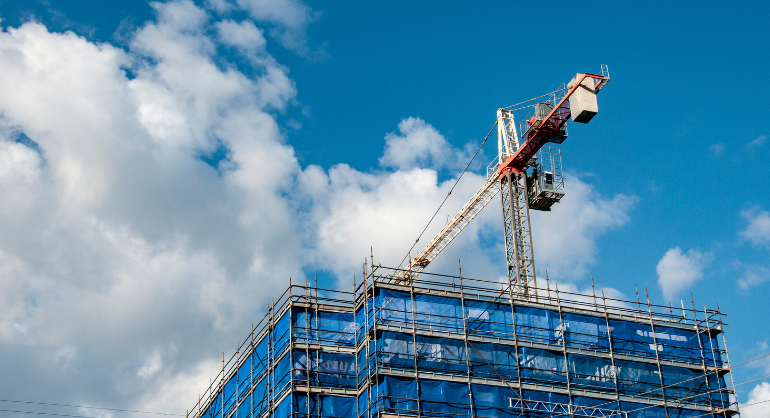
Housing Australia will open Round 3 of the Housing Australia Future Fund Facility (HAFFF) and National Housing Accord Facility (NHAF) in late January 2026, unlocking investment to deliver the remaining 21,350 social and affordable homes and achieve the national target of 40,000 new homes.
Housingaustralia Gov -
3
Delivering on the $10 billion Housing Australia Future Fund
The Albanese Labor Government will deliver its largest round yet under the Housing Australia Future Fund, with Round 3 delivering more than 21,000 new social and affordable homes across the country. These homes form part of Labor’s ambitious commitment to deliver 55,000 social and affordable homes.
Ministers Treasury Gov -
4

After a hopeful start, Labor's affordable housing fund is proving problematic
The $10 billion housing future fund will build 30,000 new social and affordable homes. While the scheme is welcome, there is plenty of room for improvement.
The Conversation -
5
Labor's $10b housing fund faces delays, rising costs and an audit
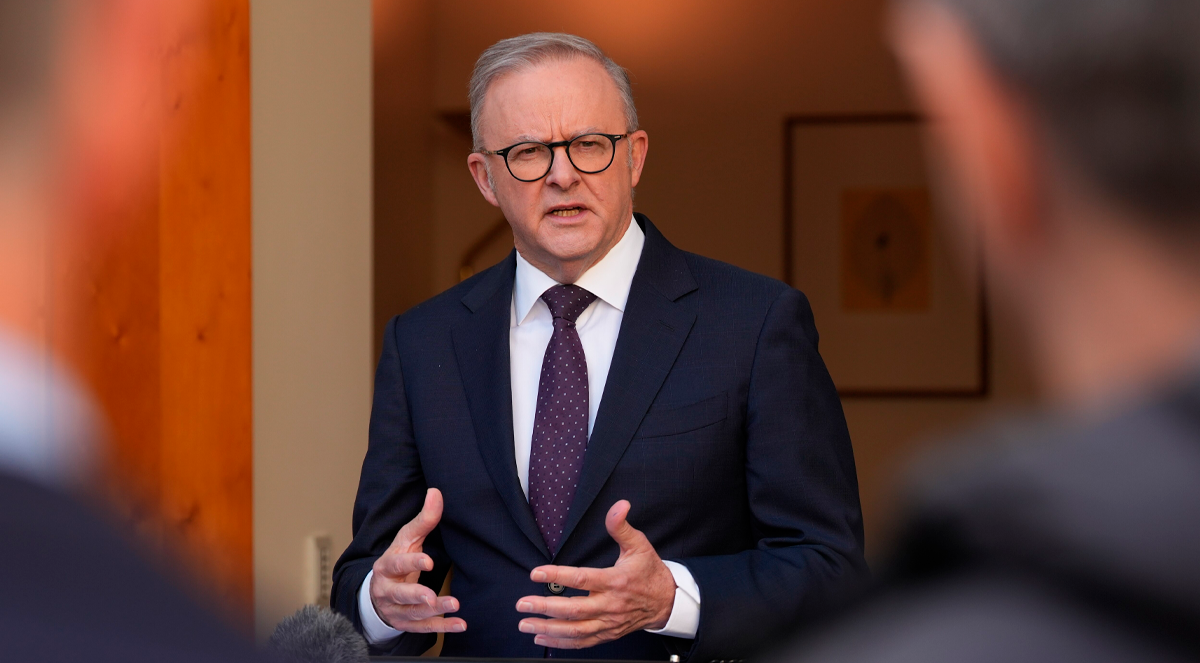
Labor's $10B housing fund hit by delays, soaring costs and audit probe, exposing hurdles to fixing Australia's housing crisis and 1.2M home target.
Australianpropertyupdate Com -
6

Building Activity, Australia, September 2025
Provides estimates of value of building work and number of dwellings commenced, completed, under construction and in the pipeline
Australian Bureau of Statistics
Rating Scale Methodology
1-3: FALSE
Factually incorrect or malicious fabrication.
4-6: PARTIAL
Some truth but context is missing or skewed.
7-9: MOSTLY TRUE
Minor technicalities or phrasing issues.
10: ACCURATE
Perfectly verified and contextually fair.
Methodology: Ratings are determined through cross-referencing official government records, independent fact-checking organizations, and primary source documents.