
The Claim
“Record $2 billion annual Pacific development assistance”
Original Sources Provided
✅ FACTUAL VERIFICATION
The claim that Australia is delivering record annual Pacific development assistance of $2 billion is factually accurate according to official government sources [1]. In the 2024–25 budget, Australia allocated $2.05 billion in development assistance to the Pacific, a substantial increase from $1.91 billion in 2023–24 [2]. This represents the highest level of Pacific development assistance in Australian history [3].
The Pacific region continues to account for a significant share of Australia's Official Development Assistance (ODA), representing 44% of all foreign aid allocations in the 2024–25 budget, up from 42% in 2023–24 [2]. For context, the total Australian ODA budget for 2024–25 is $4.961 billion [2], which was virtually unchanged from the inflation-adjusted 2023–24 level of $4.900 billion [2].
Missing Context
However, the claim of a "record" presents an incomplete picture that requires significant context [4]. While the absolute dollar amount ($2 billion) represents the highest nominal figure, this framing obscures several important realities:
1. Growth was front-loaded and largely predetermined - The substantial increase from $1.6 billion in 2021–22 to $1.9 billion in 2022–23 (a $300 million jump) was announced in the October 2022 Budget under the previous Morrison government, not initiated by the Albanese government [5]. The additional $900 million in ODA over four years in that budget "started to flow substantially to the region" from 2023–24 onwards [6]. This means a significant portion of the 2024–25 "record" represents implementation of pre-existing commitments from the previous government.
2. Recent increases have plateaued - While the increase from $1.91 billion (2023–24) to $2.05 billion (2024–25) appears significant, it represents a growth of only $140 million, or approximately 7.3%. The larger growth momentum occurred in 2022–23 when funding jumped from $1.6 billion to $1.9 billion. Growth has slowed substantially [2].
3. Total ODA budget remains frozen - The overall Australian ODA budget increased to $4.961 billion in 2024–25, which is "virtually unchanged" from 2023–24 when accounting for inflation [2]. This means the Pacific's increased share comes at the expense of aid to other regions. While Pacific prioritization is a stated policy choice, it should not be presented as an expansion of Australia's development commitment overall [7].
4. The "record" is limited to the Albanese period - This is technically a record only since Labor took office in May 2022. Historical data shows that Pacific aid levels in 2021–22 ($1.44 billion) were comparable to earlier periods [5]. The comparison frames achievement only within a three-year timeframe rather than demonstrating long-term commitment growth.
5. Implementation challenges remain - The funding includes significant concessional finance commitments through the Australian Infrastructure Financing Facility for the Pacific (AIFFP), which operates on a loan basis alongside grants. Over $900 million of the AIFFP contribution from 2024–25 to 2027–28 comes from concessional lending (loans at favorable terms), not outright grants [2]. While concessional lending has value, it differs from development grants and represents a debt obligation for recipient countries.
💭 CRITICAL PERSPECTIVE
When examined holistically, the claim of a "record" $2 billion annual Pacific development assistance reveals a more nuanced reality [8]. Australia has indeed increased Pacific development assistance to historically high nominal levels, demonstrating a strategic prioritization of the region [2]. This reflects geopolitical concerns about Chinese influence in the Pacific and legitimate development needs [4].
However, the claim functions as what analysts call "redirection rather than expansion" [7]. The frozen overall ODA budget means that increased Pacific aid represents a reallocation from other regions (Southeast Asia, South Asia, Africa) rather than expanded Australia's total development commitment [8]. As one critical analysis noted, the Pacific "gets 'record' share of Australia's static foreign aid budget" [4].
Furthermore, the attribution of achievement to the Albanese government is partially misleading [5]. The momentum for increased Pacific spending was established in the October 2022 Budget announcement by the previous Coalition government, specifically in response to post-pandemic regional recovery needs and China's expanding influence. The Albanese government has maintained and continued this direction but cannot be credited with initiating it [6].
From a regional perspective, while $2 billion annual assistance represents a significant commitment, the actual implementation includes mixed instruments. The heavy reliance on concessional financing through AIFFP means that while grant funding supports development objectives, substantial portions involve loans that create future debt obligations for Pacific island nations [2]. This distinction is important for understanding the actual nature of the assistance being provided.
Additionally, the claim uses the "record" framing to suggest positive achievement, but this obscures the fact that Australia's development assistance as a percentage of Gross National Income (GNI) remains low compared to OECD targets [8]. Australia's ODA/GNI ratio of approximately 0.31% falls well short of the OECD DAC average and the UN target of 0.7% [4]. The "record" spending is thus occurring within a context of systemic underinvestment relative to international norms.
PARTIALLY TRUE
6.5
out of 10
The factual claim that Australia is delivering approximately $2 billion in annual Pacific development assistance in 2024–25 is accurate and represents the highest nominal amount in Australian history. However, the framing as a "record" achievement for the Albanese government is misleading because: (1) much of the funding increase was announced and initiated by the previous government; (2) the total ODA budget remains frozen, making this a reallocation rather than expansion; (3) significant portions involve concessional lending rather than grants; and (4) it occurs within a context of Australia's overall underinvestment in development assistance relative to international standards.
Final Score
6.5
OUT OF 10
PARTIALLY TRUE
The factual claim that Australia is delivering approximately $2 billion in annual Pacific development assistance in 2024–25 is accurate and represents the highest nominal amount in Australian history. However, the framing as a "record" achievement for the Albanese government is misleading because: (1) much of the funding increase was announced and initiated by the previous government; (2) the total ODA budget remains frozen, making this a reallocation rather than expansion; (3) significant portions involve concessional lending rather than grants; and (4) it occurs within a context of Australia's overall underinvestment in development assistance relative to international standards.
📚 SOURCES & CITATIONS (8)
-
1
Australia's Official Development Assistance Budget Summary 2024-25
Dfat Gov
-
2PDF
Australia's Official Development Assistance DEVELOPMENT BUDGET SUMMARY 2024–25
Dfat Gov • PDF Document -
3
Australia's Pacific Regional development program
Dfat Gov
-
4

Pacific gets 'record' share of Australia's static foreign aid budget
Competition with China in the Pacific is shaping how Australia allocates development assistance.
Radio Free Asia -
5
Australian Official Development Assistance budget summary 2021-22
Dfat Gov
-
6PDF
Australian ODA, Development Budget Summary 2023-24
Dfat Gov • PDF Document -
7
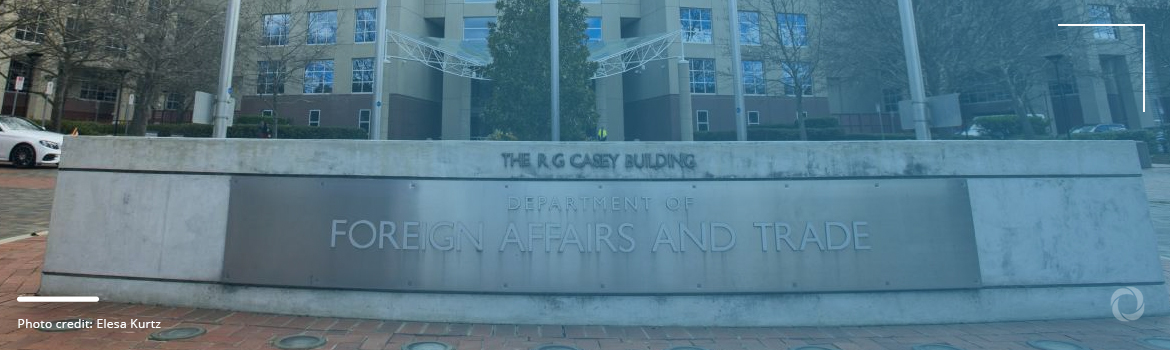
Australia increases aid in 2023-24 to focus on Pacific nations, South Asia
The Australia’s Department of Foreign Affairs (DFAT) official budget for ODA spending in 2023-2024 is $4.77 billion AUD ($3.19 billion USD), a sizable increase from 2020 when it spent just $2.6 billion USD, but only a modest increase from 2022 when it spent $3 billion USD.
DevelopmentAid -
8

2024 Australian aid spending and effectiveness update
Australia's aid is flatlining and its generosity declining, and DFAT needs a better handle on which programs are under-performing, says Stephen Howes.
Devpolicy Blog from the Development Policy Centre
Rating Scale Methodology
1-3: FALSE
Factually incorrect or malicious fabrication.
4-6: PARTIAL
Some truth but context is missing or skewed.
7-9: MOSTLY TRUE
Minor technicalities or phrasing issues.
10: ACCURATE
Perfectly verified and contextually fair.
Methodology: Ratings are determined through cross-referencing official government records, independent fact-checking organizations, and primary source documents.