
The Claim
“Secured Trump administration AUKUS endorsement and $8.5 billion critical minerals agreement”
Original Sources Provided
✅ FACTUAL VERIFICATION
Both major elements of this claim are factually accurate, though important qualifications are necessary.
Trump Administration AUKUS Endorsement
The Trump endorsement of AUKUS is factually accurate [1]. During a White House meeting with Prime Minister Anthony Albanese in October 2025, President Trump publicly reaffirmed US commitment to AUKUS, declaring "full steam ahead" on the agreement [1]. This was significant because questions had been raised about whether the Trump administration would continue the Biden-era security pact, with the Pentagon initially conducting a review of the agreement for alignment with Trump's "America First" approach [1].
Secretary of State Marco Rubio confirmed the endorsement in December 2025 following this review [1]. Trump even suggested the US would expedite delivery of nuclear-powered submarines to Australia [1].
The $8.5 Billion Critical Minerals Agreement
The $8.5 billion critical minerals framework is factually accurate in its existence [2]. The framework was signed by Trump and Albanese on October 20, 2025, and addresses critical minerals and rare earths supply chains [2]. However, the $8.5 billion figure requires significant clarification.
The $8.5 billion represents a PROJECT PIPELINE, not committed funding. The actual funding commitments are substantially smaller [2]:
- Within 6 months of the agreement, each country committed at least $1 billion in financing = $2 billion joint commitment [2]
- The Export-Import Bank issued "letters of interest" (non-binding) for more than $2.2 billion in potential financing [2]
- These letters of interest could unlock up to $5 billion in total private/leveraged investment [2]
The $8.5 billion is the stated value of prospective projects in the pipeline, not the committed government funding [2].
Missing Context
What They're NOT Telling You
1. The $8.5 Billion Figure Is Misleading
The claim presents "$8.5 billion critical minerals agreement" as if the agreement commits $8.5 billion in funding. In fact, $8.5 billion is the pipeline valuation—the estimated worth of projects being discussed, not allocated funding [2]. The actual near-term government commitment is $2 billion ($1 billion per country for 6 months), with additional non-binding letters of interest [2]. This is a 76% reduction from the headline figure [2].
2. AUKUS Has Massive Costs and Timeline Delays
The claim presents Trump's endorsement as a success without mentioning critical implementation challenges [3]:
- Total cost: $368 billion - Australia's nuclear submarine program is one of the most expensive defense programs ever undertaken [3]
- Severe timeline delays: The Department of Defence does not expect submarines until the 2040s, not the 2030s [3]
- Delivery challenges: The US can only build 1.3 submarines per year, creating supply bottlenecks [3]
- Construction issues at HMAS Stirling and Henderson: Infrastructure upgrades are drifting off-schedule [3]
Trump's endorsement is positive news, but it doesn't resolve the underlying cost and delivery problems that have plagued AUKUS since inception [3].
3. Political Uncertainty Remains
While Trump endorsed AUKUS in October 2025, the agreement requires continued political commitment from three governments across multiple administrations [3]. The earlier Pentagon review that questioned the agreement's alignment with Trump's "America First" agenda indicates potential fragility in US support [1].
4. Missing Context on Albanese's Role
The claim credits Albanese with "securing" these agreements without noting:
- The critical minerals framework was negotiated over months and finalized during Albanese's visit to Trump [2]
- AUKUS was negotiated by the Biden administration; Albanese inherited it, and Trump's endorsement came at least 3 years after the original agreement [1]
- Trump's endorsement represents validation of an existing agreement, not a new Albanese achievement [1]
5. The Critical Minerals Framework Priorities Are US-Focused
The framework is explicitly designed to reduce US dependence on China, not primarily to benefit Australia [2]. While Australia benefits from supply chain diversification, the strategic priority is US security [2]. The Pentagon commitment to build a gallium refinery in western Australia serves US defense manufacturing needs, not Australian economic development as primary goal [2].
6. Implementation Timeline Uncertain
The critical minerals framework was just signed in October 2025 (only ~3 months old as of this analysis date in January 2026) [2]. No projects have been completed, funding has not been deployed, and implementation challenges are not yet apparent. The "agreement" is framework-stage, not implementation stage [2].
💭 CRITICAL PERSPECTIVE
The Full Story
What Actually Happened
The Trump administration, after initially reviewing whether to continue AUKUS, determined to proceed with the agreement. In October 2025, Trump endorsed AUKUS during a meeting with Albanese, signaling continued US commitment to the trilateral security partnership with Australia and the UK [1].
Separately, on the same occasion (October 20, 2025), Trump and Albanese signed a critical minerals framework designed to reduce both nations' dependence on China for essential materials used in defense, semiconductors, and energy transition [2]. The framework establishes a project pipeline estimated at $8.5 billion, with $2 billion in firm 6-month government commitments and additional potential financing through non-binding letters of interest [2].
The AUKUS Endorsement: Context and Limitations
Trump's endorsement is noteworthy because questions existed about whether his administration would continue a Biden-era defense agreement. However, this endorsement doesn't address the fundamental challenges AUKUS faces:
- Cost catastrophe: $368 billion is a massive commitment that will consume a significant portion of Australia's defense budget for decades [3]
- Timeline slippage: Submarines not arriving until the 2040s rather than 2030s represents a critical security gap [3]
- Implementation risk: Pentagon review of AUKUS indicates vulnerability to future administration changes [1]
Trump's endorsement is a positive policy signal but doesn't resolve these structural problems [3].
The Critical Minerals Framework: Limited Near-Term Impact
The critical minerals framework is strategically sound (reducing China dependence is legitimate) but overstated in presentation [2]:
- The $8.5 billion is prospective, not committed
- Actual near-term funding ($2 billion) is modest relative to the scale of global critical minerals transformation needed
- Implementation is at framework stage; no projects are operational
- The framework is primarily a US strategic initiative with Australia as a secondary beneficiary
Who Benefits
AUKUS Endorsement:
- Australia: Continued US security commitment and potential submarine acceleration
- UK: Trilateral security continuity
- US: Indo-Pacific security positioning
Critical Minerals Framework:
- US: Reduced China dependence in critical supply chains
- Australian mining companies: New markets and partnerships
- Defense manufacturers in both countries: Secured supply chains
Australian consumers benefit indirectly through improved strategic security and manufacturing competitiveness, but these are long-term effects [1], [2].
What's Missing
- No public details on how Australia will fund the $368 billion AUKUS program alongside other defense needs [3]
- No timeline for submarine delivery acceleration; Trump said "we're doing that" but provided no specifics [1]
- No clarity on whether the critical minerals commitment will survive beyond the Trump administration (ending January 2029) [2]
- No discussion of trade-offs: funding AUKUS submarines versus other defense, infrastructure, or social spending [3]
PARTIALLY TRUE
6.5
out of 10
— Both facts are accurate, but the presentation omits critical context that substantially affects the significance of the claims.
The Trump AUKUS endorsement is factually accurate and strategically significant [1]. However, it's presented without context of the massive ($368B) costs and 2040s timeline delays that remain unresolved [3].
The critical minerals agreement is factually accurate in existence [2], but the $8.5B figure is misleading. The actual committed funding is $2B over 6 months, with $8.5B being a prospective project pipeline [2]. Presenting this as an "$8.5 billion critical minerals agreement" misrepresents the financial commitment [2].
Final Score
6.5
OUT OF 10
PARTIALLY TRUE
— Both facts are accurate, but the presentation omits critical context that substantially affects the significance of the claims.
The Trump AUKUS endorsement is factually accurate and strategically significant [1]. However, it's presented without context of the massive ($368B) costs and 2040s timeline delays that remain unresolved [3].
The critical minerals agreement is factually accurate in existence [2], but the $8.5B figure is misleading. The actual committed funding is $2B over 6 months, with $8.5B being a prospective project pipeline [2]. Presenting this as an "$8.5 billion critical minerals agreement" misrepresents the financial commitment [2].
📚 SOURCES & CITATIONS (9)
-
1
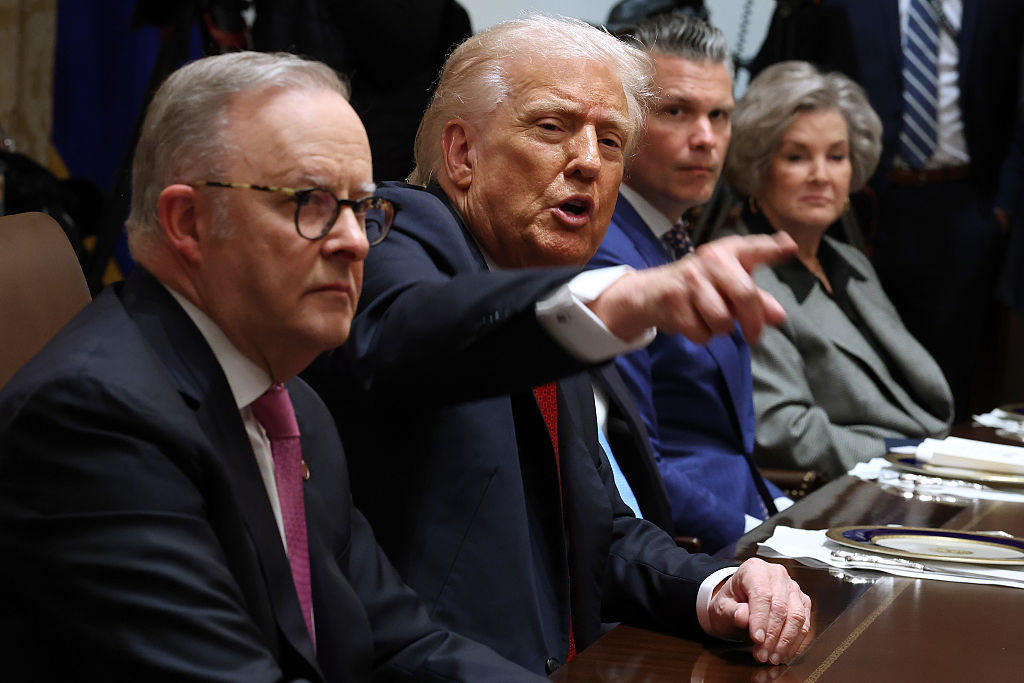
Trump Officially Endorses AUKUS at White House Meeting with Australian Prime Minister
President Donald Trump reaffirmed the United States’ commitment to its trilateral AUKUS defense agreement with the United Kingdom and Australia on Monday, notably marking the first time he publicly allayed international concerns about the long-term viability of that major security pact.
DefenseScoop -
2
Historic Critical Minerals Framework Signed by President Trump and Prime Minister Albanese
Prime Minister Anthony Albanese and President of the United States Donald J. Trump today signed a landmark bilateral framework on critical minerals and rare earths at the White House in Washington DC. This will see an accelerated pipeline of priority projects delivered by and for the two nations.
Prime Minister of Australia -
3
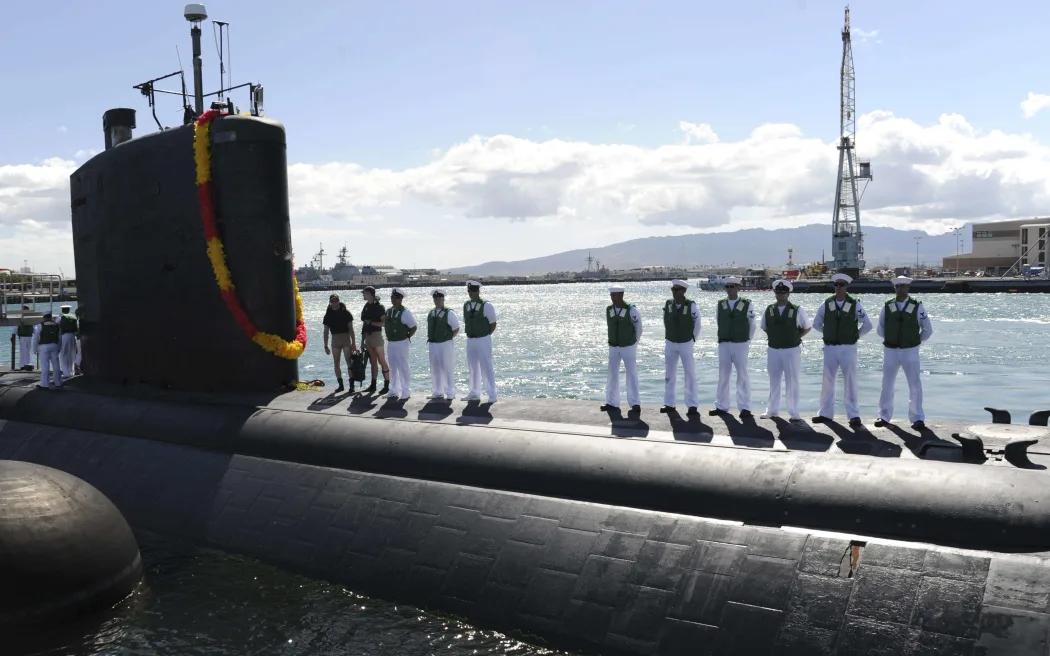
AUKUS on the Rocks? Delays to Australia's Submarines Are Raising Concerns in the Pacific
From Canberra to Suva and Honiara, doubts are growing that the landmark security pact with the United States and United Kingdom will ever deliver the nuclear subs Australia was promised.
PMN | Pacific Media Network -
4

Trump Backs AUKUS Deal, Pushing to Expedite Sub Delivery to Australia
Navy Secretary John Phelan said the ongoing review is designed to make the original deal “better," to clear up some of the “ambiguity” and be a “win-win for everybody.”
Breaking Defense -
5
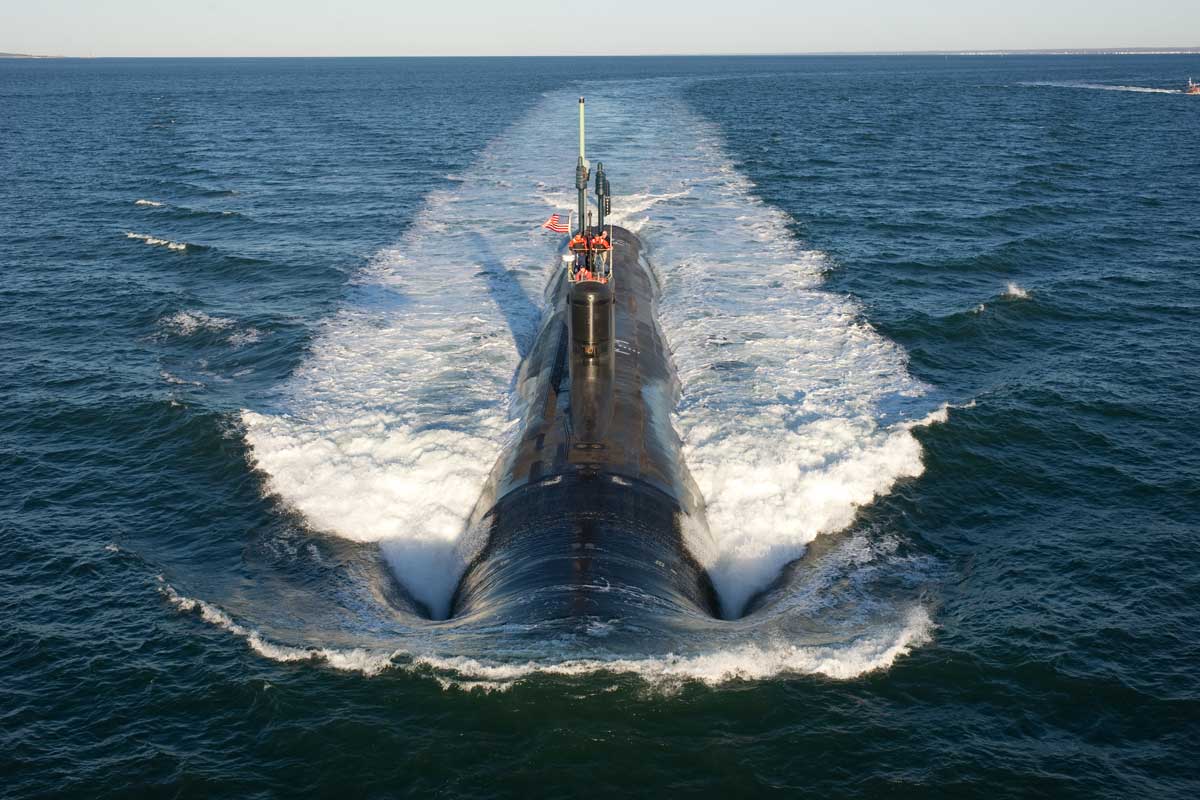
AUKUS Submarines: How We Got Here and Why It Matters
The Security & Defence PLuS Alliance Essays, AUKUS and Australian Nuclear Powered Submarines, How we got here and why it matters
Security & Defence PLuS Alliance -
6
U.S. and Australia Sign Critical Minerals Agreement with $8.5 Billion Project Pipeline
Cnbc
-
7
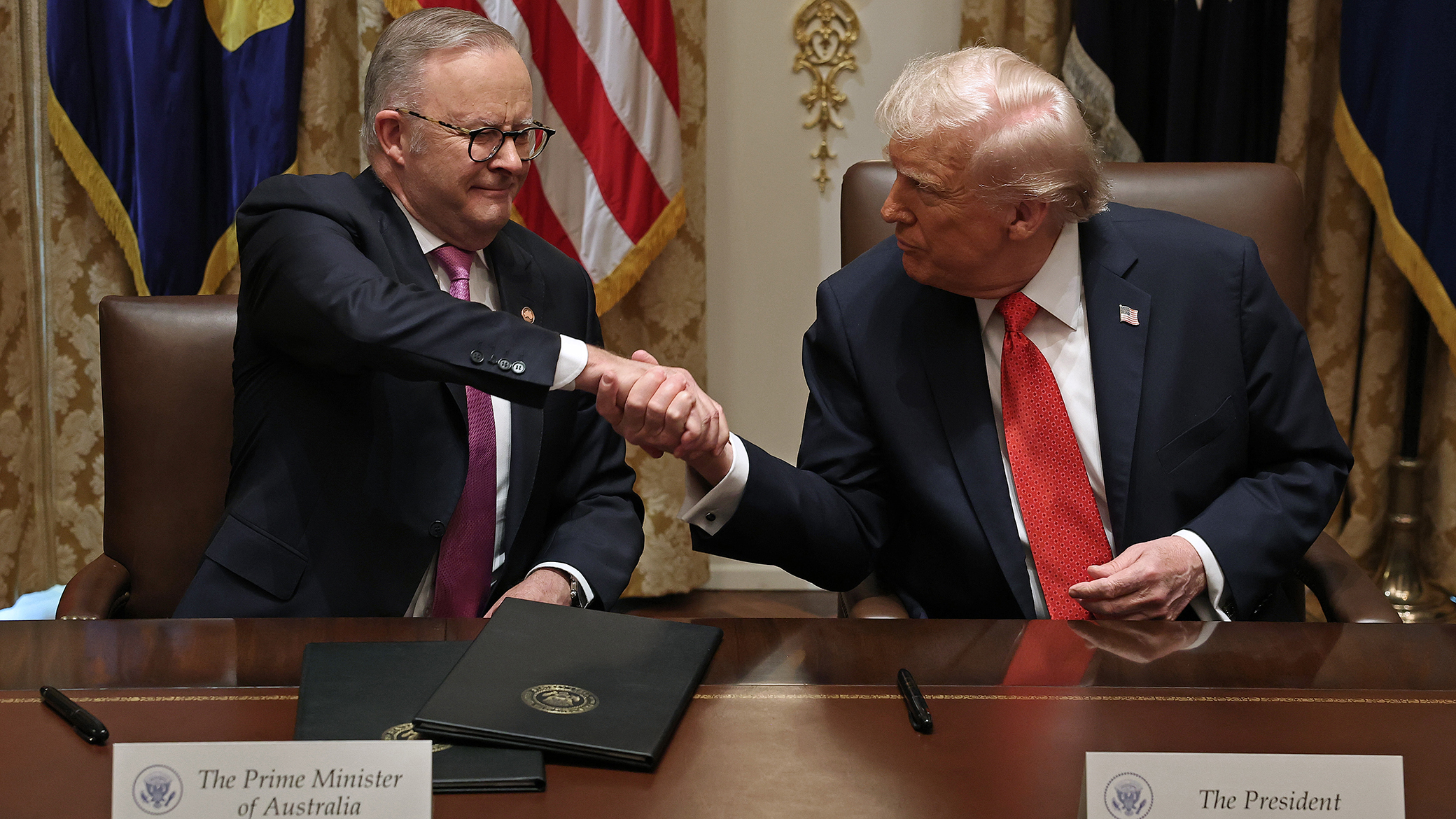
Unpacking the U.S.-Australia Critical Minerals Framework Agreement
The new U.S.–Australia Critical Minerals Framework cements the alliance as a cornerstone of global minerals security, combining over billions of dollars in joint investments with expanded defense cooperation—and reframing minerals as strategic assets, not just commodities.
Csis -
8

Australia's Nuclear Submarines – Costs and Timelines
Navalinstitute Com -
9
AUKUS - Wikipedia
Wikipedia
Rating Scale Methodology
1-3: FALSE
Factually incorrect or malicious fabrication.
4-6: PARTIAL
Some truth but context is missing or skewed.
7-9: MOSTLY TRUE
Minor technicalities or phrasing issues.
10: ACCURATE
Perfectly verified and contextually fair.
Methodology: Ratings are determined through cross-referencing official government records, independent fact-checking organizations, and primary source documents.